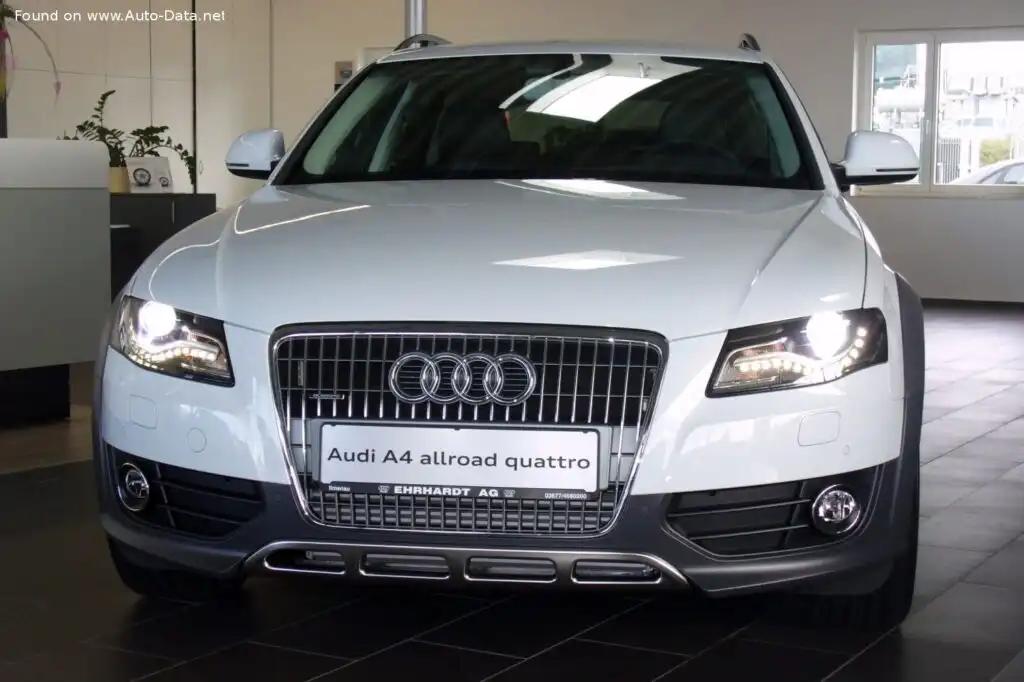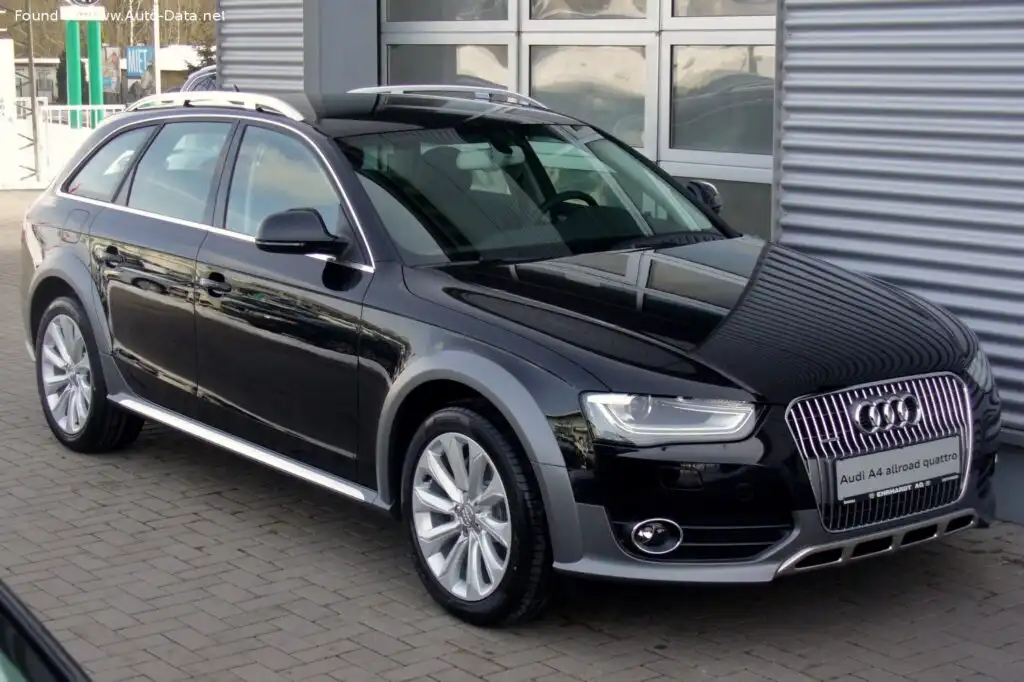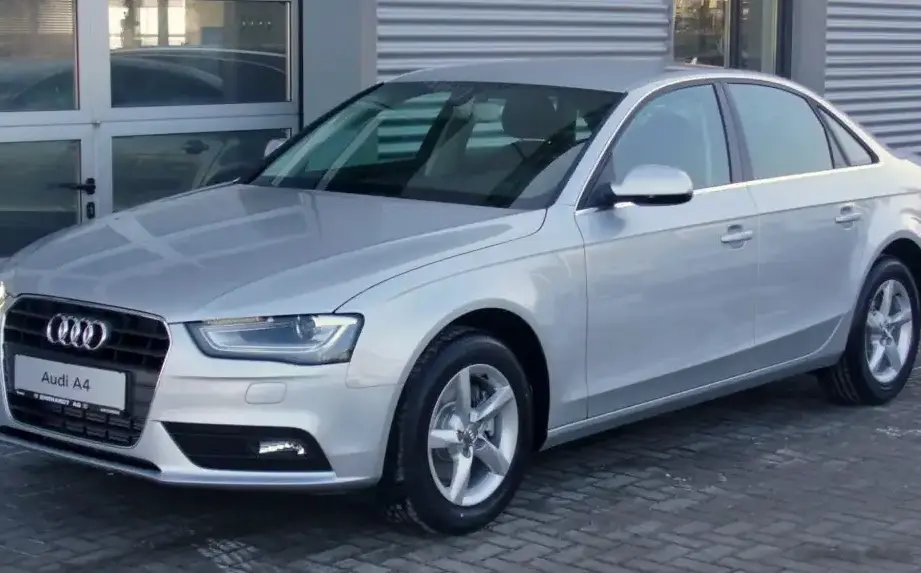
The Audi A4 (B8 8K) facelift model, produced from September 2011 to 2015, represented a significant refresh of Audi’s popular compact executive car. Among the various engine and drivetrain configurations offered, the 2.0 TFSI flexible-fuel variant producing 180 horsepower with Audi’s quattro all-wheel drive system held a prominent position. This version aimed to balance performance, fuel efficiency, and all-weather capability, appealing to a broad range of buyers in the North American and European markets. It sat in the mid-range of the B8 A4 lineup, offering a step up in power and grip from the base 1.8 TFSI models, while remaining more accessible than the higher-performance 3.0 TFSI variants.
Technical Specifications
| Brand | Audi |
| Model | A4 |
| Generation | A4 (B8 8K, facelift 2011) |
| Type (Engine) | 2.0 TFSI flexible fuel (180 Hp) quattro |
| Start of production | September, 2011 |
| End of production | 2015 |
| Powertrain Architecture | Internal Combustion engine |
| Body type | Sedan |
| Seats | 5 |
| Doors | 4 |
| Fuel consumption (urban) | 9 l/100 km (26.1 US mpg, 31.4 UK mpg, 11.1 km/l) |
| Fuel consumption (extra urban) | 5.5 l/100 km (42.8 US mpg, 51.4 UK mpg, 18.2 km/l) |
| Fuel consumption (combined) | 6.8 l/100 km (34.6 US mpg, 41.5 UK mpg, 14.7 km/l) |
| CO2 emissions | 159 g/km |
| Fuel Type | Petrol (Gasoline) |
| Acceleration 0 – 100 km/h | 7.7 sec |
| Acceleration 0 – 62 mph | 7.7 sec |
| Acceleration 0 – 60 mph | 7.3 sec |
| Maximum speed | 232 km/h (144.16 mph) |
| Emission standard | Euro 5 |
| Weight-to-power ratio | 8.5 kg/Hp, 117.3 Hp/tonne |
| Weight-to-torque ratio | 4.8 kg/Nm, 208.5 Nm/tonne |
| Power | 180 Hp @ 4000-6000 rpm |
| Power per litre | 90.7 Hp/l |
| Torque | 320 Nm @ 1500-3900 rpm (236.02 lb.-ft. @ 1500-3900 rpm) |
| Engine layout | Front, Longitudinal |
| Engine Model/Code | CFKA |
| Engine displacement | 1984 cm3 (121.07 cu. in.) |
| Number of cylinders | 4 |
| Engine configuration | Inline |
| Cylinder Bore | 82.5 mm (3.25 in.) |
| Piston Stroke | 92.8 mm (3.65 in.) |
| Compression ratio | 9.6:1 |
| Number of valves per cylinder | 4 |
| Fuel injection system | Direct injection |
| Engine aspiration | Turbocharger, Intercooler |
| Valvetrain | DOHC |
| Engine oil capacity | 4.6 l (4.86 US qt | 4.05 UK qt) |
| Kerb Weight | 1535 kg (3384.1 lbs.) |
| Max. weight | 2085 kg (4596.64 lbs.) |
| Max load | 550 kg (1212.54 lbs.) |
| Trunk (boot) space – minimum | 480 l (16.95 cu. ft.) |
| Trunk (boot) space – maximum | 962 l (33.97 cu. ft.) |
| Fuel tank capacity | 61 l (16.11 US gal | 13.42 UK gal) |
| Max. roof load | 90 kg (198.42 lbs.) |
| Permitted trailer load with brakes (8%) | 1900 kg (4188.78 lbs.) |
| Permitted trailer load without brakes | 750 kg (1653.47 lbs.) |
| Permitted towbar download | 80 kg (176.37 lbs.) |
| Length | 4701 mm (185.08 in.) |
| Width | 1826 mm (71.89 in.) |
| Width including mirrors | 2040 mm (80.31 in.) |
| Height | 1427 mm (56.18 in.) |
| Wheelbase | 2808 mm (110.55 in.) |
| Front track | 1564 mm (61.57 in.) |
| Rear (Back) track | 1551 mm (61.06 in.) |
| Front overhang | 862 mm (33.94 in.) |
| Rear overhang | 1031 mm (40.59 in.) |
| Drag coefficient (Cd) | 0.29 |
| Minimum turning circle (turning diameter) | 11.5 m (37.73 ft.) |
| Drive wheel | All wheel drive (4×4) |
| Number of gears and type of gearbox | 6 gears, manual transmission |
| Front suspension | Independent multi-link suspension |
| Rear suspension | Independent on trapezoidal lever |
| Front brakes | Ventilated discs |
| Rear brakes | Disc |
| Assisting systems | ABS (Anti-lock braking system) |
| Steering type | Steering rack and pinion |
| Power steering | Electric Steering |
| Tires size | 225/55 R16 |
| Wheel rims size | 7.5J x 16 |
INTRODUCTION
The Audi A4 B8.5, as the facelifted model is commonly known, built upon the success of the B8 generation, offering refined styling, updated technology, and improved efficiency. The 2.0 TFSI quattro variant, with its 180 horsepower output and flexible-fuel capability (allowing operation on gasoline or E85 ethanol blends), was a popular choice for drivers seeking a balance between performance and practicality. This model year saw improvements to the A4’s infotainment system, headlights, and front and rear fascias, giving it a more modern appearance. The quattro all-wheel-drive system remained a key selling point, providing enhanced traction and stability in various driving conditions.
Powertrain & Engine Architecture
At the heart of this A4 variant lies the 2.0-liter inline-four cylinder engine, designated the CFKA engine code. This engine is a member of Audi’s EA888 family, known for its robust design and tuning potential. The CFKA utilizes direct fuel injection (FSI) and a single turbocharger with an intercooler to deliver a respectable 180 horsepower and 236 lb-ft of torque. The flexible-fuel capability allows the engine to run on gasoline, E85, or any blend of the two, offering potential cost savings and reduced emissions depending on fuel prices and availability. The engine’s valvetrain features a dual overhead camshaft (DOHC) design with four valves per cylinder, optimizing airflow for improved performance. The engine is longitudinally mounted, directing power to all four wheels via Audi’s renowned quattro system. The transmission is a six-speed manual, providing precise gear changes and driver engagement.
Driving Characteristics
The 180 hp 2.0 TFSI quattro offered a composed and refined driving experience. While not as overtly sporty as the higher-output versions of the A4, it provided ample power for everyday driving and confident highway passing. The six-speed manual transmission allowed for precise control over the engine’s powerband, and the quattro all-wheel-drive system provided excellent traction in both dry and wet conditions. The gear ratios were tuned for a balance of acceleration and fuel efficiency, with a relatively short first gear for quick off-the-line acceleration and a taller sixth gear for relaxed cruising. Compared to the 1.8 TFSI models, the 2.0 TFSI offered noticeably stronger acceleration and a more responsive feel. However, it lacked the outright performance of the 3.0 TFSI variants.
Equipment & Trim Levels
The 2.0 TFSI quattro typically came standard with a well-equipped interior, including leather upholstery, automatic climate control, a multi-function steering wheel, and an Audi Concert audio system. Optional extras included a navigation system, sunroof, heated front seats, and a premium sound system. Trim levels varied depending on the market, but generally offered increasing levels of luxury and technology. The exterior featured standard alloy wheels, fog lights, and chrome accents. The flexible-fuel capability was a standard feature on this variant in markets where E85 was readily available.
Chassis & Braking
The A4 B8.5 featured a sophisticated chassis design, with independent multi-link suspension at all four corners. This suspension setup provided a comfortable ride while maintaining excellent handling characteristics. The front suspension utilized coil springs and shock absorbers, while the rear suspension employed a trapezoidal link design. The braking system consisted of ventilated discs at the front and solid discs at the rear, providing ample stopping power. Anti-lock brakes (ABS) were standard, along with electronic stability control (ESC) to enhance safety.
Market Reception & Comparison
The 2.0 TFSI quattro was generally well-received by automotive critics, who praised its balanced performance, comfortable ride, and sophisticated interior. Fuel economy was considered competitive for its class, and the flexible-fuel capability was seen as a positive feature. Compared to the 1.8 TFSI models, the 2.0 TFSI offered a noticeable improvement in performance, making it a more appealing option for drivers who prioritized driving enjoyment. However, the 3.0 TFSI variants offered significantly more power and a more engaging driving experience, albeit at a higher price point. Reliability was generally good, although some owners reported issues with the turbocharger and fuel injectors.
Legacy
The Audi A4 B8.5 2.0 TFSI quattro remains a popular choice in the used car market today. Its combination of performance, practicality, and all-wheel-drive capability makes it a versatile and appealing option for a wide range of buyers. The CFKA engine is generally considered reliable, although regular maintenance is essential to ensure long-term durability. The availability of parts and service is good, and the A4 B8.5 continues to be a well-regarded and respected compact executive car.