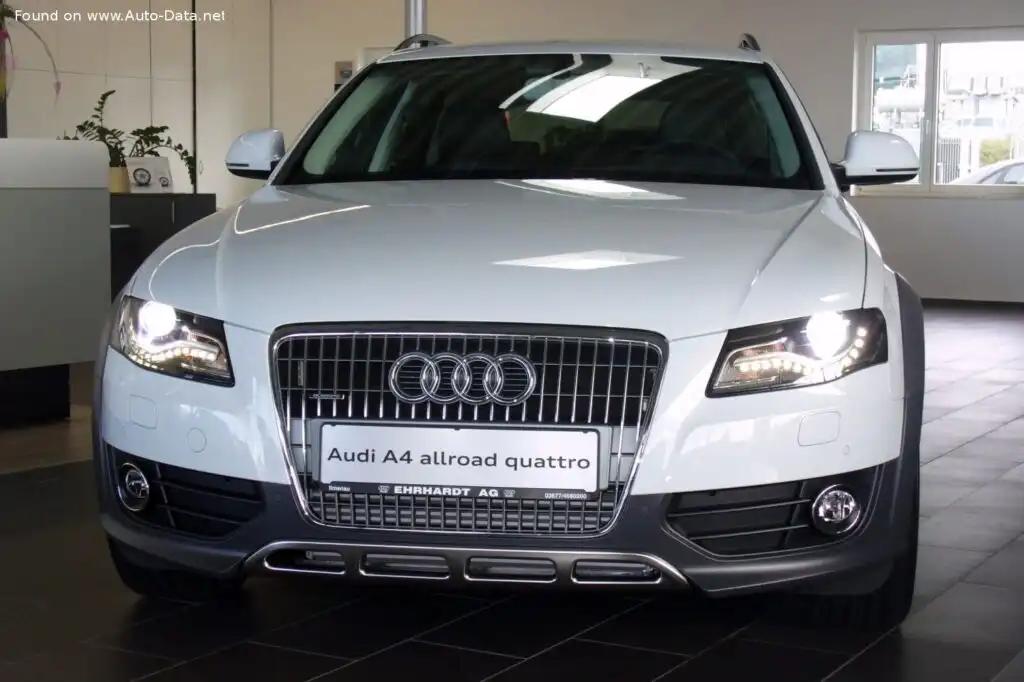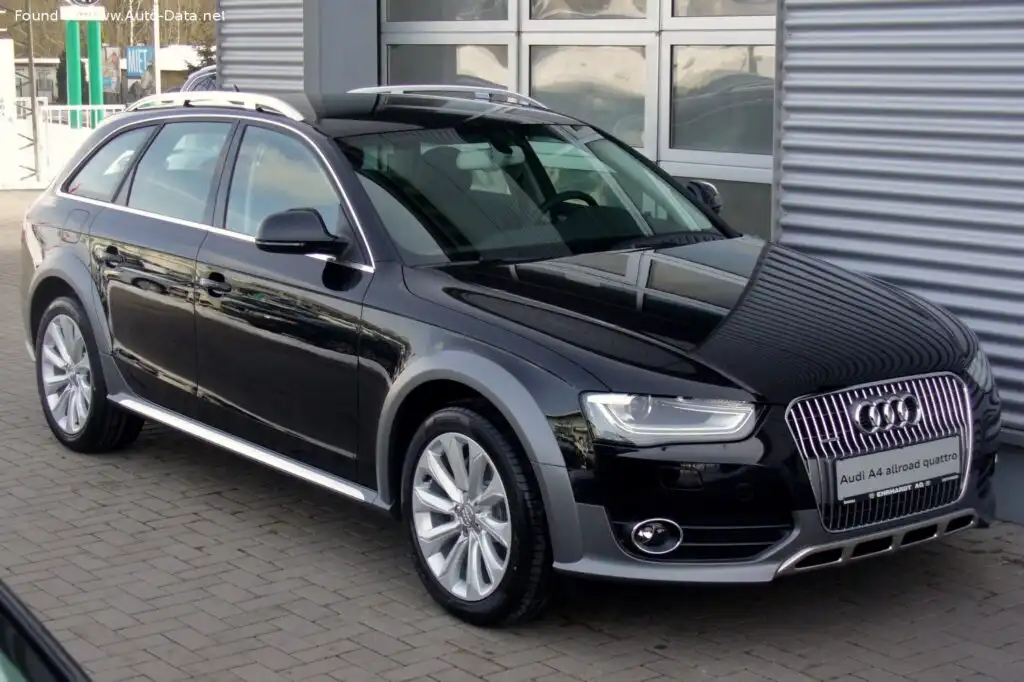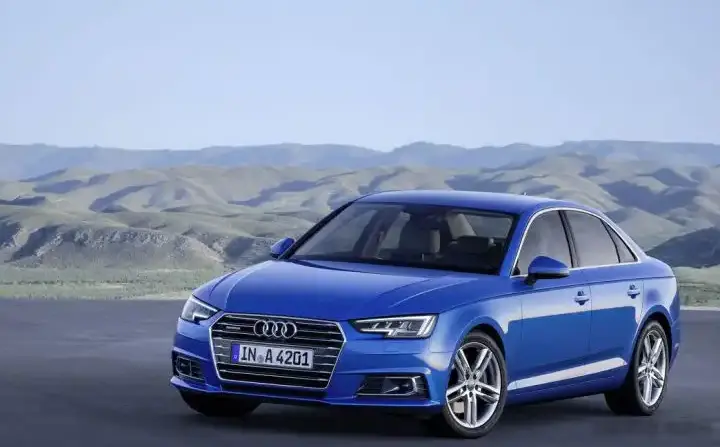
The Audi A4 (B9 8W) 2.0 TDI producing 122 horsepower was a key variant within the fifth generation of Audi’s popular executive car, produced between 2015 and 2018. Positioned as a fuel-efficient and accessible entry point into the B9 A4 range, this model aimed to balance practicality, comfort, and running costs for a broad customer base. It served as a significant offering in the European market, where diesel engines remained dominant, and represented Audi’s commitment to delivering sophisticated technology in a more affordable package. This variant was primarily offered as a sedan (saloon) and, less commonly, as an Avant (estate).
Technical Specifications
| Brand | Audi |
| Model | A4 |
| Generation | A4 (B9 8W) |
| Type (Engine) | 2.0 TDI (122 Hp) |
| Start of production | 2015 |
| End of production | 2018 |
| Powertrain Architecture | Internal Combustion engine |
| Body type | Sedan |
| Seats | 5 |
| Doors | 4 |
| Fuel consumption (urban) | 4.4-4.9 l/100 km (53.5 – 48 US mpg, 64.2 – 57.6 UK mpg, 22.7 – 20.4 km/l) |
| Fuel consumption (extra urban) | 3.3-3.8 l/100 km (71.3 – 61.9 US mpg, 85.6 – 74.3 UK mpg, 30.3 – 26.3 km/l) |
| Fuel consumption (combined) | 3.7-4.2 l/100 km (63.6 – 56 US mpg, 76.3 – 67.3 UK mpg, 27 – 23.8 km/l) |
| CO2 emissions | 97-110 g/km |
| Fuel Type | Diesel |
| Acceleration 0 – 100 km/h | 10.5 sec |
| Acceleration 0 – 62 mph | 10.5 sec |
| Acceleration 0 – 60 mph | 10 sec |
| Maximum speed | 205 km/h (127.38 mph) |
| Emission standard | Euro 6 |
| Weight-to-power ratio | 11.7 kg/Hp, 85.3 Hp/tonne |
| Weight-to-torque ratio | 4.5 kg/Nm, 223.8 Nm/tonne |
| Power | 122 Hp @ 3500-4000 rpm |
| Power per litre | 62 Hp/l |
| Torque | 320 Nm @ 1500-3250 rpm (236.02 lb.-ft. @ 1500-3250 rpm) |
| Engine layout | Front, Longitudinal |
| Engine Model/Code | DEUC |
| Engine displacement | 1968 cm3 (120.09 cu. in.) |
| Number of cylinders | 4 |
| Engine configuration | Inline |
| Cylinder Bore | 81 mm (3.19 in.) |
| Piston Stroke | 95.5 mm (3.76 in.) |
| Compression ratio | 16.2:1 |
| Number of valves per cylinder | 4 |
| Fuel injection system | Diesel Commonrail |
| Engine aspiration | Turbocharger, Intercooler |
| Valvetrain | DOHC |
| Engine oil capacity | 4.7 l (4.97 US qt | 4.14 UK qt) |
| Kerb Weight | 1430 kg (3152.61 lbs.) |
| Max. weight | 2030 kg (4475.38 lbs.) |
| Max load | 600 kg (1322.77 lbs.) |
| Trunk (boot) space – minimum | 480 l (16.95 cu. ft.) |
| Trunk (boot) space – maximum | 965 l (34.08 cu. ft.) |
| Fuel tank capacity | 40 l (10.57 US gal | 8.8 UK gal) |
| Max. roof load | 90 kg (198.42 lbs.) |
| Permitted trailer load with brakes (8%) | 1500 kg (3306.93 lbs.) |
| Permitted trailer load with brakes (12%) | 1300 kg (2866.01 lbs.) |
| Permitted trailer load without brakes | 750 kg (1653.47 lbs.) |
| Permitted towbar download | 80 kg (176.37 lbs.) |
| Length | 4726 mm (186.06 in.) |
| Width | 1842 mm (72.52 in.) |
| Width including mirrors | 2022 mm (79.61 in.) |
| Height | 1427 mm (56.18 in.) |
| Wheelbase | 2820 mm (111.02 in.) |
| Front track | 1572 mm (61.89 in.) |
| Rear (Back) track | 1555 mm (61.22 in.) |
| Front overhang | 880 mm (34.65 in.) |
| Rear overhang | 1026 mm (40.39 in.) |
| Drag coefficient (Cd) | 0.27 |
| Minimum turning circle (turning diameter) | 11.6 m (38.06 ft.) |
| Drivetrain Architecture | The Internal combustion engine (ICE) drives the front wheels of the vehicle. |
| Drive wheel | Front wheel drive |
| Number of gears and type of gearbox | 6 gears, manual transmission |
| Front suspension | Independent multi-link suspension |
| Rear suspension | Independent multi-link suspension |
| Front brakes | Ventilated discs |
| Rear brakes | Ventilated discs |
| Assisting systems | ABS (Anti-lock braking system) |
| Steering type | Steering rack and pinion |
| Power steering | Electric Steering |
| Tires size | 205/60 R16; 225/50 R17; 245/40 R18; 245/35 R19 |
| Wheel rims size | 7J x 16 |
INTRODUCTION
The Audi A4 (B9 8W) 2.0 TDI 122 hp, launched in 2015, represented a significant update to Audi’s best-selling model. Built on the Modular Longitudinal Platform (MLB Evo), also known as the 1HX0 platform, the B9 generation aimed to improve upon its predecessor in terms of technology, efficiency, and refinement. The 2.0 TDI 122 hp variant was specifically designed to appeal to buyers prioritizing fuel economy and lower running costs, making it a popular choice in Europe where diesel remained the dominant fuel. It occupied the lower-mid range of the A4 lineup, sitting below the more powerful TDI variants and the petrol-powered models.
Powertrain & Engine Architecture
At the heart of this A4 variant lies the Volkswagen Group’s 2.0-liter four-cylinder diesel engine, designated DEUC. This engine is a turbocharged, common-rail direct injection diesel, known for its balance of power and efficiency. The engine utilizes a single turbocharger with an intercooler to enhance performance. The common-rail system, operating at extremely high pressures, ensures precise fuel delivery and optimized combustion. The engine features a Double Overhead Camshaft (DOHC) valvetrain with four valves per cylinder, contributing to its efficient breathing. The 122 hp output is achieved at 3500-4000 rpm, while the peak torque of 320 Nm (236 lb-ft) is available from a low 1500-3250 rpm, providing strong pulling power at everyday driving speeds. This variant was typically paired with a six-speed manual transmission, although a seven-speed S tronic dual-clutch transmission was also available as an option. The engine also incorporated a diesel particulate filter (DPF) to meet stringent Euro 6 emission standards.
Driving Characteristics
The 2.0 TDI 122 hp A4 offered a comfortable and refined driving experience, prioritizing usability over outright performance. While not particularly quick – achieving 0-62 mph in around 10.5 seconds – the engine’s strong low-end torque made it feel responsive in everyday driving situations. The six-speed manual transmission provided a direct connection to the engine, allowing drivers to make the most of the available power. Compared to the more powerful TDI variants (150 hp or 190 hp), this version felt less eager to rev and required more gear changes when accelerating. However, its fuel efficiency was significantly better. The gear ratios were tuned for economy, with a relatively long final drive. The engine was generally quiet and smooth, with minimal vibration, contributing to a relaxed driving experience.
Equipment & Trim Levels
The 2.0 TDI 122 hp A4 typically came equipped with a respectable level of standard features. These included air conditioning, a multi-function steering wheel, electric windows, and an infotainment system with a color display. Higher trim levels, such as Sport and S line, added features like alloy wheels, sports seats, and upgraded interior trim. Optional extras included navigation, parking sensors, a sunroof, and advanced driver assistance systems like adaptive cruise control and lane departure warning. Interior upholstery was typically cloth in the base models, with leather options available on higher trims. The dashboard layout was clean and modern, with a focus on ergonomics and ease of use.
Chassis & Braking
The B9 A4 featured a sophisticated chassis design, with independent multi-link suspension at both the front and rear. This setup provided a comfortable ride and good handling characteristics. The 2.0 TDI 122 hp variant, being one of the lighter A4 models, benefited from a well-balanced feel. Braking was handled by ventilated discs on all four wheels, providing ample stopping power. Anti-lock Braking System (ABS) was standard, along with Electronic Stability Control (ESC). The steering was precise and well-weighted, offering good feedback to the driver. Stabilizer bars were fitted front and rear to reduce body roll during cornering.
Market Reception & Comparison
The Audi A4 2.0 TDI 122 hp was generally well-received by automotive critics. It was praised for its fuel efficiency, comfortable ride, and refined interior. However, some reviewers noted that the engine lacked the punch of the more powerful TDI variants. Compared to the 1.4 TFSI petrol engine, the 2.0 TDI offered significantly better fuel economy and torque, but at the expense of some refinement. Against rivals like the BMW 3 Series and Mercedes-Benz C-Class, the A4 2.0 TDI 122 hp offered a compelling combination of practicality, comfort, and efficiency. Its fuel economy figures consistently ranked among the best in its class.
Legacy
The 2.0 TDI engine, in its various iterations, has proven to be a reliable and durable powertrain. However, like all modern diesel engines, it is susceptible to issues with the DPF and turbocharger if not properly maintained. The B9 A4 2.0 TDI 122 hp remains a popular choice in the used car market, particularly for buyers seeking a fuel-efficient and comfortable executive car. Its relatively simple engine design and readily available parts contribute to its affordability and ease of maintenance. While newer A4 models offer more advanced technology and higher performance, the B9 2.0 TDI 122 hp continues to represent a solid and dependable option for those seeking a practical and economical vehicle.