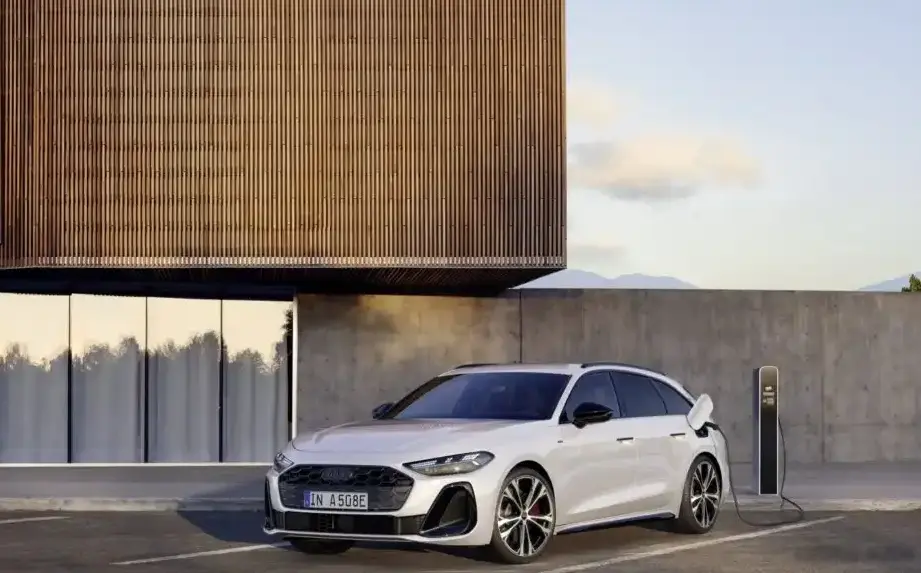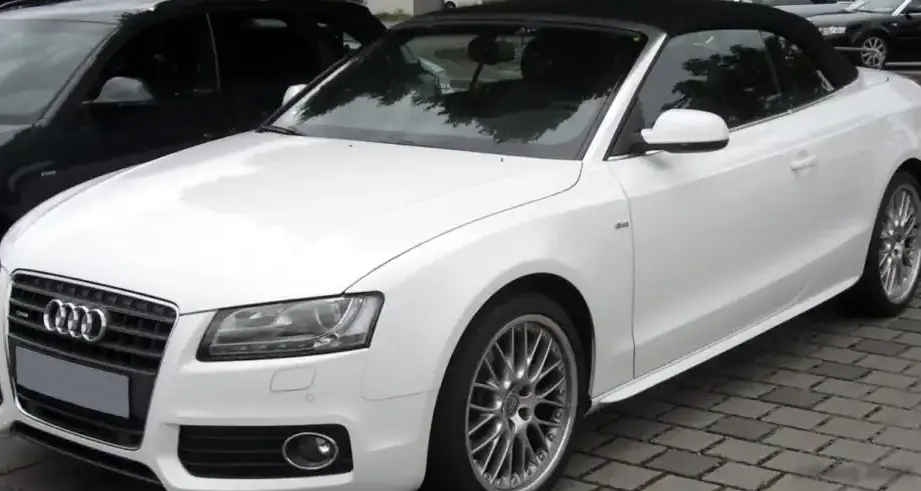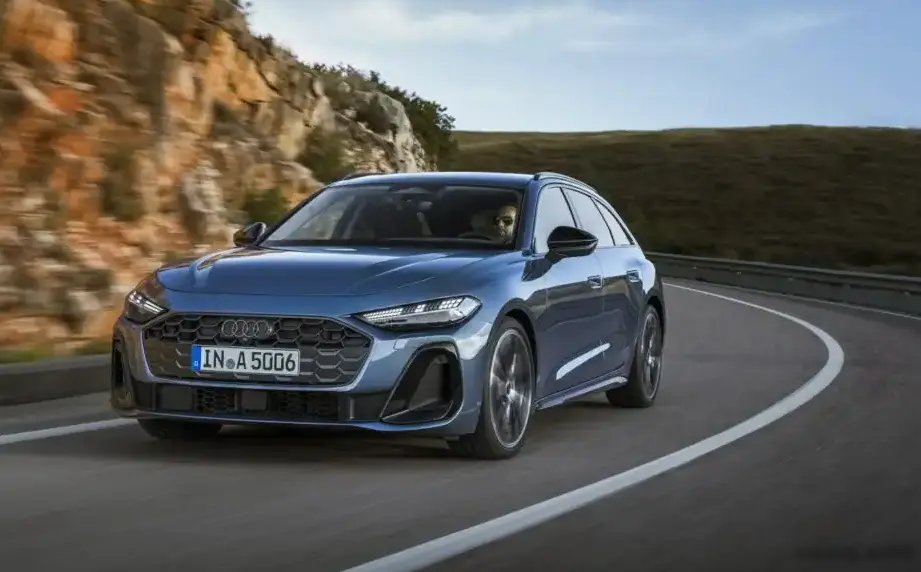
The Audi A5 Avant (B10) 2.0 TDI, introduced in July 2024, represents a significant iteration of Audi’s popular mid-size executive wagon. Positioned within the broader B10 A5 family – encompassing Coupe and Sportback body styles – the Avant (station wagon) caters to buyers prioritizing practicality and cargo space without sacrificing Audi’s signature refinement. This specific 2.0 TDI variant, producing 204 horsepower and incorporating mild hybrid technology paired with the S tronic dual-clutch transmission, occupies a central role in the A5 Avant lineup, offering a balance between performance, fuel efficiency, and cost. It builds upon the foundation of the A4 platform (MLB evo) and aims to compete with rivals like the BMW 3 Series Touring and Mercedes-Benz C-Class Estate.
Technical Specifications
| Brand | Audi |
| Model | A5 |
| Generation | A5 Avant (B10) |
| Type (Engine) | 2.0 TDI (204 Hp) Mild Hybrid plus S tronic |
| Start of production | July, 2024 |
| Powertrain Architecture | MHEV (Mild Hybrid Electric Vehicle) |
| Body type | Station wagon (estate) |
| Seats | 5 |
| Doors | 5 |
| Combined fuel consumption (WLTP) | 4.8-5.5 l/100 km (49 – 42.8 US mpg, 58.9 – 51.4 UK mpg, 20.8 – 18.2 km/l) |
| CO2 emissions (WLTP) | 127-145 g/km |
| Fuel Type | Diesel |
| Acceleration 0 – 100 km/h | 7.7 sec |
| Acceleration 0 – 62 mph | 7.7 sec |
| Acceleration 0 – 60 mph | 7.3 sec |
| Maximum speed | 240 km/h (149.13 mph) |
| Emission standard | Euro 6e |
| Weight-to-power ratio | 9 kg/Hp, 111.2 Hp/tonne |
| Weight-to-torque ratio | 4.6 kg/Nm, 218 Nm/tonne |
| Battery voltage | 48 V |
| Battery technology | Lithium iron phosphate (LiFePO4) |
| Battery location | Under the trunk |
| Recuperation output | 25 kW |
| Electric motor power | 24 Hp |
| Electric motor Torque | 230 Nm (169.64 lb.-ft.) |
| Electric motor location | Middle, Longitudinal |
| Power | 204 Hp @ 3800-4200 rpm |
| Torque | 400 Nm @ 1750-3250 rpm (295.02 lb.-ft. @ 1750-3250 rpm) |
| Engine layout | Front, Longitudinal |
| Engine Model/Code | EA288 evo |
| Engine displacement | 1968 cm3 (120.09 cu. in.) |
| Number of cylinders | 4 |
| Engine configuration | Inline |
| Cylinder Bore | 81 mm (3.19 in.) |
| Piston Stroke | 95.5 mm (3.76 in.) |
| Compression ratio | 15.5:1 |
| Number of valves per cylinder | 4 |
| Fuel injection system | Diesel Commonrail |
| Engine aspiration | Turbocharger, Intercooler |
| Valvetrain | DOHC |
| Engine oil capacity | 5.5 l (5.81 US qt | 4.84 UK qt) |
| Coolant | 18.7 l (19.76 US qt | 16.45 UK qt) |
| Kerb Weight | 1835 kg (4045.48 lbs.) |
| Max. weight | 2430 kg (5357.23 lbs.) |
| Max load | 595 kg (1311.75 lbs.) |
| Trunk (boot) space – minimum | 448 l (15.82 cu. ft.) |
| Trunk (boot) space – maximum | 1396 l (49.3 cu. ft.) |
| Fuel tank capacity | 60 l (15.85 US gal | 13.2 UK gal) |
| AdBlue tank | 20 l (5.28 US gal | 4.4 UK gal) |
| Max. roof load | 90 kg (198.42 lbs.) |
| Permitted trailer load with brakes (8%) | 1900 kg (4188.78 lbs.) |
| Permitted trailer load with brakes (12%) | 1700 kg (3747.86 lbs.) |
| Permitted trailer load without brakes | 750 kg (1653.47 lbs.) |
| Permitted towbar download | 80 kg (176.37 lbs.) |
| Length | 4829 mm (190.12 in.) |
| Width | 1860 mm (73.23 in.) |
| Width including mirrors | 2099 mm (82.64 in.) |
| Height | 1460 mm (57.48 in.) |
| Wheelbase | 2892 mm (113.86 in.) |
| Front track | 1624 mm (63.94 in.) |
| Rear (Back) track | 1611 mm (63.43 in.) |
| Front overhang | 908 mm (35.75 in.) |
| Rear overhang | 1029 mm (40.51 in.) |
| Drag coefficient (Cd) | 0.28 |
| Minimum turning circle (turning diameter) | 12.1 m (39.7 ft.) |
| Approach angle | 14.1° |
| Departure angle | 18.5° |
| Drivetrain Architecture | ICE and electric motor drive the front wheels |
| Drive wheel | Front wheel drive |
| Number of gears and type of gearbox | 7 gears, automatic transmission S tronic |
| Front suspension | Coil spring, Independent multi-link suspension, Transverse stabilizer |
| Rear suspension | Independent multi-link spring suspension with stabilizer |
| Front brakes | Ventilated discs, 323 mm |
| Rear brakes | Disc, 300 mm |
| Assisting systems | ABS (Anti-lock braking system) |
| Steering type | Steering rack and pinion |
| Power steering | Electric Steering |
| Tires size | 205/60 R17; 215/55 R17; 225/55 R17; 235/45 R18; 245/40 R19; 245/35 R20 |
| Wheel rims size | 7J x 17; 7.5J x 17; 8J x 18; 8J x 19; 8.5J x 19; 8.5J x 20 |
Powertrain & Engine Architecture
At the heart of the A5 Avant 2.0 TDI lies the EA288 evo, a 2.0-liter inline-four diesel engine. This engine benefits from significant advancements over its predecessors, including improved combustion efficiency and reduced emissions. The engine utilizes a common-rail direct injection system, delivering fuel at pressures up to 2,500 bar for optimized atomization and combustion. A single turbocharger with an intercooler provides forced induction, boosting power and torque. The DOHC (Double Overhead Camshaft) valvetrain, with four valves per cylinder, ensures efficient gas exchange. The mild hybrid system, operating at 48V, incorporates a belt-driven starter-generator (BSG) and a small lithium-ion battery. This system enables features like extended start-stop operation, regenerative braking, and a limited amount of electric assistance during acceleration. The S tronic 7-speed dual-clutch transmission delivers rapid and smooth gear changes, contributing to both performance and efficiency.
Driving Characteristics
The 204 horsepower and 400 Nm (295 lb-ft) of torque provide adequate performance for everyday driving. Acceleration from 0 to 100 km/h (0-62 mph) takes 7.7 seconds. While not overtly sporty, the engine delivers a broad torque curve, making it responsive in most driving situations. The S tronic transmission contributes to a seamless driving experience, with quick shifts and no noticeable torque interruption. Compared to higher-output versions of the A5 Avant, such as those equipped with the 3.0-liter TDI, this variant offers a more relaxed and fuel-efficient driving experience. The automatic transmission, while convenient, may not offer the same level of driver engagement as a manual gearbox.
Equipment & Trim Levels
The A5 Avant 2.0 TDI typically comes standard with features such as Audi’s MMI infotainment system with a touchscreen display, automatic climate control, LED headlights, and a suite of driver-assistance systems including lane departure warning and forward collision warning. Interior upholstery is typically cloth or a combination of cloth and leatherette. Optional extras include a fully digital instrument cluster (Audi Virtual Cockpit), a premium sound system, leather upholstery, and adaptive cruise control. Trim levels vary by market, but generally offer increasing levels of luxury and technology.
Chassis & Braking
The A5 Avant utilizes a sophisticated suspension setup designed to balance comfort and handling. The front suspension features a multi-link design with coil springs and a transverse stabilizer bar, while the rear suspension employs an independent multi-link setup with coil springs and a stabilizer bar. This configuration provides a comfortable ride while minimizing body roll during cornering. Braking duties are handled by ventilated discs at the front and solid discs at the rear. ABS (Anti-lock Braking System) is standard, along with electronic brake-force distribution and brake assist.
Market Reception & Comparison
The A5 Avant 2.0 TDI has generally been well-received by automotive critics, praised for its refined driving experience, spacious interior, and fuel efficiency. Compared to other trims in the A5 Avant lineup, this variant offers a compelling value proposition for buyers seeking a balance between performance and economy. Fuel economy figures of 4.8-5.5 l/100 km (49-42.8 US mpg) are competitive within its segment. Reliability has been generally good, although some owners have reported minor issues with the diesel particulate filter (DPF) system.
Legacy
The EA288 evo engine family has proven to be a durable and reliable powerplant, and the 2.0 TDI variant in the A5 Avant is expected to offer long-term dependability. The mild hybrid technology adds a layer of future-proofing, helping to reduce emissions and improve fuel efficiency. As the A5 Avant (B10) ages, this specific powertrain configuration is likely to remain a popular choice in the used car market, appealing to buyers seeking a practical, refined, and economical executive wagon.