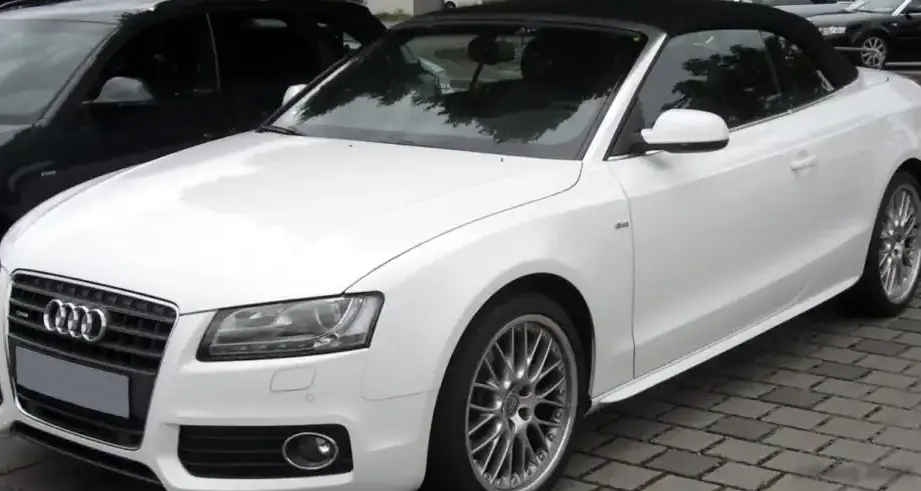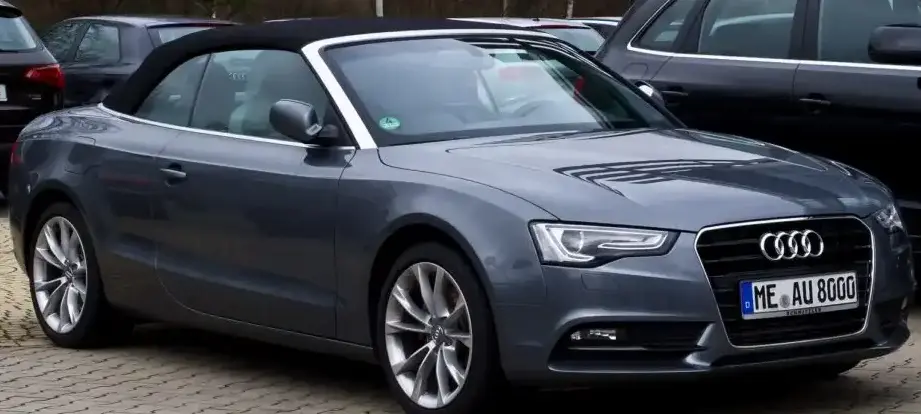
The Audi A5 Cabriolet 8F7, specifically the 2.0 TDI variant producing 150 horsepower, was a key model in Audi’s luxury convertible lineup from 2011 to 2015, following the facelift of the 8F series. Positioned as a more economical and accessible entry point into the A5 Cabriolet range, it offered a blend of style, comfort, and reasonable running costs. This model occupied a middle ground, appealing to buyers who desired the open-air experience of a convertible but weren’t necessarily seeking the higher performance of the more powerful gasoline engines or the more utilitarian focus of the higher-output diesel variants. It was primarily marketed in Europe and other regions where diesel fuel was prevalent and convertible ownership was popular.
Technical Specifications
| Brand | Audi |
| Model | A5 |
| Generation | A5 Cabriolet (8F7, facelift 2011) |
| Type (Engine) | 2.0 TDI (150 Hp) |
| Start of production | October, 2011 |
| End of production | May, 2015 |
| Powertrain Architecture | Internal Combustion engine |
| Body type | Cabriolet |
| Seats | 4 |
| Doors | 2 |
| Fuel consumption (urban) | 5.6 l/100 km (42 US mpg, 50.4 UK mpg, 17.9 km/l) |
| Fuel consumption (extra urban) | 4.2 l/100 km (56 US mpg, 67.3 UK mpg, 23.8 km/l) |
| Fuel consumption (combined) | 4.7 l/100 km (50 US mpg, 60.1 UK mpg, 21.3 km/l) |
| CO2 emissions | 124 g/km |
| Fuel Type | Diesel |
| Acceleration 0 – 100 km/h | 10.2 sec |
| Acceleration 0 – 62 mph | 10.2 sec |
| Acceleration 0 – 60 mph | 9.7 sec |
| Maximum speed | 210 km/h (130.49 mph) |
| Emission standard | Euro 5 |
| Weight-to-power ratio | 11 kg/Hp, 90.6 Hp/tonne |
| Weight-to-torque ratio | 5.2 kg/Nm, 193.4 Nm/tonne |
| Power | 150 Hp @ 4200 rpm |
| Power per litre | 76.2 Hp/l |
| Torque | 320 Nm @ 1750-2500 rpm (236.02 lb.-ft. @ 1750-2500 rpm) |
| Engine layout | Front, Longitudinal |
| Engine Model/Code | CJCD |
| Engine displacement | 1968 cm3 (120.09 cu. in.) |
| Number of cylinders | 4 |
| Engine configuration | Inline |
| Cylinder Bore | 81 mm (3.19 in.) |
| Piston Stroke | 95.5 mm (3.76 in.) |
| Compression ratio | 16.5:1 |
| Number of valves per cylinder | 4 |
| Fuel injection system | Diesel Commonrail |
| Engine aspiration | Turbocharger, Intercooler |
| Valvetrain | DOHC |
| Engine oil capacity | 5 l (5.28 US qt | 4.4 UK qt) |
| Kerb Weight | 1655 kg (3648.65 lbs.) |
| Max. weight | 2155 kg (4750.96 lbs.) |
| Max load | 500 kg (1102.31 lbs.) |
| Trunk (boot) space – minimum | 320 l (11.3 cu. ft.) |
| Trunk (boot) space – maximum | 750 l (26.49 cu. ft.) |
| Fuel tank capacity | 63 l (16.64 US gal | 13.86 UK gal) |
| Permitted trailer load with brakes (8%) | 1800 kg (3968.32 lbs.) |
| Permitted trailer load with brakes (12%) | 1600 kg (3527.4 lbs.) |
| Permitted trailer load without brakes | 750 kg (1653.47 lbs.) |
| Permitted towbar download | 80 kg (176.37 lbs.) |
| Length | 4626 mm (182.13 in.) |
| Width | 1854 mm (72.99 in.) |
| Width including mirrors | 2020 mm (79.53 in.) |
| Height | 1383 mm (54.45 in.) |
| Wheelbase | 2751 mm (108.31 in.) |
| Front track | 1590 mm (62.6 in.) |
| Rear (Back) track | 1577 mm (62.09 in.) |
| Front overhang | 861 mm (33.9 in.) |
| Rear overhang | 1014 mm (39.92 in.) |
| Drag coefficient (Cd) | 0.31 |
| Minimum turning circle (turning diameter) | 11.4 m (37.4 ft.) |
| Drivetrain Architecture | The Internal combustion engine (ICE) drives the front wheels of the vehicle. |
| Drive wheel | Front wheel drive |
| Number of gears and type of gearbox | 6 gears, manual transmission |
| Front suspension | Independent multi-link suspension |
| Rear suspension | Independent on trapezoidal lever |
| Front brakes | Ventilated discs |
| Rear brakes | Disc |
| Assisting systems | ABS (Anti-lock braking system) |
| Steering type | Steering rack and pinion |
| Power steering | Electric Steering |
| Tires size | 225/50 R17 |
| Wheel rims size | 7.5J x 17 |
Powertrain & Engine Architecture
The heart of the A5 Cabriolet 2.0 TDI was the CJCD engine, a 2.0-liter inline-four cylinder diesel engine. This engine was part of the Volkswagen Group’s modular engine family and featured common-rail direct injection, a turbocharger with an intercooler, and a double overhead camshaft (DOHC) valvetrain with four valves per cylinder. The common-rail system, operating at very high pressures, allowed for precise fuel metering and optimized combustion. The turbocharger boosted power output, providing increased torque at lower engine speeds. The engine produced 150 horsepower at 4200 rpm and 320 Nm (236 lb-ft) of torque between 1750 and 2500 rpm. The engine’s longitudinal mounting allowed for front-wheel drive configuration. The transmission was a 6-speed manual gearbox, chosen for its efficiency and driver engagement, although an automatic transmission (S tronic) was also available as an option.
Driving Characteristics
The 2.0 TDI 150 hp A5 Cabriolet offered a comfortable and refined driving experience. While not a sports car, it provided adequate performance for everyday driving and cruising. Acceleration from 0 to 62 mph (0-100 km/h) took around 10.2 seconds. The engine’s torque delivery was strong and linear, making it easy to drive in various conditions. The manual transmission, while engaging, had relatively long throws. Compared to the more powerful 2.0 TFSI gasoline variants, the TDI offered significantly better fuel economy but lacked the same level of outright acceleration. Compared to the higher-output TDI models (like the 190 hp version), the 150 hp version felt less strained during highway overtaking and offered a more relaxed driving experience. The front-wheel-drive configuration provided good traction in most conditions, but could exhibit some torque steer under hard acceleration.
Equipment & Trim Levels
The A5 Cabriolet 2.0 TDI typically came with a generous level of standard equipment. This included features like automatic climate control, a multi-function steering wheel, an infotainment system with a color display, and electric windows and mirrors. Upholstery was typically cloth, but leather options were available. Common optional extras included navigation system, parking sensors, upgraded sound system, and sport seats. Trim levels varied by market, but generally offered progressively more luxurious features and styling enhancements. The SE trim was a popular choice, offering a good balance of equipment and value.
Chassis & Braking
The A5 Cabriolet featured a sophisticated chassis designed to provide a comfortable ride and precise handling. The front suspension utilized an independent multi-link setup, while the rear suspension employed an independent trapezoidal link design. This configuration minimized body roll and provided good wheel control. The braking system consisted of ventilated discs at the front and solid discs at the rear, coupled with ABS (Anti-lock Braking System). The steering was a rack-and-pinion system with electric power assistance, providing a light and responsive feel.
Market Reception & Comparison
The Audi A5 Cabriolet 2.0 TDI was generally well-received by automotive critics. It was praised for its stylish design, comfortable interior, and fuel-efficient engine. However, some critics noted that the 150 hp engine could feel underpowered, especially when the car was fully loaded or driving uphill. Compared to its rivals, such as the BMW 3 Series Convertible and Mercedes-Benz C-Class Cabriolet, the A5 offered a compelling combination of value, style, and practicality. Its fuel economy was particularly competitive, making it an attractive option for drivers who prioritized running costs.
Legacy
The CJCD engine, found in the A5 Cabriolet 2.0 TDI, has proven to be a relatively reliable powertrain. While diesel engines are generally more complex than gasoline engines, the CJCD has a good reputation for durability, provided it is properly maintained. Common issues include diesel particulate filter (DPF) clogging, particularly on vehicles that primarily do short trips, and potential problems with the turbocharger. In the used car market, the A5 Cabriolet 2.0 TDI remains a popular choice, offering a stylish and affordable way to enjoy open-top motoring. Its fuel efficiency and relatively low maintenance costs make it an attractive option for buyers seeking a practical and enjoyable convertible.