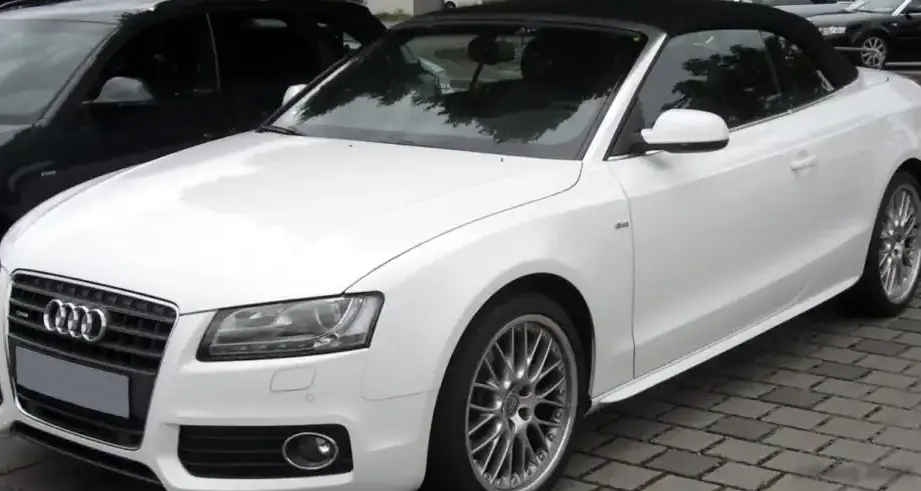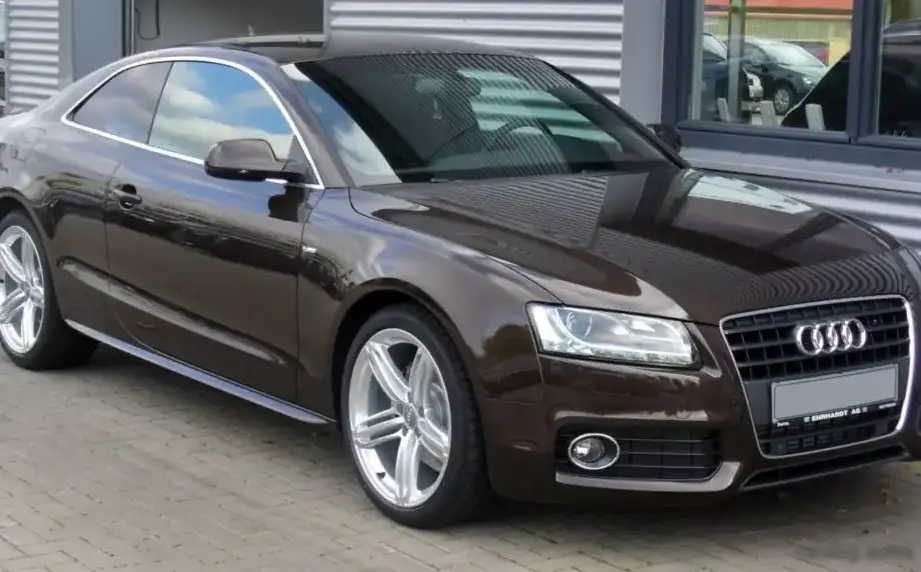
The Audi A5 Coupe (8T3) 2.7 TDI V6, produced from July 2007 to 2011, represents a compelling blend of performance and efficiency within the A5 model range. Positioned as a mid-range offering, it slotted between the entry-level 1.8 TFSI and the higher-performance 3.0 TDI variants. This variant was primarily aimed at European markets, where diesel engines held significant popularity due to their fuel economy and torque characteristics. The A5 Coupe itself was the two-door coupe derivative of the B8 Audi A4 platform, sharing its core mechanicals but offering a more stylish and sporty aesthetic.
Technical Specifications
| Brand | Audi |
| Model | A5 |
| Generation | A5 Coupe (8T3) |
| Type (Engine) | 2.7 TDI V6 (190 Hp) |
| Start of production | July, 2007 |
| End of production | 2011 |
| Powertrain Architecture | Internal Combustion engine |
| Body type | Coupe |
| Seats | 4 |
| Doors | 2 |
| Fuel consumption (urban) | 8.1 l/100 km (29 US mpg, 34.9 UK mpg, 12.3 km/l) |
| Fuel consumption (extra urban) | 4.8 l/100 km (49 US mpg, 58.9 UK mpg, 20.8 km/l) |
| Fuel consumption (combined) | 6 l/100 km (39.2 US mpg, 47.1 UK mpg, 16.7 km/l) |
| CO2 emissions | 159 g/km |
| Fuel Type | Diesel |
| Acceleration 0 – 100 km/h | 7.9 sec |
| Acceleration 0 – 62 mph | 7.9 sec |
| Acceleration 0 – 60 mph | 7.5 sec |
| Maximum speed | 239 km/h (148.51 mph) |
| Emission standard | Euro 5 |
| Weight-to-power ratio | 8.2 kg/Hp, 122.6 Hp/tonne |
| Weight-to-torque ratio | 3.9 kg/Nm, 258.1 Nm/tonne |
| Power | 190 Hp @ 3500-4400 rpm |
| Power per litre | 70.4 Hp/l |
| Torque | 400 Nm @ 1400-3250 rpm (295.02 lb.-ft. @ 1400-3250 rpm) |
| Engine layout | Front, Longitudinal |
| Engine Model/Code | CAMA, CGKA |
| Engine displacement | 2698 cm3 (164.64 cu. in.) |
| Number of cylinders | 6 |
| Engine configuration | V-engine |
| Cylinder Bore | 83 mm (3.27 in.) |
| Piston Stroke | 83.1 mm (3.27 in.) |
| Compression ratio | 16.8:1 |
| Number of valves per cylinder | 4 |
| Fuel injection system | Diesel Commonrail |
| Engine aspiration | Turbocharger, Intercooler |
| Valvetrain | DOHC |
| Engine oil capacity | 6.9 l (7.29 US qt | 6.07 UK qt) |
| Kerb Weight | 1550 kg (3417.17 lbs.) |
| Max. weight | 2050 kg (4519.48 lbs.) |
| Max load | 500 kg (1102.31 lbs.) |
| Trunk (boot) space – minimum | 455 l (16.07 cu. ft.) |
| Trunk (boot) space – maximum | 829 l (29.28 cu. ft.) |
| Fuel tank capacity | 65 l (17.17 US gal | 14.3 UK gal) |
| Max. roof load | 75 kg (165.35 lbs.) |
| Permitted trailer load with brakes (8%) | 1800 kg (3968.32 lbs.) |
| Permitted trailer load with brakes (12%) | 1600 kg (3527.4 lbs.) |
| Permitted trailer load without brakes | 750 kg (1653.47 lbs.) |
| Permitted towbar download | 80 kg (176.37 lbs.) |
| Length | 4625 mm (182.09 in.) |
| Width | 1854 mm (72.99 in.) |
| Height | 1372 mm (54.02 in.) |
| Wheelbase | 2751 mm (108.31 in.) |
| Front track | 1590 mm (62.6 in.) |
| Rear (Back) track | 1577 mm (62.09 in.) |
| Drag coefficient (Cd) | 0.30 |
| Minimum turning circle (turning diameter) | 11.4 m (37.4 ft.) |
| Drivetrain Architecture | The Internal combustion engine (ICE) drives the front wheels of the vehicle. |
| Drive wheel | Front wheel drive |
| Number of gears and type of gearbox | 6 gears, manual transmission |
| Front suspension | Independent multi-link suspension |
| Rear suspension | Independent multi-link spring suspension with stabilizer |
| Front brakes | Ventilated discs |
| Rear brakes | Disc |
| Assisting systems | ABS (Anti-lock braking system) |
| Steering type | Steering rack and pinion |
| Power steering | Electric Steering |
| Tires size | 225/50 R17 |
| Wheel rims size | 7.5J x 17 |
Powertrain & Engine Architecture
The heart of this A5 variant is the 2.7-liter V6 TDI engine, identified by engine codes CAMA or CGKA. This engine is a longitudinally mounted, turbocharged diesel featuring common rail direct injection. The common rail system, operating at extremely high pressures, allows for precise fuel metering and optimized combustion. The engine utilizes a double overhead camshaft (DOHC) valvetrain with four valves per cylinder, enhancing volumetric efficiency. The turbocharger, coupled with an intercooler, forces more air into the cylinders, boosting power output. The 2.7 TDI is known for its relatively smooth operation compared to some earlier diesel engines, thanks to careful attention to noise, vibration, and harshness (NVH) characteristics. The engine’s particulate filter helps to reduce harmful emissions, meeting Euro 5 standards. The 6-speed manual transmission was standard, providing a balance between fuel efficiency and driver engagement.
Driving Characteristics
The 190 horsepower and 400 Nm (295 lb-ft) of torque delivered by the 2.7 TDI provided a comfortable and capable driving experience. Acceleration from 0-60 mph took around 7.5 to 7.9 seconds, making it noticeably quicker than the base 1.8 TFSI models. The broad torque curve meant strong pulling power was available from low engine speeds, making it well-suited for highway cruising and overtaking. Compared to the more powerful 3.0 TDI, the 2.7 TDI offered a more economical option without sacrificing a significant amount of performance. The manual transmission, while engaging, had gear ratios geared towards fuel efficiency rather than outright acceleration. The front-wheel-drive configuration provided predictable handling, but could exhibit some torque steer under hard acceleration.
Equipment & Trim Levels
The 2.7 TDI typically came equipped with a respectable level of standard features. This included automatic climate control, alloy wheels, a multi-function steering wheel, and an Audi Concert audio system. Interior upholstery was generally cloth, with leather options available as an upgrade. Optional extras included a sunroof, navigation system, parking sensors, and upgraded sound systems. Trim levels varied slightly depending on the market, but generally followed a progressive structure with increasing levels of luxury and technology.
Chassis & Braking
The A5 Coupe utilized an independent multi-link suspension system at both the front and rear axles, providing a comfortable ride and good handling characteristics. The front suspension featured stabilizer bars to reduce body roll during cornering. Braking duties were handled by ventilated discs at the front and solid discs at the rear, equipped with ABS (Anti-lock Braking System) as standard. The chassis was designed to provide a balance between rigidity and weight reduction, contributing to the car’s overall dynamic performance.
Market Reception & Comparison
The Audi A5 Coupe 2.7 TDI V6 was generally well-received by automotive critics. It was praised for its stylish design, comfortable interior, and refined driving experience. The diesel engine was lauded for its fuel efficiency and strong torque output. Compared to the 1.8 TFSI, the 2.7 TDI offered significantly more performance, while remaining more economical than the 3.0 TDI. However, some critics noted that the front-wheel-drive configuration limited its handling potential compared to quattro all-wheel-drive models. Fuel economy figures consistently hovered around 39-47 mpg (UK), making it an attractive option for drivers covering long distances.
Legacy
The 2.7 TDI engine, in various iterations, proved to be a relatively reliable powertrain. However, like all diesel engines, it is susceptible to issues related to the diesel particulate filter (DPF) and the fuel injection system, particularly if not properly maintained. Regular oil changes and the use of high-quality diesel fuel are crucial for long-term reliability. Today, well-maintained examples of the A5 Coupe 2.7 TDI V6 can be found on the used car market at reasonable prices, offering a stylish and economical grand tourer. The engine’s robust construction and readily available parts contribute to its continued appeal among enthusiasts.