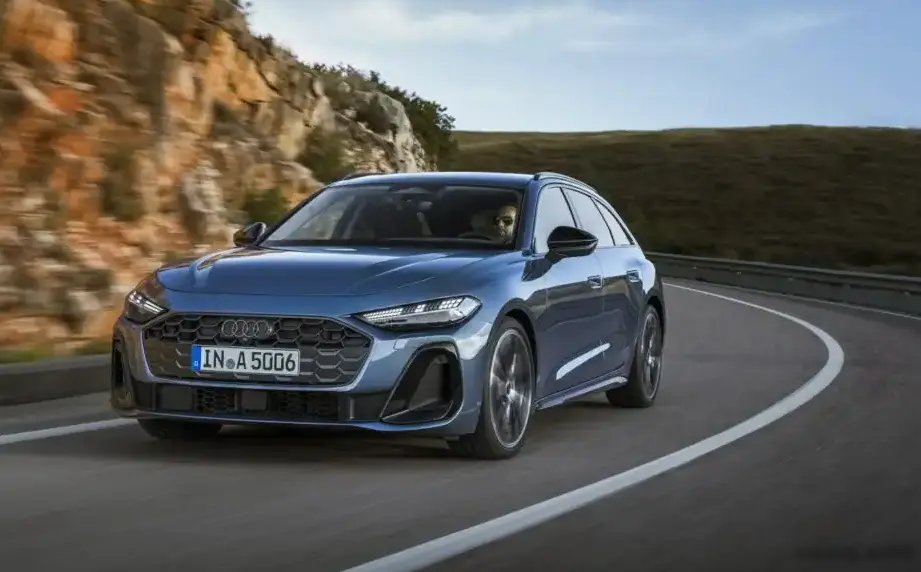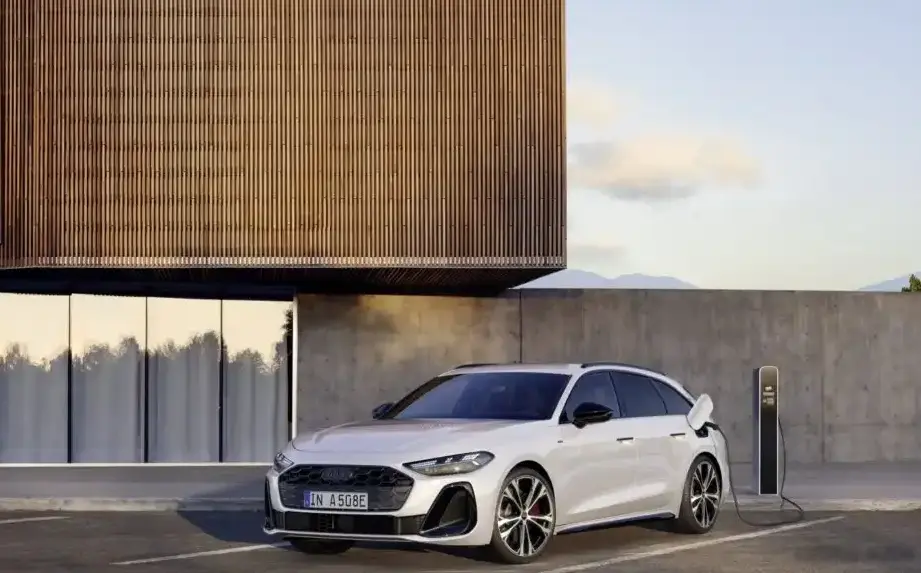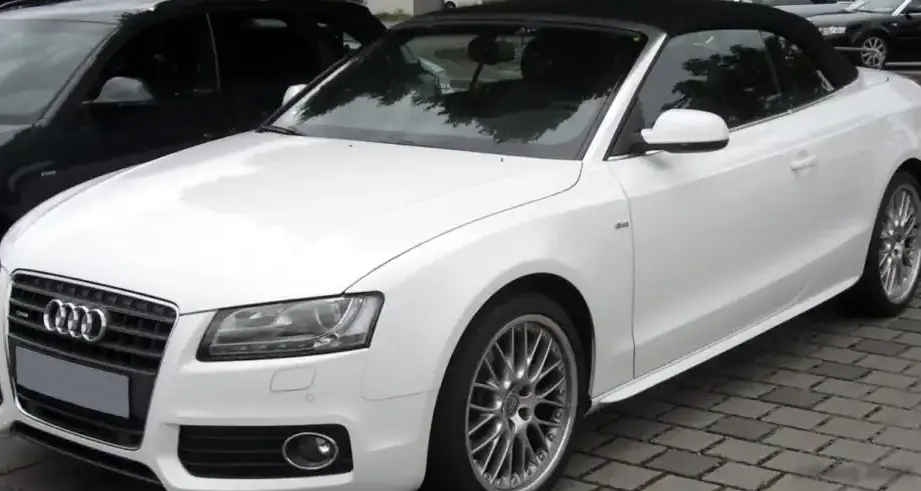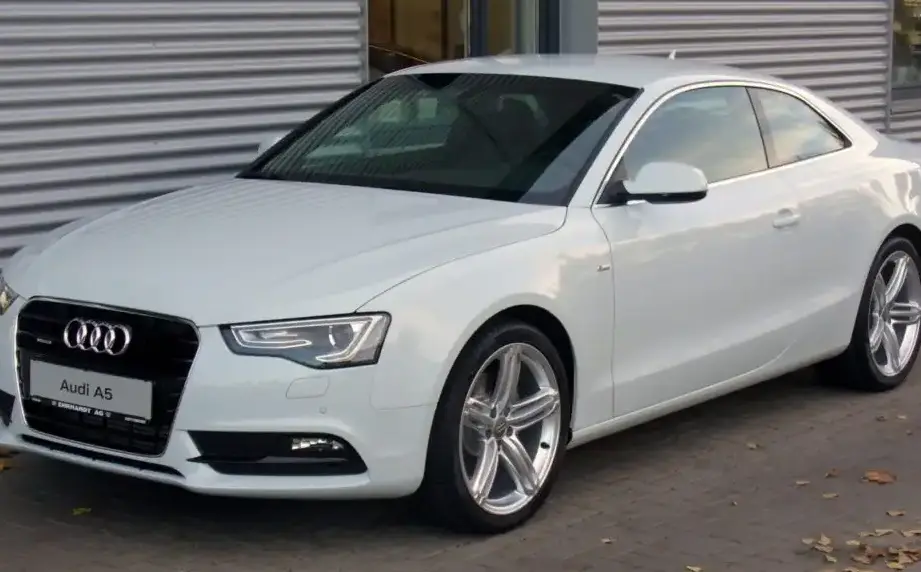
The Audi A5 Coupe (8T3), particularly the facelifted version introduced in 2011, represented a significant evolution in Audi’s design language and engineering prowess. Production of the 2.0 TFSI (225 Hp) Multitronic variant spanned from April 2013 to 2016, positioning it as a compelling mid-range offering within the A5 lineup. This model sat between the entry-level 1.8 TFSI and the performance-oriented S5, appealing to buyers seeking a balance of style, efficiency, and respectable power. The A5 Coupe, built on the Audi’s versatile A4 (B8) platform – internally designated 8T3 – aimed to deliver a more emotionally resonant driving experience than its sedan sibling, emphasizing a sporty aesthetic and refined interior.
Technical Specifications
| Brand | Audi |
| Model | A5 |
| Generation | A5 Coupe (8T3, facelift 2011) |
| Type (Engine) | 2.0 TFSI (225 Hp) Multitronic |
| Start of production | April, 2013 |
| End of production | 2016 |
| Powertrain Architecture | Internal Combustion engine |
| Body type | Coupe |
| Seats | 4 |
| Doors | 2 |
| Fuel consumption (urban) | 7.4-7.9 l/100 km (31.8 – 29.8 US mpg, 38.2 – 35.8 UK mpg, 13.5 – 12.7 km/l) |
| Fuel consumption (extra urban) | 5-5.6 l/100 km (47 – 42 US mpg, 56.5 – 50.4 UK mpg, 20 – 17.9 km/l) |
| Fuel consumption (combined) | 5.9-6.4 l/100 km (39.9 – 36.8 US mpg, 47.9 – 44.1 UK mpg, 16.9 – 15.6 km/l) |
| CO2 emissions | 136-149 g/km |
| Fuel Type | Petrol (Gasoline) |
| Acceleration 0 – 100 km/h | 6.9 sec |
| Acceleration 0 – 62 mph | 6.9 sec |
| Acceleration 0 – 60 mph | 6.6 sec |
| Maximum speed | 242 km/h (150.37 mph) |
| Emission standard | Euro 6 |
| Weight-to-power ratio | 6.6 kg/Hp, 152.5 Hp/tonne |
| Weight-to-torque ratio | 4.2 kg/Nm, 237.3 Nm/tonne |
| Power | 225 Hp @ 4500-6250 rpm |
| Power per litre | 113.4 Hp/l |
| Torque | 350 Nm @ 1500-4500 rpm (258.15 lb.-ft. @ 1500-4500 rpm) |
| Engine layout | Front, Longitudinal |
| Engine Model/Code | EA888 / CNCD |
| Engine displacement | 1984 cm3 (121.07 cu. in.) |
| Number of cylinders | 4 |
| Engine configuration | Inline |
| Cylinder Bore | 82.5 mm (3.25 in.) |
| Piston Stroke | 92.8 mm (3.65 in.) |
| Compression ratio | 9.6:1 |
| Number of valves per cylinder | 4 |
| Fuel injection system | Direct injection and Multi-port manifold injection |
| Engine aspiration | Turbocharger, Intercooler |
| Valvetrain | DOHC |
| Engine oil capacity | 4.6 l (4.86 US qt | 4.05 UK qt) |
| Kerb Weight | 1475 kg (3251.82 lbs.) |
| Max. weight | 1975 kg (4354.13 lbs.) |
| Max load | 500 kg (1102.31 lbs.) |
| Trunk (boot) space – minimum | 455 l (16.07 cu. ft.) |
| Trunk (boot) space – maximum | 829 l (29.28 cu. ft.) |
| Fuel tank capacity | 63 l (16.64 US gal | 13.86 UK gal) |
| Max. roof load | 75 kg (165.35 lbs.) |
| Permitted trailer load with brakes (8%) | 1700 kg (3747.86 lbs.) |
| Permitted trailer load with brakes (12%) | 1500 kg (3306.93 lbs.) |
| Permitted trailer load without brakes | 750 kg (1653.47 lbs.) |
| Permitted towbar download | 80 kg (176.37 lbs.) |
| Length | 4626 mm (182.13 in.) |
| Width | 1854 mm (72.99 in.) |
| Width including mirrors | 2020 mm (79.53 in.) |
| Height | 1372 mm (54.02 in.) |
| Wheelbase | 2751 mm (108.31 in.) |
| Front track | 1590 mm (62.6 in.) |
| Rear (Back) track | 1577 mm (62.09 in.) |
| Front overhang | 861 mm (33.9 in.) |
| Rear overhang | 1014 mm (39.92 in.) |
| Minimum turning circle (turning diameter) | 11.4 m (37.4 ft.) |
| Drivetrain Architecture | The Internal combustion engine (ICE) drives the front wheels of the vehicle. |
| Drive wheel | Front wheel drive |
| Number of gears and type of gearbox | automatic transmission Multitronic |
| Front suspension | Independent multi-link suspension, Transverse stabilizer |
| Rear suspension | Independent on trapezoidal lever, Transverse stabilizer |
| Front brakes | Ventilated discs |
| Rear brakes | Disc |
| Assisting systems | ABS (Anti-lock braking system) |
| Steering type | Steering rack and pinion |
| Power steering | Electric Steering |
| Tires size | 225/50 R17; 245/40 R18; 255/35 R19 |
| Wheel rims size | 7.5J x 17; 8.5J x 18; 8.5J x 19; 9J x 19 |
Powertrain & Engine Architecture
At the heart of the A5 2.0 TFSI Multitronic lies the EA888 engine, specifically the CNCD variant. This 1984cc, turbocharged inline-four engine utilizes direct fuel injection combined with multi-port manifold injection, optimizing both power delivery and fuel efficiency. The engine’s turbocharger, coupled with an intercooler, provides a significant boost in power output. The 225 horsepower peak is achieved between 4500 and 6250 rpm, while the 350 Nm (258 lb-ft) of torque is readily available from a low 1500 rpm, sustaining through to 4500 rpm. This broad torque curve contributes to strong in-gear acceleration. The engine features a double overhead camshaft (DOHC) valvetrain with four valves per cylinder, enhancing breathing and overall performance. The Multitronic transmission, a continuously variable transmission (CVT), was Audi’s proprietary offering, designed to provide seamless gear changes and optimized fuel economy. It differs from traditional stepped automatic transmissions by using a chain and pulley system to provide an infinite number of gear ratios within its operating range.
Driving Characteristics
The 2.0 TFSI Multitronic A5 Coupe delivers a refined and comfortable driving experience. While not as overtly sporty as the S5, the 225 hp engine provides ample power for everyday driving and confident highway passing. The Multitronic transmission, while smooth, can sometimes feel less engaging than a traditional automatic or manual gearbox. The CVT’s programming prioritizes fuel efficiency, which can result in a slightly delayed response when demanding immediate acceleration. However, utilizing the transmission’s manual shift mode allows for more control over the engine’s powerband. Compared to the 1.8 TFSI, the 2.0 TFSI offers a noticeable increase in performance, while remaining more accessible and fuel-efficient than the higher-performance S5 models. The front-wheel-drive configuration provides predictable handling, although it can exhibit some torque steer under hard acceleration.
Equipment & Trim Levels
The 2.0 TFSI Multitronic A5 Coupe typically came well-equipped as standard. Features included automatic climate control, a multi-function steering wheel, power-adjustable front seats, and an Audi Concert audio system. Optional extras were plentiful, allowing buyers to personalize their vehicles. Popular options included the S line package (which added sportier styling cues and suspension tuning), a panoramic sunroof, leather upholstery, navigation system, and advanced driver-assistance systems like parking sensors and adaptive cruise control. Interior trim levels varied, with options ranging from cloth to premium leather, and dashboard inlays available in aluminum, wood, or carbon fiber.
Chassis & Braking
The A5 Coupe’s chassis features an independent multi-link suspension at the front and an independent trapezoidal lever suspension at the rear, providing a comfortable ride and responsive handling. A transverse stabilizer bar is fitted to both axles to reduce body roll during cornering. Braking duties are handled by ventilated discs at the front and solid discs at the rear, providing adequate stopping power for the vehicle’s weight and performance. Anti-lock braking system (ABS) is standard, enhancing safety and control during emergency braking situations. The steering system utilizes a rack-and-pinion setup with electric power assistance, offering precise and responsive steering feel.
Market Reception & Comparison
The Audi A5 Coupe 2.0 TFSI Multitronic was generally well-received by automotive critics. It was praised for its stylish design, refined interior, and comfortable ride. The Multitronic transmission received mixed reviews, with some appreciating its smoothness and efficiency, while others found it lacking in engagement. Compared to rivals like the BMW 3 Series Coupe and Mercedes-Benz C-Class Coupe, the A5 offered a compelling blend of style, technology, and value. Fuel economy figures of 5.9-6.4 l/100 km (39.9-36.8 US mpg) were competitive for its class. Reliability reports suggest that the EA888 engine is generally robust, although the Multitronic transmission can be prone to issues if not properly maintained.
Legacy
The Audi A5 Coupe (8T3) 2.0 TFSI Multitronic remains a popular choice in the used car market. The EA888 engine has proven to be relatively durable, and parts availability is good. However, potential buyers should be aware of the potential for issues with the Multitronic transmission, and a thorough inspection by a qualified mechanic is recommended before purchase. Regular maintenance, including fluid changes, is crucial for ensuring the longevity of the transmission. The A5 Coupe’s timeless design and refined driving experience continue to appeal to buyers seeking a stylish and comfortable grand tourer.