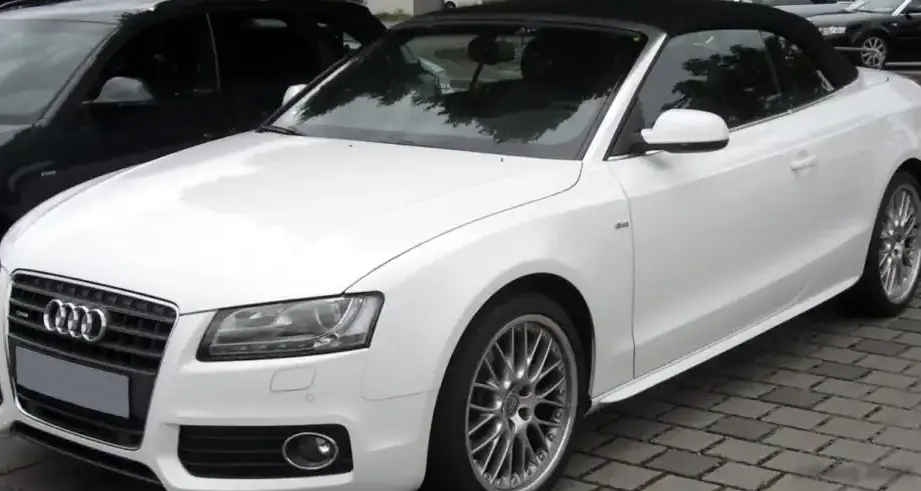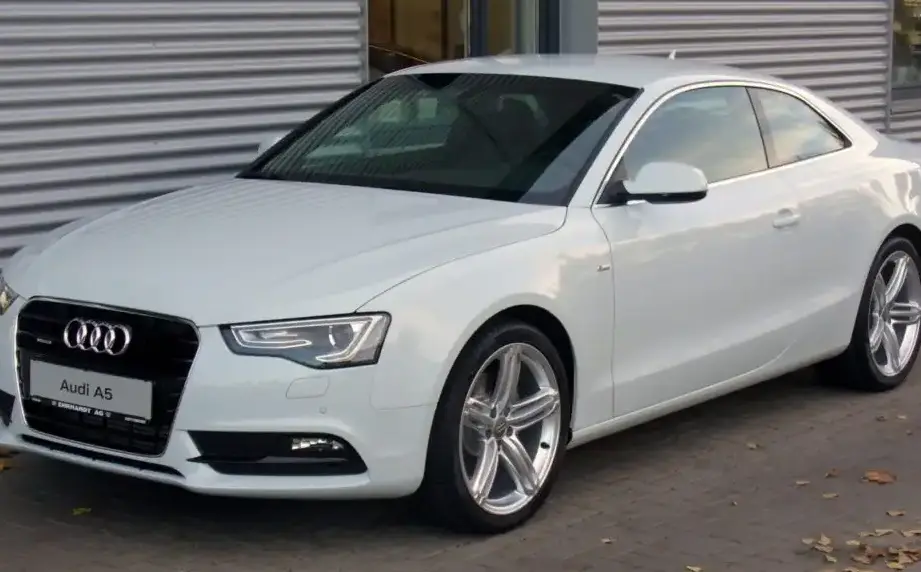
The Audi A5 Coupe (8T3), particularly the facelifted version introduced in 2011, represented a significant evolution in Audi’s design language and engineering prowess. Production of the 2.0 TFSI quattro variant, producing 225 horsepower, spanned from April 2013 to 2016. This model occupied a key position within the A5 lineup, offering a balance between performance, luxury, and all-weather capability. It was positioned as a step up from the base 1.8 TFSI models, while remaining more accessible than the high-performance S5 variants. The A5 Coupe, built on the Audi’s modular MLB platform (shared with the A4), aimed to compete directly with BMW’s 3 Series Coupe and the Mercedes-Benz C-Class Coupe.
Technical Specifications
| Brand | Audi |
| Model | A5 |
| Generation | A5 Coupe (8T3, facelift 2011) |
| Type (Engine) | 2.0 TFSI (225 Hp) quattro |
| Start of production | April, 2013 |
| End of production | 2016 |
| Powertrain Architecture | Internal Combustion engine |
| Body type | Coupe |
| Seats | 4 |
| Doors | 2 |
| Fuel consumption (urban) | 8.6-9.2 l/100 km (27.4 – 25.6 US mpg) |
| Fuel consumption (extra urban) | 5.2-5.8 l/100 km (45.2 – 40.6 US mpg) |
| Fuel consumption (combined) | 6.4-7 l/100 km (36.8 – 33.6 US mpg) |
| CO2 emissions | 149-161 g/km |
| Fuel Type | Petrol (Gasoline) |
| Acceleration 0 – 100 km/h | 6.4 sec |
| Acceleration 0 – 62 mph | 6.4 sec |
| Acceleration 0 – 60 mph | 6.1 sec |
| Maximum speed | 250 km/h (155.34 mph) |
| Emission standard | Euro 6 |
| Weight-to-power ratio | 6.7 kg/Hp |
| Weight-to-torque ratio | 4.3 kg/Nm |
| Power | 225 Hp @ 4500-6250 rpm |
| Torque | 350 Nm @ 1500-4500 rpm (258.15 lb.-ft. @ 1500-4500 rpm) |
| Engine layout | Front, Longitudinal |
| Engine Model/Code | EA888 / CNCD |
| Engine displacement | 1984 cm3 (121.07 cu. in.) |
| Number of cylinders | 4 |
| Engine configuration | Inline |
| Cylinder Bore | 82.5 mm (3.25 in.) |
| Piston Stroke | 92.8 mm (3.65 in.) |
| Compression ratio | 9.6:1 |
| Number of valves per cylinder | 4 |
| Fuel injection system | Direct injection and Multi-port manifold injection |
| Engine aspiration | Turbocharger, Intercooler |
| Valvetrain | DOHC |
| Engine oil capacity | 4.6 l (4.86 US qt | 4.05 UK qt) |
| Kerb Weight | 1510 kg (3328.98 lbs.) |
| Max. weight | 2010 kg (4431.29 lbs.) |
| Max load | 500 kg (1102.31 lbs.) |
| Trunk (boot) space – minimum | 455 l (16.07 cu. ft.) |
| Trunk (boot) space – maximum | 829 l (29.28 cu. ft.) |
| Fuel tank capacity | 61 l (16.11 US gal | 13.42 UK gal) |
| Length | 4626 mm (182.13 in.) |
| Width | 1854 mm (72.99 in.) |
| Height | 1372 mm (54.02 in.) |
| Wheelbase | 2751 mm (108.31 in.) |
| Front track | 1590 mm (62.6 in.) |
| Rear track | 1577 mm (62.09 in.) |
| Drivetrain Architecture | All wheel drive (4×4) |
| Number of gears | 6 |
| Type of gearbox | Manual transmission |
Powertrain & Engine Architecture
At the heart of the A5 2.0 TFSI quattro lies the EA888 engine, specifically the CNCD variant. This 1.984-liter (121.07 cubic inches) inline-four cylinder engine utilizes direct fuel injection combined with multi-port manifold injection, a configuration designed to optimize both power and efficiency. The engine is turbocharged, with an intercooler to reduce intake air temperature and further enhance performance. The DOHC (Dual Overhead Camshaft) valvetrain, with four valves per cylinder, contributes to the engine’s responsive nature. The 225 horsepower output is achieved at 4500-6250 rpm, while the peak torque of 350 Nm (258.15 lb-ft) is available from a low 1500 rpm, providing strong acceleration in everyday driving situations. The engine is longitudinally mounted, directing power to Audi’s quattro all-wheel-drive system via a six-speed manual transmission.
Driving Characteristics
The 2.0 TFSI quattro offered a compelling driving experience. While not as overtly sporty as the S5, the 225 hp engine provided ample power for confident overtaking and enjoyable cruising. The quattro system ensured excellent traction in all weather conditions, making it a practical choice for drivers in regions with inclement weather. The six-speed manual transmission offered precise shifts and allowed drivers to fully engage with the engine’s power delivery. Compared to the 1.8 TFSI models, the 2.0 TFSI provided a noticeable increase in performance, with a quicker 0-60 mph time of around 6.1 seconds. However, it didn’t quite match the responsiveness of the higher-output 2.0 TFSI variants or the significantly more powerful S5 models. The gear ratios were tuned for a balance between acceleration and fuel economy, prioritizing usability over outright performance.
Equipment & Trim Levels
The A5 2.0 TFSI quattro typically came well-equipped, reflecting Audi’s reputation for interior quality and technology. Standard features included leather upholstery, three-zone automatic climate control, a multi-function steering wheel, and Audi’s MMI infotainment system with a central display screen. Optional extras included navigation, a premium sound system (often Bang & Olufsen), sport seats, and various driver-assistance systems such as parking sensors and adaptive cruise control. Trim levels varied slightly depending on the market, but generally offered packages that bundled popular options together. The interior design was characterized by its clean lines, high-quality materials, and user-friendly layout.
Chassis & Braking
The A5 Coupe’s chassis was designed to provide a comfortable yet engaging driving experience. The front suspension utilized an independent multi-link setup with a transverse stabilizer bar, while the rear suspension employed an independent trapezoidal lever design, also with a stabilizer bar. This configuration minimized body roll and provided precise handling. Braking duties were handled by ventilated discs at the front and solid discs at the rear. ABS (Anti-lock Braking System) was standard, ensuring safe and controlled stopping power. The steering system was an electric power steering rack and pinion, offering a balance between assistance and feedback.
Market Reception & Comparison
The Audi A5 Coupe 2.0 TFSI quattro was generally well-received by automotive critics. It was praised for its stylish design, refined interior, and capable performance. The quattro all-wheel-drive system was a significant selling point, particularly in markets with challenging weather conditions. Fuel economy was considered respectable for a performance coupe, with combined figures ranging from 33.6 to 36.8 US mpg. Compared to the 1.8 TFSI models, the 2.0 TFSI offered a worthwhile performance upgrade, while remaining more affordable than the S5. However, some critics noted that the ride could be slightly firm on rough roads, and the manual transmission, while precise, required a bit more effort than some of its competitors.
Legacy
The EA888 engine, in its various iterations, has proven to be a remarkably durable and reliable powerplant. The 2.0 TFSI quattro variant in the A5 Coupe is generally considered to be a robust and long-lasting combination. Proper maintenance, including regular oil changes and timely replacement of wear items, is crucial for ensuring its longevity. On the used car market, these A5 Coupes hold their value reasonably well, particularly those with lower mileage and a well-documented service history. The combination of Audi’s build quality, the engine’s inherent reliability, and the appeal of the quattro system continue to make this variant a desirable choice for buyers seeking a stylish and capable coupe.