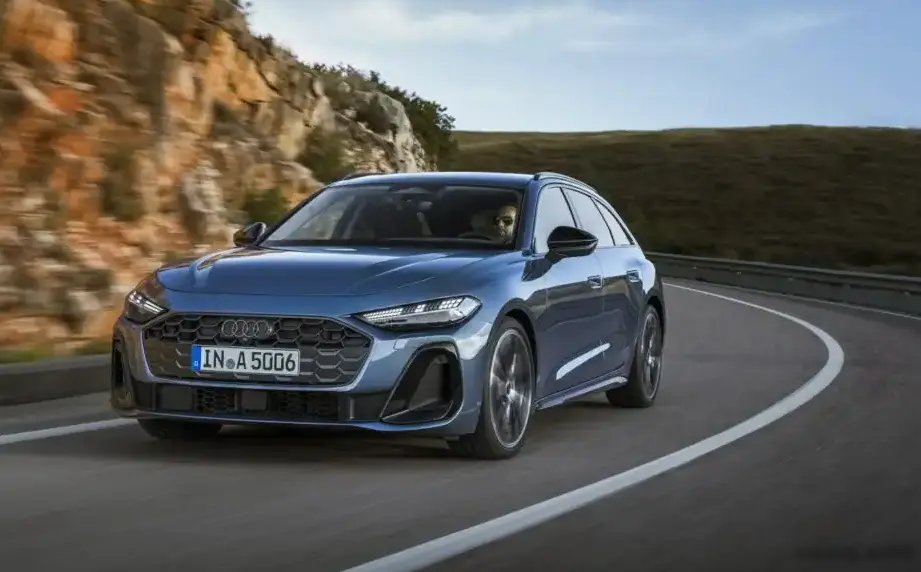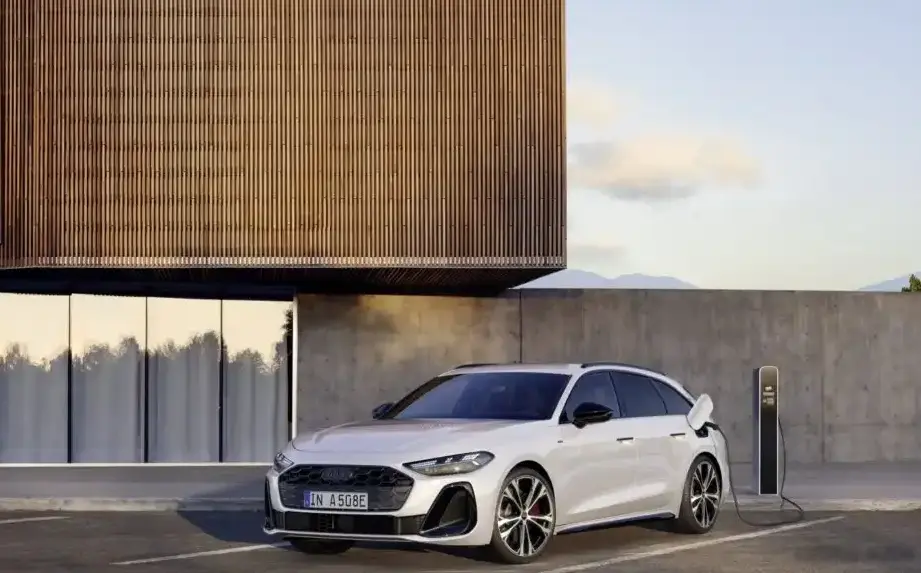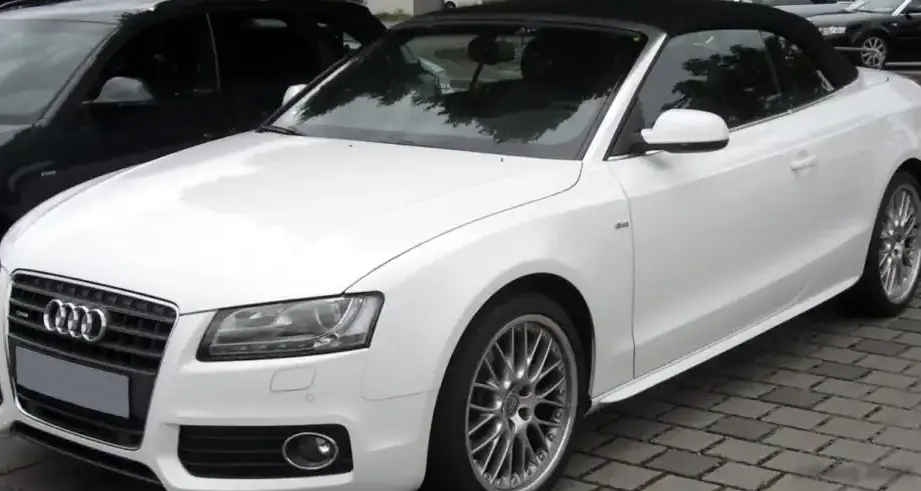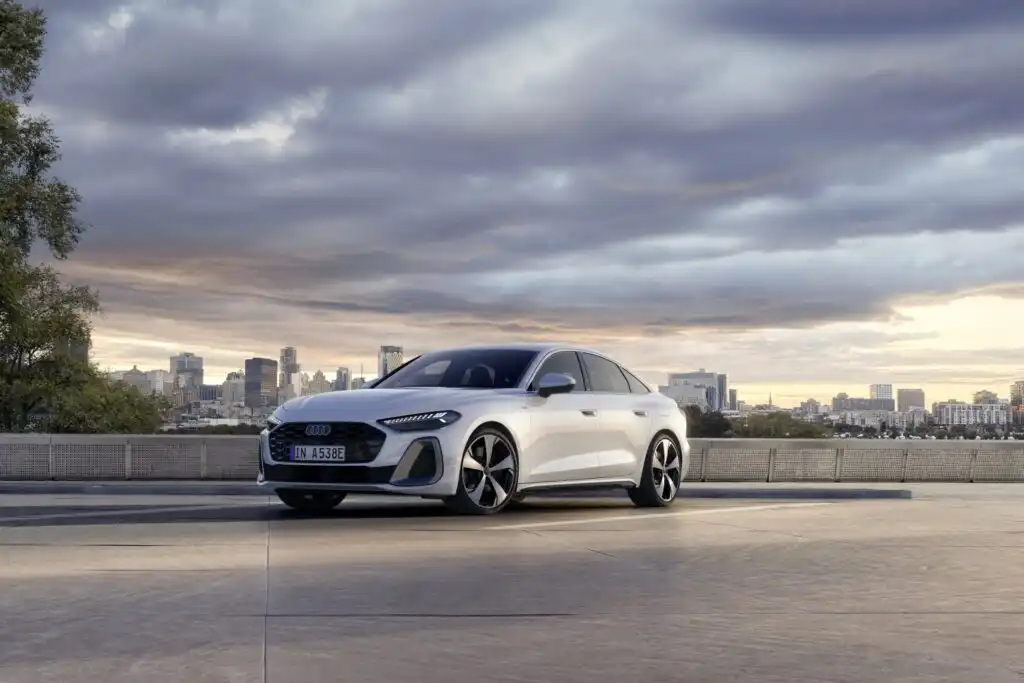
The Audi A5 Sedan (B10) 2.0 TFSI e-hybrid quattro ultra S tronic represents a significant step in Audi’s commitment to plug-in hybrid technology, launched in March 2025. Positioned as a premium offering within the A5 Sedan range, this variant combines a 2.0-liter turbocharged four-cylinder gasoline engine with an electric motor and a substantial battery pack, delivering both enhanced performance and improved fuel efficiency. It builds upon the foundation of the B10 A5 platform, which debuted in 2016, offering a blend of sporty handling and sophisticated technology. This model is designed to appeal to buyers seeking a luxurious and environmentally conscious vehicle without compromising on driving dynamics.
Technical Specifications
| Brand | Audi |
| Model | A5 |
| Generation | A5 Sedan (B10) |
| Type (Engine) | 2.0 TFSI (299 Hp) e-hybrid quattro ultra S tronic |
| Start of production | March, 2025 |
| Powertrain Architecture | PHEV (Plug-in Hybrid Electric Vehicle) |
| Body type | Liftback |
| Seats | 5 |
| Doors | 5 |
| Combined fuel consumption (WLTP) | 2-7.3 l/100 km |
| Combined fuel consumption (US mpg) | 117.6 – 32.2 |
| Combined fuel consumption (UK mpg) | 141.2 – 38.7 |
| Combined fuel consumption (km/l) | 50 – 13.7 |
| CO2 emissions (WLTP) | 45-60 g/km |
| Fuel Type | Petrol / electricity |
| Acceleration 0 – 100 km/h | 5.9 sec |
| Acceleration 0 – 62 mph | 5.9 sec |
| Acceleration 0 – 60 mph | 5.6 sec |
| Maximum speed | 250 km/h (155.34 mph) |
| Emission standard | Euro 6e |
| Weight-to-power ratio | 6.9 kg/Hp, 144.4 Hp/tonne |
| Weight-to-torque ratio | 4.6 kg/Nm, 217.4 Nm/tonne |
| Gross battery capacity | 25.9 kWh |
| Net (usable) battery capacity | 20.7 kWh |
| Battery voltage | 400 V |
| Battery technology | Lithium-ion (Li-Ion) |
| Battery location | Under the trunk |
| Recuperation output | 88 kW |
| All-electric range (WLTP) | 110 km (68.35 mi) |
| Average Energy consumption (WLTP) | 14.9-15.7 kWh/100 km |
| Average Energy consumption (kWh/100 mi) | 23.98 – 25.27 |
| Average Energy consumption (MPGe) | 141 – 133 |
| Average Energy consumption (km/kWh) | 6.7 – 6.4 |
| Average Energy consumption (mi/kWh) | 4.2 – 4 |
| Max speed (electric) | 140 km/h (86.99 mph) |
| Electric motor power | 143 Hp |
| Electric motor Torque | 350 Nm (258.15 lb.-ft.) |
| Electric motor location | Between the combustion engine and the transmission |
| Electric motor type | Synchronous |
| System power | 299 Hp |
| System torque | 450 Nm (331.9 lb.-ft.) |
| Power | 252 Hp @ 5000-6500 rpm |
| Power per litre | 127 Hp/l |
| Torque | 380 Nm (280.27 lb.-ft.) @ 1600-4500 rpm |
| Engine layout | Front, Longitudinal |
| Engine displacement | 1984 cm3 (121.07 cu. in.) |
| Number of cylinders | 4 |
| Engine configuration | Inline |
| Cylinder Bore | 82.5 mm (3.25 in.) |
| Piston Stroke | 92.8 mm (3.65 in.) |
| Compression ratio | 12.5:1 |
| Number of valves per cylinder | 4 |
| Fuel injection system | Direct injection |
| Engine aspiration | Turbocharger, Intercooler |
| Valvetrain | DOHC |
| Engine oil capacity | 6 l (6.34 US qt | 5.28 UK qt) |
| Coolant | 13 l (13.74 US qt | 11.44 UK qt) |
| Kerb Weight | 2070 kg (4563.57 lbs.) |
| Max. weight | 2635 kg (5809.18 lbs.) |
| Max load | 565 kg (1245.61 lbs.) |
| Trunk (boot) space – minimum | 331 l (11.69 cu. ft.) |
| Trunk (boot) space – maximum | 1175 l (41.49 cu. ft.) |
| Fuel tank capacity | 46 l (12.15 US gal | 10.12 UK gal) |
| Max. roof load | 90 kg (198.42 lbs.) |
| Permitted trailer load with brakes (8%) | 1900 kg (4188.78 lbs.) |
| Permitted trailer load with brakes (12%) | 1700 kg (3747.86 lbs.) |
| Permitted trailer load without brakes | 750 kg (1653.47 lbs.) |
| Permitted towbar download | 80 kg (176.37 lbs.) |
| Length | 4829 mm (190.12 in.) |
| Width | 1860 mm (73.23 in.) |
| Width including mirrors | 2099 mm (82.64 in.) |
| Height | 1443 mm (56.81 in.) |
| Wheelbase | 2892 mm (113.86 in.) |
| Front track | 1620 mm (63.78 in.) |
| Rear (Back) track | 1607 mm (63.27 in.) |
| Front overhang | 908 mm (35.75 in.) |
| Rear overhang | 1029 mm (40.51 in.) |
| Drag coefficient (Cd) | 0.27 |
| Minimum turning circle (turning diameter) | 12.2 m (40.03 ft.) |
| Approach angle | 14.2° |
| Departure angle | 18.6° |
| Drivetrain Architecture | The Internal combustion engine (ICE) and the electric motor permanently drive the front wheels of the vehicle, capable of running in full electric or mixed mode, and if necessary through the electrically or mechanically controlled clutch, the rear wheels are driven. |
| Drive wheel | All wheel drive (4×4) |
| Number of gears and type of gearbox | 7 gears, automatic transmission S tronic |
| Front suspension | Coil spring, Independent multi-link suspension, Transverse stabilizer |
| Rear suspension | Independent multi-link spring suspension with stabilizer |
| Front brakes | Ventilated discs, 360 mm |
| Rear brakes | Ventilated discs, 330 mm |
| Assisting systems | ABS (Anti-lock braking system) |
| Steering type | Steering rack and pinion |
| Power steering | Electric Steering |
| Tires size | 235/45 R18 |
| Wheel rims size | 8J x 18 |
Powertrain & Engine Architecture
At the heart of the A5 2.0 TFSI e-hybrid lies the EA888 2.0-liter inline-four cylinder gasoline engine. This engine, utilizing direct injection and a single turbocharger, produces 252 horsepower between 5,000 and 6,500 rpm and 380 Nm (280.27 lb-ft) of torque from 1,600 to 4,500 rpm. The engine features a 12.5:1 compression ratio and a dual overhead camshaft (DOHC) valvetrain. Coupled with this is a 143 hp electric motor integrated into the eight-speed S tronic dual-clutch transmission. The electric motor delivers 350 Nm (258.15 lb-ft) of torque. The combined system output reaches 299 hp and 450 Nm (331.9 lb-ft). The 25.9 kWh gross (20.7 kWh net) lithium-ion battery pack is positioned under the trunk floor, providing an all-electric range of up to 110 km (68.35 miles) based on the WLTP cycle. The battery supports fast charging, allowing for convenient replenishment of the electric range.
Driving Characteristics
The 2.0 TFSI e-hybrid offers a refined and versatile driving experience. In electric mode, the vehicle provides near-silent acceleration and instant torque, making it ideal for urban commuting. When the battery is depleted or when more power is demanded, the gasoline engine seamlessly kicks in, providing a smooth and responsive acceleration. The S tronic transmission offers quick and precise gear changes, contributing to the car’s sporty feel. The quattro all-wheel-drive system ensures excellent traction and stability in various driving conditions. Compared to the standard A5 2.0 TFSI, the e-hybrid variant offers a noticeable boost in overall power and torque, resulting in quicker acceleration (0-60 mph in approximately 5.6 seconds). While the added weight of the battery pack slightly impacts handling agility, the low center of gravity helps to mitigate this effect.
Equipment & Trim Levels
The A5 2.0 TFSI e-hybrid typically comes well-equipped with standard features such as Audi’s virtual cockpit digital instrument cluster, a touchscreen infotainment system with navigation, leather upholstery, and a premium sound system. Available options include adaptive cruise control, a head-up display, and a panoramic sunroof. The specific trim levels and available options may vary depending on the market. The e-hybrid model often features unique exterior styling cues, such as badging and distinctive wheel designs, to differentiate it from other A5 variants.
Chassis & Braking
The A5 2.0 TFSI e-hybrid utilizes a sophisticated chassis setup designed to balance comfort and handling. The front suspension features a multi-link design with a transverse stabilizer, while the rear suspension employs an independent multi-link setup with a stabilizer bar. The braking system consists of ventilated discs on all four wheels, providing ample stopping power. ABS (Anti-lock Braking System) is standard, enhancing safety and control. Due to the increased weight from the battery pack, the suspension may be slightly stiffer compared to non-hybrid A5 models to maintain stability and handling performance.
Market Reception & Comparison
The Audi A5 2.0 TFSI e-hybrid has been generally well-received by automotive critics, who praise its blend of performance, efficiency, and luxury. Compared to the standard A5 2.0 TFSI, the e-hybrid offers significantly improved fuel economy and the ability to drive in all-electric mode, reducing emissions. However, the e-hybrid variant typically carries a higher price tag. Compared to other plug-in hybrid sedans in its class, the A5 e-hybrid stands out with its refined driving dynamics, premium interior, and advanced technology.
Legacy
The Audi A5 2.0 TFSI e-hybrid represents a key step in Audi’s electrification strategy. The powertrain, while relatively new, is expected to demonstrate good long-term reliability, benefiting from Audi’s engineering expertise and quality control. The hybrid system’s components are covered by a comprehensive warranty, providing peace of mind for owners. As the demand for electric and hybrid vehicles continues to grow, the A5 2.0 TFSI e-hybrid is likely to remain a desirable option in the used car market, offering a compelling combination of performance, efficiency, and luxury.