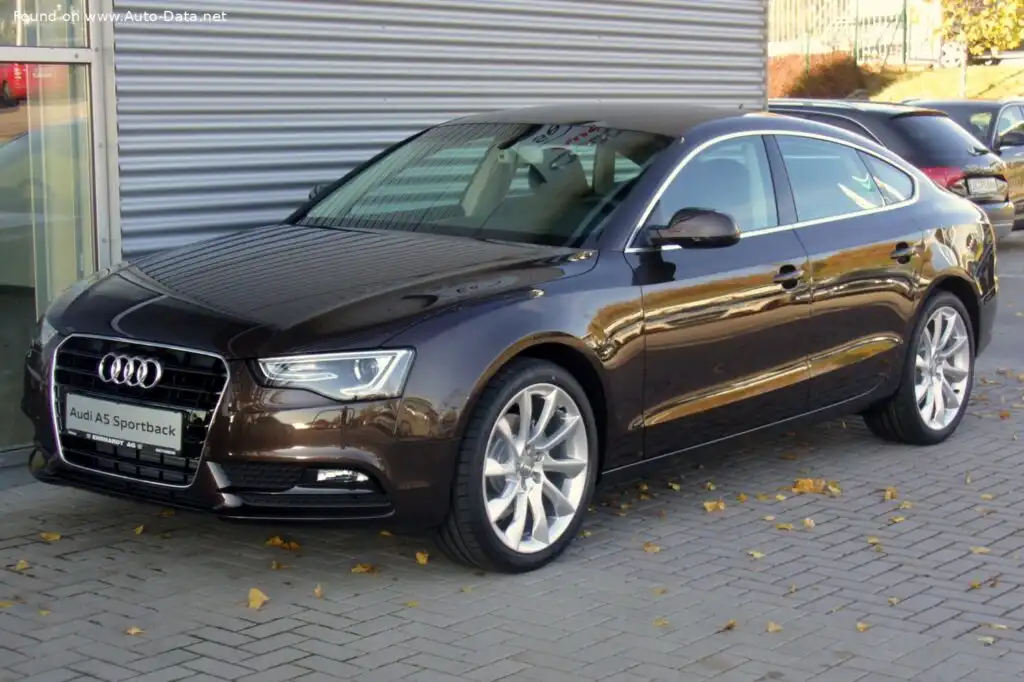
The Audi A5 Sportback 3.0 TDI quattro, produced from 2011 to 2015, represents a compelling blend of performance, practicality, and luxury within the Audi A5 range. This variant, part of the B8.5 (facelift) generation of the A5 (internally designated 8TA), offered a five-door fastback body style, combining the sleek lines of a coupe with the accessibility of a hatchback. Positioned as a premium offering, it sat near the top of the A5 Sportback lineup, appealing to buyers seeking a refined driving experience with strong diesel power and all-weather capability. The 3.0 TDI quattro model was a significant player in the European market, where diesel engines were – and continue to be – highly favored for their fuel efficiency and torque.
Technical Specifications
| Brand | Audi |
| Model | A5 |
| Generation | A5 Sportback (8TA, facelift 2011) |
| Type (Engine) | 3.0 TDI V6 (245 Hp) quattro |
| Start of production | 2011 |
| End of production | 2015 |
| Powertrain Architecture | Internal Combustion engine |
| Body type | Fastback |
| Seats | 5 |
| Doors | 5 |
| Fuel consumption (urban) | 7.2 l/100 km (32.7 US mpg, 39.2 UK mpg, 13.9 km/l) |
| Fuel consumption (extra urban) | 4.9 l/100 km (48 US mpg, 57.6 UK mpg, 20.4 km/l) |
| Fuel consumption (combined) | 5.8 l/100 km (40.6 US mpg, 48.7 UK mpg, 17.2 km/l) |
| CO2 emissions | 152 g/km |
| Fuel Type | Diesel |
| Acceleration 0 – 100 km/h | 6.2 sec |
| Acceleration 0 – 62 mph | 6.2 sec |
| Acceleration 0 – 60 mph | 5.9 sec |
| Maximum speed | 250 km/h (155.34 mph) |
| Emission standard | Euro 6 |
| Weight-to-power ratio | 6.8 kg/Hp, 147.6 Hp/tonne |
| Weight-to-torque ratio | 3.3 kg/Nm, 301.2 Nm/tonne |
| Power | 245 Hp @ 4000-4500 rpm |
| Power per litre | 82.6 Hp/l |
| Torque | 500 Nm @ 1400-3250 rpm (368.78 lb.-ft. @ 1400-3250 rpm) |
| Engine layout | Front, Longitudinal |
| Engine Model/Code | CDUC, CKVB, CKVC |
| Engine displacement | 2967 cm3 (181.06 cu. in.) |
| Number of cylinders | 6 |
| Engine configuration | V-engine |
| Cylinder Bore | 83 mm (3.27 in.) |
| Piston Stroke | 91.4 mm (3.6 in.) |
| Compression ratio | 16.8:1 |
| Number of valves per cylinder | 4 |
| Fuel injection system | Diesel Commonrail |
| Engine aspiration | Turbocharger, Intercooler |
| Valvetrain | DOHC |
| Engine oil capacity | 6.4 l (6.76 US qt | 5.63 UK qt) |
| Kerb Weight | 1660 kg (3659.67 lbs.) |
| Max. weight | 2210 kg (4872.22 lbs.) |
| Max load | 550 kg (1212.54 lbs.) |
| Trunk (boot) space – minimum | 480 l (16.95 cu. ft.) |
| Trunk (boot) space – maximum | 980 l (34.61 cu. ft.) |
| Fuel tank capacity | 61 l (16.11 US gal | 13.42 UK gal) |
| Permitted trailer load with brakes (8%) | 2100 kg (4629.71 lbs.) |
| Permitted trailer load without brakes | 750 kg (1653.47 lbs.) |
| Length | 4712 mm (185.51 in.) |
| Width | 1854 mm (72.99 in.) |
| Width including mirrors | 2020 mm (79.53 in.) |
| Height | 1391 mm (54.76 in.) |
| Wheelbase | 2810 mm (110.63 in.) |
| Front track | 1590 mm (62.6 in.) |
| Rear (Back) track | 1575 mm (62.01 in.) |
| Front overhang | 861 mm (33.9 in.) |
| Rear overhang | 1041 mm (40.98 in.) |
| Drag coefficient (Cd) | 0.30 |
| Minimum turning circle (turning diameter) | 11.5 m (37.73 ft.) |
| Drivetrain Architecture | The Internal combustion engine (ICE) drives permanently the four wheels of the vehicle. |
| Drive wheel | All wheel drive (4×4) |
| Number of gears and type of gearbox | 6 gears, manual transmission |
| Front suspension | Independent multi-link suspension |
| Rear suspension | Independent on trapezoidal lever |
| Front brakes | Ventilated discs |
| Rear brakes | Disc |
| Assisting systems | ABS (Anti-lock braking system) |
| Steering type | Steering rack and pinion |
| Power steering | Electric Steering |
| Tires size | 225/50 R17 |
| Wheel rims size | 7.5J x 17 |
Powertrain & Engine Architecture
The heart of the A5 Sportback 3.0 TDI quattro is the 3.0-liter V6 diesel engine, available with engine codes CDUC, CKVB, and CKVC depending on the specific market and year. This engine is a longitudinally mounted, turbocharged common-rail diesel. The common-rail direct injection system, operating at extremely high pressures, ensures precise fuel delivery and efficient combustion. The engine utilizes a double overhead camshaft (DOHC) valvetrain with four valves per cylinder, optimizing gas flow for increased power and torque. A variable geometry turbocharger (VGT) and intercooler further enhance performance by providing increased air intake and cooling. The 6-speed manual transmission was standard, delivering power to all four wheels via Audi’s quattro all-wheel-drive system. The quattro system employs a Torsen center differential, distributing torque between the front and rear axles as needed, providing excellent traction in various conditions.
Driving Characteristics
The 3.0 TDI quattro Sportback offered a distinctly refined driving experience. The engine’s 500 Nm (368.78 lb-ft) of torque, available from a low 1400 rpm, provided strong acceleration and effortless cruising. The 0-60 mph sprint took approximately 5.9 seconds, making it a genuinely quick vehicle. The manual transmission, while engaging, had relatively long throws. The quattro all-wheel-drive system instilled confidence in all weather conditions, providing exceptional grip and stability. Compared to the 1.8 TFSI or 2.0 TDI variants, the 3.0 TDI offered significantly more power and torque, resulting in a more relaxed and capable driving experience, particularly when fully loaded or towing. However, the increased weight of the V6 engine did slightly impact handling agility compared to the lighter four-cylinder models.
Equipment & Trim Levels
The A5 Sportback 3.0 TDI quattro typically came well-equipped, reflecting its premium positioning. Standard features included leather upholstery, three-zone automatic climate control, a multi-function steering wheel, and Audi’s MMI infotainment system with a central display screen. Optional extras included navigation, a premium sound system (Bang & Olufsen), adaptive cruise control, and parking sensors. Trim levels varied by market, but generally offered options for upgraded interior materials, exterior styling enhancements, and advanced driver-assistance systems. Sport trim packages often included sport seats, lowered suspension, and unique alloy wheel designs.
Chassis & Braking
The A5 Sportback featured a sophisticated chassis design. The front suspension utilized an independent multi-link setup, while the rear employed an independent trapezoidal link arrangement. This configuration provided a comfortable ride and precise handling. The braking system consisted of ventilated front discs and solid rear discs, providing ample stopping power. Anti-lock braking system (ABS) was standard, along with electronic stability control (ESC). The quattro all-wheel-drive system contributed to enhanced braking performance by distributing braking force optimally between all four wheels.
Market Reception & Comparison
The Audi A5 Sportback 3.0 TDI quattro was generally well-received by automotive critics. It was praised for its refined engine, comfortable ride, and practical fastback body style. Fuel economy was considered excellent for a vehicle of its performance, averaging around 40.6 US mpg in combined driving. Compared to rivals like the BMW 3 Series Gran Turismo and Mercedes-Benz CLS, the A5 Sportback offered a compelling combination of style, performance, and practicality. Reliability was generally good, although some owners reported issues with the diesel particulate filter (DPF) and turbocharger over the long term.
Legacy
The Audi A5 Sportback 3.0 TDI quattro remains a desirable used car today. The 3.0 TDI engine, while requiring diligent maintenance (particularly regarding the DPF system), is known for its durability and longevity. The quattro all-wheel-drive system continues to be a valuable asset in regions with inclement weather. The A5 Sportback’s timeless design and refined interior have also contributed to its enduring appeal. However, potential buyers should be aware of the potential costs associated with maintaining a diesel vehicle, including DPF regeneration and AdBlue refills. Overall, the 3.0 TDI quattro represents a well-engineered and rewarding driving experience that continues to hold its own in the used car market.