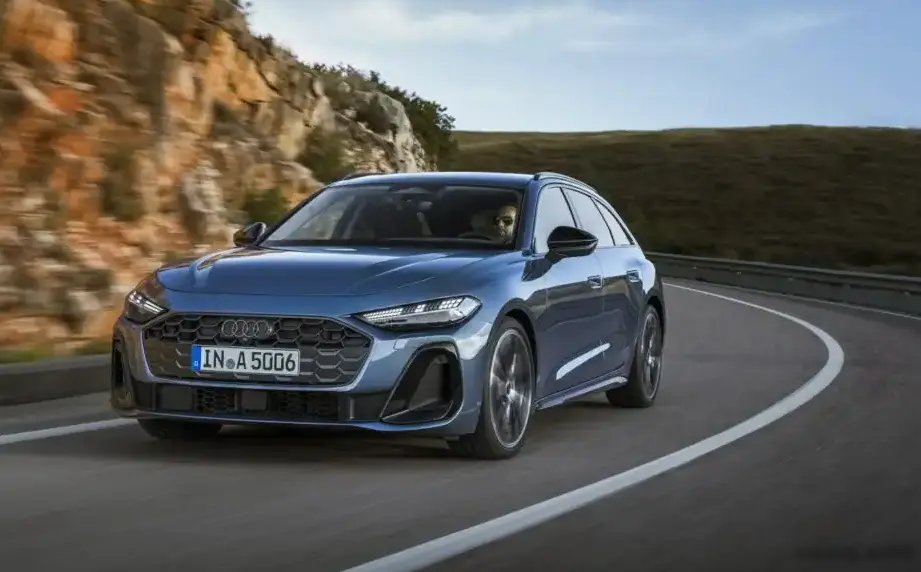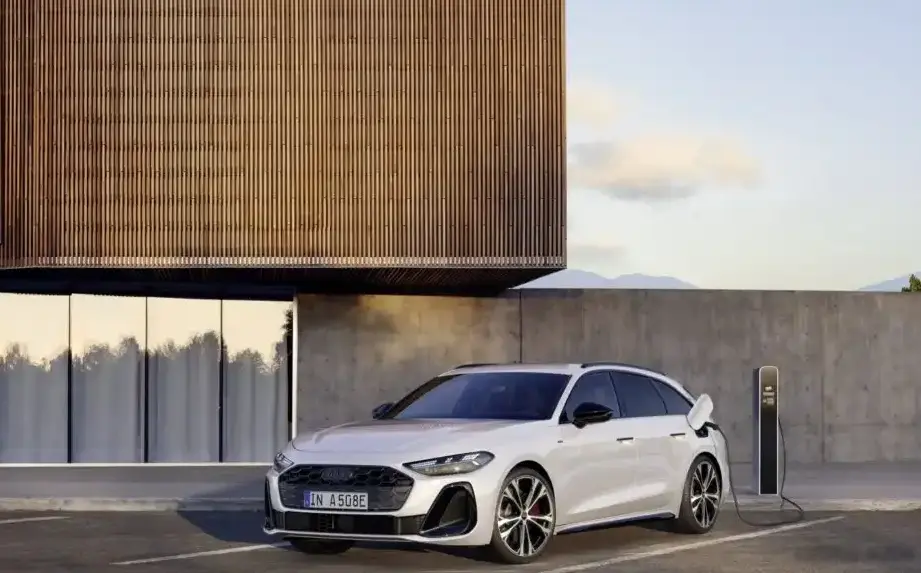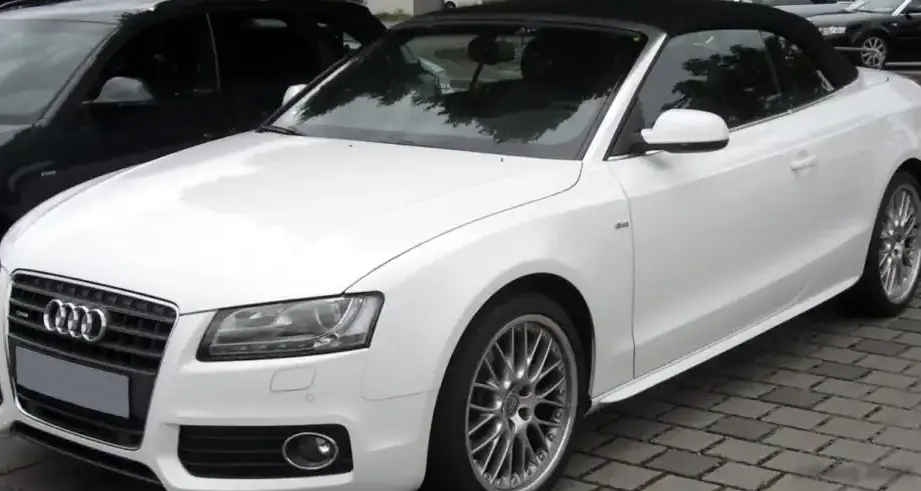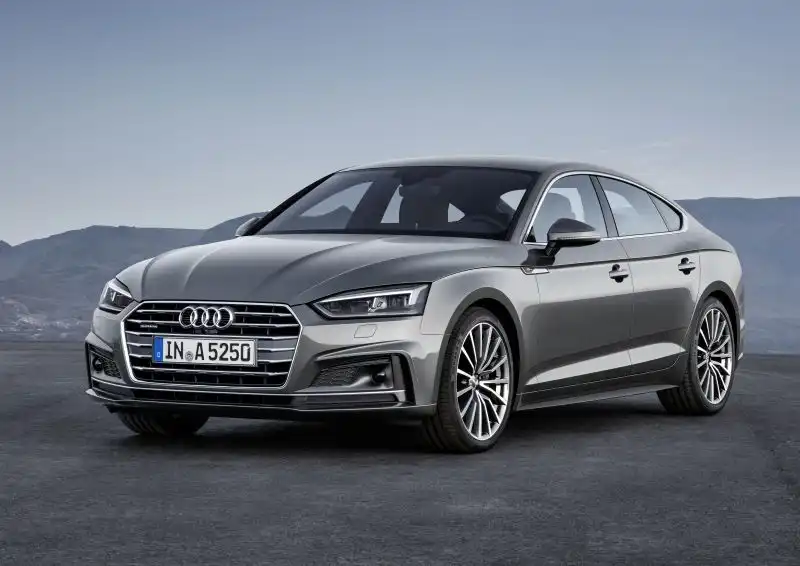
The Audi A5 Sportback (F5) 2.0 TDI quattro, produced from 2017 to 2018, represents a compelling blend of practicality, efficiency, and Audi’s signature refinement. Positioned as a mid-range offering within the broader A5 Sportback lineup, this variant catered to buyers seeking a balance between performance and fuel economy, coupled with the added security of Audi’s quattro all-wheel-drive system. It falls within the fifth generation (F5) of the A5 and A4 models, sharing the MLB Evo platform with other Volkswagen Group vehicles. This fastback model aimed to provide a more versatile alternative to the traditional A4 sedan, offering increased cargo space and a sleek, coupe-like profile.
Technical Specifications
| Brand | Audi |
| Model | A5 |
| Generation | A5 Sportback (F5) |
| Type (Engine) | 2.0 TDI (150 Hp) quattro |
| Start of production | 2017 |
| End of production | 2018 |
| Powertrain Architecture | Internal Combustion engine |
| Body type | Fastback |
| Seats | 5 |
| Doors | 5 |
| Fuel consumption (urban) | 5.2-5.3 l/100 km (45.2 – 44.4 US mpg) |
| Fuel consumption (extra urban) | 3.9-4.2 l/100 km (60.3 – 56 US mpg) |
| Fuel consumption (combined) | 4.4-4.6 l/100 km (53.5 – 51.1 US mpg) |
| CO2 emissions | 114-120 g/km |
| Fuel Type | Diesel |
| Acceleration 0 – 100 km/h | 8.9 sec |
| Acceleration 0 – 62 mph | 8.9 sec |
| Acceleration 0 – 60 mph | 8.5 sec |
| Maximum speed | 217 km/h (134.84 mph) |
| Emission standard | Euro 6 |
| Weight-to-power ratio | 10.4 kg/Hp |
| Weight-to-torque ratio | 4.9 kg/Nm |
| Power | 150 Hp @ 3250-4200 rpm |
| Torque | 320 Nm @ 1500-3250 rpm (236.02 lb.-ft.) |
| Engine layout | Front, Longitudinal |
| Engine Model/Code | CZHA, DEUA |
| Engine displacement | 1968 cm3 (120.09 cu. in.) |
| Number of cylinders | 4 |
| Engine configuration | Inline |
| Number of valves per cylinder | 4 |
| Fuel injection system | Diesel Commonrail |
| Engine aspiration | Turbocharger, Intercooler |
| Engine oil capacity | 4.7 l (4.97 US qt | 4.14 UK qt) |
| Kerb Weight | 1560 kg (3439.21 lbs.) |
| Max. weight | 2150 kg (4739.94 lbs.) |
| Max load | 590 kg (1300.73 lbs.) |
| Trunk (boot) space – minimum | 480 l (16.95 cu. ft.) |
| Fuel tank capacity | 58 l (15.32 US gal | 12.76 UK gal) |
| Length | 4733 mm (186.34 in.) |
| Width | 1843 mm (72.56 in.) |
| Height | 1386 mm (54.57 in.) |
| Wheelbase | 2824 mm (111.18 in.) |
| Drivetrain Architecture | All wheel drive (4×4) |
| Number of gears | 6 |
| Type of gearbox | Manual transmission |
INTRODUCTION
The Audi A5 Sportback (F5) 2.0 TDI quattro, launched in 2017, built upon the success of the original A5 Sportback, offering a more practical and stylish alternative to the traditional A4 sedan. This particular variant, powered by the 2.0-liter TDI engine producing 150 horsepower and paired with a six-speed manual transmission, was aimed at drivers prioritizing fuel efficiency and all-weather capability. It occupied a middle ground in the A5 Sportback range, sitting below the more powerful petrol variants and above the entry-level diesel models. The F5 generation represented a significant evolution in design and technology, incorporating Audi’s latest advancements in infotainment, driver assistance systems, and engine technology.
Powertrain & Engine Architecture
At the heart of the A5 Sportback 2.0 TDI quattro lies the Volkswagen Group’s EA288 series of diesel engines. Specifically, this model utilized either the CZHA or DEUA engine code, both representing variations of the 2.0-liter four-cylinder turbocharged diesel. The engine features a common rail direct injection system, delivering fuel at extremely high pressures for optimized combustion. A single turbocharger with an intercooler provides forced induction, boosting power and torque. The engine employs four valves per cylinder and a timing belt to manage valve operation. The six-speed manual transmission was chosen for its efficiency and driver engagement, offering precise gear changes and a direct connection to the engine. The quattro all-wheel-drive system utilizes a Torsen center differential, distributing torque between the front and rear axles as needed, providing enhanced traction and stability in various driving conditions.
Driving Characteristics
The 150 horsepower and 320 Nm (236 lb-ft) of torque delivered by the 2.0 TDI engine, combined with the six-speed manual transmission, resulted in a driving experience focused on usability and efficiency rather than outright performance. Acceleration from 0-60 mph took approximately 8.5 seconds, and top speed was limited to 134.84 mph. The engine provided a broad torque curve, making it responsive in everyday driving situations. The manual transmission allowed for precise control over gear selection, enabling drivers to maximize fuel economy or extract more performance when desired. Compared to the more powerful petrol variants, the 2.0 TDI felt less eager to rev, but offered significantly better fuel economy. The quattro all-wheel-drive system provided excellent grip and stability, particularly on slippery surfaces, enhancing confidence in adverse weather conditions.
Equipment & Trim Levels
The A5 Sportback 2.0 TDI quattro typically came well-equipped, even in its base trim. Standard features included Audi’s MMI infotainment system with a 7-inch display, Bluetooth connectivity, automatic climate control, and a leather-wrapped steering wheel. Safety features such as ABS, electronic stability control, and multiple airbags were also standard. Optional extras included a larger MMI display with navigation, a premium sound system, leather upholstery, heated seats, and a suite of driver assistance systems such as adaptive cruise control and lane departure warning. Trim levels varied slightly depending on the market, but generally offered progressively more luxurious appointments and advanced technology features.
Chassis & Braking
The A5 Sportback (F5) utilized a sophisticated chassis design featuring independent multi-link suspension at both the front and rear axles. This configuration provided a comfortable ride quality while maintaining precise handling characteristics. The front suspension incorporated ventilated disc brakes, while the rear brakes were typically solid discs. The steering system employed an electric power steering system, offering precise and responsive steering feel. The chassis was tuned to balance comfort and handling, providing a composed and stable driving experience. Stabilizer bars were fitted to both axles to reduce body roll during cornering.
Market Reception & Comparison
The Audi A5 Sportback 2.0 TDI quattro was generally well-received by automotive critics. It was praised for its stylish design, practical interior, and efficient engine. The combination of the diesel engine and all-wheel drive was seen as a particularly appealing option for drivers in regions with harsh winters or challenging road conditions. Compared to the petrol-powered A5 variants, the 2.0 TDI offered significantly better fuel economy, making it a more cost-effective choice for long-distance driving. However, some critics noted that the engine lacked the refinement and performance of its petrol counterparts. Compared to competitors such as the BMW 4 Series Gran Coupe and the Mercedes-Benz C-Class Coupe, the A5 Sportback was often seen as offering a more balanced blend of practicality, style, and technology.
Legacy
The 2.0 TDI engine, in its various iterations, has proven to be a reliable and durable powertrain. While diesel engines have faced increased scrutiny in recent years due to emissions concerns, the EA288 series has generally been regarded as a robust and well-engineered unit. The A5 Sportback 2.0 TDI quattro remains a popular choice in the used car market, offering a compelling combination of value, efficiency, and practicality. Proper maintenance, including regular oil changes and adherence to recommended service intervals, is crucial for ensuring the long-term reliability of this powertrain. The F5 generation A5 Sportback, including this 2.0 TDI quattro variant, established itself as a benchmark in the premium compact executive class, setting a high standard for design, technology, and driving experience.