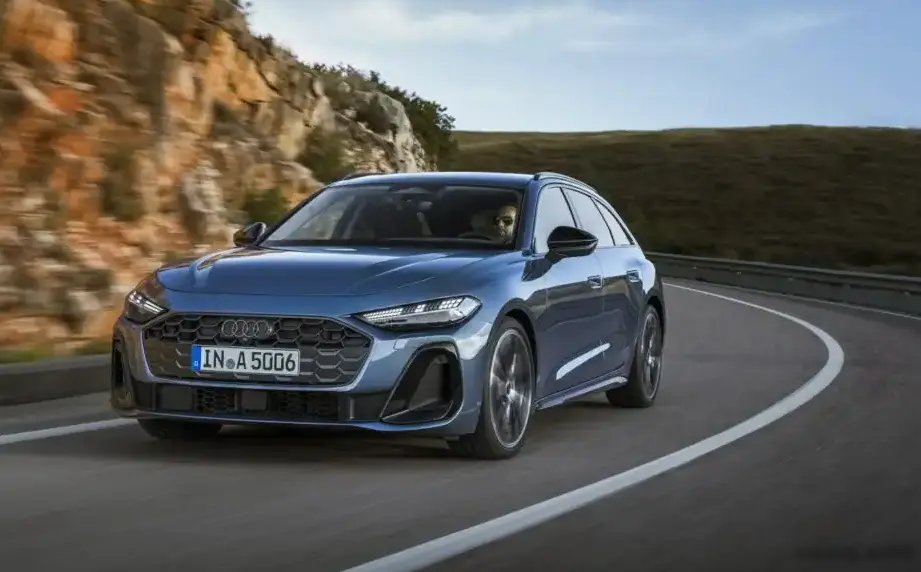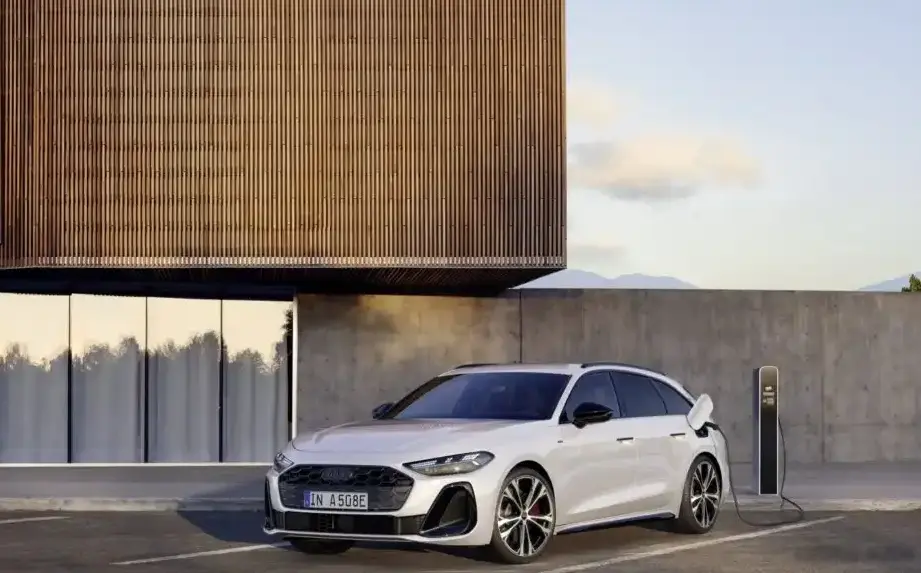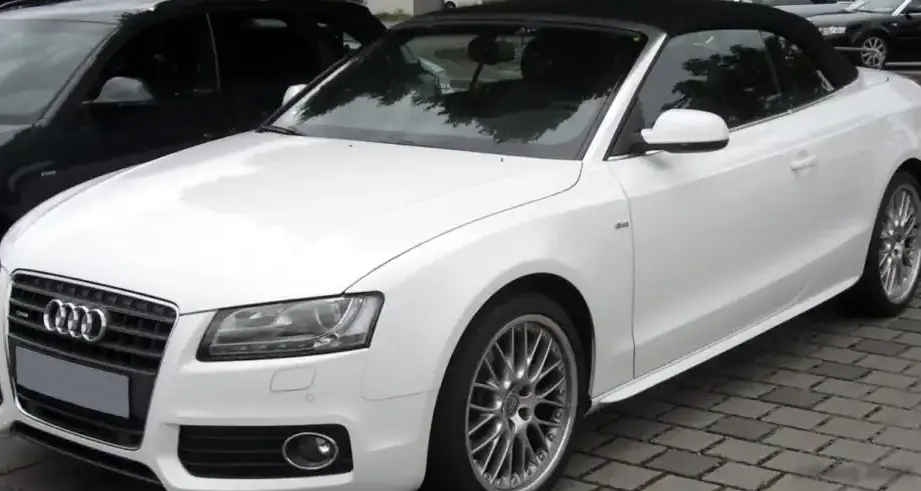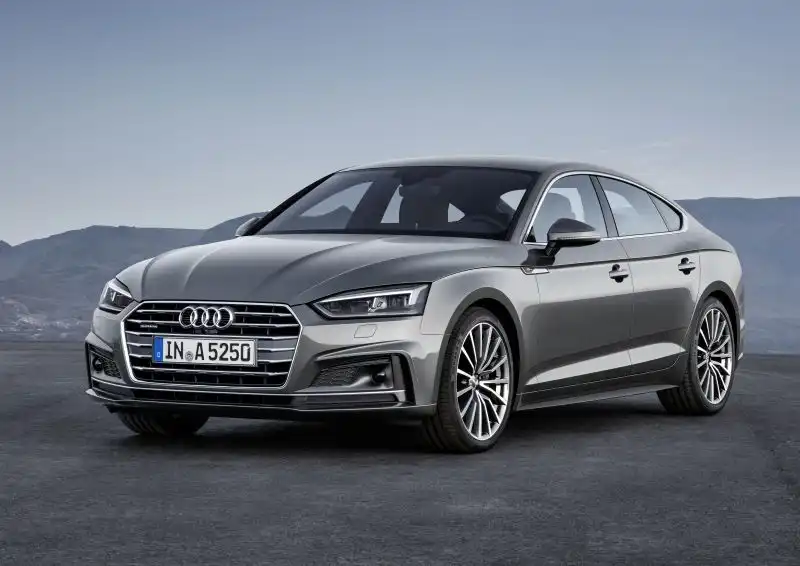
The Audi A5 Sportback (F5) 3.0 TDI quattro S tronic represents a compelling blend of performance, practicality, and luxury within the fifth generation of Audi’s A5 line. Produced from 2016 to 2018, this variant occupied a mid-to-high position in the Sportback range, offering a significant step up in power and refinement compared to the lower-displacement engines. It was primarily marketed in Europe and other regions where diesel engines remained popular, appealing to buyers seeking a sophisticated and efficient grand tourer. The F5 generation A5 Sportback, built on the MLB Evo platform, aimed to improve upon its predecessor with enhanced technology, improved fuel economy, and a more refined driving experience.
Technical Specifications
| Brand | Audi |
| Model | A5 |
| Generation | A5 Sportback (F5) |
| Type (Engine) | 3.0 TDI (218 Hp) quattro S tronic |
| Start of production | 2016 |
| End of production | 2018 |
| Powertrain Architecture | Internal Combustion engine |
| Body type | Fastback |
| Seats | 5 |
| Doors | 5 |
| Fuel consumption (urban) | 5.1 – 5.0 l/100 km (46.1 – 47 US mpg) |
| Fuel consumption (extra urban) | 4.7 – 4.3 l/100 km (50 – 54.7 US mpg) |
| Fuel consumption (combined) | 4.8 – 4.6 l/100 km (49 – 51.1 US mpg) |
| CO2 emissions | 125 – 119 g/km |
| Fuel Type | Diesel |
| Acceleration 0 – 100 km/h | 6.4 sec |
| Acceleration 0 – 62 mph | 6.4 sec |
| Acceleration 0 – 60 mph | 6.1 sec |
| Maximum speed | 250 km/h (155.34 mph) |
| Emission standard | Euro 6 |
| Weight-to-power ratio | 7.5 kg/Hp |
| Weight-to-torque ratio | 4.1 kg/Nm |
| Power | 218 Hp @ 4000-5000 rpm |
| Torque | 400 Nm @ 1250-3750 rpm (295.02 lb.-ft.) |
| Engine layout | Front, Longitudinal |
| Engine Model/Code | CSWB |
| Engine displacement | 2967 cm3 (181.06 cu. in.) |
| Number of cylinders | 6 |
| Engine configuration | V-engine |
| Cylinder Bore | 83 mm (3.27 in.) |
| Piston Stroke | 91.4 mm (3.6 in.) |
| Compression ratio | 16:1 |
| Number of valves per cylinder | 4 |
| Fuel injection system | Diesel Commonrail |
| Engine aspiration | Turbocharger, Intercooler |
| Valvetrain | DOHC |
| Engine oil capacity | 6.1 l (6.45 US qt | 5.37 UK qt) |
| Kerb Weight | 1640 kg (3615.58 lbs.) |
| Max. weight | 2220 kg (4894.26 lbs.) |
| Max load | 580 kg (1278.68 lbs.) |
| Trunk (boot) space – minimum | 480 l (16.95 cu. ft.) |
| Fuel tank capacity | 58 l (15.32 US gal | 12.76 UK gal) |
| Max. roof load | 90 kg (198.42 lbs.) |
| Permitted trailer load with brakes (8%) | 2000 kg (4409.25 lbs.) |
| Permitted trailer load with brakes (12%) | 1800 kg (3968.32 lbs.) |
| Permitted trailer load without brakes | 750 kg (1653.47 lbs.) |
| Permitted towbar download | 80 kg (176.37 lbs.) |
| Length | 4733 mm (186.34 in.) |
| Width | 1843 mm (72.56 in.) |
| Width including mirrors | 2029 mm (79.88 in.) |
| Height | 1386 mm (54.57 in.) |
| Wheelbase | 2824 mm (111.18 in.) |
| Front track | 1587 mm (62.48 in.) |
| Rear (Back) track | 1568 mm (61.73 in.) |
| Front overhang | 878 mm (34.57 in.) |
| Rear overhang | 1031 mm (40.59 in.) |
| Minimum turning circle | 11.7 m (38.39 ft.) |
| Drive wheel | All wheel drive (4×4) |
| Number of gears and type of gearbox | 7 gears, automatic transmission S tronic |
| Front suspension | Independent multi-link suspension |
| Rear suspension | Independent multi-link suspension |
| Front brakes | Ventilated discs |
| Rear brakes | Disc |
| Assisting systems | ABS (Anti-lock braking system) |
| Steering type | Steering rack and pinion |
| Power steering | Electric Steering |
| Tires size | 225/50 R17; 245/40 R18; 255/35 R19 |
| Wheel rims size | 7.5 J x 17; 18; 19 |
Powertrain & Engine Architecture
The heart of the A5 Sportback 3.0 TDI is the CSWB engine, a 3.0-liter V6 turbodiesel. This engine is a member of Audi’s modular engine family, known for its robust construction and sophisticated technology. It utilizes a common rail direct injection system, delivering fuel at extremely high pressures for optimized combustion. The engine features a single turbocharger with an intercooler to increase air density and boost power output. The valvetrain employs a dual overhead camshaft (DOHC) design with four valves per cylinder, enhancing breathing and overall efficiency. The engine produces 218 horsepower at 4000-5000 rpm and a substantial 400 Nm (295 lb-ft) of torque available from a low 1250 rpm, providing strong acceleration and effortless cruising. Paired with this engine is Audi’s seven-speed S tronic dual-clutch transmission. This transmission offers incredibly fast and smooth gear changes, contributing to both performance and fuel efficiency. The S tronic features a wet clutch design for improved durability and heat dissipation.
Driving Characteristics
The 3.0 TDI with the S tronic transmission delivers a refined and responsive driving experience. The readily available torque ensures brisk acceleration in everyday driving situations, with the 0-60 mph sprint taking approximately 6.1 seconds. The S tronic transmission’s quick shifts contribute to a seamless power delivery, minimizing any interruption in acceleration. Compared to the lower-powered 1.8 TFSI or 2.0 TDI variants, the 3.0 TDI offers a significantly more relaxed and confident driving experience, particularly when fully loaded or tackling long highway journeys. While not as overtly sporty as the S5 models, the 3.0 TDI provides ample power for spirited driving. The quattro all-wheel-drive system ensures excellent traction and stability in all weather conditions, enhancing driver confidence.
Equipment & Trim Levels
The A5 Sportback 3.0 TDI typically came well-equipped as standard. Common features included Audi’s MMI infotainment system with a central display screen, three-zone automatic climate control, leather upholstery, and a multifunction steering wheel. Optional extras included features like a Bang & Olufsen sound system, adaptive cruise control, a head-up display, and various driver assistance systems such as blind-spot monitoring and lane-keeping assist. Trim levels varied by market, but generally, the 3.0 TDI was positioned as a higher-spec model, often including features that were optional on the lower-powered variants.
Chassis & Braking
The A5 Sportback features a sophisticated chassis design with independent multi-link suspension at both the front and rear axles. This setup provides a comfortable ride quality while maintaining good handling characteristics. The suspension is tuned to balance comfort and control, offering a composed ride even on uneven surfaces. Braking duties are handled by ventilated discs at the front and solid discs at the rear. The anti-lock braking system (ABS) and electronic stability control (ESC) are standard features, providing enhanced safety and control. The steering is a rack-and-pinion system with electric power assistance, offering precise and responsive steering feel.
Market Reception & Comparison
The Audi A5 Sportback 3.0 TDI quattro S tronic was generally well-received by automotive critics. It was praised for its refined engine, smooth transmission, comfortable ride, and practical hatchback body style. Compared to its competitors, such as the BMW 4 Series Gran Coupe and the Mercedes-Benz C-Class Coupe, the A5 Sportback offered a compelling combination of performance, luxury, and practicality. Fuel economy was also a strong point, with combined fuel consumption figures ranging from 4.6 to 4.8 l/100 km (49-51.1 US mpg). The 3.0 TDI offered a noticeable performance advantage over the 2.0 TDI models, but at a higher price point. It provided a more balanced driving experience than the more powerful S5 models, which prioritized outright performance over comfort.
Legacy
The 3.0 TDI engine, in general, has proven to be a reliable and durable powertrain when properly maintained. However, like all diesel engines, it is susceptible to issues related to the diesel particulate filter (DPF) and the exhaust gas recirculation (EGR) system, particularly if primarily used for short trips. In the used car market, the A5 Sportback 3.0 TDI quattro S tronic remains a desirable option for buyers seeking a refined and capable grand tourer. Its combination of performance, fuel efficiency, and practicality continues to appeal to a wide range of drivers. Regular maintenance, including timely oil changes and DPF regeneration, is crucial to ensure the long-term reliability of this powertrain.