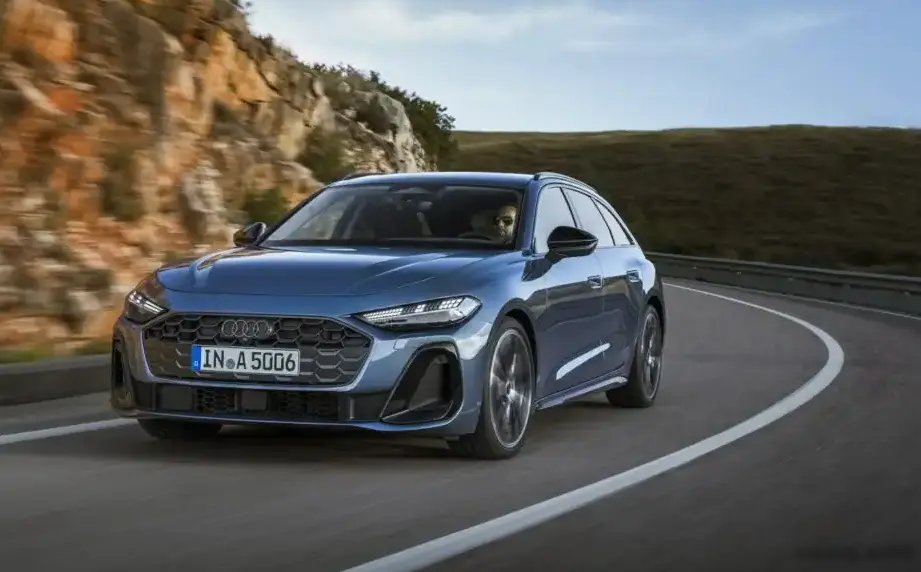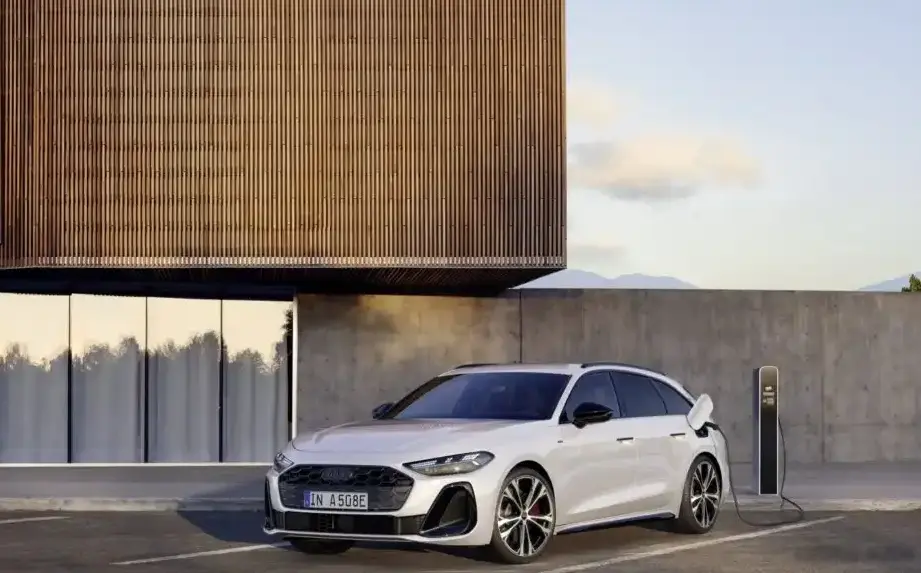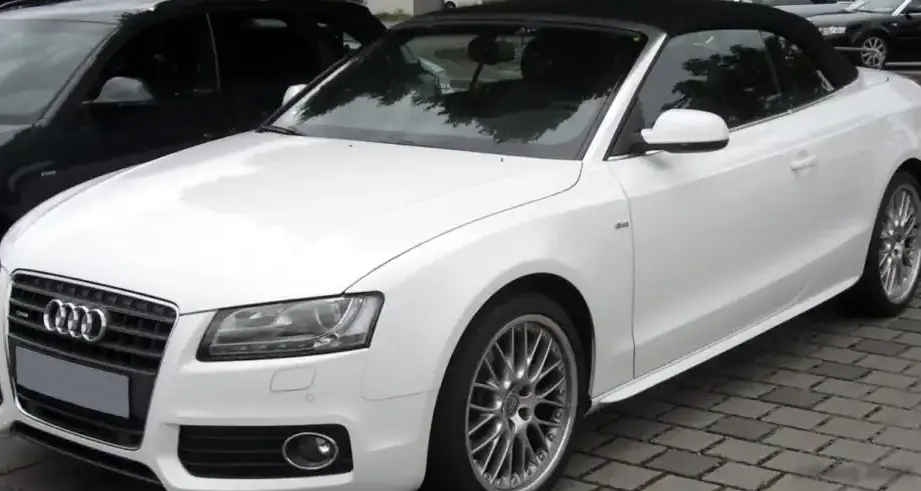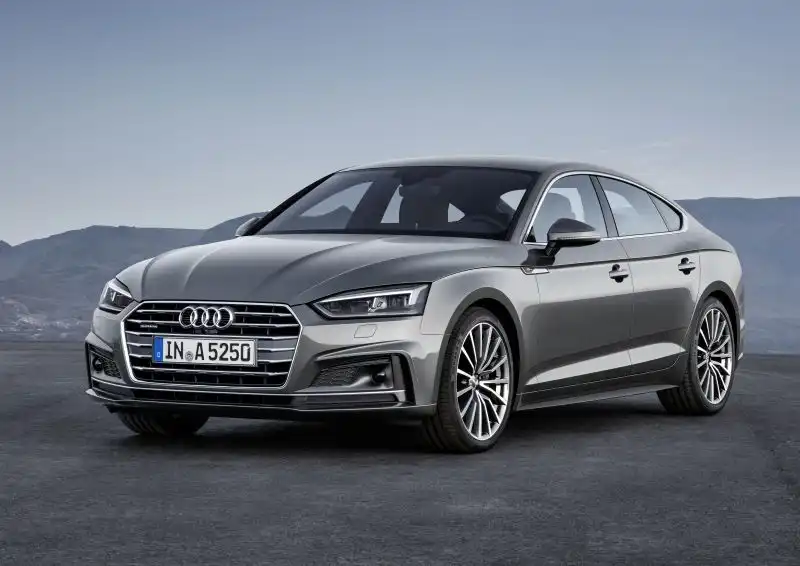
The Audi A5 Sportback (F5) g-tron 2.0 TFSI with the S tronic dual-clutch transmission represents a unique offering within the fifth-generation A5 (F5) lineup, produced from 2017 to 2018. This variant distinguished itself by its bi-fuel capability, designed to run on either gasoline or Compressed Natural Gas (CNG), catering to markets with established CNG infrastructure, primarily in Europe. Positioned as a more environmentally conscious alternative to the standard A5 models, the g-tron aimed to reduce emissions while maintaining a respectable level of performance and the practicality of a Sportback body style. It occupied a niche between the more common petrol and diesel variants, appealing to drivers seeking lower running costs and a reduced carbon footprint.
Technical Specifications
| Brand | Audi |
| Model | A5 |
| Generation | A5 Sportback (F5) |
| Type (Engine) | g-tron 2.0 TFSI (170 Hp) S tronic |
| Start of production | 2017 |
| End of production | 2018 |
| Powertrain Architecture | Internal Combustion engine |
| Body type | Fastback |
| Seats | 5 |
| Doors | 5 |
| Fuel consumption (economy) – urban | 7.2-7.4 l/100 km (32.7 – 31.8 US mpg, 39.2 – 38.2 UK mpg, 13.9 – 13.5 km/l) |
| Fuel consumption (economy) – urban (CNG) | 5-5.2 kg/100 km |
| Fuel consumption (economy) – extra urban | 4.6-5.1 l/100 km (51.1 – 46.1 US mpg, 61.4 – 55.4 UK mpg, 21.7 – 19.6 km/l) |
| Fuel consumption (economy) – extra urban (CNG) | 3.1-3.4 kg/100 km |
| Fuel consumption (economy) – combined | 5.6-6 l/100 km (42 – 39.2 US mpg, 50.4 – 47.1 UK mpg, 17.9 – 16.7 km/l) |
| Fuel consumption (economy) – combined (CNG) | 3.8-4.1 kg/100 km |
| CO2 emissions | 126-135 g/km |
| CO2 emissions (CNG) | 102-110 g/km |
| Fuel Type | Petrol / CNG |
| Acceleration 0 – 100 km/h | 8.4 sec |
| Acceleration 0 – 62 mph | 8.4 sec |
| Acceleration 0 – 60 mph | 8 sec (Calculated) |
| Maximum speed | 224 km/h (139.19 mph) |
| Emission standard | Euro 6 |
| Weight-to-power ratio | 9.3 kg/Hp, 107.6 Hp/tonne |
| Weight-to-torque ratio | 5.9 kg/Nm, 170.9 Nm/tonne |
| Power | 170 Hp @ 4450-6000 rpm |
| Power per litre | 85.7 Hp/l |
| Torque | 270 Nm @ 1650-4400 rpm (199.14 lb.-ft. @ 1650-4400 rpm) |
| Engine layout | Front, Longitudinal |
| Engine Model/Code | EA888 / CVLA |
| Engine displacement | 1984 cm3 (121.07 cu. in.) |
| Number of cylinders | 4 |
| Engine configuration | Inline |
| Cylinder Bore | 82.5 mm (3.25 in.) |
| Piston Stroke | 92.8 mm (3.65 in.) |
| Number of valves per cylinder | 4 |
| Fuel injection system | Direct injection and Multi-port manifold injection |
| Engine aspiration | Turbocharger, Intercooler |
| Valvetrain | DOHC |
| Engine oil capacity | 5.2 l (5.49 US qt | 4.58 UK qt) |
| Kerb Weight | 1580 kg (3483.3 lbs.) |
| Max. weight | 2130 kg (4695.85 lbs.) |
| Max load | 550 kg (1212.54 lbs.) |
| Trunk (boot) space – minimum | 390 l (13.77 cu. ft.) |
| Fuel tank capacity | 25 l (6.6 US gal | 5.5 UK gal) |
| CNG cylinder capacity | 19 kg |
| Max. roof load | 90 kg (198.42 lbs.) |
| Permitted trailer load with brakes (8%) | 1700 kg (3747.86 lbs.) |
| Permitted trailer load with brakes (12%) | 1500 kg (3306.93 lbs.) |
| Permitted trailer load without brakes | 750 kg (1653.47 lbs.) |
| Permitted towbar download | 80 kg (176.37 lbs.) |
| Length | 4733 mm (186.34 in.) |
| Width | 1843 mm (72.56 in.) |
| Width including mirrors | 2029 mm (79.88 in.) |
| Height | 1392 mm (54.8 in.) |
| Wheelbase | 2824 mm (111.18 in.) |
| Front track | 1587 mm (62.48 in.) |
| Rear (Back) track | 1568 mm (61.73 in.) |
| Front overhang | 878 mm (34.57 in.) |
| Rear overhang | 1032 mm (40.63 in.) |
| Minimum turning circle | 11.7 m (38.39 ft.) |
| Drivetrain Architecture | ICE drives front wheels |
| Drive wheel | Front wheel drive |
| Number of gears and type of gearbox | 7 gears, automatic transmission S tronic |
| Front suspension | Independent multi-link suspension, Transverse stabilizer |
| Rear suspension | Independent multi-link spring suspension with stabilizer |
| Front brakes | Ventilated discs |
| Rear brakes | Disc |
| Assisting systems | ABS (Anti-lock braking system) |
| Steering type | Steering rack and pinion |
| Power steering | Electric Steering |
| Tires size | 245/40 R18 |
| Wheel rims size | 8.5J x 18 |
INTRODUCTION
The Audi A5 Sportback (F5) g-tron 2.0 TFSI, launched in 2017 and discontinued in 2018, was a specialized variant of Audi’s popular A5 Sportback. Built on the Volkswagen Group’s MLB Evo platform (1HX0/A5), it offered a compelling alternative fuel option for European consumers. The g-tron model combined a turbocharged 2.0-liter TFSI gasoline engine with a dedicated CNG (Compressed Natural Gas) system, allowing it to switch seamlessly between the two fuel sources. This bi-fuel capability aimed to provide the convenience of gasoline for longer journeys and the lower emissions and running costs of CNG for everyday driving. The Sportback body style, offering five doors and a larger hatchback opening, added practicality to the eco-friendly powertrain.
Powertrain & Engine Architecture
At the heart of the A5 Sportback g-tron lies the EA888 2.0-liter inline-four cylinder engine, specifically the CVLA engine code. This engine is a direct-injection, turbocharged unit featuring an intercooler to enhance performance. The engine utilizes both direct injection and multi-port manifold injection, optimizing combustion efficiency and reducing particulate emissions. The valvetrain employs a Dual Overhead Camshaft (DOHC) configuration with four valves per cylinder. The S tronic 7-speed dual-clutch transmission is standard, providing quick and smooth gear changes. The CNG system consists of a high-pressure CNG tank (19 kg capacity) and a gas injection system that integrates with the engine’s fuel management system. When running on CNG, the engine’s compression ratio is slightly altered to optimize combustion. The engine produces 170 horsepower at 4450-6000 rpm and 270 Nm (199.14 lb.-ft.) of torque between 1650-4400 rpm.
Driving Characteristics
The A5 Sportback g-tron 2.0 TFSI with the S tronic transmission delivers a balanced driving experience. While not as overtly sporty as some of the higher-powered A5 variants, it provides adequate acceleration, achieving 0-100 km/h (0-62 mph) in 8.4 seconds. The S tronic transmission contributes to responsive shifts and a generally refined feel. When running on CNG, a slight reduction in power output is noticeable compared to gasoline mode, but the difference is generally not significant for everyday driving. The gear ratios are tuned for a blend of fuel efficiency and usability, prioritizing smooth cruising and responsive acceleration in typical driving scenarios. The weight distribution is well-balanced, contributing to predictable handling characteristics.
Equipment & Trim Levels
The A5 Sportback g-tron typically came with a generous level of standard equipment, reflecting its positioning as a technologically advanced and environmentally conscious model. Standard features included Audi’s MMI infotainment system with a central display screen, automatic climate control, and a suite of driver assistance systems such as ABS, electronic stability control, and multiple airbags. Interior upholstery was typically a combination of cloth and leatherette, with options for full leather available. Trim levels varied depending on the market, but generally included options for upgraded sound systems, navigation, and parking assistance features. Exterior features included alloy wheels, LED headlights, and a distinctive g-tron badge.
Chassis & Braking
The A5 Sportback g-tron utilizes an independent multi-link suspension system at both the front and rear axles, providing a comfortable and controlled ride. A transverse stabilizer bar is fitted at both ends to reduce body roll during cornering. The braking system consists of ventilated discs at the front and solid discs at the rear, providing adequate stopping power. ABS (Anti-lock Braking System) is standard, enhancing safety and stability during emergency braking. The steering system is a rack and pinion type with electric power assistance, offering precise and responsive steering feel.
Market Reception & Comparison
The A5 Sportback g-tron was primarily targeted at environmentally conscious consumers in European markets with well-developed CNG infrastructure. Critics generally praised the car’s fuel efficiency and reduced emissions when running on CNG. However, the limited availability of CNG refueling stations and the higher initial cost compared to conventional gasoline models were cited as potential drawbacks. Compared to the standard 2.0 TFSI A5 Sportback, the g-tron offered similar performance but with lower running costs when utilizing CNG. Compared to diesel variants, the g-tron provided a cleaner alternative, albeit with potentially slightly higher fuel costs when running on gasoline.
Legacy
The Audi A5 Sportback g-tron represents an early foray by Audi into alternative fuel technology. While production was relatively short-lived, it demonstrated the feasibility of combining a turbocharged gasoline engine with a CNG system to reduce emissions and running costs. In the used car market, the g-tron models are relatively rare and often appeal to enthusiasts seeking a unique and environmentally friendly vehicle. The EA888 engine, in general, is known for its reliability, but the CNG system requires regular maintenance to ensure optimal performance and safety. The long-term durability of the CNG components is a key consideration for potential buyers.