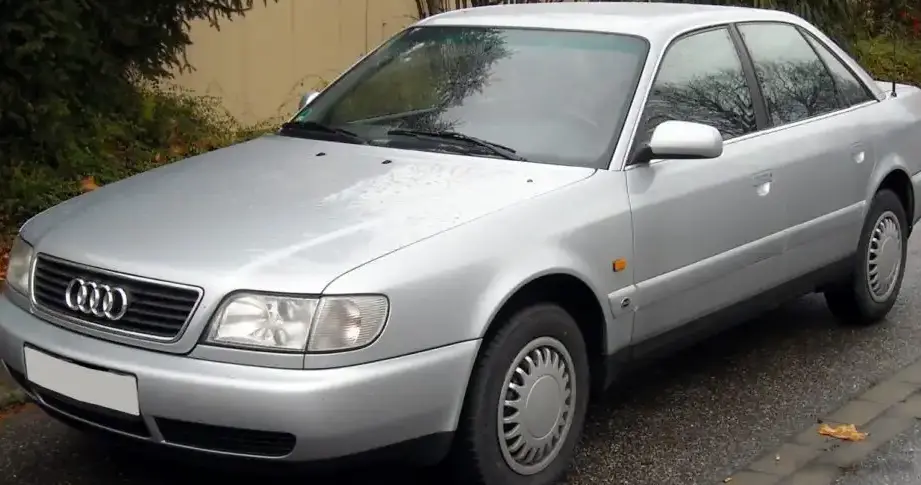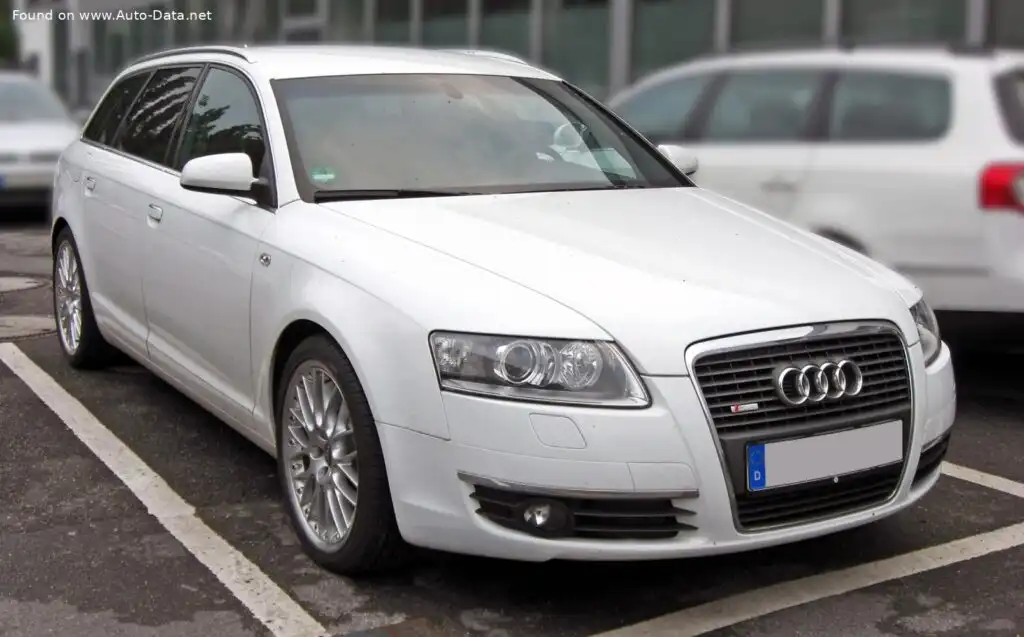
The Audi A6 Avant (4F, C6) 2.0 TDI, producing 140 horsepower, was a popular variant of Audi’s mid-size executive wagon, sold primarily in Europe from 2006 to 2008. Positioned as a more economical alternative to the higher-performance gasoline engines and larger TDI options, this model aimed to balance practicality, fuel efficiency, and a degree of refinement expected from the A6 lineage. It was part of the C6 generation A6, which utilized the Volkswagen Group’s PL46 platform (internally known as 1HX0 for the Avant). This generation represented a significant step forward for Audi in terms of interior quality and technological features.
Technical Specifications
| Brand | Audi |
| Model | A6 |
| Generation | A6 Avant (4F,C6) |
| Type (Engine) | 2.0 TDI (140 Hp) |
| Start of production | 2006 |
| End of production | 2008 |
| Powertrain Architecture | Internal Combustion engine |
| Body type | Station wagon (estate) |
| Seats | 5 |
| Doors | 5 |
| Fuel consumption (urban) | 8.2 l/100 km (28.7 US mpg, 34.4 UK mpg, 12.2 km/l) |
| Fuel consumption (extra urban) | 4.9 l/100 km (48 US mpg, 57.6 UK mpg, 20.4 km/l) |
| Fuel consumption (combined) | 6.1 l/100 km (38.6 US mpg, 46.3 UK mpg, 16.4 km/l) |
| CO2 emissions | 164 g/km |
| Fuel Type | Diesel |
| Acceleration 0 – 100 km/h | 10.5 sec |
| Acceleration 0 – 62 mph | 10.5 sec |
| Acceleration 0 – 60 mph | 10 sec |
| Maximum speed | 205 km/h (127.38 mph) |
| Emission standard | Euro 4 |
| Weight-to-power ratio | 11.5 kg/Hp, 87 Hp/tonne |
| Weight-to-torque ratio | 5 kg/Nm, 198.8 Nm/tonne |
| Power | 140 Hp @ 4000 rpm |
| Power per litre | 71.1 Hp/l |
| Torque | 320 Nm @ 1750-2500 rpm (236.02 lb.-ft. @ 1750-2500 rpm) |
| Engine layout | Front, Longitudinal |
| Engine Model/Code | EA188 / BLB |
| Engine displacement | 1968 cm3 (120.09 cu. in.) |
| Number of cylinders | 4 |
| Engine configuration | Inline |
| Cylinder Bore | 81 mm (3.19 in.) |
| Piston Stroke | 95.5 mm (3.76 in.) |
| Compression ratio | 19.5:1 |
| Number of valves per cylinder | 4 |
| Fuel injection system | Pump-nozzle (Unit Injector) |
| Engine aspiration | Turbocharger, Intercooler |
| Valvetrain | DOHC |
| Engine oil capacity | 3.8 l (4.02 US qt | 3.34 UK qt) |
| Coolant | 8 l (8.45 US qt | 7.04 UK qt) |
| Kerb Weight | 1610 kg (3549.44 lbs.) |
| Max. weight | 2240 kg (4938.35 lbs.) |
| Max load | 630 kg (1388.91 lbs.) |
| Trunk (boot) space – minimum | 565 l (19.95 cu. ft.) |
| Trunk (boot) space – maximum | 1660 l (58.62 cu. ft.) |
| Fuel tank capacity | 70 l (18.49 US gal | 15.4 UK gal) |
| Max. roof load | 100 kg (220.46 lbs.) |
| Permitted trailer load with brakes (8%) | 1800 kg (3968.32 lbs.) |
| Permitted trailer load with brakes (12%) | 1600 kg (3527.4 lbs.) |
| Permitted trailer load without brakes | 750 kg (1653.47 lbs.) |
| Permitted towbar download | 85 kg (187.39 lbs.) |
| Length | 4933 mm (194.21 in.) |
| Width | 1855 mm (73.03 in.) |
| Height | 1463 mm (57.6 in.) |
| Wheelbase | 2843 mm (111.93 in.) |
| Front track | 1612 mm (63.46 in.) |
| Rear (Back) track | 1618 mm (63.7 in.) |
| Drag coefficient (Cd) | 0.31 |
| Minimum turning circle (turning diameter) | 11.9 m (39.04 ft.) |
| Drivetrain Architecture | The Internal combustion engine (ICE) drives the front wheels of the vehicle. |
| Drive wheel | Front wheel drive |
| Number of gears and type of gearbox | 6 gears, manual transmission |
| Front suspension | Independent multi-link suspension |
| Rear suspension | Independent on trapezoidal lever |
| Front brakes | Ventilated discs |
| Rear brakes | Disc |
| Assisting systems | ABS (Anti-lock braking system) |
| Steering type | Steering rack and pinion |
| Tires size | 205/60 R16 |
| Wheel rims size | 7J x 16 |
INTRODUCTION
The Audi A6 Avant (4F, C6) 2.0 TDI 140 hp, introduced in 2006, represented a key offering in Audi’s wagon lineup. It slotted into the A6 Avant range as an entry-level diesel option, providing a more affordable and fuel-efficient alternative to the more powerful 2.7 TDI and 3.2 FSI models. The C6 generation A6, produced from 2004 to 2011, was a significant model for Audi, marking a move towards a more premium and technologically advanced vehicle. The Avant (wagon) body style was particularly popular in Europe, where practicality and cargo space were highly valued.
Powertrain & Engine Architecture
At the heart of the A6 Avant 2.0 TDI was the Volkswagen Group’s EA188 engine family, specifically the BLB engine code. This 1968cc, four-cylinder diesel engine utilized pump-nozzle (unit injector) technology for direct fuel injection, a system known for its precision and efficiency. The engine featured a single overhead camshaft (SOHC) design operating four valves per cylinder (DOHC). A turbocharger with an intercooler was employed to boost power and torque. The 2.0 TDI produced 140 horsepower at 4000 rpm and a respectable 320 Nm (236 lb-ft) of torque between 1750 and 2500 rpm. This engine was typically paired with a six-speed manual transmission, although a six-speed automatic transmission (often the 09G) was also available, albeit less common. The automatic transmission offered convenience but slightly impacted fuel economy and acceleration compared to the manual.
Driving Characteristics
The 2.0 TDI 140 hp A6 Avant offered a comfortable and refined driving experience, prioritizing fuel economy and usability over outright performance. Acceleration from 0 to 100 km/h (0-62 mph) took around 10.5 seconds, which was adequate for everyday driving but noticeably slower than the more powerful A6 variants. The engine’s torque delivery was strong in the mid-range, making it well-suited for overtaking and cruising on highways. The six-speed manual transmission allowed for precise gear selection, while the automatic, when equipped, provided smooth shifts but could sometimes feel hesitant during quick acceleration. The front-wheel-drive configuration provided good traction in most conditions, but could exhibit some torque steer under hard acceleration.
Equipment & Trim Levels
The A6 Avant 2.0 TDI typically came with a reasonable level of standard equipment. This included features like air conditioning, power windows, central locking, and an audio system. Higher trim levels, such as SE or S-Line, added features like alloy wheels, upgraded interior trim, parking sensors, and a more sophisticated audio system. Interior upholstery was typically cloth, with leather options available as an upgrade. Optional extras included a sunroof, navigation system, and advanced driver-assistance systems like rain sensors and automatic headlights.
Chassis & Braking
The A6 Avant featured an independent multi-link suspension at the front and an independent trapezoidal lever suspension at the rear, providing a comfortable ride and good handling characteristics. The front brakes were ventilated discs, while the rear brakes were solid discs. Anti-lock Braking System (ABS) was standard. The suspension was tuned to prioritize comfort, but still offered a reasonable level of control in corners. Stabilizer bars were fitted front and rear to reduce body roll.
Market Reception & Comparison
The A6 Avant 2.0 TDI was generally well-received by automotive critics as a practical and economical choice in the executive wagon segment. It was praised for its fuel efficiency, comfortable ride, and spacious interior. However, some critics noted that the 140 hp engine could feel underpowered, especially when fully loaded or when driving uphill. Compared to the 2.7 TDI, the 2.0 TDI offered significantly lower running costs but lacked the same level of performance. The 2.0 TDI was also often compared to rivals like the BMW 3 Series Touring and Mercedes-Benz C-Class Estate, generally holding its own in terms of practicality and refinement.
Legacy
The EA188 2.0 TDI engine, in its various iterations, proved to be a relatively reliable powertrain, although early versions were known to have some issues with diesel particulate filter (DPF) clogging and turbocharger failures. Proper maintenance, including regular oil changes and DPF regeneration, is crucial for long-term reliability. Today, the A6 Avant 2.0 TDI can be found on the used car market at relatively affordable prices. It remains a popular choice for those seeking a practical, fuel-efficient, and comfortable wagon. The engine’s relatively simple design and readily available parts contribute to its continued appeal for DIY mechanics and those seeking a cost-effective ownership experience.