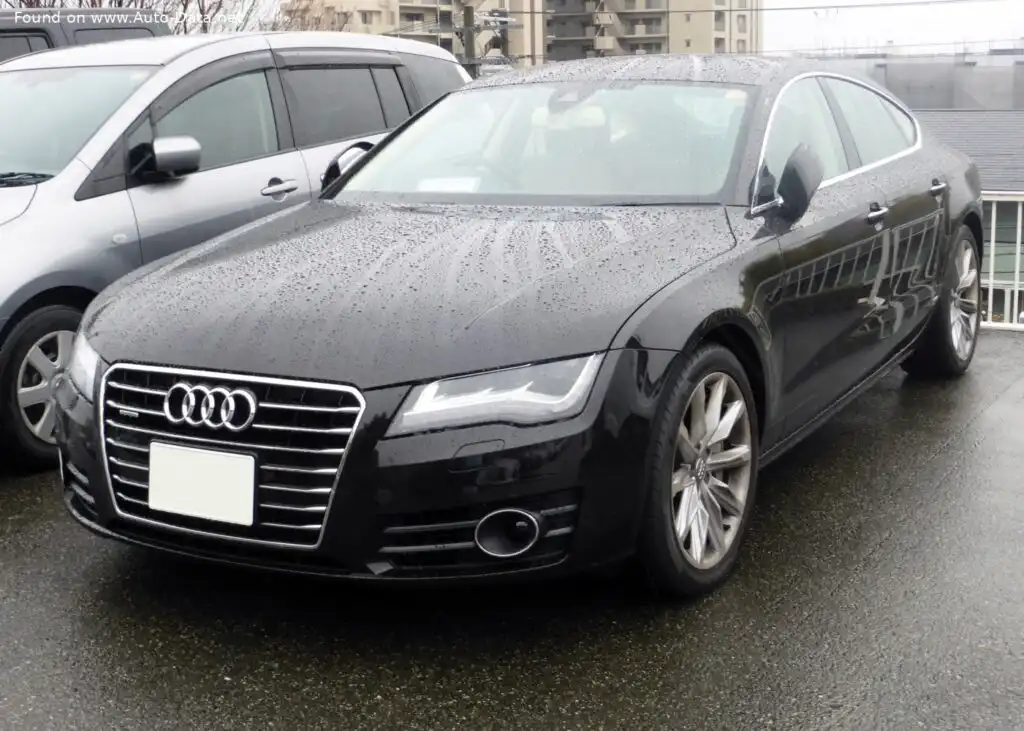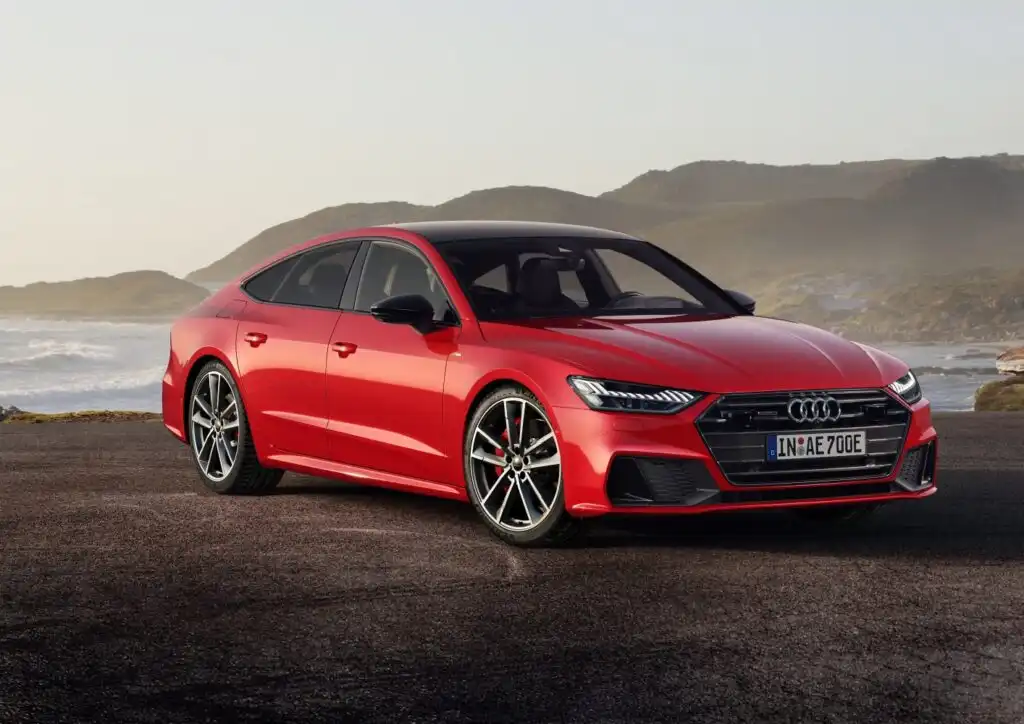
The Audi A7 Sportback (C8) 55 TFSI e, produced from 2019 to 2020, represents Audi’s foray into plug-in hybrid technology within the executive liftback segment. This variant, positioned as a mid-to-high range offering within the C8 A7 lineup, combined a 2.0-liter turbocharged four-cylinder engine with an electric motor and a lithium-ion battery pack, delivering a total system output of 367 horsepower. It was designed to appeal to buyers seeking a blend of performance, efficiency, and advanced technology, particularly in European markets where emissions regulations were becoming increasingly stringent. The “55 TFSI e” designation signifies its power output level within Audi’s naming convention, and the “quattro ultra” indicates its intelligent all-wheel drive system.
Technical Specifications
| Brand | Audi |
| Model | A7 |
| Generation | A7 Sportback (C8) |
| Type | 55 TFSI e (367 Hp) Plug-in Hybrid quattro ultra S tronic |
| Start of production | 2019 |
| End of production | 2020 |
| Powertrain Architecture | PHEV (Plug-in Hybrid Electric Vehicle) |
| Body type | Liftback |
| Seats | 5 |
| Doors | 5 |
| Combined fuel consumption (WLTP) | 1.9-2.1 l/100 km (123.8 – 112 US mpg, 148.7 – 134.5 UK mpg, 52.6 – 47.6 km/l) |
| CO2 emissions (WLTP) | 44-48 g/km |
| Fuel Type | Petrol / electricity |
| Acceleration 0 – 100 km/h | 5.7 sec |
| Acceleration 0 – 62 mph | 5.7 sec |
| Acceleration 0 – 60 mph | 5.4 sec |
| Maximum speed | 250 km/h (155.34 mph) |
| Emission standard | Euro 6d-TEMP-EVAP-ISC |
| Weight-to-power ratio | 5.6 kg/Hp, 177.7 Hp/tonne |
| Weight-to-torque ratio | 4.1 kg/Nm, 242.1 Nm/tonne |
| Gross battery capacity | 14.1 kWh |
| Net (usable) battery capacity | 11.3 kWh |
| Battery voltage | 381 V |
| Battery technology | Lithium-ion (Li-Ion) |
| Battery location | Under the trunk |
| Recuperation output | 80 kW |
| All-electric range (WLTP) | 45-52 km (27.96 – 32.31 mi) |
| Average Energy consumption | 17.5-18.1 kWh/100 km (28.16 – 29.13 kWh/100 mi, 120 – 116 MPGe, 5.7 – 5.5 km/kWh, 3.6 – 3.4 mi/kWh) |
| Max speed (electric) | 135 km/h (83.89 mph) |
| Electric motor power | 143 Hp |
| Electric motor Torque | 350 Nm (258.15 lb.-ft.) |
| Electric motor location | Between the combustion engine and the transmission |
| System power | 367 Hp |
| System torque | 500 Nm @ 1250 rpm (368.78 lb.-ft. @ 1250 rpm) |
| Power | 252 Hp @ 5000-6000 rpm |
| Torque | 370 Nm @ 1600-4500 rpm (272.9 lb.-ft. @ 1600-4500 rpm) |
| Engine layout | Front, Longitudinal |
| Engine Model/Code | DLGA |
| Engine displacement | 1984 cm3 (121.07 cu. in.) |
| Number of cylinders | 4 |
| Engine configuration | Inline |
| Cylinder Bore | 82.5 mm (3.25 in.) |
| Piston Stroke | 92.8 mm (3.65 in.) |
| Compression ratio | 9.6:1 |
| Number of valves per cylinder | 4 |
| Fuel injection system | Direct injection |
| Engine aspiration | Turbocharger, Intercooler |
| Valvetrain | DOHC |
| Engine oil capacity | 5.2 l (5.49 US qt | 4.58 UK qt) |
| Coolant | 16.9 l (17.86 US qt | 14.87 UK qt) |
| Kerb Weight | 2065 kg (4552.55 lbs.) |
| Max. weight | 2650 kg (5842.25 lbs.) |
| Max load | 585 kg (1289.7 lbs.) |
| Trunk (boot) space – minimum | 380 l (13.42 cu. ft.) |
| Trunk (boot) space – maximum | 1235 l (43.61 cu. ft.) |
| Fuel tank capacity | 52 l (13.74 US gal | 11.44 UK gal) |
| Max. roof load | 100 kg (220.46 lbs.) |
| Permitted trailer load with brakes (12%) | 2000 kg (4409.25 lbs.) |
| Permitted trailer load without brakes | 750 kg (1653.47 lbs.) |
| Permitted towbar download | 95 kg (209.44 lbs.) |
| Length | 4969 mm (195.63 in.) |
| Width | 1908 mm (75.12 in.) |
| Width including mirrors | 2118 mm (83.39 in.) |
| Height | 1422 mm (55.98 in.) |
| Wheelbase | 2926 mm (115.2 in.) |
| Front track | 1651 mm (65 in.) |
| Rear (Back) track | 1637 mm (64.45 in.) |
| Front overhang | 927 mm (36.5 in.) |
| Rear overhang | 1116 mm (43.94 in.) |
| Drag coefficient (Cd) | 0.28 |
| Minimum turning circle (turning diameter) | 12.4 m (40.68 ft.) |
| Drivetrain Architecture | The Internal combustion engine (ICE) and the electric motor permanently drive the front wheels of the vehicle, capable of running in full electric or mixed mode, and if necessary through the electrically or mechanically controlled clutch, the rear wheels are driven. |
| Drive wheel | All wheel drive (4×4) |
| Number of gears and type of gearbox | 7 gears, automatic transmission S tronic |
| Front suspension | Independent multi-link suspension, Transverse stabilizer |
| Rear suspension | Independent multi-link suspension, Transverse stabilizer |
| Front brakes | Ventilated discs |
| Rear brakes | Ventilated discs |
INTRODUCTION
The Audi A7 Sportback (C8) 55 TFSI e, launched in 2019, is a plug-in hybrid variant of the C8 generation A7. The C8 A7, built on the Volkswagen Group’s MLB Evo platform (shared with models like the Audi Q7 and Porsche Cayenne), aimed to blend the practicality of a liftback with the luxury and technology expected of a flagship Audi. The 55 TFSI e specifically targeted buyers seeking reduced emissions and improved fuel economy without sacrificing performance. Production continued through 2020, with the model serving as a bridge between traditional internal combustion engines and fully electric vehicles in Audi’s lineup. It was primarily marketed in Europe and other regions with strong incentives for plug-in hybrid vehicles.
Powertrain & Engine Architecture
At the heart of the A7 55 TFSI e lies a 2.0-liter turbocharged inline-four cylinder engine, designated as the DLGA engine code. This engine produces 252 horsepower and 272.9 lb-ft of torque. It utilizes direct fuel injection and a single twin-scroll turbocharger to maximize efficiency and power output. The engine is paired with a 143 horsepower electric motor integrated between the engine and the seven-speed S tronic dual-clutch transmission. This configuration allows for both electric-only driving and a combined output of 367 horsepower and 368.78 lb-ft of torque. The 14.1 kWh (11.3 kWh usable) lithium-ion battery pack is located under the trunk floor, impacting cargo space slightly. The S tronic transmission provides quick and smooth gear changes, contributing to the car’s responsive driving experience. The engine management system intelligently blends power from the engine and electric motor, optimizing for efficiency or performance as needed.
Driving Characteristics
The A7 55 TFSI e offers a unique driving experience compared to its conventionally powered siblings. In electric-only mode, it provides near-silent acceleration and a range of up to 52 kilometers (32.31 miles) on the WLTP cycle. Switching to hybrid mode allows the car to leverage the combined power of the engine and electric motor, resulting in brisk acceleration – 0 to 60 mph in approximately 5.4 seconds. The S tronic transmission’s quick shifts and the electric motor’s instant torque contribute to a responsive feel. While the added weight of the battery pack (approximately 300 kg) does slightly impact handling compared to lighter A7 variants, the quattro all-wheel drive system maintains excellent grip and stability. The gear ratios are tuned to provide a balance between fuel efficiency and performance, with the electric motor filling in torque gaps during acceleration.
Equipment & Trim Levels
The 55 TFSI e trim generally came well-equipped, reflecting its position as a premium offering. Standard features typically included Audi’s virtual cockpit digital instrument cluster, a large touchscreen infotainment system with navigation, leather upholstery, three-zone automatic climate control, and a suite of advanced driver-assistance systems such as adaptive cruise control, lane keeping assist, and automatic emergency braking. Optional extras included features like a Bang & Olufsen sound system, massaging seats, and a head-up display. Interior trim options varied, allowing buyers to personalize the cabin with different wood or aluminum accents. The exterior styling was largely consistent with other C8 A7 models, with subtle “TFSI e” badging to denote its plug-in hybrid status.
Chassis & Braking
The A7 55 TFSI e utilizes an independent multi-link suspension setup at both the front and rear axles, providing a comfortable and controlled ride. Transverse stabilizers help to minimize body roll during cornering. The braking system consists of ventilated discs on all four wheels, offering strong stopping power. The quattro all-wheel drive system continuously adjusts the torque distribution between the front and rear axles based on driving conditions, enhancing traction and stability. Due to the increased weight from the battery pack, the suspension components were often slightly stiffer compared to the standard A7 models to maintain handling balance.
Market Reception & Comparison
The A7 55 TFSI e was generally well-received by automotive critics, who praised its blend of performance, efficiency, and luxury. However, some reviewers noted the reduced trunk space due to the battery pack. Compared to the A7 45 TDI (diesel) variant, the 55 TFSI e offered similar performance but with significantly lower emissions. Against the A7 55 TFSI (petrol), it provided improved fuel economy, particularly for drivers who frequently utilized the electric-only driving mode. The higher initial cost of the plug-in hybrid model was a consideration for some buyers, but government incentives and lower running costs could offset this difference over time.
Legacy
The Audi A7 Sportback (C8) 55 TFSI e represents an important step in Audi’s transition towards electrification. While it was a relatively short-lived model, it demonstrated the potential of plug-in hybrid technology to deliver both performance and efficiency in a luxury vehicle. The powertrain, while not without its complexities, has proven to be reasonably reliable in the used car market. The battery pack’s longevity is a key factor for potential buyers, and regular maintenance is crucial to ensure optimal performance. Today, the C8 A7 55 TFSI e remains a desirable option for those seeking a sophisticated and environmentally conscious executive car.