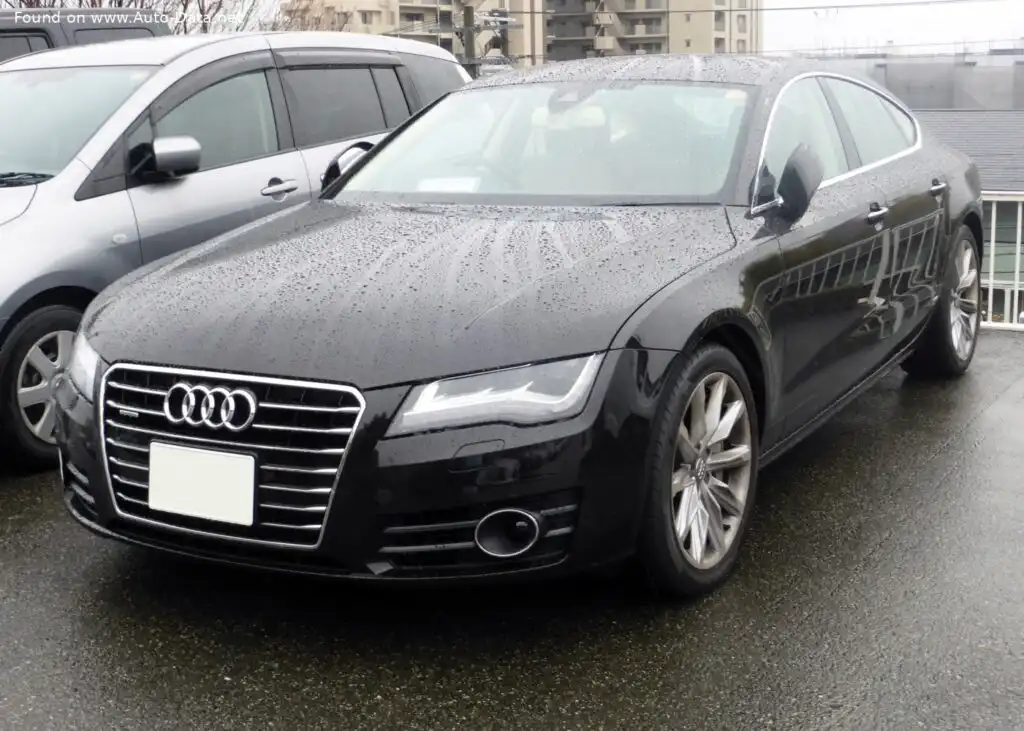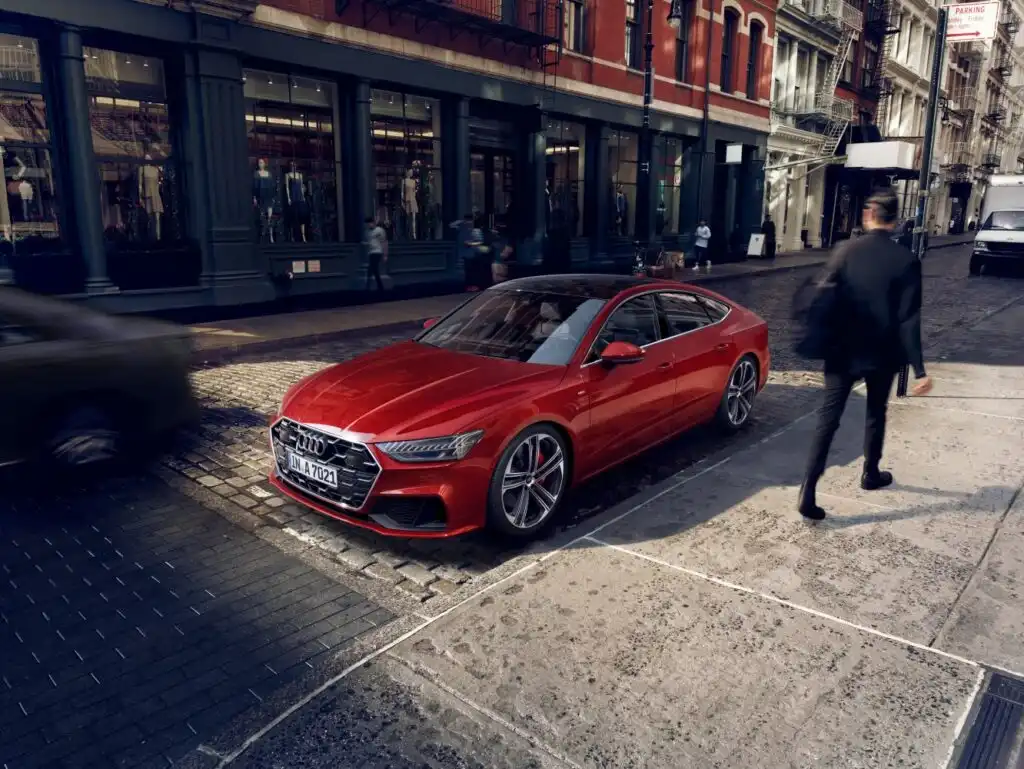
The Audi A7 Sportback (C8) facelift, specifically the 50 TDI V6 variant introduced in June 2023 and produced through March 2025, represents a refined iteration of Audi’s luxury liftback. Positioned as a mid-range offering within the C8 A7 lineup, this model combines a potent diesel engine with mild-hybrid technology and Audi’s renowned quattro all-wheel-drive system. It builds upon the foundation of the A7 Sportback (C8) launched in 2018, incorporating styling updates, enhanced technology, and optimized powertrain efficiency. This variant aimed to appeal to buyers seeking a balance of performance, luxury, and fuel economy in a sophisticated package.
Technical Specifications
| Brand | Audi |
| Model | A7 |
| Generation | A7 Sportback (C8, facelift 2023) |
| Type (Engine) | 50 TDI V6 (286 Hp) Mild Hybrid quattro tiptronic |
| Start of production | June, 2023 |
| End of production | March, 2025 |
| Powertrain Architecture | MHEV (Mild Hybrid Electric Vehicle) |
| Body type | Liftback |
| Seats | 5 |
| Doors | 5 |
| Combined fuel consumption (WLTP) | 6.4-7 l/100 km (36.8 – 33.6 US mpg, 44.1 – 40.4 UK mpg, 15.6 – 14.3 km/l) |
| CO2 emissions (WLTP) | 167-184 g/km |
| Fuel Type | Diesel |
| Acceleration 0 – 100 km/h | 5.6 sec |
| Acceleration 0 – 62 mph | 5.6 sec |
| Acceleration 0 – 60 mph | 5.3 sec |
| Maximum speed | 250 km/h (155.34 mph) |
| Emission standard | Euro 6e |
| Weight-to-power ratio | 6.6 kg/Hp, 152.1 Hp/tonne |
| Weight-to-torque ratio | 3 kg/Nm, 329.8 Nm/tonne |
| Net (usable) battery capacity | 0.5 kWh |
| Battery voltage | 48 V |
| Battery technology | Lithium-ion (Li-Ion) |
| Battery weight | 10 kg (22.05 lbs) |
| Battery location | Under the trunk |
| Recuperation output | 14 kW |
| Electric motor power | 8 Hp |
| Electric motor Torque | 60 Nm (44.25 lb.-ft.) |
| Electric motor location | Front, Longitudinal |
| Power | 286 Hp @ 3500-4000 rpm |
| Torque | 620 Nm @ 1750-3000 rpm (457.29 lb.-ft. @ 1750-3000 rpm) |
| Engine layout | Front, Longitudinal |
| Engine Model/Code | EA897evo3 / DMGA |
| Engine displacement | 2967 cm3 (181.06 cu. in.) |
| Number of cylinders | 6 |
| Engine configuration | V-engine |
| Cylinder Bore | 83 mm (3.27 in.) |
| Piston Stroke | 91.4 mm (3.6 in.) |
| Compression ratio | 16.3:1 |
| Number of valves per cylinder | 4 |
| Fuel injection system | Diesel Commonrail |
| Engine aspiration | Turbocharger, Intercooler |
| Valvetrain | DOHC |
| Engine oil capacity | 6.1 l (6.45 US qt | 5.37 UK qt) |
| Coolant | 15.7 l (16.59 US qt | 13.81 UK qt) |
| Kerb Weight | 1880 kg (4144.69 lbs) |
| Max. weight | 2535 kg (5588.72 lbs) |
| Max load | 655 kg (1444.03 lbs) |
| Trunk (boot) space – minimum | 525 l (18.54 cu. ft.) |
| Trunk (boot) space – maximum | 1380 l (48.73 cu. ft.) |
| Fuel tank capacity | 63 l (16.64 US gal | 13.86 UK gal) |
| AdBlue tank | 22 l (5.81 US gal | 4.84 UK gal) |
| Max. roof load | 90 kg (198.42 lbs) |
| Permitted trailer load with brakes (8%) | 2000 kg (4409.25 lbs) |
| Permitted trailer load with brakes (12%) | 2000 kg (4409.25 lbs) |
| Permitted trailer load without brakes | 750 kg (1653.47 lbs) |
| Permitted towbar download | 95 kg (209.44 lbs) |
| Length | 4969 mm (195.63 in.) |
| Width | 1908 mm (75.12 in.) |
| Width including mirrors | 2118 mm (83.39 in.) |
| Height | 1422 mm (55.98 in.) |
| Wheelbase | 2926 mm (115.2 in.) |
| Front track | 1651 mm (65 in.) |
| Rear (Back) track | 1637 mm (64.45 in.) |
| Front overhang | 927 mm (36.5 in.) |
| Rear overhang | 1116 mm (43.94 in.) |
| Drag coefficient (Cd) | 0.27 |
| Minimum turning circle (turning diameter) | 12.4 m (40.68 ft.) |
| Approach angle | 12.2° |
| Departure angle | 16.7° |
| Drivetrain Architecture | ICE and electric motor drive all four wheels, mixed mode operation. |
| Drive wheel | All wheel drive (4×4) |
| Number of gears and type of gearbox | 8 gears, automatic transmission tiptronic |
| Front suspension | Independent multi-link suspension |
| Rear suspension | Independent multi-link suspension |
| Front brakes | Ventilated discs, 350 mm |
| Rear brakes | Ventilated discs, 330 mm |
| Assisting systems | ABS (Anti-lock braking system) |
| Steering type | Steering rack and pinion |
| Power steering | Electric Steering |
| Tires size | 225/55 R18; 245/45 R19; 255/40 R20; 255/35 R21 |
| Wheel rims size | 8J x 18; 8.5J x 19; 8.5J x 20; 8.5J x 21 |
INTRODUCTION
The Audi A7 Sportback (C8) facelift 50 TDI V6, launched in mid-2023, is a five-door liftback that blends elegant design with sophisticated technology. It’s built on the Volkswagen Group’s MLB Evo platform (1HX0/A3), shared with other Audi models like the A6 and Q7. This particular variant, the 50 TDI, serves as a compelling alternative to the more powerful (and expensive) 55 TDI, offering a balance of performance and efficiency. The facelift brought subtle but significant changes to the exterior styling, including a revised front grille, headlights, and taillights, along with an upgraded interior featuring a new MMI touch response system. The 50 TDI aimed to capture a significant portion of the A7 market, appealing to buyers who prioritize a refined driving experience and modern features without the top-tier price tag.
Powertrain & Engine Architecture
At the heart of the A7 50 TDI lies the EA897evo3 3.0-liter V6 diesel engine. This engine, designated with the code DMGA, benefits from advanced technologies like a turbocharger with variable turbine geometry and a common-rail direct injection system operating at extremely high pressures. The engine produces 286 horsepower at 3500-4000 rpm and a substantial 620 Nm (457.29 lb-ft) of torque between 1750 and 3000 rpm. Crucially, this engine incorporates a 48V mild-hybrid system. This system utilizes a belt starter generator (BSG) and a small lithium-ion battery (0.5 kWh) to enable features like extended start-stop operation, coasting with the engine off, and a slight power boost during acceleration. The engine’s valvetrain utilizes double overhead camshafts (DOHC) and four valves per cylinder. The engine is paired with Audi’s eight-speed tiptronic automatic transmission, known for its smooth and responsive shifts. This transmission is electronically controlled and adapts to driving style for optimal performance and efficiency.
Driving Characteristics
The A7 50 TDI V6 with the tiptronic transmission delivers a refined and comfortable driving experience. While not as overtly sporty as the higher-output variants, the 50 TDI provides ample power for effortless cruising and confident overtaking. The 0-60 mph acceleration time of around 5.3 seconds is respectable, and the broad torque curve ensures strong pulling power throughout the rev range. The eight-speed tiptronic transmission is well-matched to the engine, providing smooth gear changes and contributing to relaxed highway driving. Compared to a manual transmission, the tiptronic prioritizes convenience and ease of use, but may offer slightly less driver engagement. The quattro all-wheel-drive system provides excellent traction in all weather conditions, enhancing stability and control. The mild-hybrid system contributes to improved fuel economy, particularly in urban driving, by allowing for extended periods of engine-off coasting.
Equipment & Trim Levels
The A7 50 TDI typically came well-equipped as standard. Features included Audi’s virtual cockpit digital instrument cluster, a touchscreen MMI infotainment system with navigation, leather upholstery, three-zone automatic climate control, and a suite of driver-assistance systems such as adaptive cruise control, lane departure warning, and automatic emergency braking. Optional extras included features like a Bang & Olufsen premium sound system, massaging front seats, a head-up display, and various cosmetic enhancements. Interior trim options ranged from brushed aluminum to wood veneers, allowing buyers to personalize the cabin to their preferences. The standard upholstery was typically leather/Alcantara combination, with full leather options available as upgrades.
Chassis & Braking
The A7 50 TDI utilizes an independent multi-link suspension setup at both the front and rear axles, providing a comfortable and controlled ride. The suspension is tuned to prioritize comfort, but still offers good body control in corners. The car features ventilated disc brakes on all four wheels, with larger discs at the front for increased stopping power. The braking system is assisted by ABS (Anti-lock Braking System) and electronic stability control. The steering is an electric power steering system, offering precise and responsive control. The chassis is designed to accommodate the weight of the powertrain and all-wheel-drive system, providing a stable and planted feel on the road.
Market Reception & Comparison
The Audi A7 50 TDI V6 was generally well-received by automotive critics. It was praised for its refined engine, comfortable ride, and luxurious interior. Critics noted that while it didn’t offer the outright performance of the 55 TDI, it provided a compelling balance of power and efficiency. Compared to the 55 TDI, the 50 TDI offered a lower price point and slightly better fuel economy. Compared to competitors like the BMW 5 Series and Mercedes-Benz E-Class, the A7 50 TDI was often seen as offering a more technologically advanced and stylish package. Fuel economy figures of 6.4-7 l/100 km (36.8 – 33.6 US mpg) were considered competitive for a vehicle of its size and performance.
Legacy
The EA897evo3 engine family, including the 3.0-liter V6 diesel used in the A7 50 TDI, has proven to be relatively reliable. However, like all modern diesel engines, it’s susceptible to issues related to the diesel particulate filter (DPF) and AdBlue system, particularly if the vehicle is primarily used for short trips. The mild-hybrid system has also demonstrated good long-term reliability. On the used car market, the A7 50 TDI represents a good value proposition, offering a luxurious and well-equipped vehicle at a more affordable price point than the higher-output variants. Its combination of performance, efficiency, and technology continues to make it an attractive option for buyers seeking a sophisticated and versatile luxury liftback.