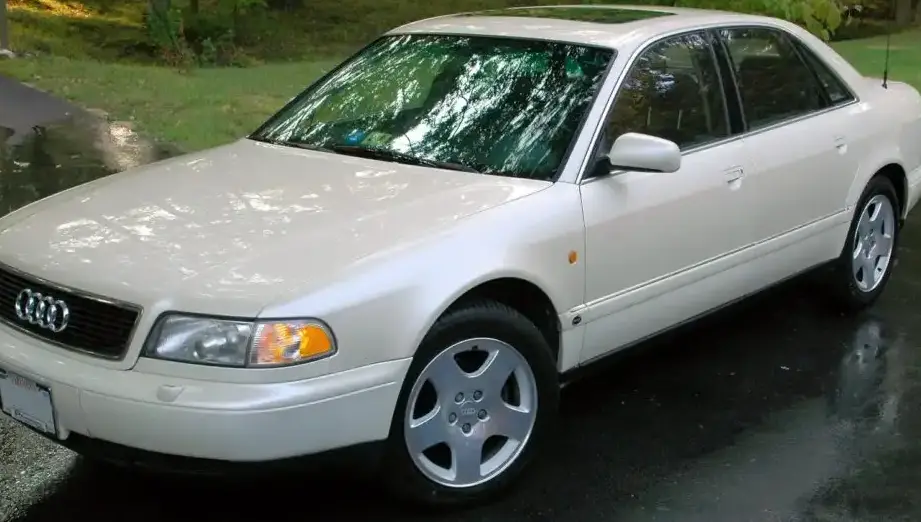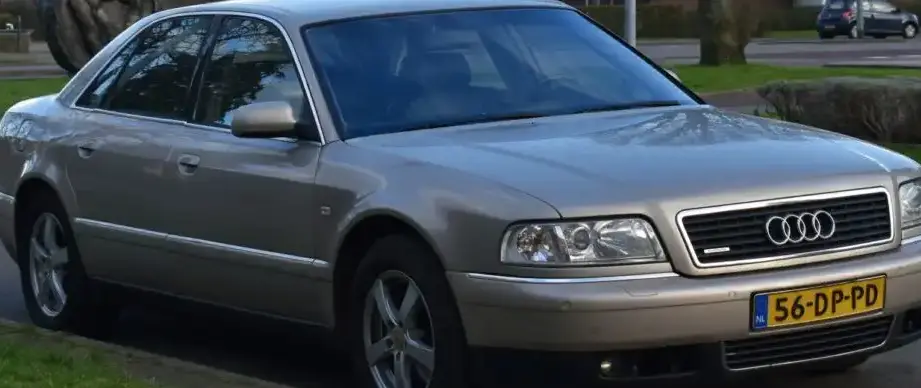
The Audi A8 (D2) facelift, produced from 1998 to 2002, represented a significant evolution of Audi’s flagship luxury sedan. The 3.7 V8 40V tiptronic variant occupied a sweet spot in the lineup, offering a blend of performance and refinement aimed at buyers seeking a comfortable and capable grand tourer. This model, designated internally as the 4D chassis code, benefited from the mid-cycle refresh which included styling updates, improved interior materials, and advancements in technology. It served as a key competitor to the BMW 7 Series and Mercedes-Benz S-Class, establishing Audi as a serious contender in the full-size luxury segment.
Technical Specifications
| Brand | Audi |
| Model | A8 |
| Generation | A8 (D2, 4D, facelift 1998) |
| Type (Engine) | 3.7 V8 40V (260 Hp) tiptronic |
| Start of production | 1998 |
| End of production | 2002 |
| Powertrain Architecture | Internal Combustion engine |
| Body type | Sedan |
| Seats | 5 |
| Doors | 4 |
| Fuel consumption (economy) – urban (NEDC) | 16.9 l/100 km (13.9 US mpg, 16.7 UK mpg, 5.9 km/l) |
| Fuel consumption (economy) – extra urban (NEDC) | 8.4 l/100 km (28 US mpg, 33.6 UK mpg, 11.9 km/l) |
| Fuel consumption (economy) – combined (NEDC) | 11.5 l/100 km (20.5 US mpg, 24.6 UK mpg, 8.7 km/l) |
| CO2 emissions (NEDC) | 276 g/km |
| Fuel Type | Petrol (Gasoline) |
| Acceleration 0 – 100 km/h | 8.1 sec |
| Acceleration 0 – 62 mph | 8.1 sec |
| Acceleration 0 – 60 mph | 7.7 sec |
| Maximum speed | 250 km/h (155.34 mph) – Electronically limited |
| Emission standard | Euro 3 |
| Weight-to-power ratio | 6.3 kg/Hp, 158.1 Hp/tonne |
| Weight-to-torque ratio | 4.7 kg/Nm, 212.8 Nm/tonne |
| Power | 260 Hp @ 6000 rpm |
| Power per litre | 70.3 Hp/l |
| Torque | 350 Nm @ 3250 rpm (258.15 lb.-ft. @ 3250 rpm) |
| Engine layout | Front, Longitudinal |
| Engine Model/Code | AQG |
| Engine displacement | 3697 cm3 (225.6 cu. in.) |
| Number of cylinders | 8 |
| Engine configuration | V-engine |
| Cylinder Bore | 84.5 mm (3.33 in.) |
| Piston Stroke | 82.4 mm (3.24 in.) |
| Compression ratio | 11:1 |
| Number of valves per cylinder | 5 |
| Fuel injection system | Multi-port manifold injection |
| Engine aspiration | Naturally aspirated engine |
| Valvetrain | DOHC |
| Engine oil capacity | 7.5 l (7.93 US qt | 6.6 UK qt) |
| Coolant | 11 l (11.62 US qt | 9.68 UK qt) |
| Kerb Weight | 1645 kg (3626.6 lbs.) |
| Max. weight | 2245 kg (4949.38 lbs.) |
| Max load | 600 kg (1322.77 lbs.) |
| Trunk (boot) space – minimum | 525 l (18.54 cu. ft.) |
| Fuel tank capacity | 90 l (23.78 US gal | 19.8 UK gal) |
| Max. roof load | 100 kg (220.46 lbs.) |
| Permitted trailer load with brakes (8%) | 2200 kg (4850.17 lbs.) |
| Permitted trailer load with brakes (12%) | 2000 kg (4409.25 lbs.) |
| Permitted trailer load without brakes | 750 kg (1653.47 lbs.) |
| Permitted towbar download | 95 kg (209.44 lbs.) |
| Length | 5034 mm (198.19 in.) |
| Width | 1880 mm (74.02 in.) |
| Width including mirrors | 1973 mm (77.68 in.) |
| Height | 1438 mm (56.61 in.) |
| Wheelbase | 2880 mm (113.39 in.) |
| Front track | 1591 mm (62.64 in.) |
| Rear (Back) track | 1580 mm (62.2 in.) |
| Front overhang | 1018 mm (40.08 in.) |
| Rear overhang | 1136 mm (44.72 in.) |
| Drag coefficient (Cd) | 0.30 |
| Minimum turning circle (turning diameter) | 12.3 m (40.35 ft.) |
| Drivetrain Architecture | The Internal combustion engine (ICE) drives the front wheels of the vehicle. |
| Drive wheel | Front wheel drive |
| Number of gears and type of gearbox | 5 gears, automatic transmission tiptronic |
| Front suspension | Independent multi-link suspension, Transverse stabilizer |
| Rear suspension | Independent on trapezoidal lever, Transverse stabilizer |
| Front brakes | Ventilated discs |
| Rear brakes | Ventilated discs |
| Assisting systems | ABS (Anti-lock braking system) |
| Steering type | Steering rack and pinion |
| Power steering | Hydraulic Steering |
| Tires size | 225/60 R16 |
| Wheel rims size | 7.5J x 16 |
Powertrain & Engine Architecture
The heart of the A8 3.7 was the AQG engine, a 3.7-liter naturally aspirated V8. This engine featured a 90-degree V-angle, four valves per cylinder (40V), and a double overhead camshaft (DOHC) design. The AQG benefitted from Bosch Motronic fuel injection, delivering precise fuel metering for optimal performance and efficiency. The engine’s architecture prioritized smooth power delivery over outright aggression, aligning with the A8’s luxury positioning. Paired with this engine was a five-speed tiptronic automatic transmission. This transmission allowed for both fully automatic operation and driver-selectable gear changes, offering a degree of control without the complexity of a manual gearbox. The tiptronic system used a torque converter for smooth launches and low-speed driving, and electronically controlled clutches for quicker shifts when in manual mode.
Driving Characteristics
The 3.7 V8 tiptronic A8 offered a refined and comfortable driving experience. While not a sports sedan, the 260 horsepower and 350 Nm (258 lb-ft) of torque provided ample power for effortless cruising and confident overtaking. The tiptronic transmission, while not as quick as some later iterations, offered smooth and predictable shifts. Compared to the more powerful 4.2-liter V8, the 3.7 felt less urgent, but it also offered better fuel economy. Against the diesel-powered variants, like the 2.5 TDI, the 3.7 provided a more responsive and refined driving experience, albeit at the cost of fuel efficiency. The gear ratios were tuned for relaxed highway cruising, with a focus on minimizing engine noise and maximizing comfort.
Equipment & Trim Levels
The A8 3.7 tiptronic typically came well-equipped, reflecting its luxury status. Standard features included leather upholstery, power-adjustable front seats with memory function, automatic climate control, a premium sound system, and alloy wheels. Optional extras included a sunroof, navigation system, rear seat entertainment, and upgraded leather packages. The interior design emphasized elegance and sophistication, with high-quality materials and a clean, uncluttered layout. The wood trim and chrome accents added to the luxurious ambiance.
Chassis & Braking
The A8 (D2) featured an independent suspension system on all four wheels, utilizing multi-link setups at the front and a trapezoidal lever arrangement at the rear. This configuration provided a comfortable ride and good handling characteristics. Stabilizer bars were fitted front and rear to reduce body roll during cornering. Braking duties were handled by ventilated disc brakes on all four wheels, coupled with an Anti-lock Braking System (ABS) for enhanced safety. The suspension was tuned to prioritize ride comfort over sporty handling, making it well-suited for long-distance cruising.
Market Reception & Comparison
The A8 3.7 V8 tiptronic was generally well-received by automotive critics. It was praised for its comfortable ride, refined engine, and luxurious interior. However, some reviewers noted that the performance wasn’t as exhilarating as some of its competitors, particularly the BMW 7 Series. Fuel economy was also a point of concern, as the 3.7-liter V8 wasn’t particularly efficient. Compared to the 2.8-liter V6 A8, the 3.7 offered a significant performance upgrade, but at a higher price point. The 4.2-liter V8 provided even more power, but also came with a higher running cost.
Legacy
The Audi A8 (D2) 3.7 V8 tiptronic remains a desirable classic among luxury car enthusiasts. The AQG engine, while not without its quirks, is generally considered to be reliable if properly maintained. Common issues include oil leaks and occasional sensor failures. The tiptronic transmission can also require attention as it ages. Today, these cars can be found in good condition, often with relatively low mileage. They represent a compelling value for those seeking a comfortable, well-equipped, and stylish luxury sedan from the late 1990s and early 2000s. The A8 D2 laid the groundwork for Audi’s continued success in the luxury car market, establishing the brand as a serious rival to the established German giants.