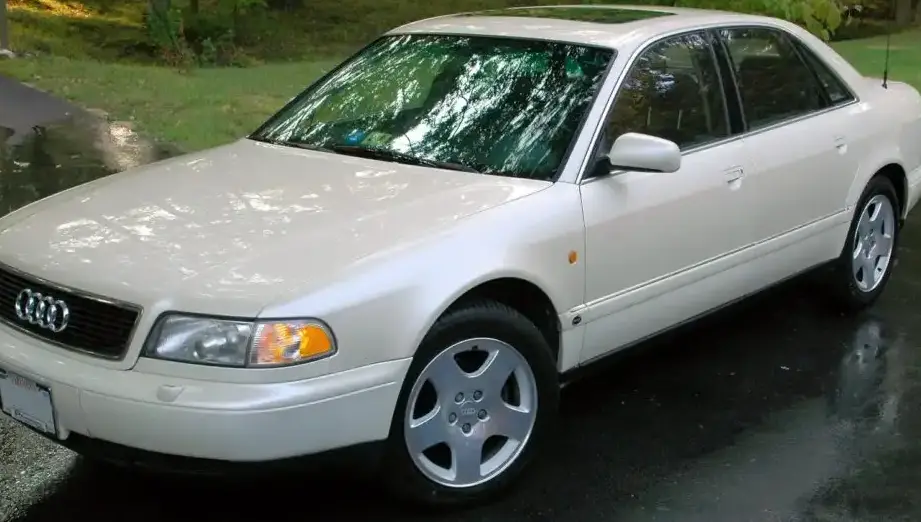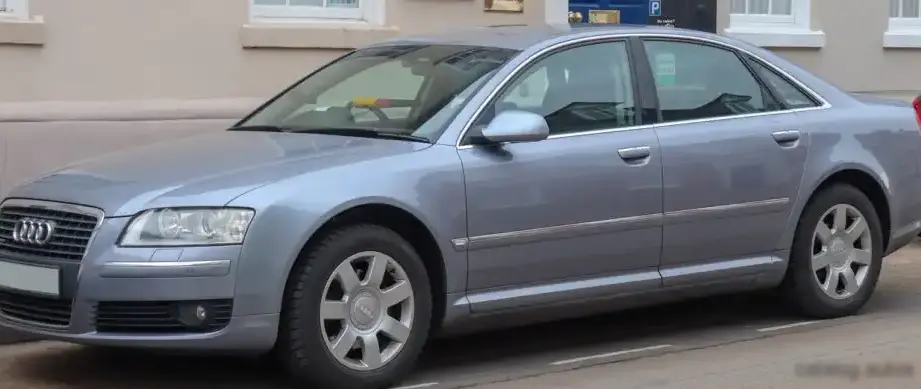
The Audi A8 (D3, 4E) facelift of 2005, specifically the 3.2 FSI V6 variant paired with the Multitronic continuously variable transmission (CVT), represented a significant refinement of Audi’s flagship sedan. Produced from 2005 to 2007, this model occupied a middle ground in the A8 lineup, offering a balance between performance and efficiency, positioned below the more powerful 4.2 FSI models and above the entry-level 3.0 TDI. It was a key offering in the luxury sedan segment, competing with vehicles like the BMW 7 Series and Mercedes-Benz S-Class, and aimed to deliver Audi’s signature blend of technology, comfort, and understated elegance to the North American market as well as Europe and Asia.
Technical Specifications
| Brand | Audi |
| Model | A8 |
| Generation | A8 (D3, 4E, facelift 2005) |
| Type (Engine) | 3.2 FSI V6 (260 Hp) Multitronic |
| Start of production | 2005 |
| End of production | 2007 |
| Powertrain Architecture | Internal Combustion engine |
| Body type | Sedan |
| Seats | 5 |
| Doors | 4 |
| Fuel consumption (urban) | 14.6-14.7 l/100 km (16.1 – 16 US mpg, 19.3 – 19.2 UK mpg, 6.8 km/l) |
| Fuel consumption (extra urban) | 7.0-7.1 l/100 km (33.6 – 33.1 US mpg, 40.4 – 39.8 UK mpg, 14.3 – 14.1 km/l) |
| Fuel consumption (combined) | 9.8-9.9 l/100 km (24 – 23.8 US mpg, 28.8 – 28.5 UK mpg, 10.2 – 10.1 km/l) |
| CO2 emissions | 235 – 238 g/km |
| Fuel Type | Petrol (Gasoline) |
| Acceleration 0 – 100 km/h | 7.7 sec |
| Acceleration 0 – 62 mph | 7.7 sec |
| Acceleration 0 – 60 mph | 7.3 sec |
| Maximum speed | 250 km/h (155.34 mph) |
| Emission standard | Euro 4 |
| Weight-to-power ratio | 6.5 kg/Hp, 153.8 Hp/tonne |
| Weight-to-torque ratio | 5.1 kg/Nm, 195.3 Nm/tonne |
| Power | 260 Hp @ 6500 rpm |
| Power per litre | 83.3 Hp/l |
| Torque | 330 Nm @ 3250 rpm (243.4 lb.-ft. @ 3250 rpm) |
| Engine layout | Front, Longitudinal |
| Engine Model/Code | BPK |
| Engine displacement | 3123 cm3 (190.58 cu. in.) |
| Number of cylinders | 6 |
| Engine configuration | V-engine |
| Cylinder Bore | 84.5 mm (3.33 in.) |
| Piston Stroke | 92.8 mm (3.65 in.) |
| Compression ratio | 12.5:1 |
| Number of valves per cylinder | 4 |
| Fuel injection system | Direct injection |
| Engine aspiration | Naturally aspirated engine |
| Valvetrain | DOHC |
| Engine oil capacity | 6.1 l (6.45 US qt | 5.37 UK qt) |
| Coolant | 12 l (12.68 US qt | 10.56 UK qt) |
| Kerb Weight | 1690 kg (3725.81 lbs.) |
| Max. weight | 2290 kg (5048.59 lbs.) |
| Max load | 600 kg (1322.77 lbs.) |
| Trunk (boot) space – minimum | 500 l (17.66 cu. ft.) |
| Fuel tank capacity | 90 l (23.78 US gal | 19.8 UK gal) |
| Max. roof load | 100 kg (220.46 lbs.) |
| Permitted trailer load with brakes (8%) | 2100 kg (4629.71 lbs.) |
| Permitted trailer load with brakes (12%) | 1900 kg (4188.78 lbs.) |
| Permitted trailer load without brakes | 750 kg (1653.47 lbs.) |
| Permitted towbar download | 95 kg (209.44 lbs.) |
| Length | 5062 mm (199.29 in.) |
| Width | 1894 mm (74.57 in.) |
| Height | 1444 mm (56.85 in.) |
| Wheelbase | 2944 mm (115.91 in.) |
| Front track | 1629 mm (64.13 in.) |
| Rear (Back) track | 1615 mm (63.58 in.) |
| Drag coefficient (Cd) | 0.27 |
| Minimum turning circle (turning diameter) | 12.1 m (39.7 ft.) |
| Drivetrain Architecture | The Internal combustion engine (ICE) drives the front wheels of the vehicle. |
| Drive wheel | Front wheel drive |
| Number of gears and type of gearbox | automatic transmission Multitronic |
| Front suspension | Independent multi-link suspension |
| Rear suspension | Independent on trapezoidal lever |
| Front brakes | Ventilated discs |
| Rear brakes | Ventilated discs |
| Assisting systems | ABS (Anti-lock braking system) |
| Steering type | Steering rack and pinion |
| Power steering | Hydraulic Steering |
| Tires size | 235/55 R17 |
| Wheel rims size | 8J x 17 |
Powertrain & Engine Architecture
The heart of this A8 variant is the 3.2-liter V6 engine, designated BPK. This engine utilizes Audi’s FSI (Fuel Stratified Injection) direct injection technology, which allows for precise fuel delivery and improved combustion efficiency. The engine boasts a high compression ratio of 12.5:1, contributing to its power output. The dual overhead camshafts (DOHC) control four valves per cylinder, optimizing airflow for enhanced performance. The engine produces 260 horsepower at 6500 rpm and 330 Nm (243 lb-ft) of torque at 3250 rpm. Paired with this engine is Audi’s Multitronic CVT, a continuously variable transmission offering smooth, stepless gear changes. Unlike traditional automatic transmissions with fixed gear ratios, the Multitronic uses a chain-driven system to provide an infinite number of ratios within its range, optimizing engine efficiency and responsiveness.
Driving Characteristics
The 3.2 FSI with the Multitronic transmission delivers a refined and comfortable driving experience. While not as overtly sporty as the higher-powered 4.2 FSI models, it provides ample power for everyday driving and confident highway cruising. The Multitronic transmission contributes to smooth acceleration and eliminates the shift shock often associated with conventional automatics. However, some drivers found the CVT’s behavior somewhat different from traditional automatics, with a tendency to hold engine RPMs at optimal power points, which could feel unusual during aggressive acceleration. The 0-60 mph time of around 7.3 seconds is respectable for a luxury sedan of this size. Compared to the manual transmission versions of the 3.2 FSI, the Multitronic offers greater convenience, but slightly diminishes the sense of driver engagement.
Equipment & Trim Levels
The 2005-2007 A8 3.2 FSI Multitronic typically came well-equipped with standard features including leather upholstery, power-adjustable front seats with memory function, a premium audio system, dual-zone automatic climate control, and xenon headlights. Optional extras included a sunroof, navigation system, rear seat entertainment, adaptive cruise control, and upgraded interior trim materials. The A8 prioritized a luxurious interior, with high-quality materials and meticulous attention to detail. The dashboard layout was clean and intuitive, with a focus on ease of use.
Chassis & Braking
The A8 (D3, 4E) featured an independent suspension system on all four wheels, providing a comfortable ride and good handling characteristics. The front suspension utilized a multi-link design, while the rear employed a trapezoidal lever setup. Ventilated disc brakes were standard on all four wheels, providing ample stopping power. Anti-lock braking system (ABS) was standard, enhancing safety and stability during emergency braking. The A8’s chassis was designed to minimize noise, vibration, and harshness, contributing to a refined driving experience.
Market Reception & Comparison
Critics generally praised the A8 3.2 FSI for its comfortable ride, refined interior, and advanced technology. The Multitronic transmission received mixed reviews, with some appreciating its smoothness and efficiency, while others found it less engaging than a traditional automatic. Fuel economy was considered reasonable for a vehicle in this class, averaging around 24 mpg combined. Compared to the 4.2 FSI models, the 3.2 FSI offered a more affordable entry point into the A8 range, while still providing a luxurious and capable driving experience. The 3.0 TDI models offered even better fuel economy, but with less overall power.
Legacy
The Audi A8 (D3, 4E) 3.2 FSI Multitronic, while not the most common variant, remains a desirable used luxury sedan. The 3.2 FSI engine is generally considered reliable, although regular maintenance is crucial. The Multitronic transmission, however, can be a potential source of issues if not properly maintained, with fluid changes being particularly important. Today, these A8s offer a compelling value proposition for buyers seeking a comfortable, well-equipped, and technologically advanced luxury sedan at a reasonable price point. Its blend of performance, efficiency, and refinement continues to appeal to enthusiasts and discerning drivers alike.