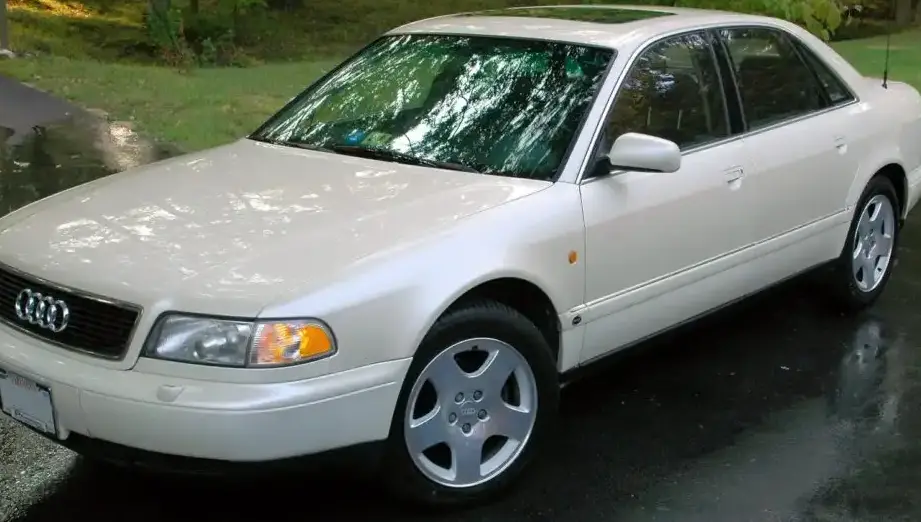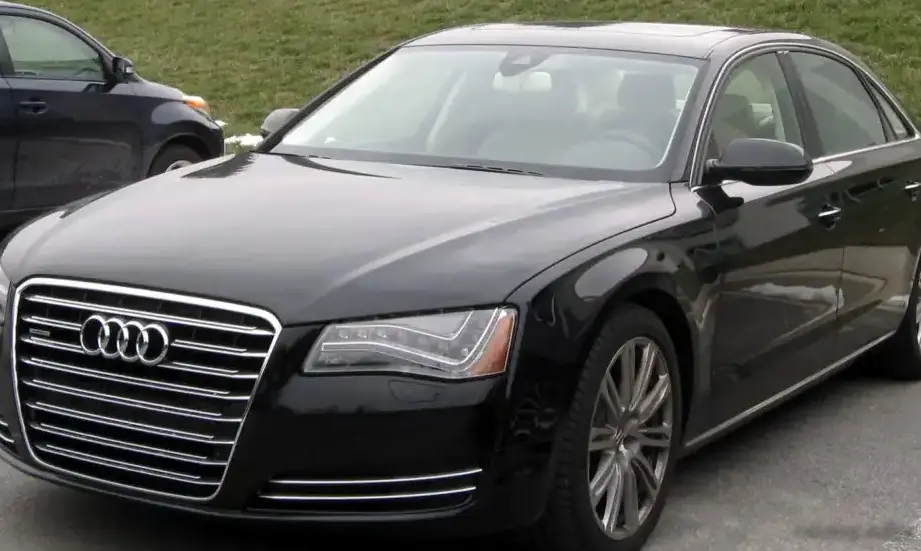
The Audi A8 (D4, 4H) 2.0 TFSI Hybrid Tiptronic represents a relatively short-lived but significant variant within the fourth generation (D4) of Audi’s flagship luxury sedan. Produced from February 2012 to 2013, this model combined a turbocharged four-cylinder gasoline engine with a full hybrid electric system, paired exclusively with Audi’s eight-speed Tiptronic automatic transmission. It was positioned as an efficiency-focused option within the A8 range, offering a lower entry point into the model line while still delivering a premium driving experience. The D4 A8, launched in 2010, aimed to blend luxury, technology, and performance, and the 2.0 TFSI Hybrid variant was a key component of Audi’s strategy to improve fuel economy and reduce emissions.
Technical Specifications
| Brand | Audi |
| Model | A8 |
| Generation | A8 (D4, 4H) |
| Type (Engine) | 2.0 TFSI (245 Hp) Hybrid Tiptronic |
| Start of production | February, 2012 |
| End of production | 2013 |
| Powertrain Architecture | FHEV (Full Hybrid Electric Vehicle) |
| Body type | Sedan |
| Seats | 5 |
| Doors | 4 |
| Fuel consumption (urban) | 6.4 l/100 km (36.8 US mpg, 44.1 UK mpg, 15.6 km/l) |
| Fuel consumption (extra urban) | 6.2 l/100 km (37.9 US mpg, 45.6 UK mpg, 16.1 km/l) |
| Fuel consumption (combined) | 6.3 l/100 km (37.3 US mpg, 44.8 UK mpg, 15.9 km/l) |
| CO2 emissions | 147 g/km |
| Fuel Type | Petrol (Gasoline) |
| Acceleration 0 – 100 km/h | 7.7 sec |
| Acceleration 0 – 62 mph | 7.7 sec |
| Acceleration 0 – 60 mph | 7.3 sec |
| Maximum speed | 235 km/h (146.02 mph) |
| Emission standard | Euro 5 |
| Weight-to-power ratio | 7.6 kg/Hp, 131 Hp/tonne |
| Weight-to-torque ratio | 3.9 kg/Nm, 256.7 Nm/tonne |
| Gross battery capacity | 1.25 kWh |
| Electric motor power | 54 Hp |
| Electric motor Torque | 210 Nm (154.89 lb.-ft.) |
| System power | 245 Hp |
| System torque | 480 Nm (354.03 lb.-ft.) |
| Engine Power | 211 Hp |
| Power per litre | 106.4 Hp/l |
| Engine Torque | 350 Nm @ 1500-4200 rpm (258.15 lb.-ft. @ 1500-4200 rpm) |
| Engine Model/Code | CHJA |
| Engine displacement | 1984 cm3 (121.07 cu. in.) |
| Number of cylinders | 4 |
| Engine configuration | Inline |
| Cylinder Bore | 82.5 mm (3.25 in.) |
| Piston Stroke | 92.8 mm (3.65 in.) |
| Compression ratio | 9.6:1 |
| Number of valves per cylinder | 4 |
| Fuel injection system | Direct injection |
| Engine aspiration | Turbocharger, Intercooler |
| Engine oil capacity | 4.6 l (4.86 US qt | 4.05 UK qt) |
| Coolant | 11.5 l (12.15 US qt | 10.12 UK qt) |
| Kerb Weight | 1870 kg (4122.64 lbs.) |
| Max. weight | 2520 kg (5555.65 lbs.) |
| Max load | 650 kg (1433 lbs.) |
| Trunk (boot) space – minimum | 335 l (11.83 cu. ft.) |
| Fuel tank capacity | 75 l (19.81 US gal | 16.5 UK gal) |
| Max. roof load | 100 kg (220.46 lbs.) |
| Length | 5137 mm (202.24 in.) |
| Width | 1949 mm (76.73 in.) |
| Height | 1460 mm (57.48 in.) |
| Wheelbase | 2992 mm (117.8 in.) |
| Front track | 1644 mm (64.72 in.) |
| Rear (Back) track | 1635 mm (64.37 in.) |
| Drag coefficient (Cd) | 0.26 |
| Minimum turning circle | 12.3 m (40.35 ft.) |
| Drive wheel | Front wheel drive |
| Number of gears and type of gearbox | 8 gears, automatic transmission Tiptronic |
| Front suspension | Independent multi-link suspension |
| Rear suspension | Independent on trapezoidal lever |
| Front brakes | Ventilated discs |
| Rear brakes | Ventilated discs |
| Assisting systems | ABS (Anti-lock braking system) |
| Steering type | Steering rack and pinion |
| Power steering | Electric Steering |
| Tires size | 235/55 R18 |
| Wheel rims size | 8J x 18 |
Powertrain & Engine Architecture
At the heart of the A8 2.0 TFSI Hybrid lies the CHJA engine, a 1.984-liter (121.07 cubic inches) inline-four cylinder gasoline engine. This engine utilizes direct fuel injection and is coupled with a single turbocharger and intercooler to produce 211 horsepower. The engine’s design prioritizes efficiency, with features like an exhaust gas recirculation system and optimized combustion chamber geometry. The hybrid system incorporates a 1.25 kWh battery pack and a 54 horsepower electric motor. This electric motor can propel the vehicle on its own for short distances and at lower speeds, and also assists the gasoline engine during acceleration. The integration is managed by a sophisticated control system that seamlessly switches between electric, gasoline, and combined power modes. The eight-speed Tiptronic automatic transmission, a staple of Audi’s lineup, provides smooth and responsive gear changes, and is specifically calibrated to work with the hybrid powertrain.
Driving Characteristics
The 2.0 TFSI Hybrid A8 delivers a noticeably different driving experience compared to its higher-powered siblings, such as the 3.0 TDI or 4.2 FSI models. While it doesn’t offer the same level of outright acceleration (0-60 mph in approximately 7.3 seconds), it provides a refined and comfortable ride. The electric motor provides instant torque, filling in gaps in the gasoline engine’s power delivery and contributing to a smooth and linear acceleration feel. The Tiptronic transmission is well-suited to the engine’s characteristics, offering quick and precise shifts. The hybrid system’s regenerative braking feature helps to recapture energy during deceleration, further enhancing fuel efficiency. In real-world driving, the 2.0 TFSI Hybrid A8 excels in urban environments, where the electric motor can be utilized more frequently. On the highway, the gasoline engine takes over, providing sufficient power for cruising and overtaking.
Equipment & Trim Levels
The 2.0 TFSI Hybrid A8 typically came well-equipped, reflecting its position as a luxury vehicle. Standard features included leather upholstery, tri-zone automatic climate control, a premium sound system, and Audi’s Multi Media Interface (MMI) infotainment system. Optional extras included features such as adaptive cruise control, a head-up display, massaging seats, and advanced driver-assistance systems. The interior design was characterized by high-quality materials and meticulous attention to detail. Trim levels were relatively standardized, with options primarily focused on adding individual features rather than distinct packages.
Chassis & Braking
The A8 (D4) chassis features an independent multi-link suspension at the front and an independent trapezoidal lever suspension at the rear, providing a comfortable and controlled ride. The 2.0 TFSI Hybrid variant, being lighter than its more powerful counterparts, benefits from a slightly more agile feel. Braking duties are handled by ventilated discs on all four wheels, coupled with Audi’s Anti-lock Braking System (ABS) and Electronic Stability Control (ESC). The steering is a rack-and-pinion system with electric power assistance, offering precise and responsive handling.
Market Reception & Comparison
The A8 2.0 TFSI Hybrid was generally well-received by critics, who praised its fuel efficiency and refined driving experience. However, some reviewers noted that it lacked the performance and prestige of the higher-powered A8 models. Compared to the 3.0 TDI, the 2.0 TFSI Hybrid offered better fuel economy but less torque and acceleration. Against the 4.2 FSI, the hybrid variant was significantly less powerful but more economical. The target audience for this model was buyers who prioritized fuel efficiency and environmental consciousness without sacrificing luxury and comfort.
Legacy
The Audi A8 2.0 TFSI Hybrid Tiptronic, while a short-lived model, played a role in Audi’s early adoption of hybrid technology in the luxury segment. The powertrain proved to be relatively reliable, with the main concerns typically revolving around the hybrid system’s battery pack and associated electronics. In the used car market, these models are often sought after by buyers looking for a fuel-efficient and technologically advanced luxury sedan. The combination of a comfortable ride, refined interior, and reasonable running costs makes it an attractive option for those seeking a premium vehicle with a smaller environmental footprint.