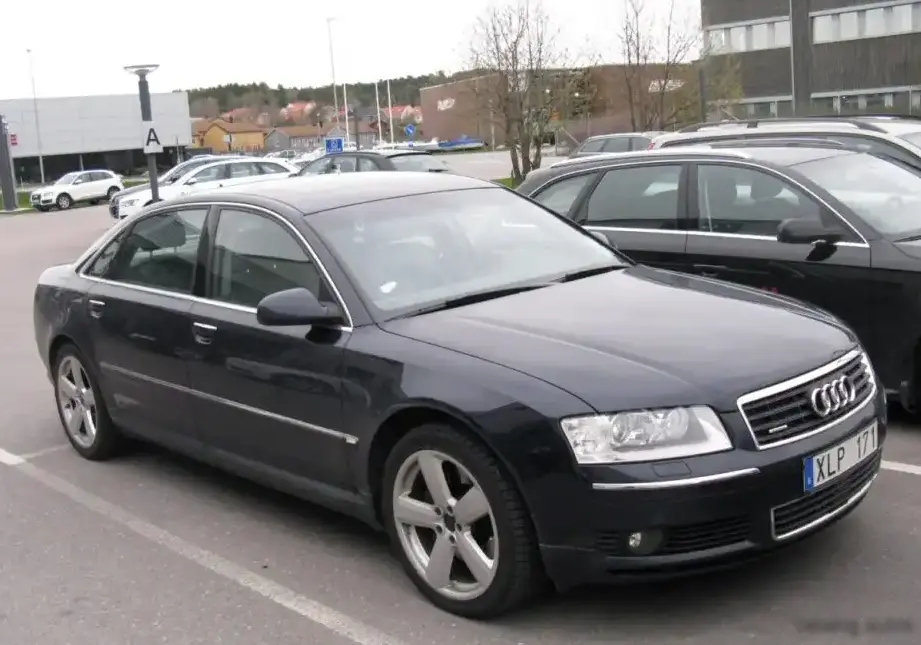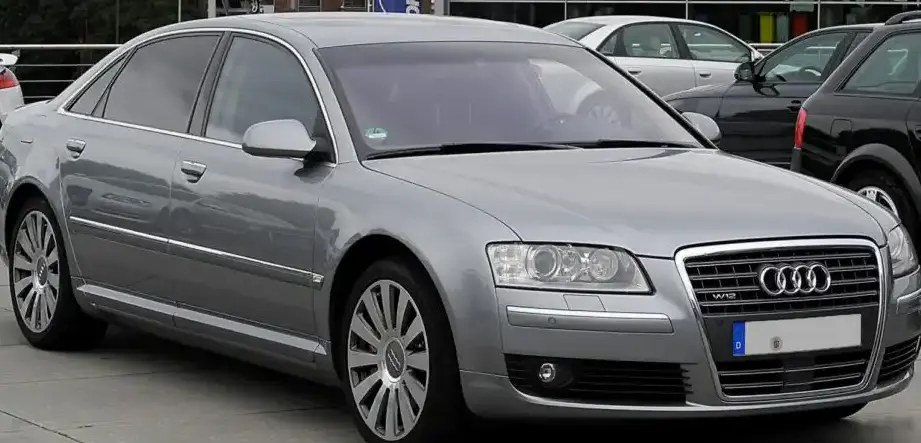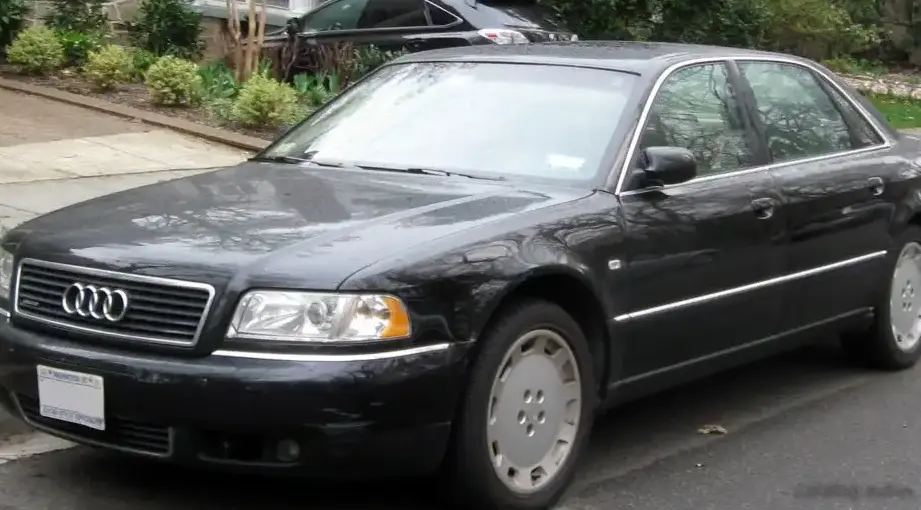
The Audi A8 L (D2, 4D) facelift model produced from 1999 to 2002, equipped with the 4.2-liter V8 40V engine producing 310 horsepower and paired with a five-speed Tiptronic automatic transmission and quattro all-wheel drive, represented the pinnacle of Audi’s luxury sedan offerings during that period. This variant sat at the top of the A8 range, offering a significant step up in performance and refinement compared to the 2.8L and 3.3L models. The “L” designation indicated a long-wheelbase version, prioritizing rear passenger space and comfort. This generation A8 was a landmark vehicle for Audi, showcasing advanced technology and a commitment to build quality that challenged established German rivals.
Technical Specifications
| Brand | Audi |
| Model | A8 |
| Generation | A8L (D2, 4D, facelift 1999) |
| Type (Engine) | 4.2 V8 40V (310 Hp) quattro tiptronic |
| Start of production | 1999 |
| End of production | 2002 |
| Powertrain Architecture | Internal Combustion engine |
| Body type | Sedan |
| Seats | 5 |
| Doors | 4 |
| Fuel consumption (economy) – urban (NEDC) | 19.6 l/100 km (12 US mpg, 14.4 UK mpg, 5.1 km/l) |
| Fuel consumption (economy) – extra urban (NEDC) | 9.2 l/100 km (25.6 US mpg, 30.7 UK mpg, 10.9 km/l) |
| Fuel consumption (economy) – combined (NEDC) | 13 l/100 km (18.1 US mpg, 21.7 UK mpg, 7.7 km/l) |
| CO2 emissions (NEDC) | 312 g/km |
| Fuel Type | Petrol (Gasoline) |
| Acceleration 0 – 100 km/h | 7 sec |
| Acceleration 0 – 62 mph | 7 sec |
| Acceleration 0 – 60 mph | 6.7 sec |
| Maximum speed | 250 km/h (155.34 mph), Electronically limited |
| Emission standard | Euro 3 |
| Weight-to-power ratio | 5.8 kg/Hp, 173.2 Hp/tonne |
| Weight-to-torque ratio | 4.4 kg/Nm, 229.1 Nm/tonne |
| Power | 310 Hp @ 6200 rpm |
| Power per litre | 74.3 Hp/l |
| Torque | 410 Nm @ 3000-4000 rpm (302.4 lb.-ft. @ 3000-4000 rpm) |
| Engine layout | Front, Longitudinal |
| Engine Model/Code | AQF |
| Engine displacement | 4172 cm3 (254.59 cu. in.) |
| Number of cylinders | 8 |
| Engine configuration | V-engine |
| Cylinder Bore | 84.5 mm (3.33 in.) |
| Piston Stroke | 93 mm (3.66 in.) |
| Compression ratio | 11:1 |
| Number of valves per cylinder | 5 |
| Fuel injection system | Multi-port manifold injection |
| Engine aspiration | Naturally aspirated engine |
| Valvetrain | DOHC |
| Engine oil capacity | 7.2 l (7.61 US qt, 6.34 UK qt) |
| Coolant | 9 l (9.51 US qt, 7.92 UK qt) |
| Kerb Weight | 1790 kg (3946.27 lbs.) |
| Max. weight | 2390 kg (5269.05 lbs.) |
| Max load | 600 kg (1322.77 lbs.) |
| Trunk (boot) space – minimum | 525 l (18.54 cu. ft.) |
| Fuel tank capacity | 92 l (24.3 US gal, 20.24 UK gal) |
| Max. roof load | 100 kg (220.46 lbs.) |
| Length | 5164 mm (203.31 in.) |
| Width | 1880 mm (74.02 in.) |
| Width including mirrors | 1973 mm (77.68 in.) |
| Height | 1438 mm (56.61 in.) |
| Wheelbase | 3010 mm (118.5 in.) |
| Front track | 1595 mm (62.8 in.) |
| Rear (Back) track | 1586 mm (62.44 in.) |
| Drag coefficient (Cd) | 0.30 |
| Minimum turning circle (turning diameter) | 12.7 m (41.67 ft.) |
| Drivetrain Architecture | The Internal combustion engine (ICE) drives permanently the four wheels of the vehicle. |
| Drive wheel | All wheel drive (4×4) |
| Number of gears and type of gearbox | 5 gears, automatic transmission tiptronic |
| Front suspension | Independent multi-link suspension, Transverse stabilizer |
| Rear suspension | Independent on trapezoidal lever, Transverse stabilizer |
| Front brakes | Ventilated discs |
| Rear brakes | Ventilated discs |
| Assisting systems | ABS (Anti-lock braking system) |
| Steering type | Steering rack and pinion |
| Power steering | Hydraulic Steering |
| Tires size | 225/60 R16 |
| Wheel rims size | 7.5J x 16 |
Powertrain & Engine Architecture
The heart of this A8 L variant is the AQF engine, a 4.2-liter naturally aspirated V8. This engine utilizes a 90-degree V-angle, contributing to a smooth and balanced operation. It features five valves per cylinder (four intake, one exhaust) and double overhead camshafts (DOHC), maximizing volumetric efficiency. Fuel delivery is managed by a multi-port fuel injection system, providing precise fuel metering for optimal combustion. The engine’s robust construction and sophisticated design allowed it to produce 310 horsepower at 6200 rpm and 410 Nm (302 lb-ft) of torque between 3000 and 4000 rpm.
The engine is mated to a five-speed Tiptronic automatic transmission. This transmission offered both fully automatic operation and a manual shift mode, allowing drivers to exert more control over gear selection. The Tiptronic system used electronic controls to provide quick and smooth gear changes. The quattro all-wheel-drive system distributes power between the front and rear axles, enhancing traction and stability, particularly in adverse weather conditions. The system typically operates with a rearward bias, contributing to a more engaging driving experience.
Driving Characteristics
The 4.2L V8 and Tiptronic combination in the A8 L delivered a refined and powerful driving experience. Acceleration from 0 to 60 mph took approximately 6.7 seconds, and the car was electronically limited to a top speed of 155 mph. While not overtly sporty, the engine provided ample power for effortless cruising and confident overtaking. The Tiptronic transmission, while smooth, wasn’t as responsive as a traditional manual gearbox, but it offered a good balance of convenience and control. The quattro all-wheel-drive system provided excellent grip and stability, inspiring confidence in various driving conditions. Compared to the 2.8L and 3.3L A8 models, this variant offered a significantly more powerful and refined experience, but at the cost of increased fuel consumption.
Equipment & Trim Levels
The A8 L 4.2 quattro Tiptronic was typically equipped with a high level of standard features. These included leather upholstery, power-adjustable front seats with memory function, a premium sound system, automatic climate control, and a sunroof. Optional extras included rear seat entertainment systems, upgraded leather packages, and various driver assistance features. The long-wheelbase configuration provided generous rear legroom, making it a particularly appealing choice for chauffeured transport or families.
Chassis & Braking
The A8 L featured an independent suspension system on all four wheels, utilizing a multi-link setup at the front and a trapezoidal lever arrangement at the rear. This suspension design provided a comfortable ride while maintaining good handling characteristics. Stabilizer bars were fitted to both axles to reduce body roll during cornering. The braking system consisted of ventilated discs on all four wheels, providing ample stopping power. Anti-lock braking system (ABS) was standard, enhancing safety and control during emergency braking situations.
Market Reception & Comparison
The A8 L 4.2 quattro Tiptronic was well-received by automotive critics, who praised its powerful engine, luxurious interior, and advanced technology. However, its high price and relatively poor fuel economy were noted as drawbacks. Compared to its rivals, such as the BMW 7 Series and Mercedes-Benz S-Class, the A8 L offered a unique blend of performance, luxury, and technology. The 4.2L variant was often seen as a more compelling alternative to the base models, offering a significant performance upgrade without the added complexity of the W12 engine.
Legacy
The AQF engine, while generally reliable, can be susceptible to oil leaks as it ages. The Tiptronic transmission, while durable, may require servicing or rebuilding at higher mileages. Despite these potential issues, the A8 L 4.2 quattro Tiptronic remains a desirable classic car, appreciated for its luxurious appointments, powerful engine, and advanced technology. On the used car market, well-maintained examples command a premium price, reflecting their enduring appeal and status as a flagship Audi sedan of its era. The D2 A8, in general, is remembered for pioneering aluminum space frame construction, a technology that would become increasingly prevalent in the automotive industry.