
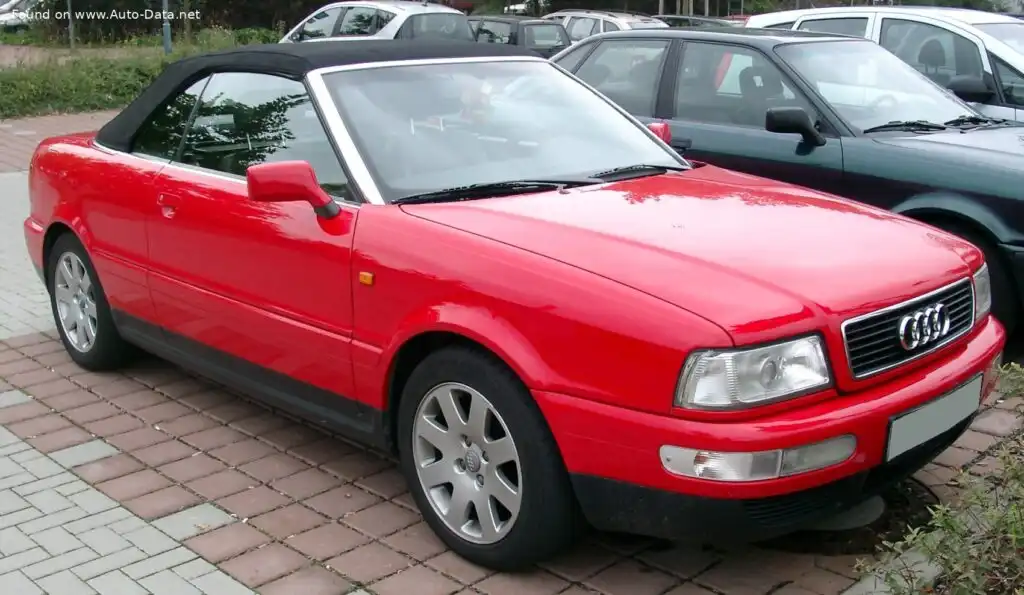
The Audi Cabriolet 2.8 V6 E Automatic, produced from 1998 through August 2000, represents a refined iteration of the B3 8G generation (facelifted in 1997). Positioned as a mid-to-upper trim level within the Cabriolet range, it offered a blend of performance and comfort aimed at buyers seeking a more luxurious open-top experience. This variant occupied a space between the more economical four-cylinder models and the higher-performance S4 Cabriolet, appealing to those prioritizing a smooth driving experience and the prestige of the V6 engine. It was a key model in Audi’s strategy to offer a premium convertible experience in the European market, and saw limited import into the United States as a grey market vehicle.
Technical Specifications
| Brand | Audi |
| Model | Cabriolet |
| Generation | Cabriolet (B3 8G, facelift 1997) |
| Type (Engine) | 2.8 V6 E (174 Hp) Automatic |
| Start of production | 1998 |
| End of production | August, 2000 |
| Powertrain Architecture | Internal Combustion engine |
| Body type | Cabriolet |
| Seats | 4 |
| Doors | 2 |
| Fuel consumption (urban) | 16.1 l/100 km (14.6 US mpg, 17.5 UK mpg, 6.2 km/l) |
| Fuel consumption (extra urban) | 8.8 l/100 km (26.7 US mpg, 32.1 UK mpg, 11.4 km/l) |
| Fuel consumption (combined) | 11.4 l/100 km (20.6 US mpg, 24.8 UK mpg, 8.8 km/l) |
| CO2 emissions | 267 g/km |
| Fuel Type | Petrol (Gasoline) |
| Acceleration 0 – 100 km/h | 11.1 sec |
| Acceleration 0 – 62 mph | 11.1 sec |
| Acceleration 0 – 60 mph | 10.5 sec |
| Maximum speed | 217 km/h (134.84 mph) |
| Weight-to-power ratio | 8.3 kg/Hp, 120.4 Hp/tonne |
| Weight-to-torque ratio | 5.8 kg/Nm, 173 Nm/tonne |
| Power | 174 Hp @ 5500 rpm |
| Power per litre | 62.8 Hp/l |
| Torque | 250 Nm @ 3000 rpm (184.39 lb.-ft. @ 3000 rpm) |
| Engine layout | Front, Longitudinal |
| Engine Model/Code | AAH |
| Engine displacement | 2771 cm3 (169.1 cu. in.) |
| Number of cylinders | 6 |
| Engine configuration | V-engine |
| Cylinder Bore | 82.5 mm (3.25 in.) |
| Piston Stroke | 86.4 mm (3.4 in.) |
| Compression ratio | 10.3:1 |
| Number of valves per cylinder | 2 |
| Fuel injection system | Multi-port manifold injection |
| Engine aspiration | Naturally aspirated engine |
| Valvetrain | OHC |
| Engine oil capacity | 5 l (5.28 US qt | 4.4 UK qt) |
| Coolant | 11 l (11.62 US qt | 9.68 UK qt) |
| Kerb Weight | 1445 kg (3185.68 lbs.) |
| Max. weight | 1845 kg (4067.53 lbs.) |
| Max load | 400 kg (881.85 lbs.) |
| Trunk (boot) space – minimum | 230 l (8.12 cu. ft.) |
| Fuel tank capacity | 70 l (18.49 US gal | 15.4 UK gal) |
| Permitted trailer load with brakes (8%) | 1000 kg (2204.62 lbs.) |
| Permitted trailer load with brakes (12%) | 1000 kg (2204.62 lbs.) |
| Permitted trailer load without brakes | 750 kg (1653.47 lbs.) |
| Permitted towbar download | 40 kg (88.18 lbs.) |
| Length | 4366 mm (171.89 in.) |
| Width | 1716 mm (67.56 in.) |
| Height | 1379 mm (54.29 in.) |
| Wheelbase | 2556 mm (100.63 in.) |
| Front track | 1453 mm (57.2 in.) |
| Rear (Back) track | 1447 mm (56.97 in.) |
| Drag coefficient (Cd) | 0.36 |
| Minimum turning circle (turning diameter) | 11.1 m (36.42 ft.) |
| Drivetrain Architecture | The Internal combustion engine (ICE) drives the front wheels of the vehicle. |
| Drive wheel | Front wheel drive |
| Number of gears and type of gearbox | 4 gears, automatic transmission |
| Front suspension | Independent, type McPherson with coil spring and anti-roll bar |
| Rear suspension | Semi-independent, coil spring |
| Front brakes | Ventilated discs |
| Rear brakes | Disc |
| Assisting systems | ABS (Anti-lock braking system) |
| Steering type | Steering rack and pinion |
| Power steering | Hydraulic Steering |
| Tires size | 205/60 R15 |
| Wheel rims size | 7J x 15 |
Powertrain & Engine Architecture
The heart of the 2.8 V6 E is the AAH engine code, a 2.8-liter naturally aspirated V6. This engine utilizes a 90-degree V-angle, contributing to a smoother power delivery and reduced vibrations. It features a cast iron block and aluminum cylinder heads. Fuel delivery is managed by a Bosch Motronic multi-port fuel injection system, providing precise control over the air-fuel mixture. The engine employs a single overhead camshaft (OHC) design per cylinder bank, operating two valves per cylinder (intake and exhaust). The automatic transmission is a four-speed unit, designed to provide comfortable and effortless shifting. This transmission was known for its reliability, but isn’t particularly efficient by modern standards.
Driving Characteristics
The 2.8 V6 Automatic Cabriolet offered a distinctly different driving experience compared to the lower-spec models. While not overtly sporty, the 174 horsepower and 184 lb-ft of torque provided adequate acceleration, achieving 0-60 mph in around 10.5 seconds. The automatic transmission, while smooth, did result in some power loss compared to the available five-speed manual. Gear ratios were tuned for comfort and fuel economy rather than outright performance. The engine felt responsive at mid-range speeds, making it well-suited for highway cruising. However, it lacked the punch of the more powerful S4 variant. The front-wheel-drive configuration provided predictable handling, but could exhibit some torque steer under hard acceleration.
Equipment & Trim Levels
The 2.8 V6 E Automatic typically came equipped with a generous array of standard features. Interior appointments included cloth upholstery, although leather was often an optional extra. Power windows, central locking, and a basic audio system were standard. Air conditioning was also a common feature. Optional extras included leather upholstery, heated front seats, a sunroof (in addition to the convertible top), and an upgraded audio system. The dashboard layout was typical of Audi’s design language of the period, with a clean and functional aesthetic.
Chassis & Braking
The Cabriolet’s chassis featured independent McPherson strut suspension at the front and a semi-independent coil spring setup at the rear. This configuration provided a comfortable ride, absorbing bumps and imperfections in the road effectively. The front brakes were ventilated discs, offering good stopping power, while the rear brakes were solid discs. Anti-lock Braking System (ABS) was standard, enhancing safety and control during emergency braking situations. Stabilizer bars were fitted to both the front and rear axles to reduce body roll during cornering.
Market Reception & Comparison
The Audi Cabriolet 2.8 V6 Automatic was generally well-received by automotive critics. It was praised for its comfortable ride, refined engine, and stylish design. However, some reviewers noted that the automatic transmission dulled the engine’s performance somewhat. Compared to the 1.8-liter four-cylinder models, the 2.8 V6 offered a significant improvement in power and refinement. Fuel economy was predictably lower, however. Against the higher-performance S4 Cabriolet, the 2.8 V6 offered a more balanced blend of performance and affordability. Reliability was generally good, although preventative maintenance was crucial to avoid issues with the convertible top mechanism and electrical components.
Legacy
Today, the Audi Cabriolet 2.8 V6 Automatic is considered a desirable classic car. The AAH engine is known for its durability, provided it has been properly maintained. Finding well-preserved examples can be challenging, as many have suffered from neglect or have been modified. The convertible top mechanism requires regular attention to prevent leaks and malfunctions. Parts availability is generally good, although some specific trim pieces may be difficult to source. The car represents a significant era in Audi’s history, showcasing the brand’s commitment to quality, design, and engineering. It remains a popular choice among enthusiasts seeking a stylish and comfortable open-top driving experience.

