
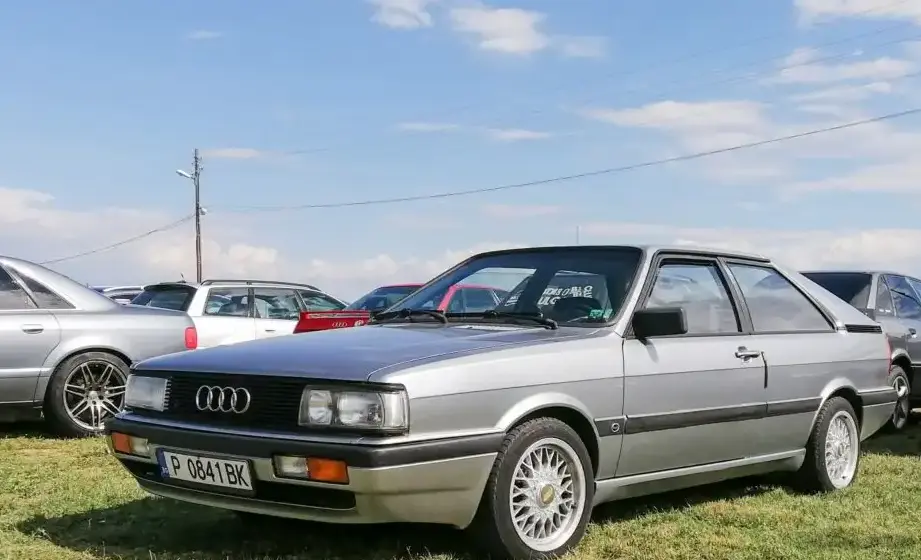
The Audi Coupe (B2), produced between 1980 and 1986, represented a significant step forward for Audi in the realm of sporty, yet practical coupes. The facelifted version introduced in 1984 brought subtle but important styling updates and mechanical refinements. Among the various engine and transmission combinations offered, the 2.0i variant with an automatic transmission – produced from 1984 to 1986 – occupied a middle ground in the lineup, appealing to buyers seeking a balance of performance and convenience. This model, designated internally with engine codes HP and JS, was a popular choice in European markets, offering a more relaxed driving experience than its manual counterparts or the more powerful five-cylinder versions.
Technical Specifications
| Brand | Audi |
| Model | Coupe |
| Generation | Coupe (B2 81, 85, facelift 1984) |
| Type (Engine) | 2.0i (115 Hp) Automatic |
| Start of production | 1984 |
| End of production | July, 1986 |
| Powertrain Architecture | Internal Combustion engine |
| Body type | Coupe |
| Seats | 5 |
| Doors | 2 |
| Fuel consumption (combined) | 10.4 l/100 km (22.6 US mpg, 27.2 UK mpg, 9.6 km/l) |
| Fuel Type | Petrol (Gasoline) |
| Acceleration 0 – 100 km/h | 11.7 sec |
| Acceleration 0 – 62 mph | 11.7 sec |
| Acceleration 0 – 60 mph | 11.1 sec |
| Maximum speed | 183 km/h (113.71 mph) |
| Weight-to-power ratio | 9.4 kg/Hp, 106.5 Hp/tonne |
| Weight-to-torque ratio | 6.5 kg/Nm, 152.8 Nm/tonne |
| Power | 115 Hp @ 5400 rpm |
| Power per litre | 57.7 Hp/l |
| Torque | 165 Nm @ 3200 rpm (121.7 lb.-ft. @ 3200 rpm) |
| Engine layout | Front, Longitudinal |
| Engine Model/Code | HP, JS |
| Engine displacement | 1994 cm3 (121.68 cu. in.) |
| Number of cylinders | 5 |
| Engine configuration | Inline |
| Cylinder Bore | 81 mm (3.19 in.) |
| Piston Stroke | 77.4 mm (3.05 in.) |
| Compression ratio | 10:1 |
| Number of valves per cylinder | 2 |
| Fuel injection system | Multi-port manifold injection |
| Engine aspiration | Naturally aspirated engine |
| Valvetrain | OHC |
| Engine oil capacity | 4.5 l (4.76 US qt | 3.96 UK qt) |
| Coolant | 8 l (8.45 US qt | 7.04 UK qt) |
| Kerb Weight | 1080 kg (2380.99 lbs.) |
| Max. weight | 1520 kg (3351.03 lbs.) |
| Max load | 440 kg (970.03 lbs.) |
| Trunk (boot) space – minimum | 443 l (15.64 cu. ft.) |
| Fuel tank capacity | 68 l (17.96 US gal | 14.96 UK gal) |
| Permitted trailer load with brakes (8%) | 1400 kg (3086.47 lbs.) |
| Permitted trailer load without brakes | 560 kg (1234.59 lbs.) |
| Length | 4421 mm (174.06 in.) |
| Width | 1682 mm (66.22 in.) |
| Height | 1350 mm (53.15 in.) |
| Wheelbase | 2538 mm (99.92 in.) |
| Front track | 1400 mm (55.12 in.) |
| Rear (Back) track | 1420 mm (55.91 in.) |
| Ride height (ground clearance) | 110 mm (4.33 in.) |
| Drag coefficient (Cd) | 0.36 |
| Minimum turning circle (turning diameter) | 11 m (36.09 ft.) |
| Drivetrain Architecture | The Internal combustion engine (ICE) drives the front wheels of the vehicle. |
| Drive wheel | Front wheel drive |
| Number of gears and type of gearbox | 3 gears, automatic transmission |
| Front brakes | Disc |
| Rear brakes | Drum |
| Tires size | 185/60 R14 |
| Wheel rims size | 14 |
Powertrain & Engine Architecture
The heart of the 2.0i Automatic Coupe was the HP or JS inline-five cylinder engine, displacing 1994cc. This engine was a key component of Audi’s engineering philosophy, offering a smooth and relatively refined power delivery. The engine featured a single overhead camshaft (OHC) operating two valves per cylinder. Fuel delivery was handled by a Bosch multi-port fuel injection system, contributing to improved efficiency and reduced emissions compared to earlier carbureted Audi engines. The automatic transmission was a three-speed unit, designed to provide comfortable and effortless cruising. While not known for its outright speed, the transmission was reliable and well-suited to the engine’s torque characteristics. The longitudinal engine layout, a hallmark of Audi’s front-wheel-drive platform, contributed to balanced weight distribution.
Driving Characteristics
The 2.0i Automatic Coupe offered a distinctly different driving experience compared to its manual transmission siblings or the more potent 2.3-liter five-cylinder models. Acceleration from 0-60 mph took around 11.1 seconds, and top speed was approximately 113.71 mph. The automatic transmission, while convenient, did result in some power loss and a less engaging driving experience. Gear ratios were optimized for fuel economy and smooth cruising rather than outright performance. The engine delivered a respectable 165 Nm (121.7 lb-ft) of torque at 3200 rpm, providing adequate pulling power for everyday driving and highway overtaking. Compared to the manual versions, the automatic felt more relaxed and less responsive, but it appealed to drivers who prioritized comfort and ease of use.
Equipment & Trim Levels
The 2.0i Automatic Coupe typically came equipped with a reasonable level of standard features. Interior upholstery was usually cloth, with options for leather available at an extra cost. The dashboard layout was functional and typically featured analog gauges for speed, tachometer, fuel level, and coolant temperature. Power steering was standard, enhancing maneuverability. Other common features included central locking, electric windows, and a basic stereo system. Optional extras could include a sunroof, upgraded audio systems, and alloy wheels. The trim level generally sat in the mid-range of the Coupe lineup, offering a step up from the base models but lacking the luxury appointments of the higher-specification versions.
Chassis & Braking
The Audi Coupe B2 utilized a MacPherson strut front suspension and a torsion beam rear suspension. The 2.0i Automatic, being a mid-range model, typically featured a smaller diameter stabilizer bar compared to the more performance-oriented versions. Braking was accomplished via disc brakes on the front wheels and drum brakes on the rear. This configuration was common for vehicles in this class during the 1980s. The suspension setup provided a comfortable ride, although it wasn’t as sporty or precise as the setups found on the higher-performance models. The curb weight of approximately 1080 kg (2380.99 lbs) contributed to the car’s handling characteristics.
Market Reception & Comparison
The 2.0i Automatic Coupe was generally well-received by automotive critics as a practical and comfortable grand tourer. It was praised for its smooth engine, comfortable ride, and relatively spacious interior. However, the automatic transmission was sometimes criticized for its lack of responsiveness and its impact on fuel economy. Compared to the manual transmission versions, the automatic offered less driver involvement but greater convenience. Against the more powerful 2.3-liter five-cylinder models, the 2.0i Automatic was seen as a more affordable and fuel-efficient option, albeit with significantly less performance. Fuel economy was rated at around 10.4 l/100 km (22.6 US mpg), which was typical for a vehicle of this size and class in the 1980s.
Legacy
The Audi Coupe B2, including the 2.0i Automatic variant, has developed a loyal following among classic car enthusiasts. The inline-five engine is particularly well-regarded for its unique sound and smooth power delivery. While the automatic transmission isn’t as sought after as the manual versions, it remains a viable option for those seeking a comfortable and reliable classic coupe. The 2.0i Automatic is generally considered to be a relatively reliable powertrain, although regular maintenance is essential to prevent issues. Parts availability can be a challenge, but a dedicated network of Audi enthusiasts and specialist suppliers helps to keep these cars on the road. Today, the 2.0i Automatic Coupe represents a stylish and affordable entry point into the world of classic Audi ownership.
