
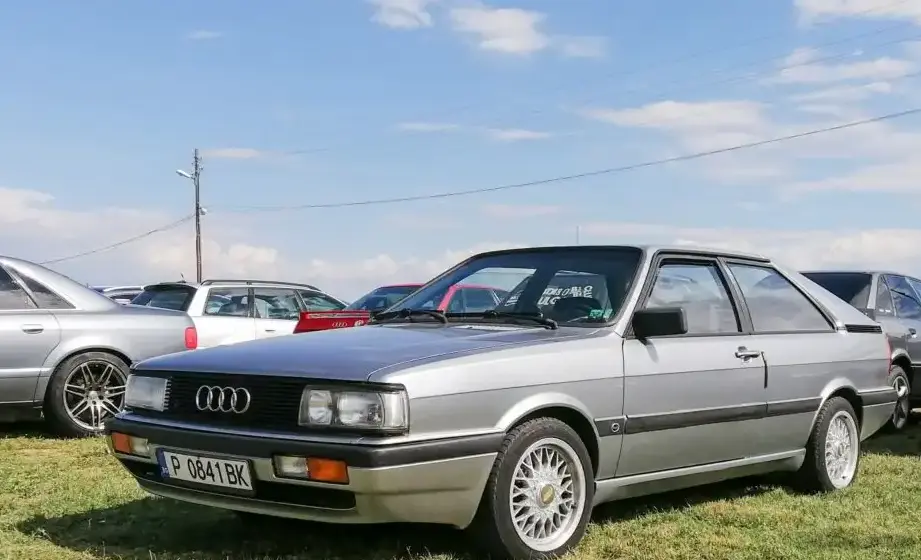
The Audi Coupe GT 2.2i Automatic, produced between August 1984 and July 1988, represents a refined iteration of the B2 Coupe generation (internal codes 81 and 85). Positioned as a mid-range offering within the Coupe lineup, it aimed to provide a balance of performance and comfort, appealing to buyers seeking a stylish and capable grand tourer. This variant utilized a 2.2-liter inline five-cylinder engine paired with a three-speed automatic transmission, distinguishing itself from the more driver-focused manual transmission options and the higher-performance Quattro models. The B2 Coupe, in general, was Audi’s attempt to create a more affordable and accessible sports coupe, leveraging technology from their more expensive models.
Technical Specifications
| Brand | Audi |
| Model | Coupe |
| Generation | Coupe (B2 81, 85, facelift 1984) |
| Type (Engine) | GT 2.2i (136 Hp) Automatic |
| Start of production | August, 1984 |
| End of production | July, 1988 |
| Powertrain Architecture | Internal Combustion engine |
| Body type | Coupe |
| Seats | 5 |
| Doors | 2 |
| Fuel Type | Petrol (Gasoline) |
| Acceleration 0 – 100 km/h | 10.5 sec |
| Acceleration 0 – 62 mph | 10.5 sec |
| Acceleration 0 – 60 mph | 10 sec |
| Maximum speed | 198 km/h (123.03 mph) |
| Weight-to-power ratio | 7.9 kg/Hp, 125.9 Hp/tonne |
| Weight-to-torque ratio | 5.8 kg/Nm, 172.2 Nm/tonne |
| Power | 136 Hp @ 5700 rpm |
| Power per litre | 61.1 Hp/l |
| Torque | 186 Nm @ 3500 rpm (137.19 lb.-ft. @ 3500 rpm) |
| Engine layout | Front, Longitudinal |
| Engine Model/Code | KV, HY |
| Engine displacement | 2226 cm3 (135.84 cu. in.) |
| Number of cylinders | 5 |
| Engine configuration | Inline |
| Cylinder Bore | 81 mm (3.19 in.) |
| Piston Stroke | 86.4 mm (3.4 in.) |
| Compression ratio | 10:1 |
| Number of valves per cylinder | 2 |
| Fuel injection system | Multi-port manifold injection |
| Engine aspiration | Naturally aspirated engine |
| Engine oil capacity | 4 l (4.23 US qt | 3.52 UK qt) |
| Coolant | 8 l (8.45 US qt | 7.04 UK qt) |
| Kerb Weight | 1080 kg (2380.99 lbs.) |
| Max. weight | 1520 kg (3351.03 lbs.) |
| Max load | 440 kg (970.03 lbs.) |
| Trunk (boot) space – minimum | 443 l (15.64 cu. ft.) |
| Fuel tank capacity | 68 l (17.96 US gal | 14.96 UK gal) |
| Permitted trailer load with brakes (8%) | 1400 kg (3086.47 lbs.) |
| Permitted trailer load without brakes | 560 kg (1234.59 lbs.) |
| Length | 4421 mm (174.06 in.) |
| Width | 1682 mm (66.22 in.) |
| Height | 1350 mm (53.15 in.) |
| Wheelbase | 2538 mm (99.92 in.) |
| Front track | 1400 mm (55.12 in.) |
| Rear (Back) track | 1420 mm (55.91 in.) |
| Ride height (ground clearance) | 110 mm (4.33 in.) |
| Drag coefficient (Cd) | 0.36 |
| Minimum turning circle (turning diameter) | 11 m (36.09 ft.) |
| Drivetrain Architecture | The Internal combustion engine (ICE) drives the front wheels of the vehicle. |
| Drive wheel | Front wheel drive |
| Number of gears and type of gearbox | 3 gears, automatic transmission |
| Front brakes | Ventilated discs |
| Rear brakes | Disc |
| Tires size | 185/60 R14 |
| Wheel rims size | 14 |
Powertrain & Engine Architecture
The heart of the GT 2.2i Automatic is Audi’s KV or HY inline five-cylinder engine. This engine, a hallmark of Audi’s engineering during the 1980s, was known for its smooth operation and relatively high output for its displacement. The 2226cc engine featured a cast iron block and an aluminum cylinder head, employing a single overhead camshaft (SOHC) design with two valves per cylinder. Fuel delivery was managed by a Bosch K-Jetronic multi-port fuel injection system, a sophisticated system for its time that contributed to improved fuel efficiency and reduced emissions. The engine’s 10:1 compression ratio and carefully tuned ignition system allowed it to produce 136 horsepower at 5700 rpm and 186 Nm (137.19 lb-ft) of torque at 3500 rpm. The three-speed automatic transmission, while providing convenience, was a relatively simple unit compared to modern automatics. It featured a torque converter and planetary gearsets, offering smooth but not particularly rapid shifts.
Driving Characteristics
The 2.2i Automatic Coupe offered a comfortable and relaxed driving experience. Acceleration from 0 to 60 mph took around 10 seconds, which was respectable for the era but noticeably slower than the manual transmission versions or the more powerful Quattro models. The automatic transmission’s gear ratios were geared towards fuel economy and smooth cruising rather than outright performance. While the engine provided adequate power for highway passing and everyday driving, it lacked the urgency of the turbocharged or higher-displacement engines available in other Coupe variants. The front-wheel-drive configuration provided predictable handling, but it also limited the car’s cornering ability compared to the all-wheel-drive Quattros.
Equipment & Trim Levels
The GT 2.2i Automatic typically came equipped with a reasonable level of standard features. Interior appointments included cloth upholstery, a basic stereo system, and power windows. Optional extras included a sunroof, upgraded audio systems, and metallic paint finishes. The dashboard layout was typical of Audi’s designs of the period, featuring a clean and functional design with clearly marked gauges. The interior space was adequate for a coupe, offering comfortable seating for two adults and limited space for rear passengers.
Chassis & Braking
The B2 Coupe utilized a MacPherson strut front suspension and a semi-trailing arm rear suspension. The suspension was tuned for comfort, providing a relatively smooth ride over uneven surfaces. The GT 2.2i Automatic featured ventilated disc brakes at the front and solid disc brakes at the rear, providing adequate stopping power for its weight and performance. The car rode on 14-inch wheels with 185/60 R14 tires. A stabilizer bar was fitted to the front suspension to reduce body roll during cornering.
Market Reception & Comparison
The Audi Coupe GT 2.2i Automatic was generally well-received by automotive critics as a stylish and comfortable grand tourer. However, it was often criticized for its relatively slow acceleration and lack of sporting character compared to the manual transmission versions and the Quattro models. Fuel economy was considered reasonable for the time, but not exceptional. Compared to the 1.8-liter versions, the 2.2i offered a noticeable improvement in performance, but at a higher price point. The 2.2i Automatic appealed to buyers who prioritized comfort and convenience over outright performance.
Legacy
The Audi Coupe GT 2.2i Automatic, while not the most sought-after variant of the B2 Coupe, remains a popular classic car among Audi enthusiasts. The inline five-cylinder engine is known for its durability and relatively simple maintenance requirements. However, like all cars of this era, it is susceptible to age-related issues such as corrosion and rubber component degradation. Today, well-maintained examples of the 2.2i Automatic Coupe are becoming increasingly collectible, offering a unique blend of 1980s styling, German engineering, and comfortable cruising capabilities. The engine’s distinctive sound and smooth operation continue to appeal to enthusiasts who appreciate classic European automobiles.
