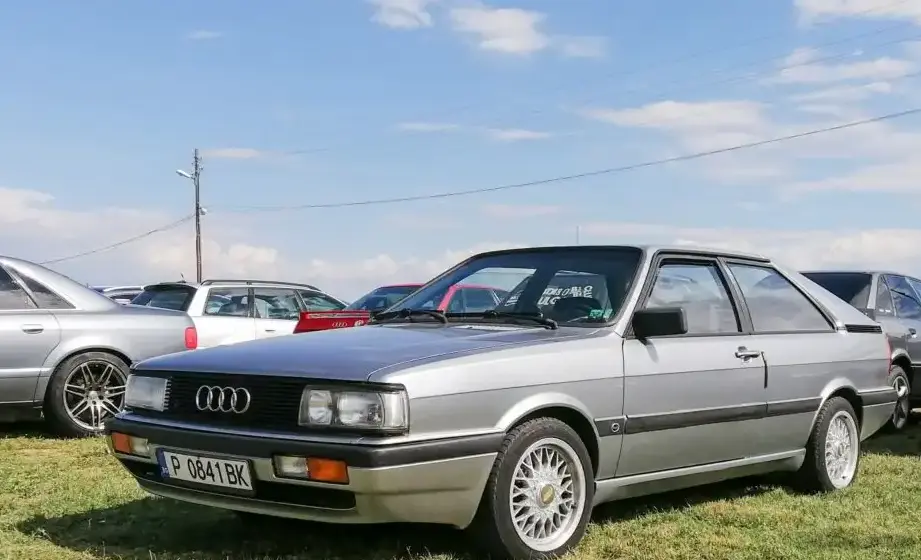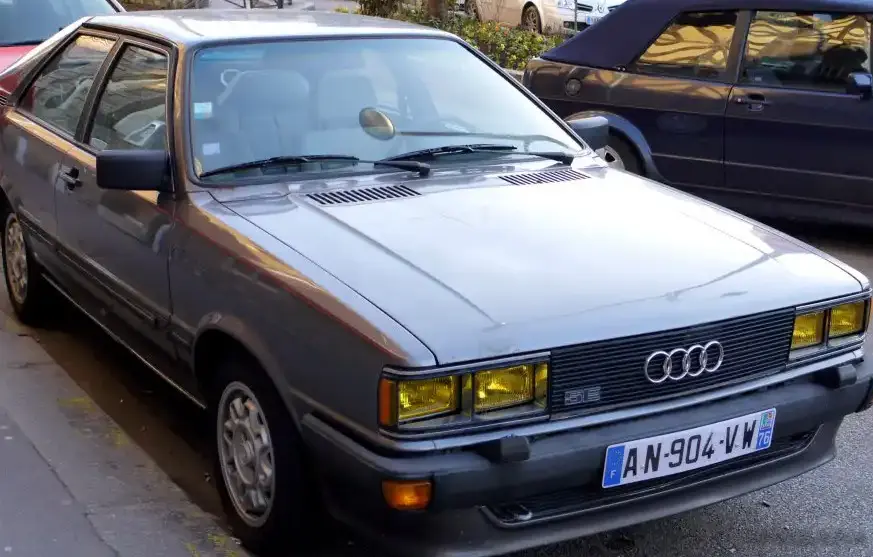
The Audi Coupe (B2), produced between 1980 and 1988, represented a significant step forward for Audi, establishing a foothold in the sporty coupe market. The GL 1.8 variant, powered by a 1.8-liter engine and paired with a three-speed automatic transmission, was offered primarily between 1981 and 1983. This model occupied an entry-level position within the B2 Coupe range, aimed at buyers seeking a comfortable and stylish coupe experience without the higher price tag or performance focus of the more powerful five-cylinder models. It was a key component of Audi’s strategy to broaden the appeal of the Coupe beyond dedicated enthusiasts.
Technical Specifications
| Brand | Audi |
| Model | Coupe |
| Generation | Coupe (B2 81, 85) |
| Type (Engine) | GL 1.8 (75 Hp) Automatic |
| Start of production | 1981 |
| End of production | 1983 |
| Powertrain Architecture | Internal Combustion engine |
| Body type | Coupe |
| Seats | 5 |
| Doors | 2 |
| Fuel Type | Petrol (Gasoline) |
| Acceleration 0 – 100 km/h | 15.9 sec |
| Acceleration 0 – 62 mph | 15.9 sec |
| Acceleration 0 – 60 mph | 15.1 sec |
| Maximum speed | 156 km/h (96.93 mph) |
| Weight-to-power ratio | 12.9 kg/Hp, 77.3 Hp/tonne |
| Weight-to-torque ratio | 7 kg/Nm, 142.3 Nm/tonne |
| Power | 75 Hp @ 4500 rpm |
| Power per litre | 42.1 Hp/l |
| Torque | 138 Nm @ 2600 rpm (101.78 lb.-ft. @ 2600 rpm) |
| Engine layout | Front, Longitudinal |
| Engine Model/Code | DD |
| Engine displacement | 1781 cm3 (108.68 cu. in.) |
| Number of cylinders | 4 |
| Engine configuration | Inline |
| Cylinder Bore | 81 mm (3.19 in.) |
| Piston Stroke | 86.4 mm (3.4 in.) |
| Compression ratio | 8.8:1 |
| Number of valves per cylinder | 2 |
| Fuel injection system | Carburettor |
| Engine aspiration | Naturally aspirated engine |
| Engine oil capacity | 3.5 l (3.7 US qt | 3.08 UK qt) |
| Coolant | 6.5 l (6.87 US qt | 5.72 UK qt) |
| Kerb Weight | 970 kg (2138.48 lbs.) |
| Max. weight | 1410 kg (3108.52 lbs.) |
| Max load | 440 kg (970.03 lbs.) |
| Trunk (boot) space – minimum | 494 l (17.45 cu. ft.) |
| Fuel tank capacity | 60 l (15.85 US gal | 13.2 UK gal) |
| Length | 4349 mm (171.22 in.) |
| Width | 1682 mm (66.22 in.) |
| Height | 1350 mm (53.15 in.) |
| Wheelbase | 2542 mm (100.08 in.) |
| Front track | 1400 mm (55.12 in.) |
| Rear (Back) track | 1420 mm (55.91 in.) |
| Drag coefficient (Cd) | 0.39 |
| Minimum turning circle | 10.4 m (34.12 ft.) |
| Drivetrain Architecture | The Internal combustion engine (ICE) drives the front wheels of the vehicle. |
| Drive wheel | Front wheel drive |
| Number of gears and type of gearbox | 3 gears, automatic transmission |
| Front brakes | Ventilated discs |
| Rear brakes | Drum |
| Tires size | 175/70 R13 |
| Wheel rims size | 13 |
Powertrain & Engine Architecture
The GL 1.8 Coupe utilized Audi’s DD engine code, a 1.8-liter inline four-cylinder engine. This engine was characterized by its relatively simple design, featuring a single overhead camshaft (SOHC) operating two valves per cylinder. Fuel delivery was managed by a Solex carburetor, a common setup for European vehicles of the era. While not particularly powerful by modern standards, the engine provided adequate performance for everyday driving. The three-speed automatic transmission, a common unit for the time, was chosen to provide ease of use and comfort, appealing to a broader range of drivers. The longitudinal engine layout, a hallmark of Audi’s engineering, contributed to a balanced weight distribution.
Driving Characteristics
The 1.8-liter engine with the three-speed automatic transmission delivered a relaxed driving experience. Acceleration was modest, with 0-60 mph times around 15 seconds. The automatic transmission, while convenient, lacked the responsiveness of a manual gearbox, and gear changes were noticeable. Compared to the more potent five-cylinder versions of the B2 Coupe, the GL 1.8 prioritized fuel economy and smooth cruising over outright performance. The gear ratios were optimized for comfortable highway driving, but the engine could feel strained when attempting rapid acceleration or climbing steep hills. The front-wheel-drive configuration provided predictable handling, but lacked the dynamic capabilities of later Quattro models.
Equipment & Trim Levels
The GL 1.8 Coupe was positioned as a well-equipped, yet affordable, entry point into the Audi Coupe range. Standard features typically included cloth upholstery, basic instrumentation, and a radio. Power steering was often included, but air conditioning and electric windows were frequently optional extras. The interior design was functional and understated, reflecting the car’s focus on practicality. Buyers could specify various options, such as upgraded sound systems, sunroofs, and alloy wheels, to personalize their vehicle. The GL trim level generally represented a step up from the base model, offering a slightly more refined interior and additional comfort features.
Chassis & Braking
The B2 Coupe utilized a MacPherson strut front suspension and a torsion beam rear suspension. The GL 1.8 variant typically featured drum brakes on the rear wheels, while the front wheels were equipped with ventilated disc brakes. This braking configuration was adequate for the car’s weight and performance, but lacked the stopping power of the disc brakes found on higher-spec models. The suspension setup provided a comfortable ride, but wasn’t particularly sporty. Stabilizer bars were fitted to both the front and rear axles to reduce body roll during cornering, but the overall handling characteristics were geared towards comfort rather than agility.
Market Reception & Comparison
The Audi Coupe GL 1.8 Automatic received mixed reviews. Critics praised its stylish design and comfortable interior, but often criticized its lack of performance. Compared to the more powerful five-cylinder Coupes, the 1.8-liter version was seen as underpowered. However, its lower price and improved fuel economy made it an attractive option for buyers who prioritized practicality and affordability. The automatic transmission was generally well-received for its ease of use, but some reviewers noted its lack of responsiveness. In terms of reliability, the 1.8-liter engine proved to be relatively robust, but the carburetor required periodic maintenance.
Legacy
The Audi Coupe GL 1.8 Automatic, while not the most sought-after variant of the B2 Coupe, holds a place in automotive history as a stylish and accessible entry-level coupe. Today, these cars are becoming increasingly collectible, particularly well-maintained examples. The relatively simple engine and transmission design make them relatively easy to maintain, although finding parts can sometimes be a challenge. The GL 1.8’s enduring appeal lies in its combination of classic Audi styling, comfortable driving experience, and relative affordability. It represents a significant chapter in Audi’s evolution as a premium automotive brand, demonstrating the company’s ability to create desirable and well-engineered vehicles for a broad range of customers.