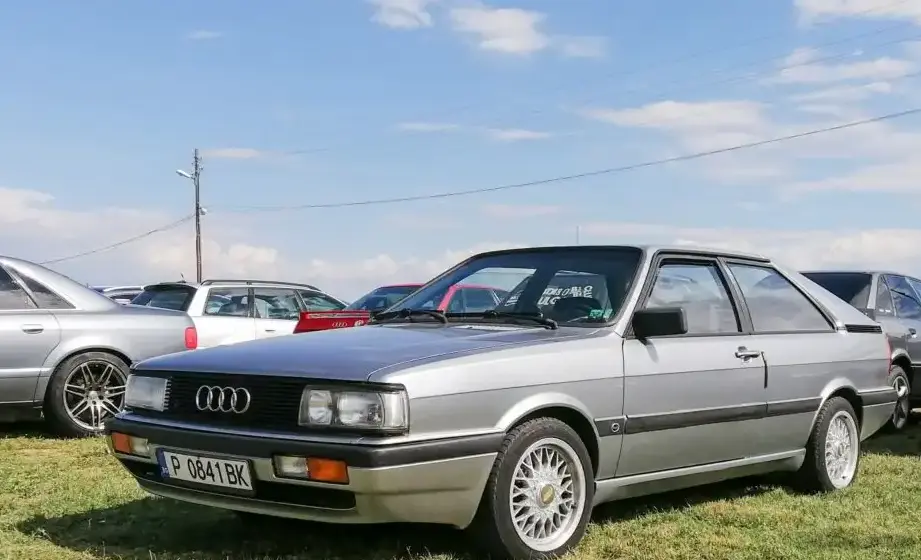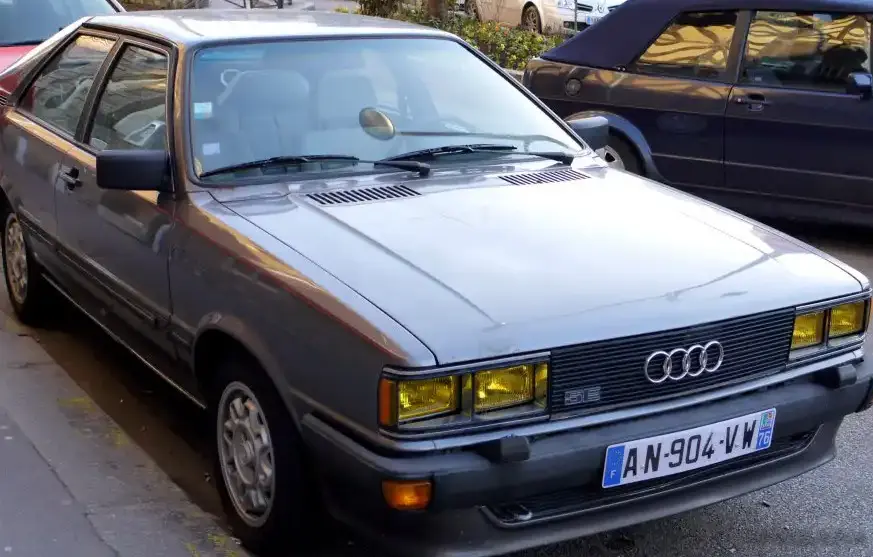
The Audi Coupe (B2), produced between 1980 and 1988, represented a significant step forward for Audi, blending sporty styling with practical usability. The GT 1.8 variant, powered by a 90 horsepower engine and often paired with an automatic transmission, was a key model within the B2 range from 1982-1984. It occupied a middle ground in the lineup, offering a more affordable entry point into the Coupe experience compared to the more potent, five-cylinder models, while still providing a comfortable and refined driving experience. This version was primarily aimed at buyers seeking a stylish and economical coupe for everyday use.
Technical Specifications
| Brand | Audi |
| Model | Coupe |
| Generation | Coupe (B2 81, 85) |
| Type (Engine) | GT 1.8 (90 Hp) |
| Start of production | 1982 |
| End of production | 1984 |
| Powertrain Architecture | Internal Combustion engine |
| Body type | Coupe |
| Seats | 5 |
| Doors | 2 |
| Fuel Type | Petrol (Gasoline) |
| Acceleration 0 – 100 km/h | 11 sec |
| Acceleration 0 – 62 mph | 11 sec |
| Acceleration 0 – 60 mph | 10.5 sec |
| Maximum speed | 170 km/h (105.63 mph) |
| Weight-to-power ratio | 10.6 kg/Hp, 94.7 Hp/tonne |
| Weight-to-torque ratio | 6.6 kg/Nm, 152.6 Nm/tonne |
| Power | 90 Hp @ 5200 rpm |
| Power per litre | 50.5 Hp/l |
| Torque | 145 Nm @ 3300 rpm (106.95 lb.-ft. @ 3300 rpm) |
| Engine layout | Front, Longitudinal |
| Engine Model/Code | DS, JN, JV |
| Engine displacement | 1781 cm3 (108.68 cu. in.) |
| Number of cylinders | 4 |
| Engine configuration | Inline |
| Cylinder Bore | 81 mm (3.19 in.) |
| Piston Stroke | 86.4 mm (3.4 in.) |
| Compression ratio | 10:1 |
| Number of valves per cylinder | 2 |
| Fuel injection system | Carburettor |
| Engine aspiration | Naturally aspirated engine |
| Engine oil capacity | 3.5 l (3.7 US qt | 3.08 UK qt) |
| Coolant | 6.5 l (6.87 US qt | 5.72 UK qt) |
| Kerb Weight | 950 kg (2094.39 lbs.) |
| Max. weight | 1410 kg (3108.52 lbs.) |
| Max load | 460 kg (1014.13 lbs.) |
| Trunk (boot) space – minimum | 494 l (17.45 cu. ft.) |
| Fuel tank capacity | 60 l (15.85 US gal | 13.2 UK gal) |
| Length | 4349 mm (171.22 in.) |
| Width | 1682 mm (66.22 in.) |
| Height | 1350 mm (53.15 in.) |
| Wheelbase | 2542 mm (100.08 in.) |
| Front track | 1400 mm (55.12 in.) |
| Rear (Back) track | 1420 mm (55.91 in.) |
| Drag coefficient (Cd) | 0.39 |
| Minimum turning circle | 10.4 m (34.12 ft.) |
| Drivetrain Architecture | The Internal combustion engine (ICE) drives the front wheels of the vehicle. |
| Drive wheel | Front wheel drive |
| Number of gears | 5 gears, manual transmission |
| Front brakes | Disc |
| Rear brakes | Drum |
| Tires size | 175/70 R13 |
| Wheel rims size | 13 |
Powertrain & Engine Architecture
The heart of the GT 1.8 was the Audi DS, JN, or JV inline-four cylinder engine, displacing 1781cc. This engine, a mainstay of the Volkswagen Group at the time, featured a relatively simple carbureted fuel injection system. While not as sophisticated as later fuel injection technologies, it provided adequate performance for the intended market. The engine utilized a two-valve per cylinder configuration and a compression ratio of 10:1. The engine was mounted longitudinally in the front of the vehicle, driving the front wheels. The automatic transmission option, typically a three-speed unit, was designed for smooth operation and ease of use, prioritizing comfort over outright performance. This transmission was a common choice for buyers who preferred a less involved driving experience.
Driving Characteristics
The 90 horsepower output and automatic transmission combination resulted in a relaxed driving experience. Acceleration from 0-60 mph took around 10.5 seconds, and top speed was approximately 105 mph. Compared to the manual transmission versions or the more powerful five-cylinder models, the GT 1.8 Automatic felt noticeably slower. However, the automatic transmission provided smooth gear changes and made the car easy to drive in city traffic. The gear ratios were optimized for fuel efficiency and comfortable cruising rather than spirited acceleration. The front-wheel-drive layout offered predictable handling, but lacked the dynamic capabilities of rear-wheel-drive alternatives.
Equipment & Trim Levels
The GT 1.8 typically came with a reasonable level of standard equipment. Interior upholstery was usually cloth, with a functional and straightforward dashboard layout. Power steering was often included, enhancing ease of maneuverability. Options included a sunroof, upgraded audio systems, and alloy wheels. The trim level was generally considered entry-level to mid-range within the B2 Coupe lineup. It offered a good balance of features and affordability, making it an attractive option for buyers who didn’t require the luxury or performance of the higher-spec models.
Chassis & Braking
The B2 Coupe utilized a MacPherson strut front suspension and a torsion beam rear suspension. The GT 1.8, due to its lower weight compared to the five-cylinder variants, often featured a slightly softer suspension setup, prioritizing ride comfort. Braking was accomplished via disc brakes on the front wheels and drum brakes on the rear. While adequate for normal driving conditions, the rear drum brakes were a point of criticism compared to the all-disc setups found on higher-performance models. Stabilizer bars were included to reduce body roll during cornering, but were typically thinner than those found on the sportier trims.
Market Reception & Comparison
The Audi Coupe GT 1.8 Automatic was generally well-received as a stylish and practical coupe. Critics praised its comfortable ride and user-friendly automatic transmission. However, the engine’s performance was often considered adequate but not exciting. Compared to the more powerful five-cylinder Coupes, the 1.8 felt underpowered, particularly when fully loaded with passengers and luggage. Fuel economy was a strong point, making it an attractive option for buyers concerned about running costs. Reliability was generally good, although the carbureted fuel system required periodic maintenance. The 1.8L automatic was often seen as a sensible choice for those prioritizing comfort and economy over outright performance.
Legacy
Today, the Audi Coupe B2 GT 1.8 Automatic is a relatively affordable classic car. The engine, while not particularly powerful, is known for its durability and relative simplicity. Maintenance is generally straightforward, although finding parts for the carbureted fuel system can sometimes be challenging. These cars are increasingly sought after by enthusiasts who appreciate their classic styling and understated elegance. While not a high-performance icon, the GT 1.8 Automatic represents a significant chapter in Audi’s history, showcasing the brand’s commitment to building stylish, comfortable, and reliable automobiles. The automatic transmission, while not favored by performance enthusiasts, has proven to be reasonably durable over the long term, making these cars a viable option for those seeking a classic Audi experience.