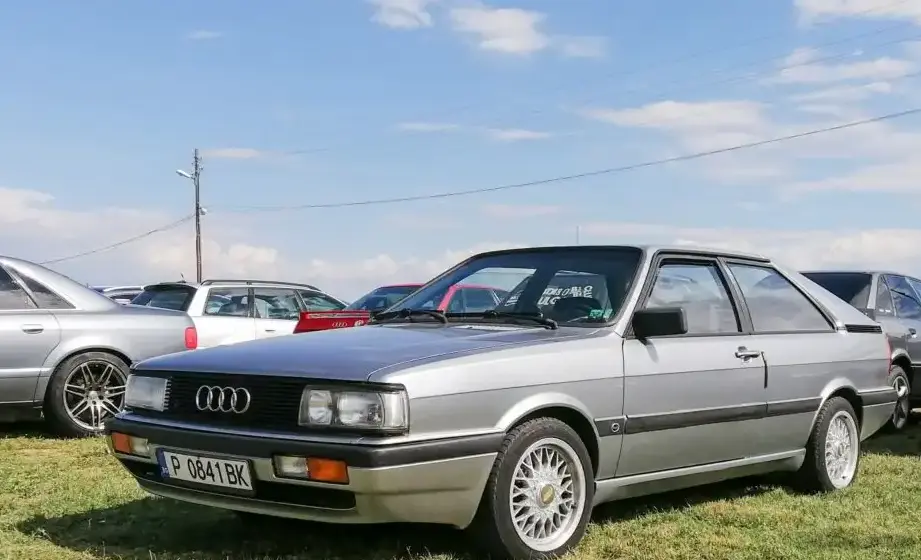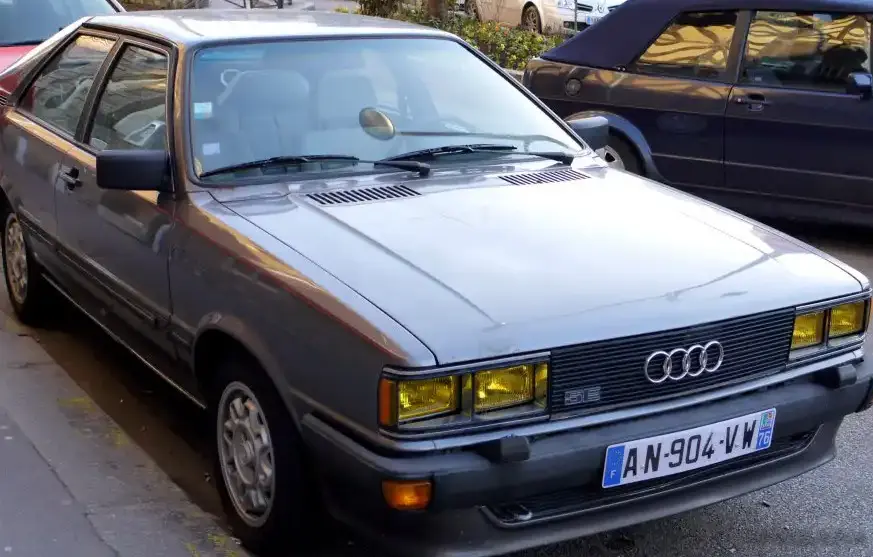
The Audi Coupe (B2), produced between 1980 and 1988, represented a significant step forward for Audi, blending sporty styling with a comfortable grand touring experience. The GT 5S 2.0 Automatic, manufactured from 1981 to 1984, was a key variant within the B2 range (chassis codes 81 and 85). Positioned as a mid-range offering, it aimed to provide a balance between performance and ease of use, appealing to buyers who desired a stylish coupe without the demands of a manual transmission or the higher price tag of the more powerful models. It was built on the Audi B2 platform, shared with the Audi 80 and 90 sedans.
Technical Specifications
| Brand | Audi |
| Model | Coupe |
| Generation | Coupe (B2 81, 85) |
| Type (Engine) | GT 5S 2.0 (115 Hp) Automatic |
| Start of production | August, 1981 |
| End of production | 1984 |
| Powertrain Architecture | Internal Combustion engine |
| Body type | Coupe |
| Seats | 5 |
| Doors | 2 |
| Fuel Type | Petrol (Gasoline) |
| Acceleration 0 – 100 km/h | 12.5 sec |
| Acceleration 0 – 62 mph | 12.5 sec |
| Acceleration 0 – 60 mph | 11.9 sec |
| Maximum speed | 177 km/h (109.98 mph) |
| Weight-to-power ratio | 9.1 kg/Hp, 110 Hp/tonne |
| Weight-to-torque ratio | 6.8 kg/Nm, 147.4 Nm/tonne |
| Power | 115 Hp @ 5900 rpm |
| Power per litre | 59.9 Hp/l |
| Torque | 154 Nm @ 3700 rpm (113.58 lb.-ft. @ 3700 rpm) |
| Engine layout | Front, Longitudinal |
| Engine Model/Code | JS, HP |
| Engine displacement | 1921 cm3 (117.23 cu. in.) |
| Number of cylinders | 5 |
| Engine configuration | Inline |
| Cylinder Bore | 79.5 mm (3.13 in.) |
| Piston Stroke | 77.4 mm (3.05 in.) |
| Compression ratio | 10:1 |
| Number of valves per cylinder | 2 |
| Fuel injection system | Carburettor |
| Engine aspiration | Naturally aspirated engine |
| Valvetrain | OHC |
| Kerb Weight | 1045 kg (2303.83 lbs.) |
| Max. weight | 1480 kg (3262.84 lbs.) |
| Max load | 435 kg (959.01 lbs.) |
| Trunk (boot) space – minimum | 494 l (17.45 cu. ft.) |
| Fuel tank capacity | 60 l (15.85 US gal | 13.2 UK gal) |
| Length | 4349 mm (171.22 in.) |
| Width | 1682 mm (66.22 in.) |
| Height | 1350 mm (53.15 in.) |
| Wheelbase | 2542 mm (100.08 in.) |
| Front track | 1400 mm (55.12 in.) |
| Rear (Back) track | 1420 mm (55.91 in.) |
| Drag coefficient (Cd) | 0.39 |
| Minimum turning circle | 10.4 m (34.12 ft.) |
| Drivetrain Architecture | The Internal combustion engine (ICE) drives the front wheels of the vehicle. |
| Drive wheel | Front wheel drive |
| Number of gears and type of gearbox | 3 gears, automatic transmission |
| Front brakes | Disc |
| Rear brakes | Drum |
| Tires size | 175/70 R13 |
| Wheel rims size | 13 |
Powertrain & Engine Architecture
The GT 5S 2.0 Automatic was powered by Audi’s inline five-cylinder engine, designated JS or HP depending on minor variations. This engine, displacing 1921cc, produced 115 horsepower at 5900 rpm and 154 Nm (113.58 lb-ft) of torque at 3700 rpm. It utilized a single overhead camshaft (OHC) valvetrain with two valves per cylinder. Notably, this engine employed a carburetor fuel system, a common feature for the time, rather than fuel injection. This carburetor setup, while simpler and less expensive, contributed to slightly lower fuel efficiency and emissions compared to later fuel-injected Audi engines. The engine was mounted longitudinally in the front of the vehicle, driving the front wheels.
The automatic transmission was a three-speed unit. While providing convenience, this transmission wasn’t known for its responsiveness or efficiency. The gear ratios were geared towards comfortable cruising rather than spirited acceleration. The automatic transmission was a key selling point for buyers who preferred the ease of use over the engagement of a manual gearbox.
Driving Characteristics
The 115 hp output and three-speed automatic transmission resulted in a driving experience that prioritized comfort and usability over outright performance. Acceleration from 0-60 mph took approximately 11.9 seconds, and the top speed was around 109.98 mph. Compared to the five-speed manual versions of the 2.0-liter Coupe, the automatic was noticeably slower. The manual transmission allowed for better control and more efficient use of the engine’s power band. The automatic’s gear changes were relatively slow and sometimes hesitant, particularly during kickdown maneuvers. However, for everyday driving and long-distance cruising, the automatic provided a relaxed and effortless experience.
Equipment & Trim Levels
The GT 5S 2.0 Automatic came standard with features considered fairly generous for the early 1980s. These included cloth upholstery, a basic stereo system, and power-assisted steering. Optional extras included a sunroof, upgraded stereo systems, and metallic paint finishes. The interior design was functional and relatively minimalist, reflecting the German design philosophy of the time. The dashboard layout was straightforward, with clearly marked gauges and controls. The GT 5S trim level sat in the middle of the Coupe range, offering more features than the base models but lacking the luxury appointments of the higher-spec versions.
Chassis & Braking
The Audi Coupe B2 featured an independent suspension system at the front, utilizing MacPherson struts and torsion bars. The rear suspension employed a semi-trailing arm setup. This suspension configuration provided a good balance between ride comfort and handling. The GT 5S 2.0 Automatic was equipped with disc brakes at the front and drum brakes at the rear. While adequate for normal driving conditions, the drum brakes on the rear limited the car’s overall braking performance compared to models equipped with all-disc brakes. The car rode on 175/70 R13 tires, mounted on 13-inch steel wheels.
Market Reception & Comparison
The GT 5S 2.0 Automatic was generally well-received by automotive critics as a comfortable and stylish coupe. However, the automatic transmission was often criticized for its lack of responsiveness and its impact on fuel economy. Compared to the manual transmission versions, the automatic was considered less engaging to drive. Against competitors like the BMW 320i and the Mercedes-Benz 200, the Audi Coupe offered a unique blend of sporty styling and practicality. The Audi’s front-wheel-drive layout provided good traction in adverse weather conditions, a significant advantage in many European markets.
Legacy
The Audi Coupe B2, including the GT 5S 2.0 Automatic variant, has become a sought-after classic car among enthusiasts. The inline five-cylinder engine is particularly admired for its distinctive sound and robust construction. While the carburetor and three-speed automatic transmission are not known for their cutting-edge technology, they are relatively simple to maintain. Today, well-maintained examples of the GT 5S 2.0 Automatic command reasonable prices in the used car market. The car’s enduring appeal lies in its timeless design, comfortable driving experience, and the unique character of its five-cylinder engine. Finding parts can be a challenge, but a dedicated community of Audi enthusiasts ensures that support and resources are available for those looking to restore and maintain these classic coupes.