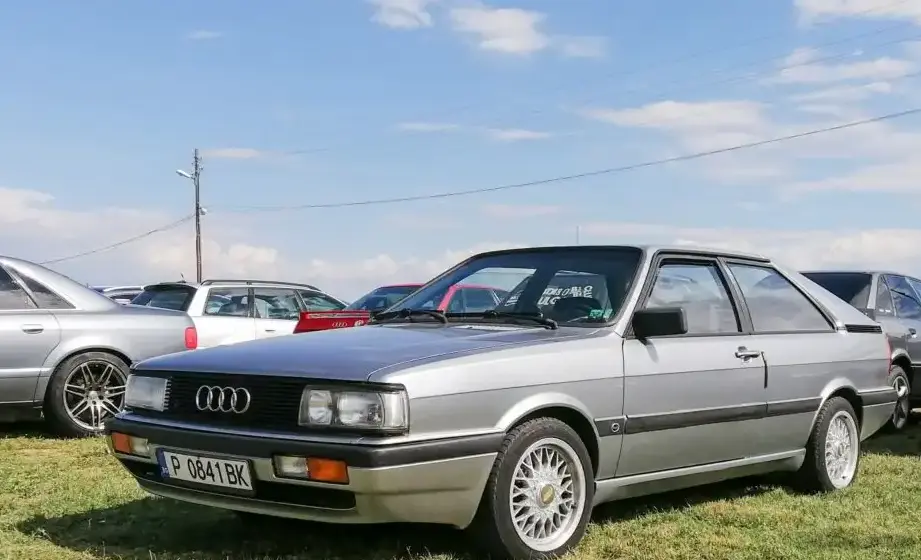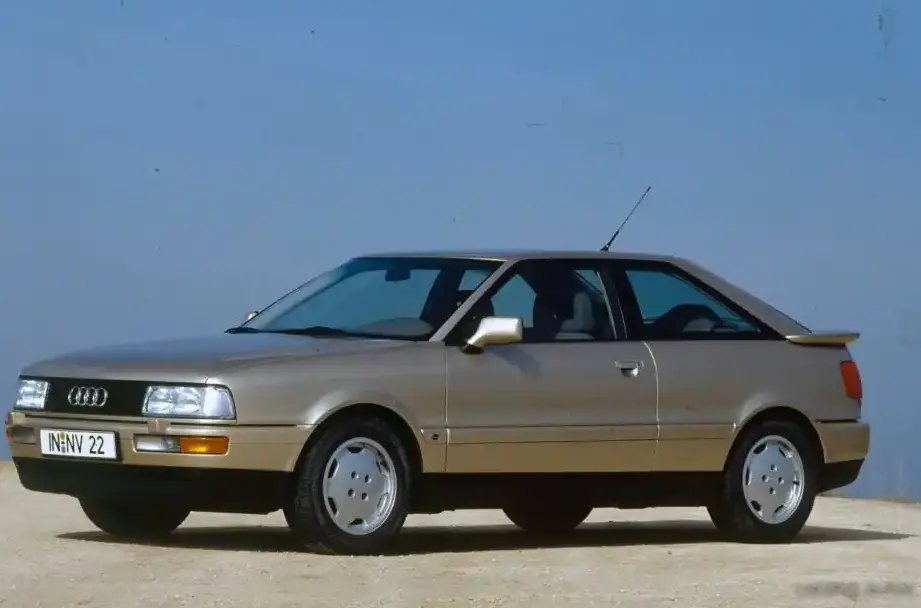
The Audi Coupe (B3), produced between 1980 and 1988, represented a significant step forward for Audi, blending sporty styling with practical usability. The 1.8-liter variant, specifically those manufactured between 1989 and July 1991, occupied a middle ground within the B3 Coupe lineup. Positioned above the base 1.6-liter models but below the more potent 2.3-liter versions, the 1.8 offered a balance of performance and affordability, appealing to buyers seeking a stylish coupe without the higher price tag of the flagship engines. This model was a key part of the B3 generation, built on the Audi 80 (B3) platform, also known internally as the 1HX0/A3 platform.
Technical Specifications
| Brand | Audi |
| Model | Coupe |
| Generation | Coupe (B3 89) |
| Type (Engine) | 1.8 (112 Hp) |
| Start of production | 1989 |
| End of production | July, 1991 |
| Powertrain Architecture | Internal Combustion engine |
| Body type | Coupe |
| Seats | 5 |
| Doors | 2 |
| Fuel Type | Petrol (Gasoline) |
| Maximum speed | 195 km/h (121.17 mph) |
| Weight-to-power ratio | 9.2 kg/Hp, 108.7 Hp/tonne |
| Weight-to-torque ratio | 6.4 kg/Nm, 155.3 Nm/tonne |
| Power | 112 Hp @ 5800 rpm |
| Power per litre | 62.9 Hp/l |
| Torque | 160 Nm @ 3400 rpm (118.01 lb.-ft. @ 3400 rpm) |
| Engine layout | Front, Longitudinal |
| Engine Model/Code | DZ |
| Engine displacement | 1781 cm3 (108.68 cu. in.) |
| Number of cylinders | 4 |
| Engine configuration | Inline |
| Cylinder Bore | 81 mm (3.19 in.) |
| Piston Stroke | 86.4 mm (3.4 in.) |
| Compression ratio | 10:1 |
| Number of valves per cylinder | 2 |
| Fuel injection system | Multi-port manifold injection |
| Engine aspiration | Naturally aspirated engine |
| Engine oil capacity | 3 l (3.17 US qt | 2.64 UK qt) |
| Coolant | 7 l (7.4 US qt | 6.16 UK qt) |
| Kerb Weight | 1030 kg (2270.76 lbs) |
| Trunk (boot) space – minimum | 280 l (9.89 cu. ft.) |
| Trunk (boot) space – maximum | 960 l (33.9 cu. ft.) |
| Fuel tank capacity | 68 l (17.96 US gal | 14.96 UK gal) |
| Length | 4366 mm (171.89 in.) |
| Width | 1716 mm (67.56 in.) |
| Height | 1370 mm (53.94 in.) |
| Wheelbase | 2556 mm (100.63 in.) |
| Front track | 1446 mm (56.93 in.) |
| Rear (Back) track | 1441 mm (56.73 in.) |
| Drag coefficient (Cd) | 0.32 |
| Minimum turning circle (turning diameter) | 11.1 m (36.42 ft.) |
| Drivetrain Architecture | The Internal combustion engine (ICE) drives the front wheels of the vehicle. |
| Drive wheel | Front wheel drive |
| Number of gears and type of gearbox | 5 gears, manual transmission |
| Front suspension | Independent, type McPherson with coil spring and anti-roll bar |
| Rear suspension | Double wishbone |
| Steering type | Steering rack and pinion |
| Tires size | 205/60 R15 |
| Wheel rims size | 15 |
Powertrain & Engine Architecture
The heart of the 1.8-liter Coupe was the DZ engine code, a naturally aspirated, inline four-cylinder powerplant. Displacing 1781cc, it featured a cast iron block and an aluminum cylinder head. Fuel delivery was managed by a Bosch multi-port fuel injection system, providing a good balance between efficiency and performance for its time. The engine utilized a single overhead camshaft (SOHC) design with two valves per cylinder. This configuration, while not as sophisticated as dual overhead cam setups, contributed to the engine’s reliability and ease of maintenance. The 1.8-liter engine produced 112 horsepower at 5800 rpm and 160 Nm (118 lb-ft) of torque at 3400 rpm. The engine was mounted longitudinally in the front of the vehicle, driving the front wheels through a five-speed manual transmission. The transmission itself was a standard unit for Audi at the time, known for its smooth shifting and durability. It was designed to handle the engine’s torque output without issue, contributing to the overall reliability of the drivetrain.
Driving Characteristics
The 1.8-liter Coupe, with its 112 hp, offered a respectable, though not exhilarating, driving experience. Acceleration from 0 to 60 mph took approximately 10.5 seconds, and the top speed was around 121 mph. Compared to the more powerful 2.3-liter versions, the 1.8 felt noticeably less responsive, particularly during overtaking maneuvers. However, the five-speed manual transmission allowed drivers to keep the engine in its optimal power band. The gear ratios were well-chosen for everyday driving, providing adequate acceleration in most situations. The front-wheel-drive layout offered predictable handling, although it could exhibit some understeer when pushed hard. The suspension, while comfortable, wasn’t particularly sporty, resulting in a slightly softer ride compared to the higher-performance models. The steering provided adequate feedback, but lacked the precision found in more focused sports coupes. Overall, the driving experience was geared towards comfortable cruising and everyday usability rather than outright performance.
Equipment & Trim Levels
The 1.8-liter Coupe typically came with a fairly standard level of equipment. Standard features included power steering, central locking, and a basic stereo system. Interior upholstery was typically cloth, with options for upgraded materials available. The dashboard layout was functional and straightforward, with clearly marked gauges and controls. Optional extras included a sunroof, alloy wheels, and upgraded sound systems. The trim level was generally considered a mid-range offering, providing a good balance of features and affordability. It wasn’t as bare-bones as the base 1.6-liter models, but it lacked the luxury appointments found in the 2.3-liter variants. Features like electric windows and heated mirrors were often available as optional extras, allowing buyers to customize their vehicle to their preferences.
Chassis & Braking
The B3 Coupe utilized a McPherson strut front suspension and a double-wishbone rear suspension. This setup provided a comfortable ride and decent handling characteristics. The front suspension incorporated an anti-roll bar to reduce body roll during cornering. Braking duties were handled by disc brakes on the front wheels and drum brakes on the rear wheels. This configuration was typical for vehicles in this class at the time. The braking system provided adequate stopping power for everyday driving, but it lacked the stopping power of the larger brakes found on the higher-performance models. The steering was a rack-and-pinion system, offering precise and responsive steering feel. The chassis was relatively lightweight, contributing to the car’s nimble handling characteristics.
Market Reception & Comparison
The 1.8-liter Coupe was generally well-received by automotive critics as a practical and stylish coupe. It was praised for its comfortable ride, decent fuel economy, and relatively affordable price. However, some critics noted that the engine lacked the power and refinement of the larger engines in the lineup. Compared to the 1.6-liter models, the 1.8 offered a noticeable performance improvement. Compared to the 2.3-liter versions, it was less powerful but more fuel-efficient and less expensive to purchase and maintain. The 1.8-liter Coupe appealed to buyers who wanted a sporty-looking coupe without the high running costs of the more powerful engines. It filled a niche for those seeking a balance between style, practicality, and affordability.
Legacy
The Audi Coupe B3 1.8-liter variant has become a popular choice among classic car enthusiasts. The DZ engine is known for its reliability and relatively simple maintenance requirements. Parts availability is generally good, although some specific components may be difficult to find. Today, these cars are often sought after for their classic styling and affordable price. While not a high-performance machine by modern standards, the 1.8-liter Coupe offers a charming and engaging driving experience. Its enduring appeal lies in its blend of practicality, style, and German engineering. The B3 Coupe, and the 1.8 variant specifically, helped solidify Audi’s reputation for building well-engineered and stylish automobiles. The car represents a significant era in Audi’s history, showcasing the brand’s commitment to innovation and quality.