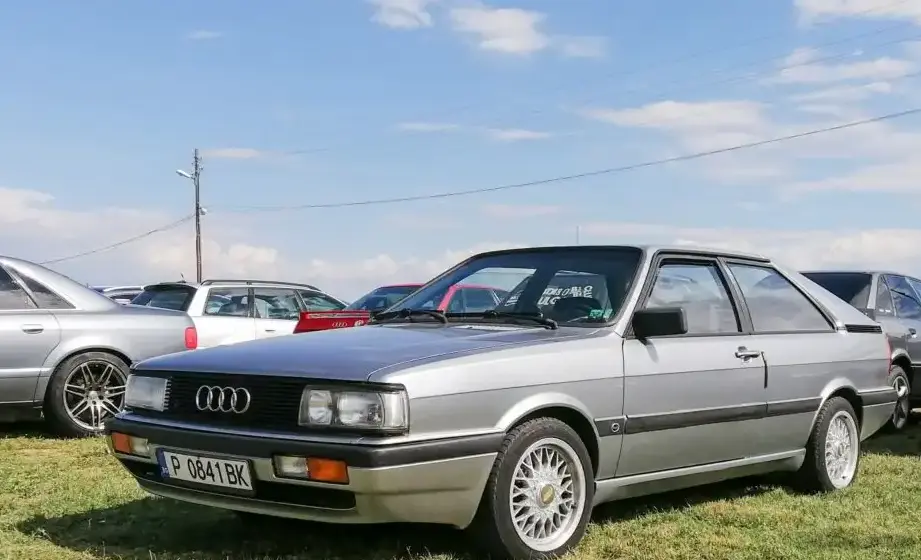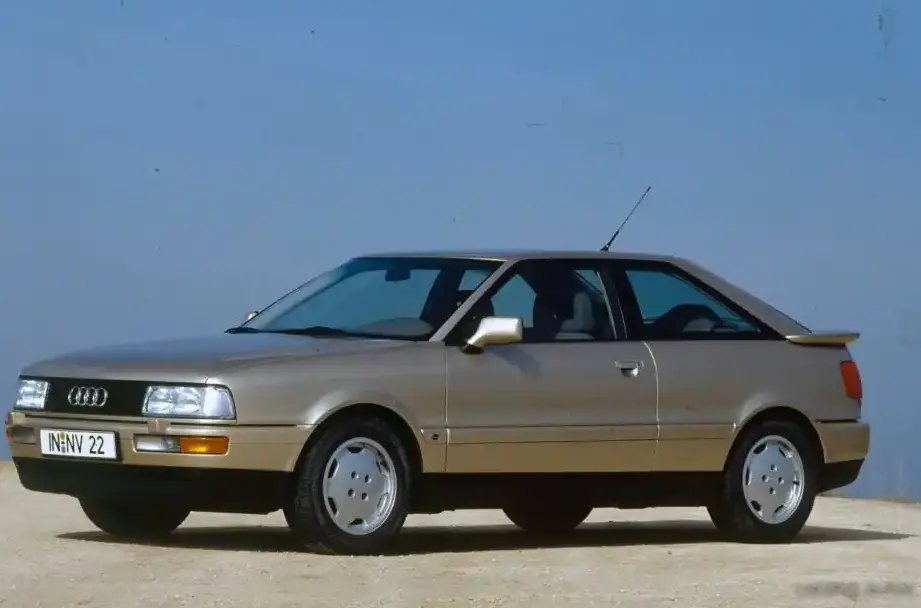
The Audi Coupe (B3), produced between 1988 and 1991, represented a significant evolution in Audi’s coupe design. The 2.0-liter (115 hp) variant, specifically those manufactured between August 1990 and July 1991, occupied a middle ground within the B3 Coupe lineup, offering a balance between performance and affordability. This model was built on the Audi 80 (B3) platform – internally designated as the B3 – and aimed to provide a more sporting alternative to the standard sedan while remaining accessible to a wider customer base. It served as a bridge between the more economical base models and the higher-performance versions like the 2.3-liter five-cylinder models.
Technical Specifications
| Brand | Audi |
| Model | Coupe |
| Generation | Coupe (B3 89) |
| Type (Engine) | 2.0 (115 Hp) |
| Start of production | August, 1990 |
| End of production | July, 1991 |
| Powertrain Architecture | Internal Combustion engine |
| Body type | Coupe |
| Seats | 5 |
| Doors | 2 |
| Fuel consumption (combined) | 8.2 l/100 km |
| Fuel consumption (US mpg) | 28.7 US mpg |
| Fuel consumption (UK mpg) | 34.4 UK mpg |
| Fuel consumption (km/l) | 12.2 km/l |
| Fuel Type | Petrol (Gasoline) |
| Acceleration 0 – 100 km/h | 10.9 sec |
| Acceleration 0 – 62 mph | 10.9 sec |
| Acceleration 0 – 60 mph | 10.4 sec |
| Maximum speed | 196 km/h (121.79 mph) |
| Weight-to-power ratio | 10 kg/Hp, 100 Hp/tonne |
| Weight-to-torque ratio | 7 kg/Nm, 143.5 Nm/tonne |
| Power | 115 Hp @ 5400 rpm |
| Power per litre | 58 Hp/l |
| Torque | 165 Nm @ 3200 rpm (121.7 lb.-ft. @ 3200 rpm) |
| Engine layout | Front, Longitudinal |
| Engine Model/Code | AAD |
| Engine displacement | 1984 cm3 (121.07 cu. in.) |
| Number of cylinders | 4 |
| Engine configuration | Inline |
| Cylinder Bore | 82.5 mm (3.25 in.) |
| Piston Stroke | 92.8 mm (3.65 in.) |
| Compression ratio | 10.4:1 |
| Number of valves per cylinder | 2 |
| Fuel injection system | Multi-port manifold injection |
| Engine aspiration | Naturally aspirated engine |
| Engine oil capacity | 3 l (3.17 US qt | 2.64 UK qt) |
| Coolant capacity | 7 l (7.4 US qt | 6.16 UK qt) |
| Kerb Weight | 1150 kg (2535.32 lbs.) |
| Trunk (boot) space – minimum | 280 l (9.89 cu. ft.) |
| Trunk (boot) space – maximum | 960 l (33.9 cu. ft.) |
| Fuel tank capacity | 70 l (18.49 US gal | 15.4 UK gal) |
| Length | 4366 mm (171.89 in.) |
| Width | 1716 mm (67.56 in.) |
| Height | 1375 mm (54.13 in.) |
| Wheelbase | 2556 mm (100.63 in.) |
| Front track | 1446 mm (56.93 in.) |
| Rear (Back) track | 1447 mm (56.97 in.) |
| Ride height (ground clearance) | 140 mm (5.51 in.) |
| Minimum turning circle | 11.1 m (36.42 ft.) |
| Drivetrain Architecture | The Internal combustion engine (ICE) drives the front wheels of the vehicle. |
| Drive wheel | Front wheel drive |
| Number of gears and type of gearbox | 5 gears, manual transmission |
| Front suspension | Independent, type McPherson with coil spring and anti-roll bar |
| Rear suspension | Double wishbone |
| Front brakes | Ventilated discs |
| Rear brakes | Disc |
| Steering type | Steering rack and pinion |
| Tires size | 195/65 R15 |
| Wheel rims size | 15 |
Powertrain & Engine Architecture
The 2.0-liter inline-four engine, designated as the AAD engine code, was a naturally aspirated unit featuring multi-port fuel injection. This engine was a mainstay of the Audi 80 range and offered a good compromise between fuel efficiency and performance. The engine’s 10.4:1 compression ratio and two valves per cylinder contributed to its relatively smooth operation. The engine’s layout was longitudinal, meaning it was mounted with the crankshaft running from front to rear, a configuration common in front-wheel-drive Audi models of the time. The five-speed manual transmission was the standard offering for this variant, providing precise gear changes and contributing to a more engaging driving experience. The engine produced 115 horsepower at 5400 rpm and 165 Nm (121.7 lb-ft) of torque at 3200 rpm.
Driving Characteristics
The 2.0-liter Coupe offered a respectable, if not exhilarating, driving experience. Acceleration from 0 to 60 mph took approximately 10.4 seconds, and the top speed was around 121.79 mph. Compared to the more powerful 2.3-liter five-cylinder versions, the 2.0-liter felt less urgent in its acceleration. However, the lighter weight of the 2.0-liter model, at 1150 kg, meant it felt more nimble and responsive in corners. The five-speed manual transmission allowed drivers to keep the engine in its optimal power band, maximizing performance. The gear ratios were well-chosen for everyday driving, providing adequate acceleration in most situations. The front-wheel-drive configuration offered good traction in most conditions, although torque steer could be noticeable under hard acceleration.
Equipment & Trim Levels
The 2.0-liter Coupe typically came with a reasonable level of standard equipment. This included power steering, central locking, and a basic stereo system. Interior upholstery was typically cloth, with options for upgraded materials available. The dashboard layout was functional and driver-focused, with clear instrumentation. Optional extras included a sunroof, alloy wheels, and upgraded audio systems. The trim level generally sat in the mid-range of the B3 Coupe lineup, offering more features than the base models but lacking the luxury appointments of the higher-spec versions.
Chassis & Braking
The B3 Coupe featured an independent McPherson strut suspension at the front and a double-wishbone suspension at the rear, providing a comfortable ride and good handling characteristics. The front suspension included an anti-roll bar to reduce body roll during cornering. Braking was handled by ventilated discs at the front and solid discs at the rear. The braking system was adequate for the car’s performance, providing good stopping power in most conditions. The steering was a rack-and-pinion system, offering precise and responsive steering feel.
Market Reception & Comparison
The 2.0-liter Coupe was generally well-received by automotive critics as a practical and stylish coupe. It was praised for its comfortable ride, good handling, and relatively fuel-efficient engine. However, some critics noted that the engine lacked the punch of the more powerful five-cylinder versions. Compared to the 2.3-liter models, the 2.0-liter offered better fuel economy (around 28.7 US mpg combined) and lower maintenance costs. It was also more affordable to purchase, making it an attractive option for buyers looking for a sporty coupe without breaking the bank. Compared to the diesel variants, the 2.0-liter offered more refined performance but at the cost of fuel economy.
Legacy
The Audi Coupe B3 2.0 (115 hp) has become a sought-after classic among Audi enthusiasts. The AAD engine is known for its reliability, provided it is properly maintained. Common issues include oil leaks and wear on the timing belt, which should be replaced at regular intervals. Today, well-maintained examples of this model are relatively rare and command a premium in the used car market. The B3 Coupe, in general, is remembered as a stylish and well-engineered coupe that helped establish Audi’s reputation for quality and innovation. The 2.0-liter variant, while not the most powerful, remains a popular choice for those seeking a classic Audi experience that is both affordable and enjoyable to drive.