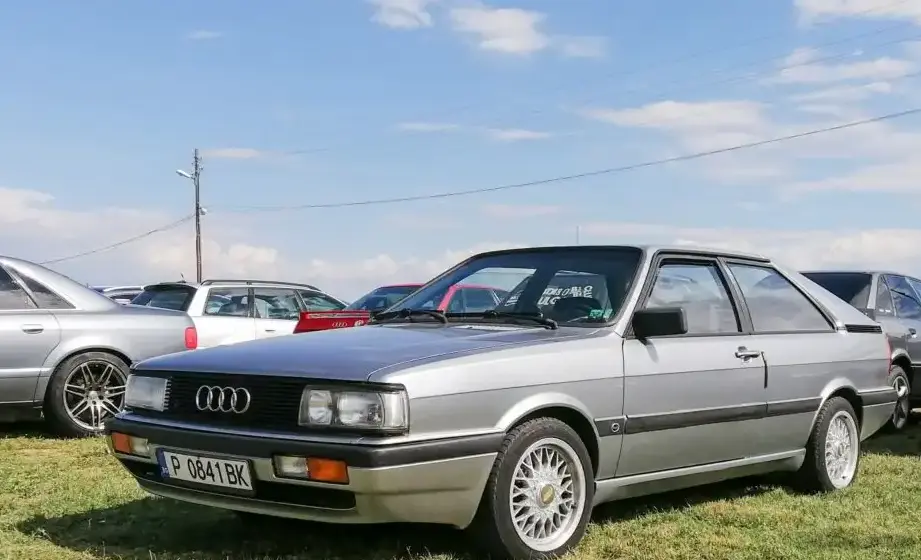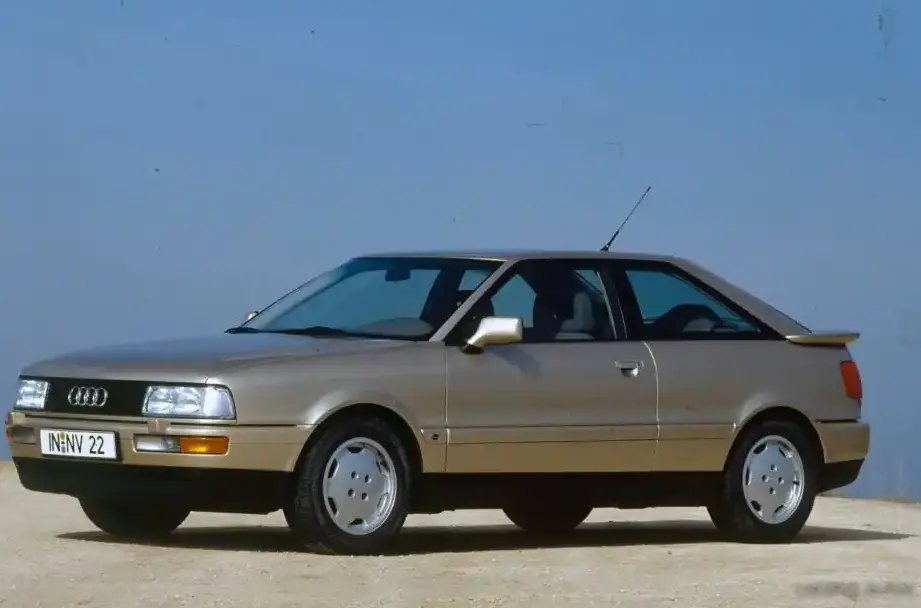
The Audi Coupe (B3), produced from 1988 to 1991, represented a significant evolution in Audi’s coupe design. The 2.0 E (113 hp) CAT Automatic variant, manufactured between May 1989 and July 1990, occupied a middle ground within the B3 Coupe lineup, offering a balance between performance and affordability. This model was part of the broader Audi 80 (B3) family, sharing its platform (B3) and many mechanical components. It aimed to provide a comfortable and refined driving experience, appealing to buyers seeking a stylish coupe with the convenience of an automatic transmission.
Technical Specifications
| Brand | Audi |
| Model | Coupe |
| Generation | Coupe (B3 89) |
| Type (Engine) | 2.0 E (113 Hp) CAT Automatic |
| Start of production | May, 1989 |
| End of production | July, 1990 |
| Powertrain Architecture | Internal Combustion engine |
| Body type | Coupe |
| Seats | 5 |
| Doors | 2 |
| Fuel Type | Petrol (Gasoline) |
| Acceleration 0 – 100 km/h | 13.1 sec |
| Acceleration 0 – 62 mph | 13.1 sec |
| Acceleration 0 – 60 mph | 12.4 sec |
| Maximum speed | 192 km/h (119.3 mph) |
| Weight-to-power ratio | 10 kg/Hp, 100 Hp/tonne |
| Weight-to-torque ratio | 6.6 kg/Nm, 150.4 Nm/tonne |
| Power | 113 Hp @ 5300 rpm |
| Power per litre | 57 Hp/l |
| Torque | 170 Nm @ 3250 rpm (125.39 lb.-ft. @ 3250 rpm) |
| Engine layout | Front, Longitudinal |
| Engine Model/Code | 3A |
| Engine displacement | 1984 cm3 (121.07 cu. in.) |
| Number of cylinders | 4 |
| Engine configuration | Inline |
| Cylinder Bore | 82.5 mm (3.25 in.) |
| Piston Stroke | 92.8 mm (3.65 in.) |
| Compression ratio | 10.5:1 |
| Number of valves per cylinder | 2 |
| Fuel injection system | Multi-port manifold injection |
| Engine aspiration | Naturally aspirated engine |
| Engine oil capacity | 3 l (3.17 US qt | 2.64 UK qt) |
| Coolant | 6.5 l (6.87 US qt | 5.72 UK qt) |
| Kerb Weight | 1130 kg (2491.22 lbs.) |
| Max. weight | 1590 kg (3505.35 lbs.) |
| Max load | 460 kg (1014.13 lbs.) |
| Trunk (boot) space – minimum | 280 l (9.89 cu. ft.) |
| Trunk (boot) space – maximum | 960 l (33.9 cu. ft.) |
| Fuel tank capacity | 68 l (17.96 US gal | 14.96 UK gal) |
| Length | 4366 mm (171.89 in.) |
| Width | 1716 mm (67.56 in.) |
| Height | 1370 mm (53.94 in.) |
| Wheelbase | 2556 mm (100.63 in.) |
| Front track | 1446 mm (56.93 in.) |
| Rear (Back) track | 1441 mm (56.73 in.) |
| Drag coefficient (Cd) | 0.32 |
| Minimum turning circle | 11.1 m (36.42 ft.) |
| Drivetrain Architecture | The Internal combustion engine (ICE) drives the front wheels of the vehicle. |
| Drive wheel | Front wheel drive |
| Number of gears and type of gearbox | 3 gears, automatic transmission |
| Front suspension | Independent, type McPherson with coil spring and anti-roll bar |
| Rear suspension | Double wishbone |
| Front brakes | Ventilated discs |
| Rear brakes | Disc |
| Steering type | Steering rack and pinion |
| Tires size | 205/60 R15 |
| Wheel rims size | 15 |
Powertrain & Engine Architecture
The 2.0 E variant was powered by the Audi 3A engine, a 1984cc inline-four cylinder gasoline engine. This engine featured multi-port fuel injection, a relatively advanced system for its time, contributing to improved fuel efficiency and smoother power delivery. The engine utilized a two-valve per cylinder (8V) configuration and a compression ratio of 10.5:1. The catalytic converter (“CAT” in the model designation) was standard, reflecting increasing emissions regulations. The engine was mounted longitudinally in the front of the vehicle, driving the front wheels. The automatic transmission was a three-speed unit, designed for comfortable cruising rather than outright performance. This transmission was chosen to appeal to buyers prioritizing ease of use over sporty driving dynamics.
Driving Characteristics
The 113 hp and 125 lb-ft of torque produced by the 2.0 E engine, coupled with the three-speed automatic transmission, resulted in a driving experience focused on refinement and usability. Acceleration from 0-60 mph took approximately 12.4 seconds, and top speed was around 119 mph. Compared to the more powerful 2.1L five-cylinder models or the manual transmission versions of the 2.0 E, this variant felt noticeably less responsive. The automatic transmission’s gear ratios were optimized for fuel economy and smooth shifts, rather than aggressive acceleration. While not a sports car, the 2.0 E Automatic provided adequate power for everyday driving and highway cruising. The front-wheel-drive configuration offered predictable handling, although it lacked the dynamic capabilities of rear-wheel-drive alternatives.
Equipment & Trim Levels
The 2.0 E Automatic typically came with a reasonable level of standard equipment. This included power steering, central locking, electric windows, and a basic stereo system. Interior upholstery was typically cloth, with options for upgraded materials like leatherette available. The dashboard layout was functional and straightforward, typical of German automotive design of the era. Optional extras included a sunroof, alloy wheels, and upgraded audio systems. The trim level generally sat in the mid-range of the B3 Coupe lineup, offering more features than the base models but lacking the luxury appointments of the higher-spec versions.
Chassis & Braking
The Audi Coupe B3 utilized an independent McPherson strut suspension at the front and a double-wishbone suspension at the rear, providing a comfortable ride and decent handling characteristics. The 2.0 E Automatic variant typically featured ventilated disc brakes at the front and solid disc brakes at the rear. The braking system was adequate for the car’s weight and performance, but lacked the stopping power of more modern systems. A stabilizer bar was fitted to both the front and rear axles to reduce body roll during cornering. The chassis was designed to provide a balance between comfort and handling, prioritizing ride quality over outright sportiness.
Market Reception & Comparison
The 2.0 E Automatic variant was generally well-received by automotive critics as a practical and comfortable coupe. However, it was often criticized for its relatively modest performance compared to other engines in the B3 Coupe range, particularly the five-cylinder models. Fuel economy was considered reasonable for its class, but not exceptional. Reliability was generally good, although the automatic transmission could be prone to issues if not properly maintained. Compared to the manual transmission 2.0 E, the automatic version offered greater convenience but sacrificed some performance and fuel efficiency. The five-cylinder models provided significantly more power but came at a higher price point.
Legacy
The Audi Coupe B3 2.0 E Automatic, while not the most sought-after variant, remains a popular choice among classic Audi enthusiasts. The 3A engine is known for its durability and relatively simple maintenance requirements. However, finding well-maintained examples can be challenging, as many have suffered from neglect or accumulated high mileage. The automatic transmission requires regular fluid changes to prevent premature failure. Today, these coupes represent an affordable entry point into classic Audi ownership, offering a stylish and comfortable driving experience reminiscent of the late 1980s and early 1990s. The B3 Coupe, in general, is remembered as a pivotal model in Audi’s history, establishing the brand’s reputation for quality and innovation.