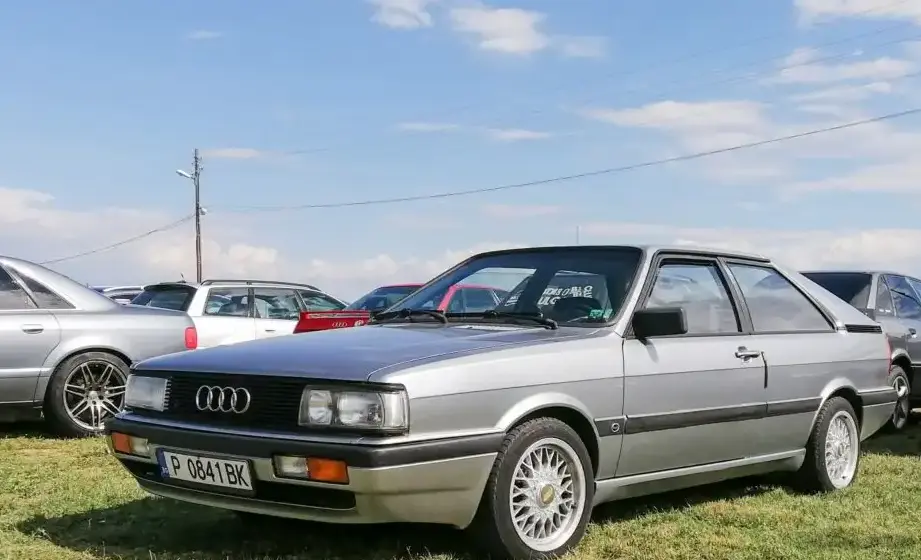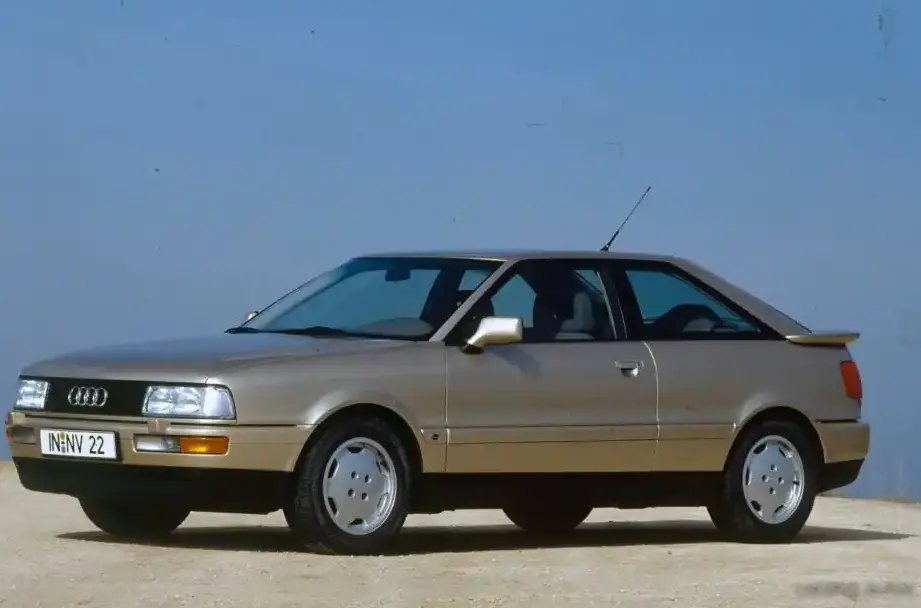
The Audi Coupe (B3), produced from 1988 to 1991, represented a significant evolution in Audi’s coupe design. The 2.3 E quattro variant, available from 1990-1991, occupied a premium position within the B3 lineup, offering a blend of performance and all-weather capability. This model was built on the Audi 80 (B3) platform – internally designated as the B3 – and shared many components with the contemporary Audi 80 and 90 models. The 2.3 E quattro was aimed at buyers seeking a sporty, yet refined, coupe experience, distinguishing itself from the base models with its larger engine and standard all-wheel drive system.
Technical Specifications
| Brand | Audi |
| Model | Coupe |
| Generation | Coupe (B3 89) |
| Type (Engine) | 2.3 E (133 Hp) quattro |
| Start of production | 1990 |
| End of production | 1991 |
| Powertrain Architecture | Internal Combustion engine |
| Body type | Coupe |
| Seats | 5 |
| Doors | 2 |
| Fuel consumption (urban) | 12.6 l/100 km (18.7 US mpg, 22.4 UK mpg, 7.9 km/l) |
| Fuel consumption (extra urban) | 6.7 l/100 km (35.1 US mpg, 42.2 UK mpg, 14.9 km/l) |
| Fuel consumption (combined) | 8.8 l/100 km (26.7 US mpg, 32.1 UK mpg, 11.4 km/l) |
| Fuel Type | Petrol (Gasoline) |
| Maximum speed | 206 km/h (128 mph) |
| Weight-to-power ratio | 9.6 kg/Hp, 103.9 Hp/tonne |
| Weight-to-torque ratio | 6.9 kg/Nm, 145.3 Nm/tonne |
| Power | 133 Hp @ 5500 rpm |
| Power per litre | 57.6 Hp/l |
| Torque | 186 Nm @ 4000 rpm (137.19 lb.-ft. @ 4000 rpm) |
| Engine layout | Front, Longitudinal |
| Engine Model/Code | NG |
| Engine displacement | 2309 cm3 (140.9 cu. in.) |
| Number of cylinders | 5 |
| Engine configuration | Inline |
| Cylinder Bore | 82.5 mm (3.25 in.) |
| Piston Stroke | 86.4 mm (3.4 in.) |
| Compression ratio | 10:1 |
| Number of valves per cylinder | 2 |
| Fuel injection system | Multi-port manifold injection |
| Engine aspiration | Naturally aspirated engine |
| Valvetrain | OHC |
| Engine oil capacity | 4 l (4.23 US qt | 3.52 UK qt) |
| Coolant capacity | 8 l (8.45 US qt | 7.04 UK qt) |
| Kerb Weight | 1280 kg (2821.92 lbs.) |
| Max. weight | 1740 kg (3836.04 lbs.) |
| Max load | 460 kg (1014.13 lbs.) |
| Trunk (boot) space – minimum | 232 l (8.19 cu. ft.) |
| Trunk (boot) space – maximum | 522 l (18.43 cu. ft.) |
| Fuel tank capacity | 70 l (18.49 US gal | 15.4 UK gal) |
| Length | 4366 mm (171.89 in.) |
| Width | 1716 mm (67.56 in.) |
| Height | 1370 mm (53.94 in.) |
| Wheelbase | 2550 mm (100.39 in.) |
| Front track | 1455 mm (57.28 in.) |
| Rear (Back) track | 1435 mm (56.5 in.) |
| Drive wheel | All wheel drive (4×4) |
| Number of gears and type of gearbox | 5 gears, manual transmission |
| Front suspension | Wishbone |
| Rear suspension | Double wishbone |
| Front brakes | Ventilated discs |
| Rear brakes | Disc |
| Assisting systems | ABS (Anti-lock braking system) |
| Steering type | Steering rack and pinion |
| Power steering | Hydraulic Steering |
| Tires size | 205/60 R15 |
Powertrain & Engine Architecture
The heart of the 2.3 E quattro was the Audi NG inline five-cylinder engine. This engine, displacing 2309 cc, was a naturally aspirated unit featuring multi-port fuel injection. The NG engine was known for its relatively smooth power delivery and distinctive exhaust note. The engine utilized a single overhead camshaft (OHC) design, operating with two valves per cylinder. The 10:1 compression ratio contributed to its respectable power output of 133 horsepower at 5500 rpm and 186 Nm (137.19 lb-ft) of torque at 4000 rpm. The engine’s longitudinal mounting and the quattro all-wheel-drive system necessitated a more complex drivetrain layout compared to front-wheel-drive variants.
Driving Characteristics
The 2.3 E quattro offered a noticeably more engaging driving experience than the lower-spec models. The all-wheel-drive system provided excellent traction, particularly in adverse weather conditions, making it a practical choice for year-round use. While not a high-performance machine by modern standards, the 2.3-liter engine provided adequate acceleration, with a 0-60 mph time estimated around 8.5-9.0 seconds. The five-speed manual transmission allowed for precise control, and the gear ratios were well-matched to the engine’s powerband. Compared to the 1.8L and 2.0L models, the 2.3 E quattro felt more refined and capable, though it did carry a weight penalty due to the quattro system.
Equipment & Trim Levels
The 2.3 E quattro typically came well-equipped, reflecting its position as a premium model. Standard features included power windows, central locking, and an upgraded audio system. Interior upholstery was typically cloth, though leather was available as an option. The dashboard layout was functional and driver-focused, with clear instrumentation. Optional extras included a sunroof, alloy wheels, and a more sophisticated sound system. The 2.3 E quattro often featured a sport suspension setup, providing a firmer ride and improved handling.
Chassis & Braking
The B3 Audi Coupe utilized a robust chassis with independent suspension all around. The front suspension employed a wishbone design, while the rear featured a double wishbone setup. This configuration provided a good balance of ride comfort and handling precision. The 2.3 E quattro was equipped with ventilated disc brakes at the front and solid discs at the rear, providing adequate stopping power. An Anti-lock Braking System (ABS) was standard, enhancing safety and control during emergency braking situations. The steering was a rack-and-pinion system with hydraulic power assistance, offering a responsive and precise feel.
Market Reception & Comparison
The 2.3 E quattro was generally well-received by automotive critics. It was praised for its refined engine, excellent handling, and all-weather capability. However, some reviewers noted that the price was relatively high compared to other coupes in its class. Compared to the 1.8 and 2.0-liter models, the 2.3 E quattro offered significantly more performance, but at the cost of slightly lower fuel economy. The 2.3 E quattro also stood apart from the diesel-powered variants, offering a more sporty and engaging driving experience. Its main competitors included the BMW 3 Series Coupe and the Mercedes-Benz 190E Coupe.
Legacy
The Audi Coupe B3, and particularly the 2.3 E quattro variant, holds a respected place among enthusiasts. The NG engine is known for its durability and relative simplicity, making it a relatively easy engine to maintain. While not as common as some of the other B3 models, the 2.3 E quattro has become a sought-after classic, particularly among Audi collectors. Today, well-maintained examples command a premium in the used car market. The B3 Coupe’s influence can be seen in subsequent Audi coupe models, and it remains a testament to Audi’s commitment to engineering and design.