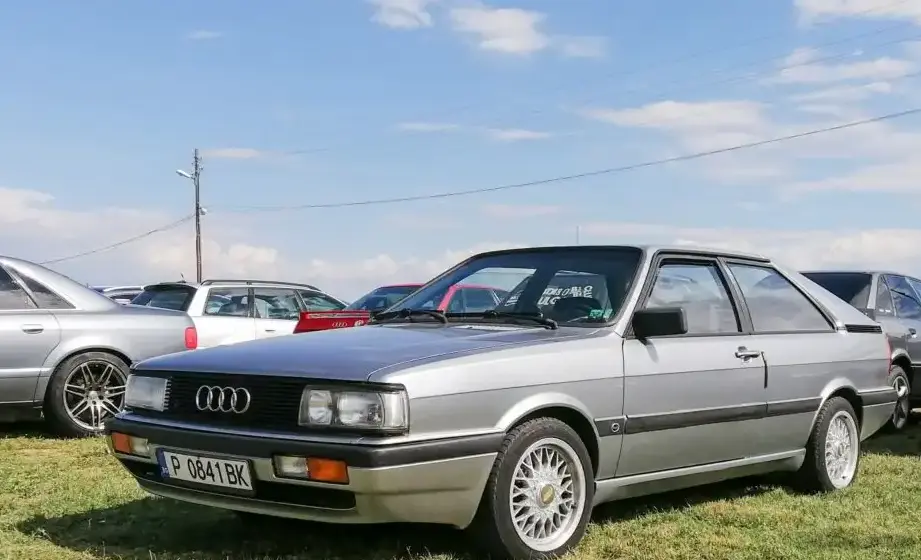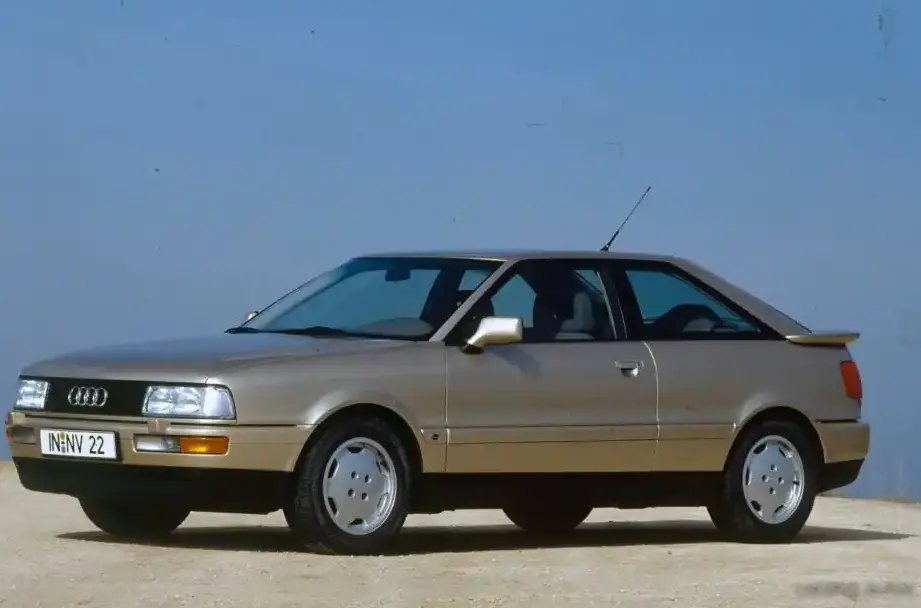
The Audi Coupe (B3), produced between 1988 and 1990, represented a significant evolution in Audi’s compact coupe lineage. The 2.3 E (136 Hp) CAT variant, powered by the longitudinally-mounted five-cylinder engine, occupied a middle ground within the B3 Coupe range, offering a balance between performance and refinement. This model sat above the base 1.8 liter versions and below the more potent 2.3 quattro models, appealing to buyers seeking a sporty yet practical grand tourer. It was built on the Audi B3 platform, shared with the Audi 80/90 series, and played a role in establishing Audi’s reputation for sophisticated engineering and design.
Technical Specifications
| Brand | Audi |
| Model | Coupe |
| Generation | Coupe (B3 89) |
| Type (Engine) | 2.3 E (136 Hp) CAT |
| Start of production | 1988 |
| End of production | 1990 |
| Powertrain Architecture | Internal Combustion engine |
| Body type | Coupe |
| Seats | 5 |
| Doors | 2 |
| Fuel Type | Petrol (Gasoline) |
| Acceleration 0 – 100 km/h | 8.9 sec |
| Acceleration 0 – 62 mph | 8.9 sec |
| Acceleration 0 – 60 mph | 8.5 sec |
| Maximum speed | 206 km/h (128 mph) |
| Weight-to-power ratio | 8.6 kg/Hp, 116.2 Hp/tonne |
| Weight-to-torque ratio | 6.2 kg/Nm, 162.4 Nm/tonne |
| Power | 136 Hp @ 5700 rpm |
| Power per litre | 58.9 Hp/l |
| Torque | 190 Nm @ 4500 rpm (140.14 lb.-ft. @ 4500 rpm) |
| Engine layout | Front, Longitudinal |
| Engine Model/Code | NG |
| Engine displacement | 2309 cm3 (140.9 cu. in.) |
| Number of cylinders | 5 |
| Engine configuration | Inline |
| Cylinder Bore | 82.5 mm (3.25 in.) |
| Piston Stroke | 86.4 mm (3.4 in.) |
| Compression ratio | 10:1 |
| Number of valves per cylinder | 2 |
| Fuel injection system | Multi-port manifold injection |
| Engine aspiration | Naturally aspirated engine |
| Valvetrain | OHC |
| Engine oil capacity | 4 l (4.23 US qt | 3.52 UK qt) |
| Coolant | 8 l (8.45 US qt | 7.04 UK qt) |
| Kerb Weight | 1170 kg (2579.41 lbs.) |
| Max. weight | 1630 kg (3593.53 lbs.) |
| Max load | 460 kg (1014.13 lbs.) |
| Trunk (boot) space – minimum | 280 l (9.89 cu. ft.) |
| Trunk (boot) space – maximum | 960 l (33.9 cu. ft.) |
| Fuel tank capacity | 68 l (17.96 US gal | 14.96 UK gal) |
| Length | 4366 mm (171.89 in.) |
| Width | 1716 mm (67.56 in.) |
| Height | 1370 mm (53.94 in.) |
| Wheelbase | 2556 mm (100.63 in.) |
| Front track | 1453 mm (57.2 in.) |
| Rear (Back) track | 1447 mm (56.97 in.) |
| Drag coefficient (Cd) | 0.32 |
| Minimum turning circle | 11.1 m (36.42 ft.) |
| Drivetrain Architecture | The Internal combustion engine (ICE) drives the front wheels of the vehicle. |
| Drive wheel | Front wheel drive |
| Number of gears | 5 gears, manual transmission |
| Front brakes | Ventilated discs |
| Rear brakes | Ventilated discs |
| Power steering | Hydraulic Steering |
| Tires size | 205/60 R15 |
| Wheel rims size | 15 |
Powertrain & Engine Architecture
The heart of the 2.3 E was the NG engine, a 2.3-liter inline five-cylinder powerplant. This engine was a hallmark of Audi’s engineering prowess during the 1980s and early 1990s, known for its smooth operation and distinctive sound. The NG featured a single overhead camshaft (OHC) operating two valves per cylinder. Fuel delivery was managed by a Bosch multi-port fuel injection system, contributing to improved efficiency and reduced emissions. The engine’s 10:1 compression ratio and relatively advanced (for the time) engine management system allowed it to produce 136 horsepower at 5700 rpm and 190 Nm (140 lb-ft) of torque at 4500 rpm. The engine was mounted longitudinally, driving the front wheels through a five-speed manual transmission. This configuration, while providing good balance, was a departure from the rear-wheel-drive layouts of earlier Audi Coupes.
Driving Characteristics
The 2.3 E Coupe offered a refined driving experience. While not as overtly sporty as the quattro versions, the front-wheel-drive layout provided predictable handling and decent grip. The five-speed manual transmission was well-matched to the engine’s characteristics, offering smooth shifts and allowing the driver to keep the engine in its optimal power band. Acceleration from 0 to 60 mph took approximately 8.5 seconds, and the car could reach a top speed of 128 mph. Compared to the 1.8-liter models, the 2.3 E provided noticeably more power and torque, making it more comfortable for highway cruising and overtaking. However, it lacked the all-weather capability and enhanced traction of the quattro variants. The front-wheel-drive setup also meant a tendency towards understeer when pushed hard.
Equipment & Trim Levels
The 2.3 E Coupe came reasonably well-equipped as standard. Interior features typically included cloth upholstery, power windows, central locking, and a basic stereo system. The dashboard layout was functional and driver-focused, with clear instrumentation. Optional extras included a sunroof, upgraded stereo systems, alloy wheels, and metallic paint finishes. The trim level was generally considered mid-range within the B3 Coupe lineup, offering a step up in comfort and performance from the base models without the added cost of the quattro versions. The interior materials were of good quality for the price point, reflecting Audi’s commitment to build quality.
Chassis & Braking
The B3 Coupe utilized a MacPherson strut front suspension and a semi-trailing arm rear suspension. The 2.3 E variant featured a stabilizer bar on both the front and rear axles to reduce body roll during cornering. Braking duties were handled by ventilated disc brakes on all four wheels, providing adequate stopping power for the car’s weight and performance. Power steering was standard, making the car easy to maneuver at low speeds. The suspension tuning was geared towards comfort and stability, rather than outright sportiness, resulting in a compliant ride quality. The curb weight of 1170 kg (2579 lbs) contributed to the car’s balanced handling characteristics.
Market Reception & Comparison
The Audi Coupe 2.3 E was generally well-received by automotive critics. It was praised for its refined engine, comfortable ride, and stylish design. However, some reviewers noted the limitations of the front-wheel-drive layout compared to the quattro models. Fuel economy was respectable for the time, averaging around 25-30 mpg. In terms of reliability, the NG engine proved to be relatively robust, although regular maintenance was essential. Compared to other coupes in its class, such as the BMW 3 Series Coupe and the Mercedes-Benz 190E Coupe, the Audi Coupe offered a unique combination of performance, practicality, and value.
Legacy
The Audi Coupe B3, and specifically the 2.3 E variant, holds a nostalgic place in the hearts of many Audi enthusiasts. The NG engine is known for its durability and relatively simple maintenance requirements. Today, well-maintained examples of the 2.3 E Coupe are becoming increasingly collectible. While not as sought-after as the quattro models, the 2.3 E offers a more affordable entry point into classic Audi ownership. The car’s timeless design and refined driving experience continue to appeal to those seeking a stylish and engaging coupe from the late 1980s. Parts availability is generally good, although some specific trim pieces may be difficult to find.