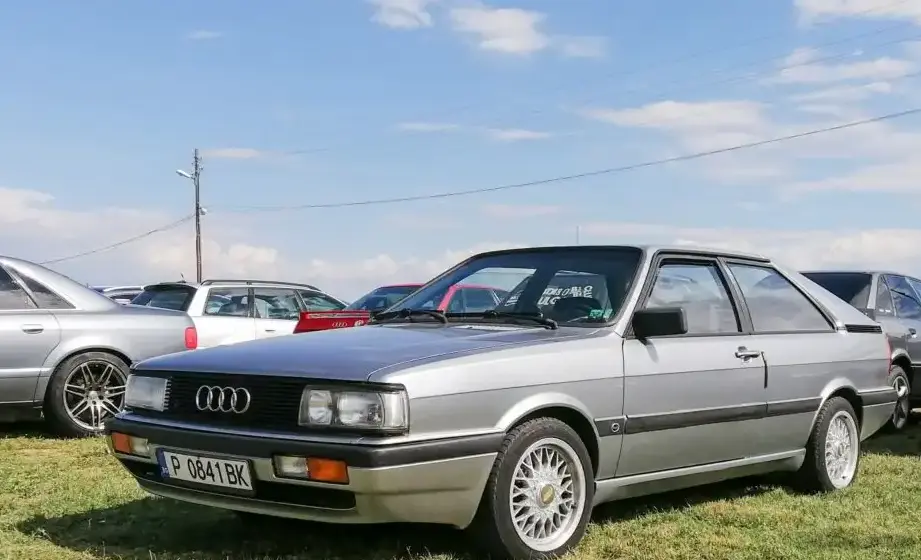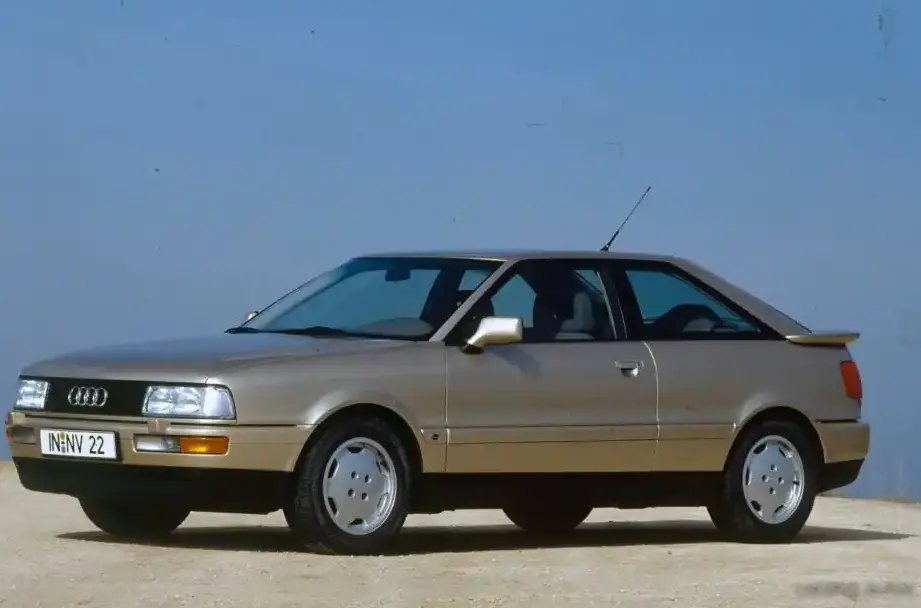
The Audi Coupe (B3), produced between 1988 and 1991, represented a significant evolution in Audi’s compact coupe offerings. The 2.3E 20V variant, introduced in 1990, was a performance-oriented model within the B3 range, positioned above the base 1.8L and 2.0L models but below the more exclusive Quattro versions. Built on the Audi 80 (B3) platform – also known internally as the B3 – this coupe aimed to deliver a blend of sporty handling, respectable power, and Audi’s signature build quality. It was primarily marketed in Europe, where front-wheel-drive coupes were a popular segment, offering a more accessible entry point into the Audi brand than the all-wheel-drive Quattros.
Technical Specifications
| Brand | Audi |
| Model | Coupe |
| Generation | Coupe (B3 89) |
| Type (Engine) | 2.3 E 20V (167 Hp) |
| Start of production | 1990 |
| End of production | 1991 |
| Powertrain Architecture | Internal Combustion engine |
| Body type | Coupe |
| Seats | 5 |
| Doors | 2 |
| Fuel consumption (urban) | 13.2 l/100 km (17.8 US mpg, 21.4 UK mpg, 7.6 km/l) |
| Fuel consumption (extra urban) | 7 l/100 km (33.6 US mpg, 40.4 UK mpg, 14.3 km/l) |
| Fuel consumption (combined) | 8.5 l/100 km (27.7 US mpg, 33.2 UK mpg, 11.8 km/l) |
| Fuel Type | Petrol (Gasoline) |
| Acceleration 0 – 100 km/h | 8.6 sec |
| Acceleration 0 – 62 mph | 8.6 sec |
| Acceleration 0 – 60 mph | 8.2 sec |
| Maximum speed | 220 km/h (136.7 mph) |
| Weight-to-power ratio | 7.2 kg/Hp, 139.2 Hp/tonne |
| Weight-to-torque ratio | 5.6 kg/Nm, 180 Nm/tonne |
| Power | 167 Hp @ 6000 rpm |
| Power per litre | 72.3 Hp/l |
| Torque | 216 Nm @ 4500 rpm (159.31 lb.-ft. @ 4500 rpm) |
| Engine layout | Front, Longitudinal |
| Engine Model/Code | 7A |
| Engine displacement | 2309 cm3 (140.9 cu. in.) |
| Number of cylinders | 5 |
| Engine configuration | Inline |
| Cylinder Bore | 82.5 mm (3.25 in.) |
| Piston Stroke | 86.4 mm (3.4 in.) |
| Compression ratio | 10.3:1 |
| Number of valves per cylinder | 4 |
| Fuel injection system | Multi-port manifold injection |
| Engine aspiration | Naturally aspirated engine |
| Valvetrain | DOHC |
| Engine oil capacity | 4.5 l (4.76 US qt | 3.96 UK qt) |
| Coolant | 8 l (8.45 US qt | 7.04 UK qt) |
| Kerb Weight | 1200 kg (2645.55 lbs.) |
| Max. weight | 1660 kg (3659.67 lbs.) |
| Max load | 460 kg (1014.13 lbs.) |
| Trunk (boot) space – minimum | 296 l (10.45 cu. ft.) |
| Trunk (boot) space – maximum | 596 l (21.05 cu. ft.) |
| Fuel tank capacity | 70 l (18.49 US gal | 15.4 UK gal) |
| Length | 4366 mm (171.89 in.) |
| Width | 1716 mm (67.56 in.) |
| Height | 1375 mm (54.13 in.) |
| Wheelbase | 2556 mm (100.63 in.) |
| Front track | 1455 mm (57.28 in.) |
| Rear (Back) track | 1445 mm (56.89 in.) |
| Drivetrain Architecture | The Internal combustion engine (ICE) drives the front wheels of the vehicle. |
| Drive wheel | Front wheel drive |
| Number of gears and type of gearbox | 5 gears, manual transmission |
| Front suspension | Wishbone |
| Rear suspension | Several levers and rods |
| Front brakes | Ventilated discs |
| Rear brakes | Disc |
| Assisting systems | ABS (Anti-lock braking system) |
| Steering type | Steering rack and pinion |
| Power steering | Hydraulic Steering |
| Tires size | 205/60 R15 |
Powertrain & Engine Architecture
The heart of the 2.3E 20V was the Audi-developed 7A inline five-cylinder engine. This engine was a significant step up from the four-cylinder options available in the B3 Coupe. The ‘20V’ designation refers to the dual overhead camshafts (DOHC) and four valves per cylinder, contributing to its higher power output. Fuel delivery was handled by a Bosch Motronic multi-port fuel injection system, optimizing air-fuel mixture for improved efficiency and performance. The engine’s longitudinal mounting allowed for a more balanced weight distribution. The five-cylinder configuration provided a unique engine note and a smoother power delivery compared to inline-four engines. The 5-speed manual transmission was standard, offering precise gear changes and enhancing the driving experience.
Driving Characteristics
The 2.3E 20V Coupe offered a noticeably more engaging driving experience than its lower-spec siblings. The 167 horsepower and 159 lb-ft of torque provided brisk acceleration, with a 0-60 mph time of around 8.2 seconds. While not a sports car in the modern sense, it was quick for its time and offered a good balance between performance and everyday usability. The front-wheel-drive layout, while not as sophisticated as Audi’s Quattro system, provided good traction in most conditions. The gear ratios were well-matched to the engine’s powerband, allowing for responsive acceleration in all gears. Compared to the 1.8L and 2.0L models, the 2.3E felt significantly more powerful and refined.
Equipment & Trim Levels
The 2.3E 20V typically came with a relatively well-equipped standard package. This included power windows, central locking, and a basic stereo system. Interior upholstery was typically cloth, although leather options were available. The dashboard featured a straightforward layout with clear instrumentation. Optional extras included a sunroof, upgraded stereo systems, and alloy wheels. The trim level was generally considered a mid-range offering, bridging the gap between the more basic models and the higher-specification Quattros.
Chassis & Braking
The B3 Coupe utilized a MacPherson strut front suspension and a multi-link rear suspension, providing a comfortable yet controlled ride. The front brakes were ventilated discs, offering good stopping power, while the rear brakes were solid discs. ABS (Anti-lock Braking System) was standard, enhancing safety and stability during braking. The steering was a rack-and-pinion system with hydraulic power assistance, providing precise and responsive steering feel. The suspension was tuned to provide a balance between comfort and handling, making it suitable for both everyday driving and spirited cornering.
Market Reception & Comparison
The 2.3E 20V Coupe was generally well-received by automotive critics. It was praised for its strong engine, comfortable ride, and good build quality. However, some critics noted that the front-wheel-drive layout limited its handling potential compared to the Quattro models. Fuel economy was reasonable for a car of its performance, averaging around 27.7 US mpg in combined driving. Compared to the 1.8L and 2.0L models, the 2.3E offered a significant performance upgrade, but at a higher price point. The Quattro versions, while more expensive, provided superior handling and all-weather capability.
Legacy
The Audi Coupe B3 2.3E 20V has become a sought-after classic among Audi enthusiasts. The 7A engine is known for its durability and tunability, making it a popular choice for modifications. While finding well-maintained examples can be challenging, the B3 Coupe 2.3E 20V remains a testament to Audi’s engineering prowess and design flair of the late 1980s and early 1990s. Its blend of performance, comfort, and style continues to appeal to collectors and enthusiasts today. Parts availability is generally good, although some specific components may be difficult to source. The car’s relatively simple mechanical design makes it a rewarding project for DIY mechanics.