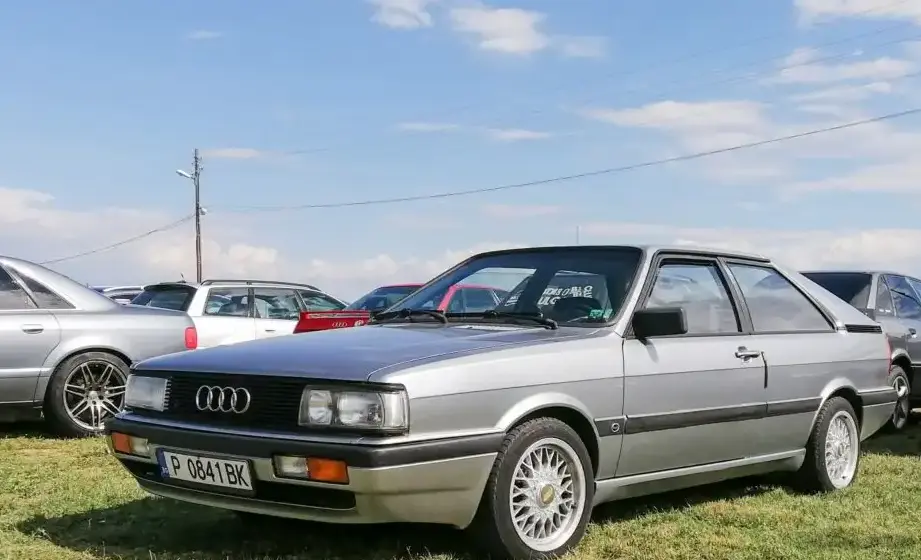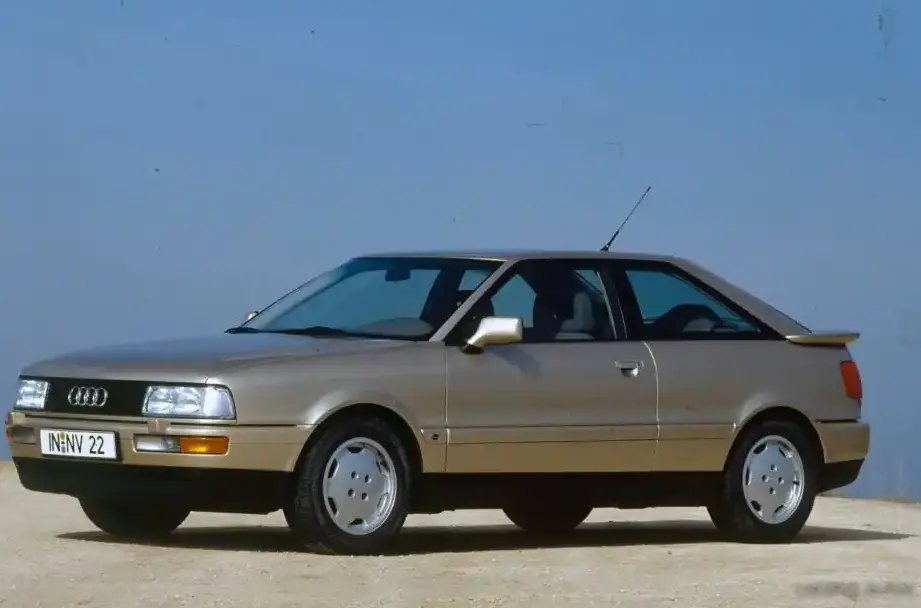
The Audi Coupe (B3), produced between 1988 and 1991, represented a significant evolution in Audi’s coupe design. The 2.3E 20V Automatic variant, manufactured from 1990 to 1991, occupied a premium position within the B3 Coupe lineup, offering a blend of performance and convenience. This model was part of the larger B3 platform, also known as the Audi 80/89, and aimed to provide a more refined and powerful alternative to the base models. It was primarily marketed in Europe, where front-wheel-drive coupes with automatic transmissions were gaining popularity among buyers seeking a comfortable and stylish grand tourer.
Technical Specifications
| Brand | Audi |
| Model | Coupe |
| Generation | Coupe (B3 89) |
| Type (Engine) | 2.3 E 20V (167 Hp) Automatic |
| Start of production | 1990 |
| End of production | 1991 |
| Powertrain Architecture | Internal Combustion engine |
| Body type | Coupe |
| Seats | 5 |
| Doors | 2 |
| Fuel consumption (urban) | 13.9 l/100 km (16.9 US mpg, 20.3 UK mpg, 7.2 km/l) |
| Fuel consumption (extra urban) | 7.9 l/100 km (29.8 US mpg, 35.8 UK mpg, 12.7 km/l) |
| Fuel consumption (combined) | 9.3 l/100 km (25.3 US mpg, 30.4 UK mpg, 10.8 km/l) |
| Fuel Type | Petrol (Gasoline) |
| Acceleration 0 – 100 km/h | 9.6 sec |
| Acceleration 0 – 62 mph | 9.6 sec |
| Acceleration 0 – 60 mph | 9.1 sec |
| Maximum speed | 218 km/h (135.46 mph) |
| Weight-to-power ratio | 7.2 kg/Hp, 139.2 Hp/tonne |
| Weight-to-torque ratio | 5.6 kg/Nm, 180 Nm/tonne |
| Power | 167 Hp @ 6000 rpm |
| Power per litre | 72.3 Hp/l |
| Torque | 216 Nm @ 4500 rpm (159.31 lb.-ft. @ 4500 rpm) |
| Engine layout | Front, Longitudinal |
| Engine Model/Code | 7A |
| Engine displacement | 2309 cm3 (140.9 cu. in.) |
| Number of cylinders | 5 |
| Engine configuration | Inline |
| Cylinder Bore | 82.5 mm (3.25 in.) |
| Piston Stroke | 86.4 mm (3.4 in.) |
| Compression ratio | 10.3:1 |
| Number of valves per cylinder | 4 |
| Fuel injection system | Multi-port manifold injection |
| Engine aspiration | Naturally aspirated engine |
| Valvetrain | DOHC |
| Engine oil capacity | 4.5 l (4.76 US qt | 3.96 UK qt) |
| Coolant | 8 l (8.45 US qt | 7.04 UK qt) |
| Kerb Weight | 1200 kg (2645.55 lbs.) |
| Max. weight | 1660 kg (3659.67 lbs.) |
| Max load | 460 kg (1014.13 lbs.) |
| Trunk (boot) space – minimum | 296 l (10.45 cu. ft.) |
| Trunk (boot) space – maximum | 596 l (21.05 cu. ft.) |
| Fuel tank capacity | 70 l (18.49 US gal | 15.4 UK gal) |
| Length | 4366 mm (171.89 in.) |
| Width | 1716 mm (67.56 in.) |
| Height | 1375 mm (54.13 in.) |
| Wheelbase | 2556 mm (100.63 in.) |
| Front track | 1455 mm (57.28 in.) |
| Rear (Back) track | 1445 mm (56.89 in.) |
| Drivetrain Architecture | The Internal combustion engine (ICE) drives the front wheels of the vehicle. |
| Drive wheel | Front wheel drive |
| Number of gears and type of gearbox | 4 gears, automatic transmission |
| Front suspension | Wishbone |
| Rear suspension | Several levers and rods |
| Front brakes | Ventilated discs |
| Rear brakes | Disc |
| Assisting systems | ABS (Anti-lock braking system) |
| Steering type | Steering rack and pinion |
| Power steering | Hydraulic Steering |
| Tires size | 205/60 R15 |
| Wheel rims size | 15 |
Powertrain & Engine Architecture
The heart of the 2.3E 20V Automatic was Audi’s 7A inline five-cylinder engine. This engine was a significant departure from the traditional four-cylinder layouts common in the segment, offering a smoother and more refined power delivery. The ‘20V’ designation indicated the engine’s dual overhead camshafts (DOHC) and four valves per cylinder, contributing to its high specific output. Fuel delivery was managed by a Bosch Motronic multi-port fuel injection system, optimizing combustion efficiency and responsiveness. The engine produced 167 horsepower at 6000 rpm and 216 Nm (159.31 lb-ft) of torque at 4500 rpm. Paired with this engine was a four-speed automatic transmission, designed to provide smooth and effortless gear changes. This transmission was not known for its sportiness, prioritizing comfort and ease of use over rapid shifts.
Driving Characteristics
The 2.3E 20V Automatic offered a comfortable and refined driving experience. While not as overtly sporty as the manual transmission versions or the higher-output 2.3 quattro models, it provided ample power for everyday driving and highway cruising. Acceleration from 0 to 60 mph took approximately 9.1 seconds, and the car could reach a top speed of 135.46 mph. The automatic transmission’s gear ratios were geared towards fuel efficiency and smooth cruising, resulting in a less engaging driving experience compared to the manual. However, the five-cylinder engine’s characteristic sound and smooth power delivery made it a pleasant cruiser. The front-wheel-drive configuration provided predictable handling, although it lacked the all-weather capability of the quattro models.
Equipment & Trim Levels
The 2.3E 20V Automatic typically came well-equipped, reflecting its position as a premium trim level. Standard features included power windows, central locking, a sunroof, and a basic audio system. Interior upholstery was typically cloth, although leather options were available. The dashboard featured a clean and functional design, with easy-to-read gauges. Optional extras included upgraded audio systems, alloy wheels, and a more luxurious interior trim. The overall interior ambiance was one of understated elegance, typical of Audi’s design philosophy at the time.
Chassis & Braking
The B3 Coupe featured a relatively simple but effective chassis design. Front suspension utilized a wishbone setup, while the rear employed a multi-link arrangement. This configuration provided a good balance between ride comfort and handling. Braking duties were handled by ventilated discs at the front and solid discs at the rear. An Anti-lock Braking System (ABS) was standard, enhancing safety and stability during hard braking. The steering was rack and pinion, providing precise and responsive control. The car rode on 205/60 R15 tires, offering a good compromise between grip and comfort.
Market Reception & Comparison
The 2.3E 20V Automatic was generally well-received by automotive critics. It was praised for its refined engine, comfortable ride, and well-equipped interior. However, some critics noted that the automatic transmission detracted from the driving experience, and the front-wheel-drive configuration limited its handling potential compared to the quattro models. Fuel economy was reasonable for a car of its class, averaging around 25.3 US mpg in combined driving. Compared to the 1.8L and 2.0L models, the 2.3E offered significantly more power and refinement, justifying its higher price tag. Compared to the 2.3 quattro, it offered similar performance but lacked the all-wheel-drive system’s added traction and stability.
Legacy
The Audi Coupe B3 2.3E 20V Automatic has become a sought-after classic among Audi enthusiasts. The 7A engine is known for its durability and relatively straightforward maintenance. However, like any older vehicle, it requires regular upkeep to prevent issues. Parts availability can be a challenge, but a dedicated aftermarket and online communities provide support for owners. Today, these coupes are appreciated for their unique styling, refined driving experience, and the distinctive sound of their five-cylinder engines. They represent a significant chapter in Audi’s history, showcasing the brand’s commitment to innovation and quality.