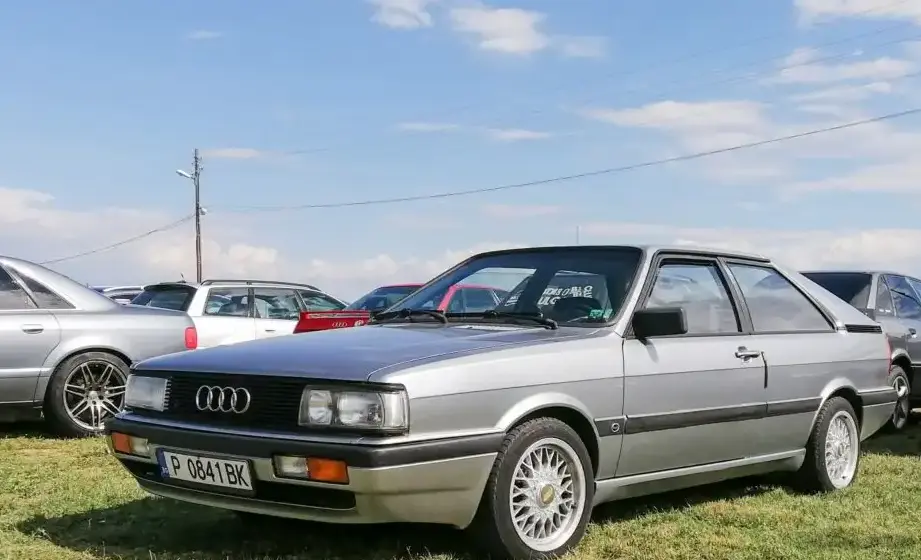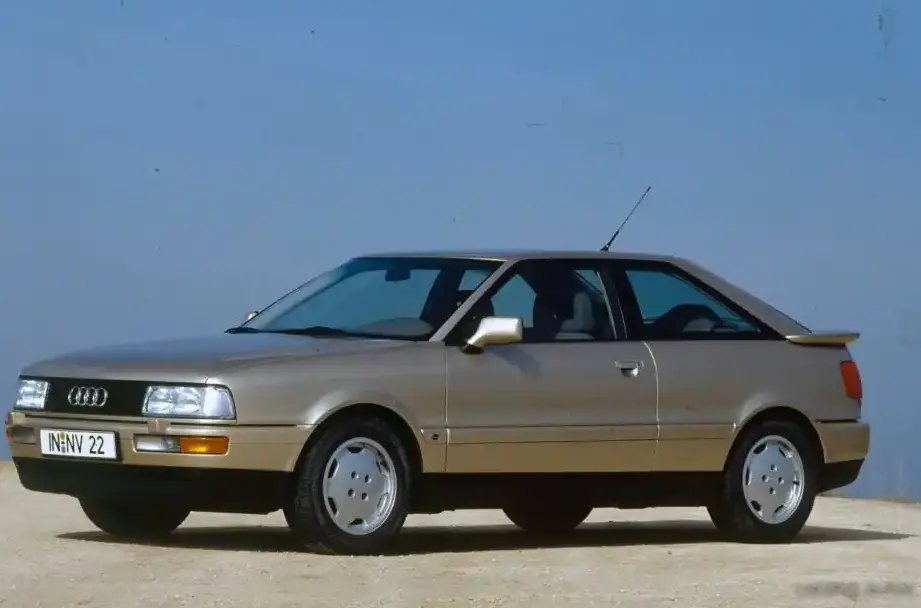
The Audi Coupe (B3), produced between 1988 and 1991, represented a significant evolution in Audi’s coupe design. The 2.3 E 20V quattro variant, manufactured from 1990 to 1991, was a performance-oriented model positioned near the top of the B3 Coupe range. It combined a potent five-cylinder engine with Audi’s renowned quattro all-wheel-drive system, offering a compelling blend of performance and all-weather capability. This model sat within the broader B3 chassis family (internally designated 89/8B), sharing its platform with the Audi 80 and 90 sedans.
Technical Specifications
| Brand | Audi |
| Model | Coupe |
| Generation | Coupe (B3 89) |
| Type (Engine) | 2.3 E 20V (167 Hp) quattro |
| Start of production | 1990 |
| End of production | 1991 |
| Powertrain Architecture | Internal Combustion engine |
| Body type | Coupe |
| Seats | 5 |
| Doors | 2 |
| Fuel consumption (urban) | 13.7 l/100 km (17.2 US mpg, 20.6 UK mpg, 7.3 km/l) |
| Fuel consumption (extra urban) | 7.6 l/100 km (30.9 US mpg, 37.2 UK mpg, 13.2 km/l) |
| Fuel consumption (combined) | 9.2 l/100 km (25.6 US mpg, 30.7 UK mpg, 10.9 km/l) |
| Fuel Type | Petrol (Gasoline) |
| Acceleration 0 – 100 km/h | 8.4 sec |
| Acceleration 0 – 62 mph | 8.4 sec |
| Acceleration 0 – 60 mph | 8 sec |
| Maximum speed | 220 km/h (136.7 mph) |
| Weight-to-power ratio | 7.9 kg/Hp, 126.5 Hp/tonne |
| Weight-to-torque ratio | 6.1 kg/Nm, 163.6 Nm/tonne |
| Power | 167 Hp @ 6000 rpm |
| Power per litre | 72.3 Hp/l |
| Torque | 216 Nm @ 4500 rpm (159.31 lb.-ft. @ 4500 rpm) |
| Engine layout | Front, Longitudinal |
| Engine Model/Code | 7A |
| Engine displacement | 2309 cm3 (140.9 cu. in.) |
| Number of cylinders | 5 |
| Engine configuration | Inline |
| Cylinder Bore | 82.5 mm (3.25 in.) |
| Piston Stroke | 86.4 mm (3.4 in.) |
| Compression ratio | 10.3:1 |
| Number of valves per cylinder | 4 |
| Fuel injection system | Multi-port manifold injection |
| Engine aspiration | Naturally aspirated engine |
| Valvetrain | DOHC |
| Engine oil capacity | 4.5 l (4.76 US qt | 3.96 UK qt) |
| Coolant | 8 l (8.45 US qt | 7.04 UK qt) |
| Kerb Weight | 1320 kg (2910.1 lbs.) |
| Max. weight | 1780 kg (3924.23 lbs.) |
| Max load | 460 kg (1014.13 lbs.) |
| Trunk (boot) space – minimum | 232 l (8.19 cu. ft.) |
| Trunk (boot) space – maximum | 522 l (18.43 cu. ft.) |
| Fuel tank capacity | 70 l (18.49 US gal | 15.4 UK gal) |
| Length | 4366 mm (171.89 in.) |
| Width | 1716 mm (67.56 in.) |
| Height | 1370 mm (53.94 in.) |
| Wheelbase | 2550 mm (100.39 in.) |
| Front track | 1455 mm (57.28 in.) |
| Rear (Back) track | 1435 mm (56.5 in.) |
| Drive wheel | All wheel drive (4×4) |
| Number of gears and type of gearbox | 5 gears, manual transmission |
| Front suspension | Wishbone |
| Rear suspension | Double wishbone |
| Front brakes | Ventilated discs |
| Rear brakes | Disc |
| Assisting systems | ABS (Anti-lock braking system) |
| Steering type | Steering rack and pinion |
| Power steering | Hydraulic Steering |
| Tires size | 205/60 R15 |
Powertrain & Engine Architecture
The heart of the 2.3 E 20V quattro was the 7A engine, a 2.3-liter inline five-cylinder powerplant. This engine was a significant departure from the more common four-cylinder engines found in other B3 Coupe variants. The 7A featured a dual overhead camshaft (DOHC) valvetrain with four valves per cylinder – hence the “20V” designation – and multi-port fuel injection. This configuration allowed for excellent breathing and a broad powerband. The engine produced 167 horsepower at 6000 rpm and 216 Nm (159.31 lb-ft) of torque at 4500 rpm. The longitudinal engine layout, coupled with the quattro all-wheel-drive system, provided balanced weight distribution and enhanced traction. The five-speed manual transmission was the only gearbox option for this specific model, prioritizing driver engagement and performance.
Driving Characteristics
The 2.3 E 20V quattro offered a noticeably more engaging driving experience than its lower-powered siblings. The five-cylinder engine delivered strong acceleration, achieving 0-60 mph in approximately 8 seconds and a top speed of 136.7 mph. The quattro system provided exceptional grip, particularly in adverse weather conditions, inspiring confidence during spirited driving. The five-speed manual transmission allowed for precise control over the engine’s power. While not a dedicated sports car, the 2.3 E 20V quattro offered a refined and capable driving experience, blending performance with practicality.
Equipment & Trim Levels
The 2.3 E 20V quattro was generally well-equipped, reflecting its position as a premium variant. Standard features typically included power windows, central locking, and an upgraded audio system. Interior upholstery was usually a combination of cloth and leather. Optional extras included a sunroof, heated front seats, and upgraded alloy wheels. The dashboard layout was typical of early 1990s Audis, characterized by a functional and understated design. The instrument cluster featured a comprehensive array of gauges, including a tachometer, speedometer, fuel gauge, and coolant temperature gauge.
Chassis & Braking
The B3 Coupe chassis featured independent suspension all around, with wishbone suspension at the front and a double wishbone setup at the rear. This configuration provided a comfortable ride and good handling characteristics. The 2.3 E 20V quattro was equipped with ventilated disc brakes at the front and solid disc brakes at the rear. An anti-lock braking system (ABS) was standard, enhancing braking performance and safety. The steering was a rack-and-pinion system with hydraulic power assistance, providing precise and responsive steering feel.
Market Reception & Comparison
The 2.3 E 20V quattro was generally well-received by automotive critics, who praised its performance, handling, and all-weather capability. It was often compared to other performance coupes of the era, such as the BMW 3 Series Coupe and the Mercedes-Benz 190E Coupe. Compared to the base 1.8-liter and 2.0-liter Coupe models, the 2.3 E 20V quattro offered a significant performance upgrade, but at a higher price point. Fuel economy was reasonable for a performance car of its time, averaging around 25.6 US mpg in combined driving. The 2.3 E 20V quattro was considered a more refined and capable alternative to the more basic Coupe models.
Legacy
The Audi Coupe B3, and particularly the 2.3 E 20V quattro variant, holds a respected place among Audi enthusiasts. The 7A engine is known for its durability and tunability, and well-maintained examples are still sought after today. While not immune to age-related issues, the powertrain is generally considered reliable. The quattro all-wheel-drive system remains a key selling point, particularly in regions with inclement weather. In the used car market, the 2.3 E 20V quattro commands a premium over the lower-powered Coupe models, reflecting its performance and rarity. It represents a significant chapter in Audi’s history, showcasing the brand’s commitment to engineering excellence and driving pleasure.