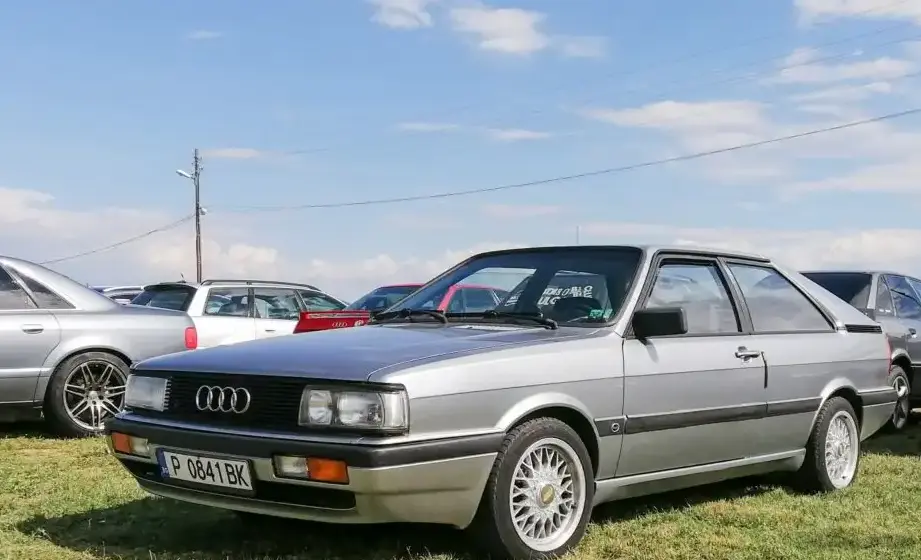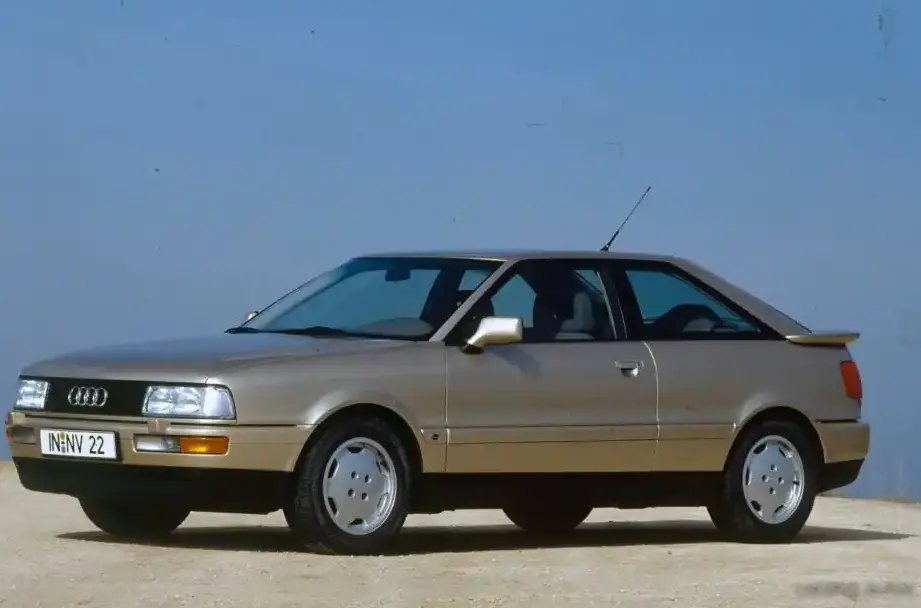
The Audi Coupe (B3), produced between 1988 and 1991, represented a significant evolution in Audi’s coupe lineage. The 2.3 E 20V quattro variant, distinguished by its five-cylinder engine and all-wheel-drive system, occupied a premium position within the B3 range. This model, built on the B3 platform (internally designated as the 89 chassis), aimed to deliver a blend of performance, sophisticated technology, and everyday usability. It served as a bridge between the earlier, more angular designs and the more rounded aesthetics that would characterize Audi’s designs in the 1990s. The 2.3 E 20V quattro was a key offering in Audi’s strategy to appeal to buyers seeking a sporty, yet refined, grand tourer.
Technical Specifications
| Brand | Audi |
| Model | Coupe |
| Generation | Coupe (B3 89) |
| Type (Engine) | 2.3 E 20V (170 Hp) quattro |
| Start of production | November, 1988 |
| End of production | July, 1991 |
| Powertrain Architecture | Internal Combustion engine |
| Body type | Coupe |
| Seats | 5 |
| Doors | 2 |
| Fuel Type | Petrol (Gasoline) |
| Acceleration 0 – 100 km/h | 8.4 sec |
| Acceleration 0 – 62 mph | 8.4 sec |
| Acceleration 0 – 60 mph | 8 sec |
| Maximum speed | 220 km/h (136.7 mph) |
| Weight-to-power ratio | 7.8 kg/Hp, 128.8 Hp/tonne |
| Weight-to-torque ratio | 6 kg/Nm, 166.7 Nm/tonne |
| Power | 170 Hp @ 5300 rpm |
| Power per litre | 73.6 Hp/l |
| Torque | 220 Nm @ 4500 rpm (162.26 lb.-ft. @ 4500 rpm) |
| Engine layout | Front, Longitudinal |
| Engine Model/Code | 7A |
| Engine displacement | 2309 cm3 (140.9 cu. in.) |
| Number of cylinders | 5 |
| Engine configuration | Inline |
| Cylinder Bore | 82.5 mm (3.25 in.) |
| Piston Stroke | 86.4 mm (3.4 in.) |
| Compression ratio | 10.3:1 |
| Number of valves per cylinder | 4 |
| Fuel injection system | Multi-port manifold injection |
| Engine aspiration | Naturally aspirated engine |
| Engine oil capacity | 4.5 l (4.76 US qt | 3.96 UK qt) |
| Coolant | 8 l (8.45 US qt | 7.04 UK qt) |
| Kerb Weight | 1320 kg (2910.1 lbs.) |
| Max. weight | 1780 kg (3924.23 lbs.) |
| Max load | 460 kg (1014.13 lbs.) |
| Trunk (boot) space – minimum | 227 l (8.02 cu. ft.) |
| Trunk (boot) space – maximum | 907 l (32.03 cu. ft.) |
| Fuel tank capacity | 75 l (19.81 US gal | 16.5 UK gal) |
| Length | 4366 mm (171.89 in.) |
| Width | 1716 mm (67.56 in.) |
| Height | 1365 mm (53.74 in.) |
| Wheelbase | 2549 mm (100.35 in.) |
| Front track | 1453 mm (57.2 in.) |
| Rear (Back) track | 1437 mm (56.57 in.) |
| Drag coefficient (Cd) | 0.32 |
| Minimum turning circle | 11.1 m (36.42 ft.) |
| Drive wheel | All wheel drive (4×4) |
| Number of gears | 5 gears, manual transmission |
Powertrain & Engine Architecture
The heart of the 2.3 E 20V quattro was the 7A engine, a 2.3-liter inline five-cylinder powerplant. This engine was a significant departure from the four-cylinder units offered in lower-spec B3 Coupes. The “20V” designation indicated the engine’s dual overhead camshafts operating four valves per cylinder, a feature that contributed to its higher output and broader powerband. Fuel delivery was managed by a Bosch Motronic multi-port fuel injection system, optimizing combustion efficiency and responsiveness. The engine’s longitudinal mounting and the quattro all-wheel-drive system necessitated a robust five-speed manual transmission, designed to handle the engine’s torque and distribute power effectively to all four wheels. The engine was known for its relatively smooth operation and distinctive five-cylinder exhaust note.
Driving Characteristics
The 2.3 E 20V quattro offered a noticeably more engaging driving experience than its lower-powered siblings. Acceleration to 60 mph in around 8 seconds was respectable for the late 1980s, and the all-wheel-drive system provided excellent traction, particularly in adverse weather conditions. The five-speed manual transmission offered precise shifts, and the engine’s torque curve provided ample power for both spirited driving and comfortable cruising. Compared to the later, more powerful 2.3-liter engines found in the S2 Coupe, the 170 hp version felt less overtly aggressive, but it offered a more balanced and accessible driving experience. The quattro system minimized understeer, inspiring confidence in corners, and the relatively lightweight construction of the B3 chassis contributed to its nimble handling.
Equipment & Trim Levels
The 2.3 E 20V quattro typically came well-equipped, reflecting its position as a premium model. Standard features included power windows, central locking, and a basic audio system. The interior typically featured cloth upholstery, although leather options were available. The dashboard layout was functional and driver-focused, with clear instrumentation. Optional extras included a sunroof, upgraded audio systems, and sport seats. The exterior styling was relatively understated, with subtle badging indicating the quattro drivetrain and 2.3-liter engine. Alloy wheels were standard, enhancing the car’s visual appeal.
Chassis & Braking
The B3 Coupe utilized an independent suspension setup, with McPherson struts at the front and a double-wishbone configuration at the rear. This suspension design provided a good balance between ride comfort and handling precision. The 2.3 E 20V quattro featured ventilated disc brakes at the front and solid discs at the rear, providing adequate stopping power for its performance level. Anti-roll bars were fitted to both the front and rear axles, further reducing body roll during cornering. The chassis was relatively lightweight, contributing to the car’s agility.
Market Reception & Comparison
The Audi Coupe B3 2.3 E 20V quattro was generally well-received by automotive critics. It was praised for its performance, handling, and sophisticated technology. However, some reviewers noted that the interior, while functional, lacked the luxurious feel of some of its competitors. Compared to the base model Coupes with smaller engines, the 2.3 E 20V quattro offered a significant performance upgrade, justifying its higher price tag. Fuel economy was reasonable for a car of its performance class, and reliability was generally good, although maintenance costs could be higher due to the complexity of the five-cylinder engine and quattro drivetrain.
Legacy
The Audi Coupe B3 2.3 E 20V quattro holds a respected position among Audi enthusiasts. The 7A engine, while not without its quirks, is known for its durability and potential for modification. The quattro all-wheel-drive system remains a hallmark of Audi performance, and the B3 Coupe is considered a stylish and capable classic car. In the used car market, well-maintained examples of the 2.3 E 20V quattro command a premium, reflecting their rarity and desirability. While parts availability can be a challenge, a dedicated community of owners and specialists ensures that these cars can be kept on the road for years to come. The B3 Coupe, and particularly the 2.3 E 20V quattro, represents a pivotal moment in Audi’s history, showcasing the brand’s commitment to innovation and driving pleasure.