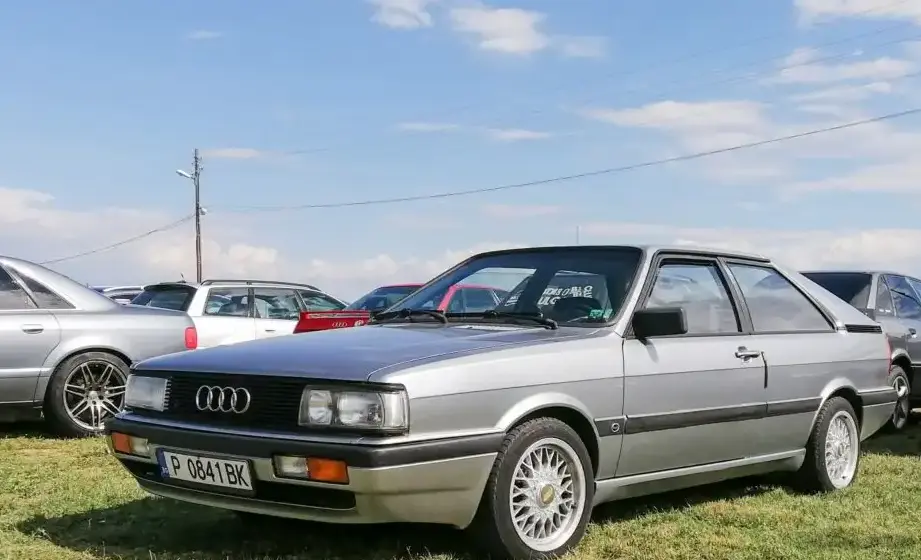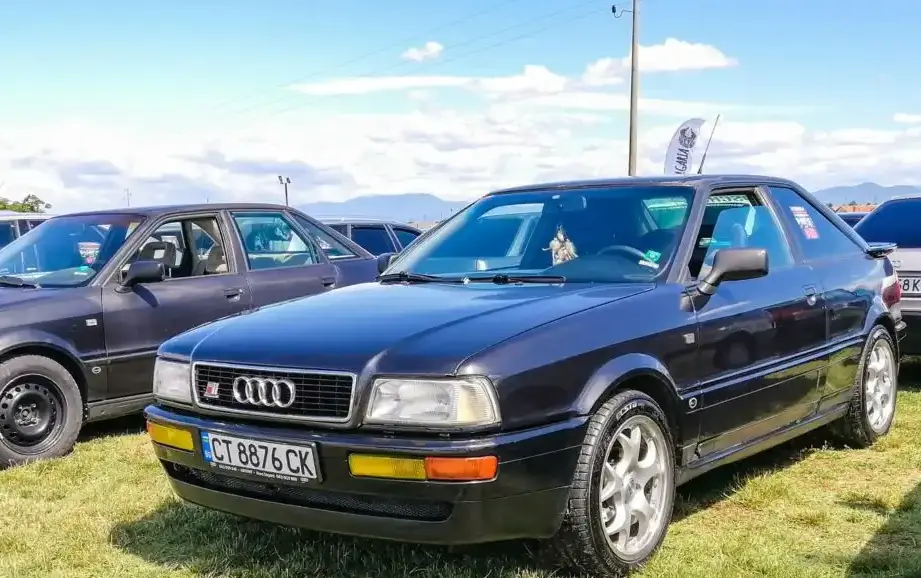
The Audi Coupe (B4), specifically the 2.3 E variant with an automatic transmission, represented a refined and comfortable entry point into Audi’s coupe range during its 1991-1994 production run. Positioned within the B4 generation (1988-1996), which itself was a significant evolution of the original Coupe, the 2.3 E offered a balance between performance and affordability. It served as a more accessible alternative to the higher-performance 2.6 and 2.8 liter models, and a more luxurious option than the base 1.8 liter versions. This model was primarily marketed in Europe, where front-wheel-drive coupes were popular, and offered a blend of German engineering and practical usability.
Technical Specifications
| Brand | Audi |
| Model | Coupe |
| Generation | Coupe (B4 8C) |
| Type (Engine) | 2.3 E (133 Hp) Automatic |
| Start of production | June, 1991 |
| End of production | July, 1994 |
| Powertrain Architecture | Internal Combustion engine |
| Body type | Coupe |
| Seats | 5 |
| Doors | 3 |
| Fuel consumption (urban) | 12.4 l/100 km (19 US mpg, 22.8 UK mpg, 8.1 km/l) |
| Fuel consumption (extra urban) | 7.2 l/100 km (32.7 US mpg, 39.2 UK mpg, 13.9 km/l) |
| Fuel consumption (combined) | 9 l/100 km (26.1 US mpg, 31.4 UK mpg, 11.1 km/l) |
| Fuel Type | Petrol (Gasoline) |
| Acceleration 0 – 100 km/h | 10.6 sec |
| Acceleration 0 – 62 mph | 10.6 sec |
| Acceleration 0 – 60 mph | 10.1 sec |
| Maximum speed | 202 km/h (125.52 mph) |
| Weight-to-power ratio | 9.2 kg/Hp, 108.1 Hp/tonne |
| Weight-to-torque ratio | 6.6 kg/Nm, 151.2 Nm/tonne |
| Power | 133 Hp @ 5500 rpm |
| Power per litre | 57.6 Hp/l |
| Torque | 186 Nm @ 4000 rpm (137.19 lb.-ft. @ 4000 rpm) |
| Engine layout | Front, Longitudinal |
| Engine Model/Code | NG |
| Engine displacement | 2309 cm3 (140.9 cu. in.) |
| Number of cylinders | 5 |
| Engine configuration | Inline |
| Cylinder Bore | 82.5 mm (3.25 in.) |
| Piston Stroke | 86.4 mm (3.4 in.) |
| Compression ratio | 10:1 |
| Number of valves per cylinder | 2 |
| Fuel injection system | Multi-port manifold injection |
| Engine aspiration | Naturally aspirated engine |
| Valvetrain | OHC |
| Engine oil capacity | 4 l (4.23 US qt | 3.52 UK qt) |
| Coolant | 8.5 l (8.98 US qt | 7.48 UK qt) |
| Kerb Weight | 1230 kg (2711.69 lbs.) |
| Max. weight | 1690 kg (3725.81 lbs.) |
| Max load | 460 kg (1014.13 lbs.) |
| Trunk (boot) space – minimum | 295 l (10.42 cu. ft.) |
| Trunk (boot) space – maximum | 977 l (34.5 cu. ft.) |
| Fuel tank capacity | 68 l (17.96 US gal | 14.96 UK gal) |
| Length | 4366 mm (171.89 in.) |
| Width | 1716 mm (67.56 in.) |
| Width including mirrors | 1930 mm (75.98 in.) |
| Height | 1375 mm (54.13 in.) |
| Wheelbase | 2556 mm (100.63 in.) |
| Front track | 1446 mm (56.93 in.) |
| Rear (Back) track | 1447 mm (56.97 in.) |
| Front overhang | 911 mm (35.87 in.) |
| Rear overhang | 899 mm (35.39 in.) |
| Drag coefficient (Cd) | 0.32 |
| Minimum turning circle | 11.3 m (37.07 ft.) |
| Drivetrain Architecture | The Internal combustion engine (ICE) drives the front wheels of the vehicle. |
| Drive wheel | Front wheel drive |
| Number of gears and type of gearbox | 4 gears, automatic transmission |
| Front suspension | Independent, type McPherson with coil spring and anti-roll bar |
| Rear suspension | Double wishbone |
| Front brakes | Ventilated discs |
| Rear brakes | Disc |
| Steering type | Steering rack and pinion |
| Power steering | Hydraulic Steering |
| Tires size | 205/60 R15 |
| Wheel rims size | 15 |
Powertrain & Engine Architecture
The heart of the 2.3 E was the Audi NG inline five-cylinder engine. This engine, a hallmark of Audi’s engineering prowess, was known for its smooth operation and distinctive sound. The NG engine featured a single overhead camshaft (OHC) operating two valves per cylinder. Fuel delivery was handled by a Bosch Motronic multi-port fuel injection system, optimizing fuel efficiency and emissions. The 2.3-liter displacement provided a reasonable balance of power and economy. Paired with this engine was a four-speed automatic transmission, designed for comfortable cruising rather than outright performance. This transmission was a conventional hydraulic automatic, lacking the modern features of electronically controlled units.
Driving Characteristics
The 2.3 E automatic offered a relaxed and refined driving experience. Acceleration from 0-60 mph took around 10.1 seconds, which was adequate for the time but noticeably slower than the manual transmission versions or the more powerful 2.6 and 2.8 liter models. The automatic transmission’s gear ratios were geared towards fuel efficiency and smooth shifts, rather than aggressive acceleration. While the engine provided sufficient torque for everyday driving, overtaking maneuvers required careful planning. The front-wheel-drive configuration provided good traction in most conditions, but could exhibit torque steer under hard acceleration. Compared to the manual, the automatic sacrificed some responsiveness for ease of use.
Equipment & Trim Levels
The 2.3 E typically came equipped with a respectable level of standard features. Interior appointments included cloth upholstery, power windows, central locking, and an AM/FM radio. Higher trim levels, often available as options, could add features like leather upholstery, a sunroof, and upgraded audio systems. The dashboard layout was typical of early 1990s Audis, with a functional and understated design. Optional extras included alloy wheels, air conditioning, and a trip computer. The 2.3 E was often seen as a step up from the base models, offering a more comfortable and well-equipped interior.
Chassis & Braking
The B4 Coupe utilized a McPherson strut front suspension and a double-wishbone rear suspension, providing a comfortable ride and predictable handling. The 2.3 E variant typically featured ventilated disc brakes at the front and solid discs at the rear. Hydraulic power steering was standard, making maneuvering at low speeds easier. Stabilizer bars were fitted to both the front and rear axles to reduce body roll during cornering. The suspension was tuned for comfort, prioritizing ride quality over sporty handling. The braking system was adequate for the car’s weight and performance, but lacked the stopping power of more modern systems.
Market Reception & Comparison
The Audi Coupe 2.3 E automatic was generally well-received by automotive critics as a comfortable and practical coupe. However, its performance was often criticized as being somewhat underwhelming compared to its more powerful siblings. Fuel economy was considered reasonable for the time, averaging around 26 mpg in combined driving. Reliability was generally good, although the automatic transmission could be prone to issues if not properly maintained. Compared to the 1.8 liter models, the 2.3 E offered a noticeable performance upgrade. Compared to the 2.6 and 2.8 liter versions, it represented a more affordable option, albeit with a compromise in performance.
Legacy
The Audi Coupe B4 2.3 E automatic has become a sought-after classic among Audi enthusiasts. The NG engine is known for its durability and relatively simple maintenance requirements. However, finding well-maintained examples can be challenging, as many have suffered from neglect or have been modified over the years. The automatic transmission requires regular fluid changes to prevent premature failure. Today, these coupes are appreciated for their classic styling, comfortable ride, and distinctive five-cylinder engine note. They represent a piece of Audi’s history and a testament to the brand’s commitment to engineering excellence.