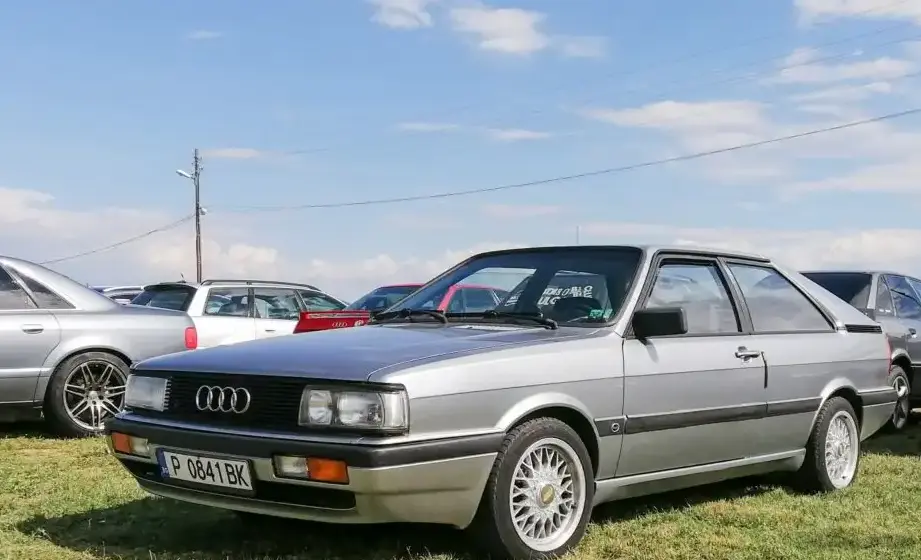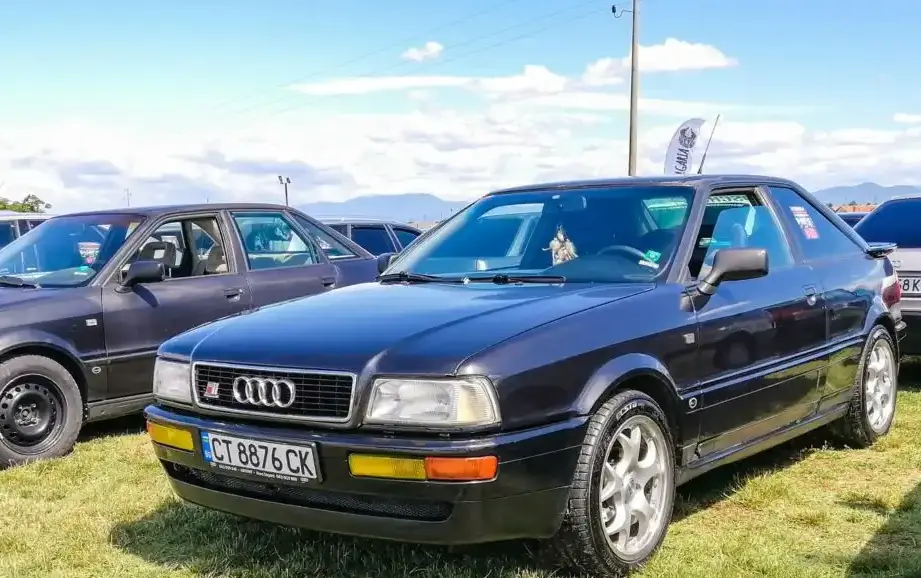
The Audi Coupe (B4), produced between 1992 and 1995, represented a significant evolution in Audi’s coupe lineage. Specifically, the 2.6 V6 E quattro variant, equipped with the ABC engine code, occupied a compelling position within the B4 range. Built on the Audi 80 (B4) platform – also known internally as the B4 – this model aimed to deliver a blend of performance, luxury, and all-weather capability. It served as a step up from the four-cylinder models, offering a more refined driving experience while remaining more accessible than the flagship S2 coupe. The “E” designation indicated the engine type and emissions compliance for the European market.
Technical Specifications
| Brand | Audi |
| Model | Coupe |
| Generation | Coupe (B4 8C) |
| Type (Engine) | 2.6 V6 E (150 Hp) quattro |
| Start of production | August, 1992 |
| End of production | December, 1995 |
| Powertrain Architecture | Internal Combustion engine |
| Body type | Coupe |
| Seats | 5 |
| Doors | 3 |
| Fuel consumption (combined) | 10.3 l/100 km (22.8 US mpg, 27.4 UK mpg, 9.7 km/l) |
| Fuel Type | Petrol (Gasoline) |
| Acceleration 0 – 100 km/h | 9.5 sec |
| Acceleration 0 – 62 mph | 9.5 sec |
| Acceleration 0 – 60 mph | 9 sec |
| Maximum speed | 212 km/h (131.73 mph) |
| Weight-to-power ratio | 9.3 kg/Hp, 107.1 Hp/tonne |
| Weight-to-torque ratio | 6.2 kg/Nm, 160.7 Nm/tonne |
| Power | 150 Hp @ 5750 rpm |
| Power per litre | 57.7 Hp/l |
| Torque | 225 Nm @ 3500 rpm (165.95 lb.-ft. @ 3500 rpm) |
| Engine layout | Front, Longitudinal |
| Engine Model/Code | ABC |
| Engine displacement | 2598 cm3 (158.54 cu. in.) |
| Number of cylinders | 6 |
| Engine configuration | V-engine |
| Cylinder Bore | 82.5 mm (3.25 in.) |
| Piston Stroke | 81 mm (3.19 in.) |
| Compression ratio | 10:1 |
| Number of valves per cylinder | 2 |
| Fuel injection system | Multi-port manifold injection |
| Engine aspiration | Naturally aspirated engine |
| Valvetrain | OHC |
| Engine oil capacity | 5 l (5.28 US qt | 4.4 UK qt) |
| Coolant | 8.5 l (8.98 US qt | 7.48 UK qt) |
| Kerb Weight | 1400 kg (3086.47 lbs.) |
| Max. weight | 1860 kg (4100.6 lbs.) |
| Max load | 460 kg (1014.13 lbs.) |
| Trunk (boot) space – minimum | 230 l (8.12 cu. ft.) |
| Trunk (boot) space – maximum | 912 l (32.21 cu. ft.) |
| Fuel tank capacity | 70 l (18.49 US gal | 15.4 UK gal) |
| Length | 4366 mm (171.89 in.) |
| Width | 1716 mm (67.56 in.) |
| Width including mirrors | 1930 mm (75.98 in.) |
| Height | 1370 mm (53.94 in.) |
| Wheelbase | 2549 mm (100.35 in.) |
| Front track | 1446 mm (56.93 in.) |
| Rear (Back) track | 1437 mm (56.57 in.) |
| Front overhang | 911 mm (35.87 in.) |
| Rear overhang | 899 mm (35.39 in.) |
| Drag coefficient (Cd) | 0.32 |
| Minimum turning circle | 11.3 m (37.07 ft.) |
| Drive wheel | All wheel drive (4×4) |
| Number of gears and type of gearbox | 5 gears, manual transmission |
| Front suspension | Independent, type McPherson with coil spring and anti-roll bar |
| Rear suspension | Double wishbone |
| Front brakes | Ventilated discs |
| Rear brakes | Disc |
| Assisting systems | ABS (Anti-lock braking system) |
| Steering type | Steering rack and pinion |
| Power steering | Hydraulic Steering |
| Tires size | 205/60 R15 |
| Wheel rims size | 15 |
INTRODUCTION
The Audi Coupe B4 2.6 V6 E quattro, produced from 1992 to 1995, was a sophisticated grand tourer aimed at buyers seeking a blend of performance, comfort, and all-weather security. It represented a refinement of the earlier B2 and B3 Coupe models, benefiting from advancements in engine technology and chassis design. The B4 platform, shared with the Audi 80 and 90, provided a solid foundation for the coupe, and the addition of Audi’s quattro all-wheel-drive system enhanced its handling characteristics and appeal in regions with inclement weather. This variant specifically targeted buyers who desired the prestige of a V6 engine and the added confidence of quattro, without the higher price tag of the more potent S2 model.
Powertrain & Engine Architecture
At the heart of the 2.6 V6 E quattro lay the ABC engine, a 2.6-liter naturally aspirated V6. This engine was a significant departure from the earlier inline-four and five-cylinder engines offered in the Coupe range. The ABC engine featured a 90-degree V-angle, contributing to a smoother power delivery and reduced vibrations. It employed multi-port fuel injection, managed by the Bosch Motronic engine control unit, optimizing fuel delivery for both performance and efficiency. The engine’s overhead camshaft (OHC) design, with two valves per cylinder, was a relatively conventional setup for the time. The five-speed manual transmission was standard, providing precise gear changes and allowing the driver to fully exploit the engine’s power. The quattro all-wheel-drive system utilized a Torsen differential, automatically distributing torque between the front and rear axles based on traction conditions. This system provided excellent grip in a variety of driving situations.
Driving Characteristics
The 2.6 V6 E quattro offered a refined and capable driving experience. While not as overtly sporty as the S2, it provided ample power for comfortable cruising and spirited driving. The 150 horsepower and 225 Nm (165.95 lb-ft) of torque delivered a respectable 0-60 mph time of around 9 seconds and a top speed of 131.73 mph. The five-speed manual transmission allowed for precise control, and the gear ratios were well-matched to the engine’s powerband. The quattro system provided exceptional traction, particularly on slippery surfaces, inspiring confidence in all weather conditions. Compared to the four-cylinder Coupes, the V6 offered a noticeably smoother and quieter ride, with less engine vibration. It also felt more composed at higher speeds. Compared to the S2, the 2.6 V6 offered a more relaxed driving experience, prioritizing comfort over outright performance.
Equipment & Trim Levels
The 2.6 V6 E quattro typically came well-equipped, reflecting Audi’s reputation for quality and refinement. Standard features included power windows, central locking, and an upgraded stereo system. The interior typically featured cloth upholstery, although leather was available as an option. The dashboard layout was functional and ergonomically designed, with clear instrumentation. Optional extras included a sunroof, heated seats, and upgraded alloy wheels. The trim level generally sat in the mid-range of the B4 Coupe lineup, offering a step up in luxury and performance compared to the base models, but without the more extensive upgrades found on the S2.
Chassis & Braking
The B4 Coupe chassis featured independent suspension all around, with McPherson struts at the front and a double-wishbone setup at the rear. This configuration provided a comfortable ride and good handling characteristics. Anti-roll bars were fitted front and rear to reduce body roll during cornering. The braking system consisted of ventilated discs at the front and solid discs at the rear, providing adequate stopping power for the vehicle’s weight and performance. ABS (Anti-lock Braking System) was standard, enhancing safety by preventing wheel lockup during hard braking.
Market Reception & Comparison
The Audi Coupe B4 2.6 V6 E quattro was generally well-received by automotive critics. It was praised for its refined engine, comfortable ride, and all-weather capability. However, some critics noted that its performance was not as exhilarating as that of the S2. Fuel economy was considered reasonable for a V6 engine of this era, averaging around 22.8 US mpg. Reliability was generally good, although preventative maintenance was crucial, particularly regarding the timing belt, which required periodic replacement. Compared to the 1.8L and 2.0L four-cylinder models, the 2.6 V6 offered a significant improvement in refinement and performance. Compared to the S2, it represented a more affordable and practical option for buyers who didn’t require the ultimate in performance.
Legacy
The Audi Coupe B4 2.6 V6 E quattro remains a desirable classic car today. The ABC engine, while not known for being particularly high-strung, is generally reliable when properly maintained. The quattro all-wheel-drive system continues to be a valuable asset, particularly in regions with challenging weather conditions. Finding well-maintained examples can be challenging, as many have been subjected to years of use. However, the B4 Coupe 2.6 V6 E quattro offers a compelling combination of style, performance, and practicality, making it a rewarding ownership experience for enthusiasts.