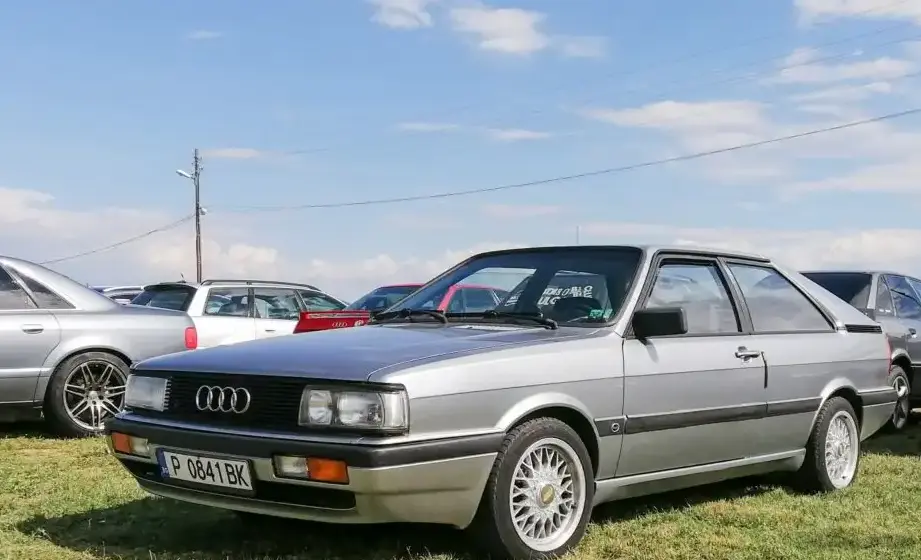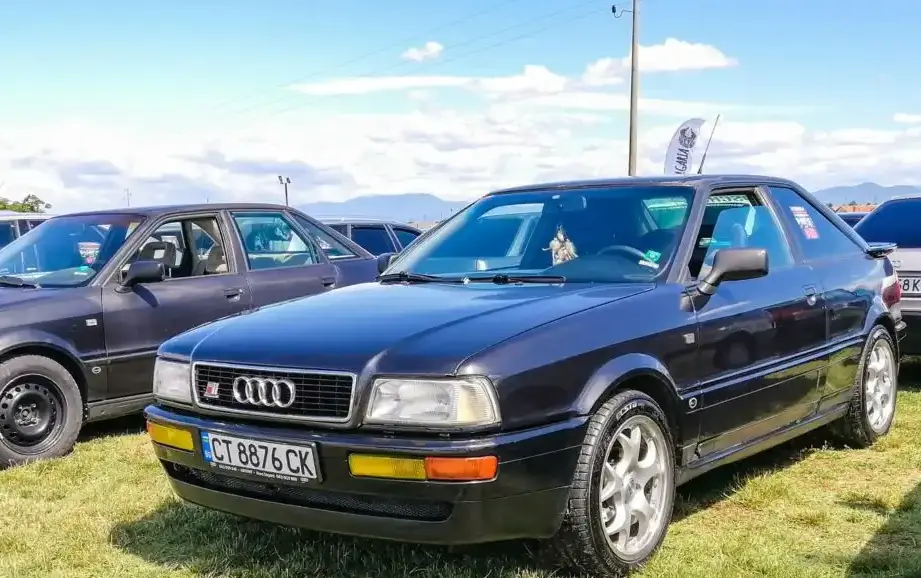
The Audi Coupe (B4), internally designated the 8C series, represented a significant evolution in Audi’s coupe lineage when it debuted in 1991. Positioned as a sporty and sophisticated alternative to more mainstream offerings, the B4 Coupe built upon the success of its predecessor, the B3, while introducing a more refined design and a range of updated engine options. Production continued through December 1995. The 2.8 V6 E quattro variant, producing 174 horsepower, occupied a premium position within the B4 Coupe lineup, offering a blend of performance and all-weather capability. It was a key model in establishing Audi’s reputation for technologically advanced and driver-focused vehicles in the early 1990s.
Technical Specifications
| Brand | Audi |
| Model | Coupe |
| Generation | Coupe (B4 8C) |
| Type (Engine) | 2.8 V6 E (174 Hp) quattro |
| Start of production | August, 1991 |
| End of production | December, 1995 |
| Powertrain Architecture | Internal Combustion engine |
| Body type | Coupe |
| Seats | 5 |
| Doors | 3 |
| Fuel consumption (combined) | 10.4 l/100 km |
| Fuel consumption (US mpg) | 22.6 US mpg |
| Fuel consumption (UK mpg) | 27.2 UK mpg |
| Fuel consumption (km/l) | 9.6 km/l |
| Fuel Type | Petrol (Gasoline) |
| Acceleration 0 – 100 km/h | 8 sec |
| Acceleration 0 – 62 mph | 8 sec |
| Acceleration 0 – 60 mph | 7.6 sec |
| Maximum speed | 222 km/h (137.94 mph) |
| Weight-to-power ratio | 8 kg/Hp, 124.3 Hp/tonne |
| Weight-to-torque ratio | 5.6 kg/Nm, 178.6 Nm/tonne |
| Power | 174 Hp @ 5500 rpm |
| Power per litre | 62.8 Hp/l |
| Torque | 250 Nm @ 3000 rpm (184.39 lb.-ft. @ 3000 rpm) |
| Engine layout | Front, Longitudinal |
| Engine Model/Code | AAH |
| Engine displacement | 2771 cm3 (169.1 cu. in.) |
| Number of cylinders | 6 |
| Engine configuration | V-engine |
| Cylinder Bore | 82.5 mm (3.25 in.) |
| Piston Stroke | 86.4 mm (3.4 in.) |
| Compression ratio | 10.3:1 |
| Number of valves per cylinder | 2 |
| Fuel injection system | Multi-port manifold injection |
| Engine aspiration | Naturally aspirated engine |
| Valvetrain | OHC |
| Engine oil capacity | 4 l (4.23 US qt | 3.52 UK qt) |
| Coolant capacity | 8.5 l (8.98 US qt | 7.48 UK qt) |
| Kerb Weight | 1400 kg (3086.47 lbs.) |
| Max. weight | 1860 kg (4100.6 lbs.) |
| Max load | 460 kg (1014.13 lbs.) |
| Trunk (boot) space – minimum | 230 l (8.12 cu. ft.) |
| Trunk (boot) space – maximum | 912 l (32.21 cu. ft.) |
| Fuel tank capacity | 70 l (18.49 US gal | 15.4 UK gal) |
| Length | 4366 mm (171.89 in.) |
| Width | 1716 mm (67.56 in.) |
| Width including mirrors | 1930 mm (75.98 in.) |
| Height | 1370 mm (53.94 in.) |
| Wheelbase | 2549 mm (100.35 in.) |
| Front track | 1446 mm (56.93 in.) |
| Rear track | 1437 mm (56.57 in.) |
| Front overhang | 911 mm (35.87 in.) |
| Rear overhang | 899 mm (35.39 in.) |
| Drag coefficient (Cd) | 0.32 |
| Minimum turning circle | 11.3 m (37.07 ft.) |
| Drive wheel | All wheel drive (4×4) |
| Number of gears and type of gearbox | 5 gears, manual transmission |
| Front suspension | Independent, type McPherson with coil spring and anti-roll bar |
| Rear suspension | Double wishbone |
| Front brakes | Ventilated discs |
| Rear brakes | Disc |
| Assisting systems | ABS (Anti-lock braking system) |
| Steering type | Steering rack and pinion |
| Power steering | Hydraulic Steering |
| Tires size | 205/60 R15 |
| Wheel rims size | 15 |
Powertrain & Engine Architecture
The heart of the 2.8 V6 E quattro was the AAH engine, a 2.8-liter naturally aspirated V6. This engine was a cornerstone of Audi’s mid-range offerings during the early 1990s. It featured a 90-degree V-angle, contributing to a smooth and balanced operation. The AAH utilized a multi-port fuel injection system, delivering fuel directly to each intake port for optimized combustion. The engine employed a single overhead camshaft (OHC) design per cylinder bank, operating two valves per cylinder (intake and exhaust). This configuration provided a good balance between performance and simplicity. The 5-speed manual transmission was standard, offering precise gear changes and a direct connection to the engine’s power. The quattro all-wheel-drive system, a defining feature of Audi, distributed power between the front and rear axles, enhancing traction and stability, particularly in adverse weather conditions.
Driving Characteristics
The 2.8 V6 E quattro offered a noticeably more refined driving experience compared to the base 1.8L and 2.0L models. The 174 horsepower and 184 lb-ft of torque provided brisk acceleration, with 0-60 mph times around 7.6 seconds. While not a sports car in the modern sense, the B4 2.8 V6 felt lively and responsive. The manual transmission’s gear ratios were well-matched to the engine’s powerband, allowing for confident overtaking maneuvers. The quattro system instilled a sense of security and control, especially on slippery surfaces. Compared to the higher-performance S2 coupe, the 2.8 V6 lacked the raw power and aggressive tuning, but it offered a more comfortable and accessible driving experience. The 2.8L also provided a more balanced feel than the front-wheel-drive variants.
Equipment & Trim Levels
The 2.8 V6 E quattro typically came well-equipped, reflecting its position as a premium model. Standard features included power windows, central locking, and a basic audio system. Interior upholstery was typically cloth, although leather options were available. The dashboard layout was functional and ergonomically designed, with clear instrumentation. Optional extras included a sunroof, upgraded audio systems, and alloy wheels. The “E” designation indicated a specific trim level, often denoting a higher level of standard equipment compared to the base 2.8 V6 models.
Chassis & Braking
The B4 Coupe utilized an independent suspension setup, with McPherson struts at the front and a double wishbone configuration at the rear. This provided a comfortable ride while maintaining good handling characteristics. The 2.8 V6 models typically featured larger brakes than the lower-spec variants, with ventilated discs at the front and solid discs at the rear. Anti-lock braking system (ABS) was standard, enhancing braking performance and safety. Stabilizer bars were fitted to both the front and rear axles to reduce body roll during cornering.
Market Reception & Comparison
The Audi Coupe B4 2.8 V6 E quattro was generally well-received by automotive critics. It was praised for its refined engine, comfortable ride, and all-weather capability. Fuel economy was reasonable for a V6 engine of that era, averaging around 22.6 mpg in combined driving. Compared to the 1.8L and 2.0L models, the 2.8 V6 offered a significant performance upgrade, but at a higher price point. Reliability was generally good, although preventative maintenance was crucial, particularly regarding the timing belt. The 2.8 V6 offered a compelling alternative to rivals such as the BMW 3 Series Coupe and the Mercedes-Benz C-Class Coupe.
Legacy
The Audi Coupe B4 2.8 V6 E quattro remains a sought-after classic among Audi enthusiasts. The AAH engine, while not known for being particularly high-strung, is generally considered reliable when properly maintained. Timing belt replacement is a critical maintenance item, as failure can lead to catastrophic engine damage. Today, well-maintained examples command a premium in the used car market. The B4 Coupe, and particularly the 2.8 V6 quattro variant, represents a pivotal moment in Audi’s history, showcasing the brand’s commitment to innovation, performance, and all-wheel-drive technology.