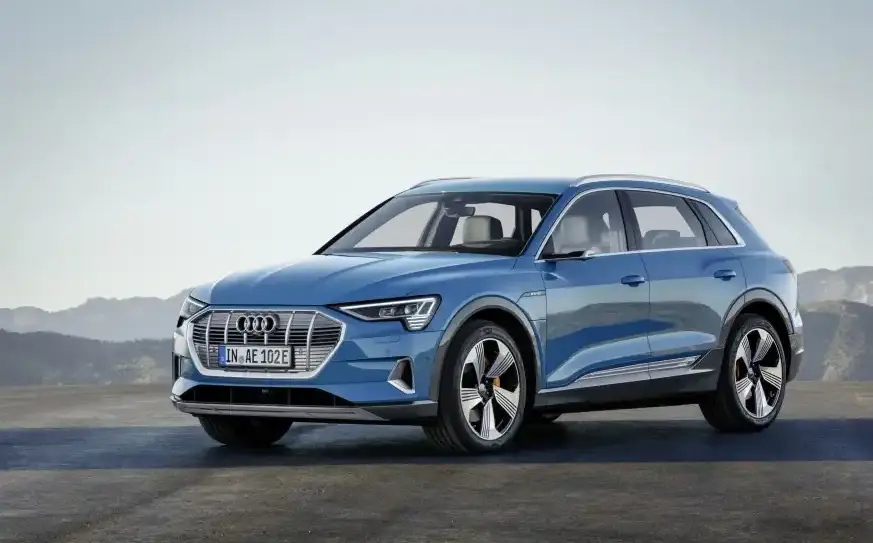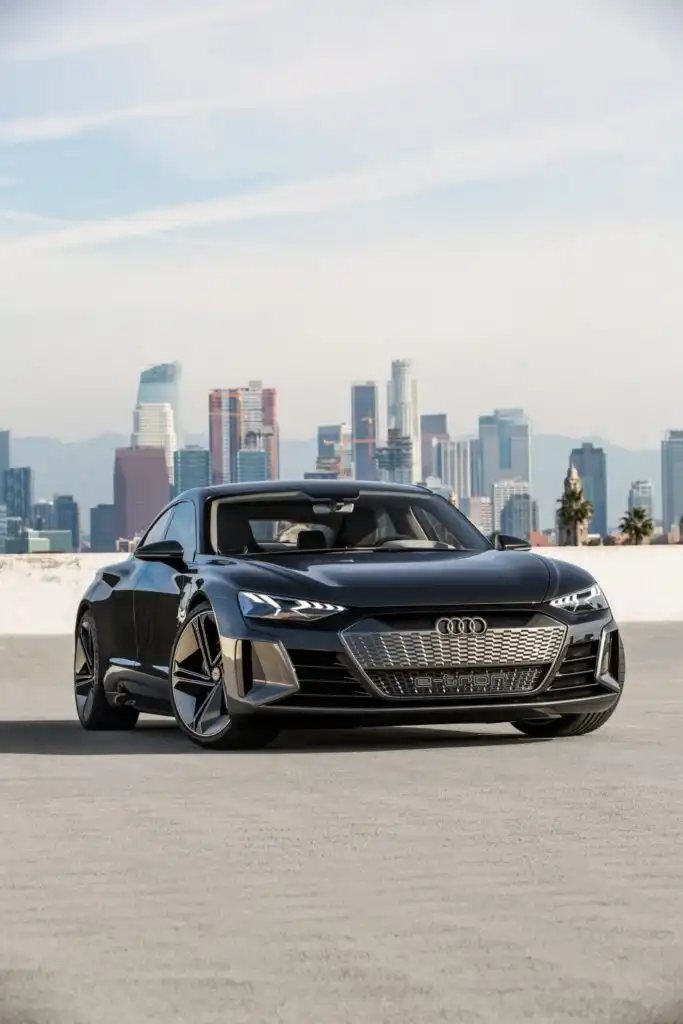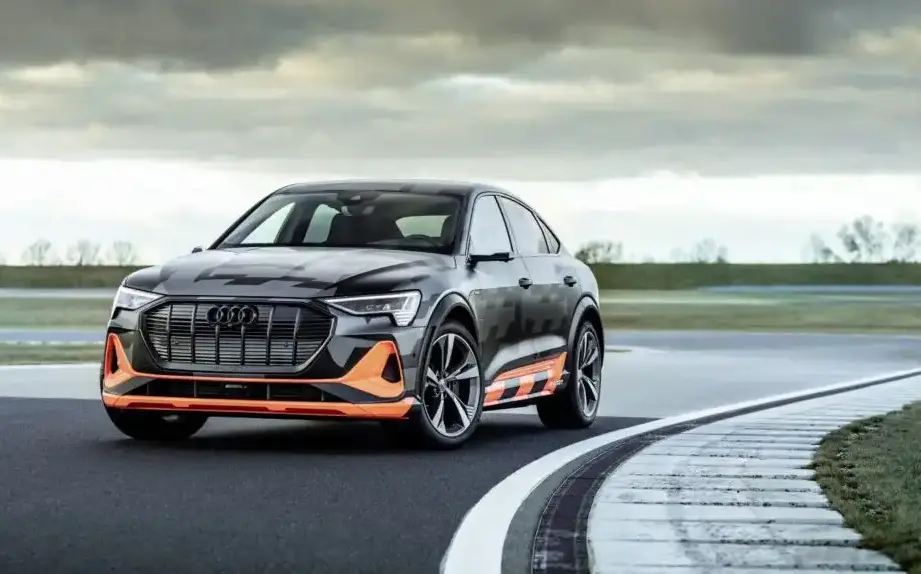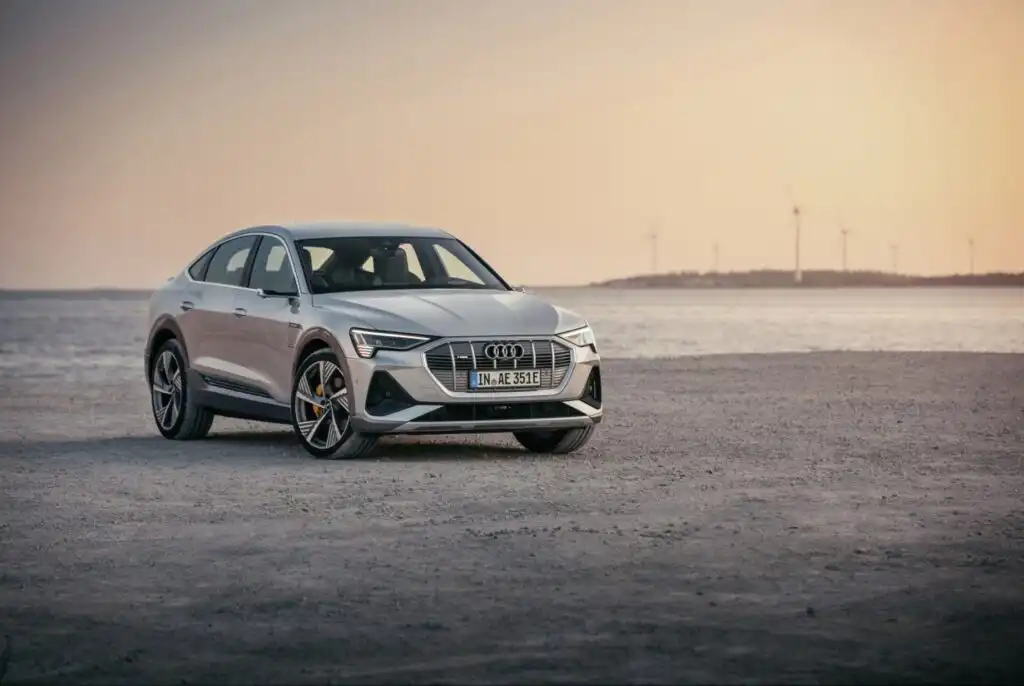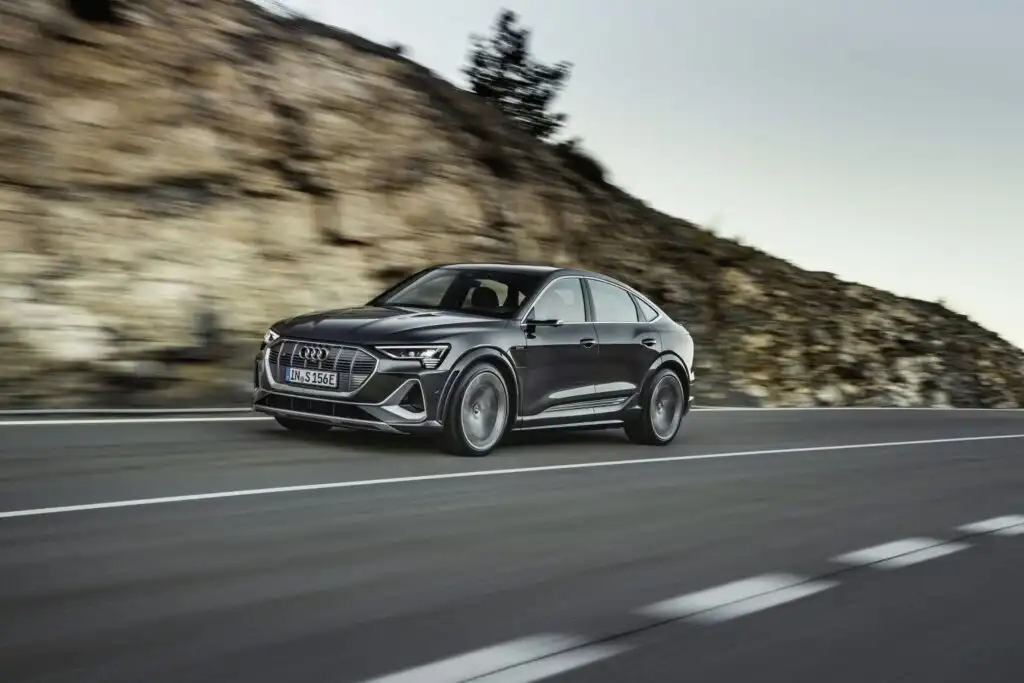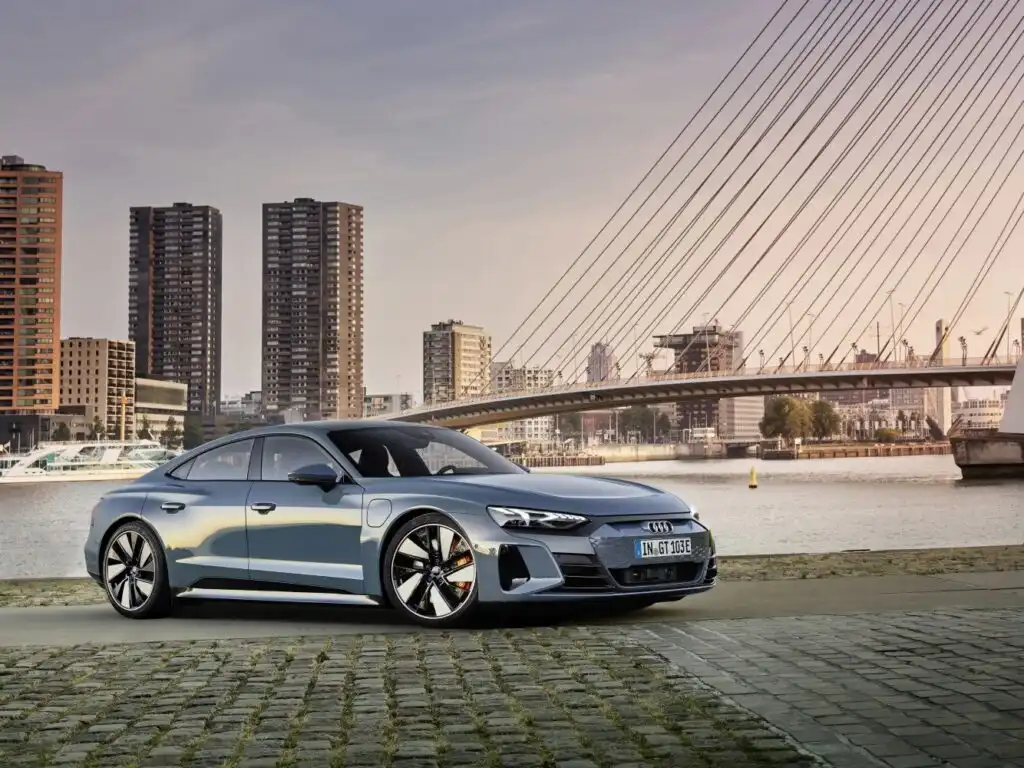
The Audi e-tron GT, specifically the 93.4 kWh (530 Hp) quattro variant, represents Audi’s foray into the high-performance electric grand touring segment. Introduced for the 2021 model year and continuing through 2024, this vehicle is built upon the J1 platform, shared with the Porsche Taycan. It aimed to deliver the driving dynamics expected of an Audi, combined with the instant torque and zero-emission capabilities of a battery-electric vehicle (BEV). The e-tron GT positioned itself as a direct competitor to vehicles like the Porsche Taycan, Tesla Model S, and Mercedes-Benz EQS, offering a blend of luxury, performance, and technology.
Technical Specifications
| Brand | Audi |
| Model | e-tron GT |
| Generation | e-tron GT |
| Type (Engine) | 93.4 kWh (530 Hp) quattro |
| Start of production | 2021 year |
| End of production | 2024 year |
| Powertrain Architecture | BEV (Electric Vehicle) |
| Body type | Grand Tourer |
| Seats | 4 |
| Doors | 4 |
| Fuel Type | Electricity |
| Acceleration 0 – 100 km/h | 4.1 sec |
| Acceleration 0 – 62 mph | 4.1 sec |
| Acceleration 0 – 60 mph | 3.9 sec |
| Maximum speed | 245 km/h, Electronically limited (152.24 mph) |
| Weight-to-power ratio | 4.3 kg/Hp, 232.9 Hp/tonne |
| Weight-to-torque ratio | 3.6 kg/Nm, 281.2 Nm/tonne |
| Gross battery capacity | 93.4 kWh |
| Net (usable) battery capacity | 83.7 kWh |
| Battery voltage | 800 V |
| Battery technology | Lithium-ion (Li-Ion) |
| Battery weight | 650 kg (1433 lbs.) |
| Battery location | Below the floor |
| Recuperation output | 265 kW |
| All-electric range (WLTP) | 452-488 km (280.86 – 303.23 mi) |
| Average Energy consumption (WLTP) | 19.9-21.6 kWh/100 km (32.03 – 34.76 kWh/100 mi) |
| Average Energy consumption | 18.8-19.6 kWh/100 km (30.26 – 31.54 kWh/100 mi) |
| Kerb Weight | 2276 kg (5017.72 lbs.) |
| Max. weight | 2840 kg (6261.13 lbs.) |
| Max load | 564 kg (1243.41 lbs.) |
| Trunk (boot) space – minimum | 405 l (14.3 cu. ft.) |
| Length | 4989 mm (196.42 in.) |
| Width | 1964 mm (77.32 in.) |
| Height | 1396 mm (54.96 in.) |
| Wheelbase | 2898 mm (114.09 in.) |
| Front track | 1710 mm (67.32 in.) |
| Rear (Back) track | 1694 mm (66.69 in.) |
| Drag coefficient (Cd) | 0.24 |
| Minimum turning circle | 11.6 m (38.06 ft.) |
| Number of gears and type of gearbox | 2 gears, automatic transmission |
Powertrain & Engine Architecture
The e-tron GT 93.4 kWh quattro utilizes a dual-motor, all-wheel-drive (quattro) powertrain. The front motor produces 238 horsepower, while the rear motor delivers a substantial 435 horsepower, combining for a total system output of 530 horsepower and 640 Nm (472.04 lb.-ft.) of torque. Both motors are permanently excited synchronous motors, chosen for their efficiency and power density. The 93.4 kWh battery pack, utilizing lithium-ion technology, is positioned low in the vehicle floor to lower the center of gravity and improve handling. The battery operates at a high 800-volt architecture, enabling faster charging times – capable of adding approximately 62 miles of range in just 22.5 minutes using a compatible DC fast charger. The two-speed transmission on each axle provides both strong acceleration and efficient cruising. The first gear is optimized for rapid acceleration, while the second gear improves efficiency at higher speeds.
Driving Characteristics
The e-tron GT 93.4 kWh quattro delivers exhilarating performance. The instant torque characteristic of electric motors provides immediate acceleration, resulting in a 0-60 mph time of around 3.9 seconds. The dual-motor all-wheel-drive system ensures excellent traction in various conditions. The low center of gravity, thanks to the battery placement, contributes to confident and stable handling. Compared to a potential future higher-performance RS variant, the 93.4 kWh model offers a more balanced driving experience, prioritizing usability and range alongside performance. While not as brutally quick as some dedicated performance EVs, the e-tron GT provides a refined and engaging driving experience suitable for both daily commutes and spirited drives.
Equipment & Trim Levels
The e-tron GT came well-equipped as standard. Interior features included premium leather upholstery, heated and ventilated front seats, a panoramic sunroof, and a sophisticated infotainment system with dual touchscreens. Standard safety features encompassed Audi pre sense basic, side assist, and rear cross-traffic assist. Optional extras included carbon fiber trim packages, massaging seats, a Bang & Olufsen sound system, and adaptive air suspension. The trim levels were relatively streamlined, with options primarily revolving around cosmetic enhancements and additional convenience features. The focus was on providing a luxurious and technologically advanced experience, rather than offering a wide range of drastically different trim levels.
Chassis & Braking
The e-tron GT features a double-wishbone front suspension and an independent multi-link rear suspension, both utilizing adaptive air suspension as standard. This allows for adjustable ride height and damping characteristics, optimizing comfort and handling. Large ventilated disc brakes – 360-420mm front and 358-410mm rear – provide ample stopping power. The braking system incorporates regenerative braking, which helps to recapture energy and extend range. Available options included carbon ceramic brakes for even greater stopping performance. The steering system is an electric power-assisted rack and pinion setup, offering precise and responsive steering feel. Available four-wheel steering further enhances agility and maneuverability.
Market Reception & Comparison
The Audi e-tron GT was generally well-received by automotive critics. Praise was directed towards its striking design, impressive performance, and luxurious interior. Comparisons to the Porsche Taycan were inevitable, with the e-tron GT often lauded for its more comfortable ride and slightly more spacious interior. Fuel economy, expressed as MPGe, ranged from 105-97 MPGe, and energy consumption varied between 19.9-21.6 kWh/100km. Reliability reports have been relatively positive, although, as with all early-model EVs, some software glitches were reported. Compared to other trims within the e-tron GT lineup (if any existed beyond battery capacity variations), the 93.4 kWh quattro model represented the top-tier offering, balancing performance, range, and luxury.
Legacy
The Audi e-tron GT marked a significant step for Audi in the electric vehicle market, demonstrating the brand’s commitment to electrification and high-performance EVs. The 800-volt architecture and dual-motor powertrain have become hallmarks of Audi’s EV strategy. On the used car market, the e-tron GT holds its value relatively well, reflecting its desirability and advanced technology. The long-term reliability of the powertrain appears promising, although regular battery health checks and software updates are recommended. The e-tron GT has established itself as a desirable and capable electric grand tourer, paving the way for future Audi EV models.