
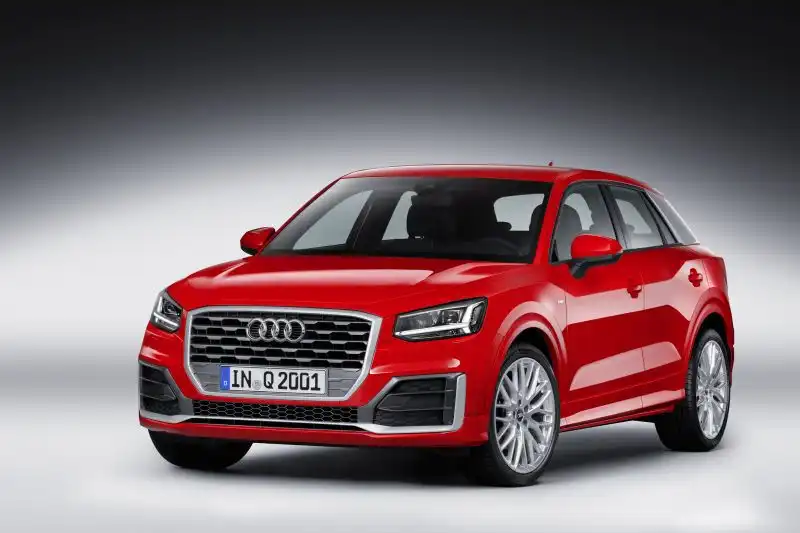
The Audi Q2 1.4 TFSI COD, produced from 2016 to 2018, represents an entry point into the Audi Q2 range, a subcompact luxury crossover SUV. Positioned as a more accessible option within the first generation (GA) Q2 lineup, it aimed to attract a younger demographic with its blend of style, technology, and relatively efficient performance. The “COD” designation stands for Cylinder On Demand, a fuel-saving technology that deactivates two cylinders under light load conditions. This variant played a significant role in establishing the Q2’s presence in the European market, where demand for compact SUVs was rapidly growing. While not initially offered in the US market, the Q2 represented Audi’s attempt to capture a segment increasingly focused on urban practicality and premium features.
Technical Specifications
| Brand | Audi |
| Model | Q2 |
| Generation | Q2 (GA) |
| Type (Engine) | 1.4 TFSI COD (150 Hp) |
| Start of production | 2016 |
| End of production | 2018 |
| Powertrain Architecture | Internal Combustion Engine |
| Body type | SUV |
| Seats | 5 |
| Doors | 5 |
| Fuel consumption (urban) | 6.7-6.8 l/100 km (35.1 – 34.6 US mpg) |
| Fuel consumption (extra urban) | 4.8-5.1 l/100 km (49 – 46.1 US mpg) |
| Fuel consumption (combined) | 5.5-5.8 l/100 km (42.8 – 40.6 US mpg) |
| CO2 emissions | 124-130 g/km |
| Fuel Type | Petrol (Gasoline) |
| Acceleration 0 – 100 km/h | 8.5 sec |
| Acceleration 0 – 62 mph | 8.5 sec |
| Acceleration 0 – 60 mph | 8.1 sec |
| Maximum speed | 208 km/h (129.25 mph) |
| Emission standard | Euro 6 |
| Power | 150 Hp @ 5000-6000 rpm |
| Torque | 250 Nm @ 1500-3500 rpm (184.39 lb.-ft.) |
| Engine layout | Front, Transverse |
| Engine Model/Code | CZEA |
| Engine displacement | 1395 cm3 (85.13 cu. in.) |
| Number of cylinders | 4 |
| Engine configuration | Inline |
| Fuel injection system | Direct injection |
| Engine aspiration | Turbocharger, Intercooler |
| Engine oil capacity | 4 l (4.23 US qt | 3.52 UK qt) |
| Coolant capacity | 8 l (8.45 US qt | 7.04 UK qt) |
| Trunk (boot) space – minimum | 405 l (14.3 cu. ft.) |
| Trunk (boot) space – maximum | 1050 l (37.08 cu. ft.) |
| Length | 4191 mm (165 in.) |
| Width | 1794 mm (70.63 in.) |
| Width including mirrors | 2009 mm (79.09 in.) |
| Height | 1508 mm (59.37 in.) |
| Wheelbase | 2601 mm (102.4 in.) |
| Front track | 1547 mm (60.91 in.) |
| Rear track | 1541 mm (60.67 in.) |
| Drivetrain | Front Wheel Drive |
| Number of gears | 6 |
| Gearbox type | Manual Transmission |
| Front brakes | Ventilated discs |
| Rear brakes | Disc |
Powertrain & Engine Architecture
The heart of the Q2 1.4 TFSI COD is the CZEA engine, a 1.4-liter turbocharged inline-four cylinder gasoline engine. This engine is part of Volkswagen Group’s EA211 family, known for its compact design and efficiency. The key feature of this engine is its Cylinder On Demand (COD) technology. Under light load conditions, such as cruising on the highway, the engine can shut down the second and third cylinders, effectively running as a two-cylinder engine. This reduces fuel consumption and emissions. The engine utilizes direct fuel injection, delivering fuel directly into the combustion chamber for improved efficiency and power. A single turbocharger with an intercooler provides forced induction, boosting power output. The 6-speed manual transmission was standard, offering precise gear changes and a more engaging driving experience. The engine’s valvetrain employs variable valve timing on both the intake and exhaust sides, optimizing performance across the rev range.
Driving Characteristics
The 150 horsepower and 184 lb-ft of torque offered by the 1.4 TFSI engine provided adequate performance for everyday driving. Acceleration from 0-60 mph took approximately 8.1 seconds, making it competitive within its class. However, compared to the more powerful 2.0 TFSI variants, the 1.4 TFSI felt noticeably less responsive, particularly during overtaking maneuvers or when carrying a full load. The manual transmission’s gear ratios were tuned for fuel efficiency, resulting in a slightly taller overall gearing. While this contributed to good highway fuel economy, it meant that the engine sometimes felt strained when climbing hills or accelerating quickly. The Cylinder On Demand system was generally seamless in operation, though some drivers reported a slight vibration when the engine switched between three and two cylinders. Overall, the driving experience was comfortable and refined, prioritizing fuel efficiency and ease of use over outright performance.
Equipment & Trim Levels
The Q2 1.4 TFSI COD typically came with a respectable level of standard equipment. This included Audi’s MMI infotainment system with a 5.8-inch display, Bluetooth connectivity, and a USB interface. Standard safety features included ABS, electronic stability control, and multiple airbags. Interior upholstery was typically cloth, with options for leather upgrades. Common trim levels included ‘SE’ and ‘Sport’ which added features like alloy wheels, parking sensors, and upgraded interior trim. Optional extras included a larger MMI display, navigation system, panoramic sunroof, and a premium sound system. The interior design was modern and minimalist, reflecting Audi’s design language at the time. The dashboard layout was clean and intuitive, with a focus on user-friendliness.
Chassis & Braking
The Q2’s chassis was designed to provide a balance between comfort and handling. It utilized a MacPherson strut front suspension and a multi-link rear suspension. The suspension tuning was relatively soft, prioritizing ride comfort over sporty handling. Stabilizer bars were fitted to both the front and rear axles to reduce body roll during cornering. The braking system consisted of ventilated discs at the front and solid discs at the rear. ABS (Anti-lock Braking System) was standard, providing enhanced braking performance in emergency situations. The steering system was an electric power steering system, offering light and precise steering feel.
Market Reception & Comparison
The Audi Q2 1.4 TFSI COD was generally well-received by automotive critics. It was praised for its stylish design, comfortable interior, and fuel efficiency. However, some critics noted that the 1.4 TFSI engine lacked the punch of its larger counterparts. Compared to the 2.0 TFSI variants, the 1.4 TFSI offered significantly lower running costs but at the expense of performance. The 1.8 TFSI models offered a middle ground, providing a better balance between performance and efficiency. In terms of reliability, the 1.4 TFSI engine proved to be generally reliable, although some owners reported issues with the turbocharger and direct injection system. Fuel economy was a strong point, with combined fuel consumption figures ranging from 40.6 to 42.8 US mpg.
Legacy
The Audi Q2 1.4 TFSI COD remains a popular choice in the used car market, particularly for buyers seeking a stylish and efficient subcompact SUV. The CZEA engine, while not without its potential issues, has proven to be relatively durable when properly maintained. The Cylinder On Demand technology, while complex, has demonstrated its effectiveness in reducing fuel consumption. As a model, the Q2 helped Audi expand its reach into the growing subcompact SUV segment, paving the way for future models like the Q3 and Q4. The 1.4 TFSI COD variant, in particular, offered an accessible entry point into the Audi brand, attracting a new generation of buyers.
