
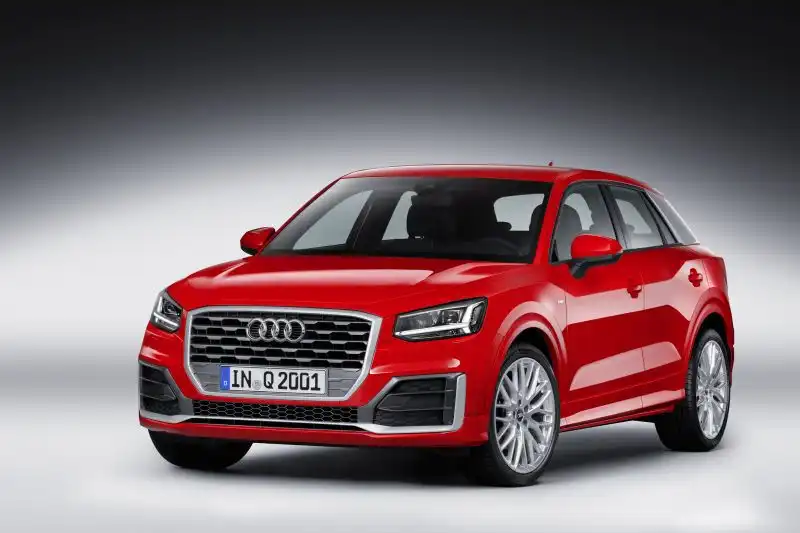
The Audi Q2 1.6 TDI (116 hp) was a front-wheel-drive subcompact luxury crossover SUV produced by the German manufacturer Audi between 2016 and 2018. Positioned as an entry-level offering within the Q2 range, it aimed to attract buyers seeking a premium vehicle with good fuel economy and practicality. This variant played a significant role in establishing the Q2 as a competitor in the burgeoning subcompact SUV segment, particularly in European markets where diesel engines remained popular. It was part of the first generation of the Q2 (GA), built on the Volkswagen Group’s MQB platform.
Technical Specifications
| Brand | Audi |
| Model | Q2 |
| Generation | Q2 |
| Type (Engine) | 1.6 TDI (116 Hp) |
| Start of production | 2016 |
| End of production | 2018 |
| Powertrain Architecture | Internal Combustion engine |
| Body type | SUV |
| Seats | 5 |
| Doors | 5 |
| Fuel consumption (urban) | 4.9-5 l/100 km (48 – 47 US mpg, 57.6 – 56.5 UK mpg, 20.4 – 20 km/l) |
| Fuel consumption (extra urban) | 4.1-4.4 l/100 km (57.4 – 53.5 US mpg, 68.9 – 64.2 UK mpg, 24.4 – 22.7 km/l) |
| Fuel consumption (combined) | 4.4-4.6 l/100 km (53.5 – 51.1 US mpg, 64.2 – 61.4 UK mpg, 22.7 – 21.7 km/l) |
| CO2 emissions | 114-120 g/km |
| Fuel Type | Diesel |
| Acceleration 0 – 100 km/h | 10.7 sec |
| Acceleration 0 – 62 mph | 10.7 sec |
| Acceleration 0 – 60 mph | 10.2 sec |
| Maximum speed | 190 km/h (118.06 mph) |
| Emission standard | Euro 6 |
| Power | 116 Hp @ 3250-4000 rpm |
| Power per litre | 72.6 Hp/l |
| Torque | 250 Nm @ 1500-3200 rpm (184.39 lb.-ft. @ 1500-3200 rpm) |
| Engine layout | Front, Transverse |
| Engine Model/Code | DDYA |
| Engine displacement | 1598 cm3 (97.52 cu. in.) |
| Number of cylinders | 4 |
| Engine configuration | Inline |
| Fuel injection system | Diesel Commonrail |
| Engine aspiration | Turbocharger, Intercooler |
| Engine oil capacity | 4.7 l (4.97 US qt | 4.14 UK qt) |
| Coolant | 8 l (8.45 US qt | 7.04 UK qt) |
| Trunk (boot) space – minimum | 405 l (14.3 cu. ft.) |
| Trunk (boot) space – maximum | 1050 l (37.08 cu. ft.) |
| Length | 4191 mm (165 in.) |
| Width | 1794 mm (70.63 in.) |
| Width including mirrors | 2009 mm (79.09 in.) |
| Height | 1508 mm (59.37 in.) |
| Wheelbase | 2601 mm (102.4 in.) |
| Front track | 1547 mm (60.91 in.) |
| Rear (Back) track | 1541 mm (60.67 in.) |
| Drivetrain Architecture | The Internal combustion engine (ICE) drives the front wheels of the vehicle. |
| Drive wheel | Front wheel drive |
| Number of gears and type of gearbox | 6 gears, manual transmission |
| Front brakes | Ventilated discs |
| Rear brakes | Disc |
| Assisting systems | ABS (Anti-lock braking system) |
| Steering type | Steering rack and pinion |
| Power steering | Electric Steering |
INTRODUCTION
The Audi Q2 1.6 TDI (116 hp) represented Audi’s entry point into the Q2 crossover range, launched in 2016. Built on the versatile MQB platform, also underpinning models like the Volkswagen Golf and Audi A3, the Q2 aimed to attract a younger demographic with its distinctive styling and compact dimensions. The 1.6 TDI variant was specifically targeted at buyers prioritizing fuel efficiency and lower running costs, making it a popular choice in Europe where diesel fuel was prevalent and taxation favored smaller, more economical engines. It was offered throughout the initial production run of the first-generation Q2, from 2016 to 2018, before being superseded by updated engine options.
Powertrain & Engine Architecture
At the heart of the Q2 1.6 TDI was the Volkswagen Group’s DDYA engine, a 1.6-liter inline-four cylinder diesel engine. This engine utilized a common rail direct injection system, delivering fuel directly into the combustion chamber at extremely high pressure for improved efficiency and reduced emissions. A turbocharger with an intercooler was employed to boost power output and enhance torque across a wider rev range. The engine featured four valves per cylinder and a single overhead camshaft. The 116 horsepower peak was achieved between 3250 and 4000 rpm, while the 250 Nm (184 lb-ft) of torque was available from a low 1500 rpm, providing good responsiveness for everyday driving. This variant was exclusively paired with a six-speed manual transmission, sending power to the front wheels. The engine was designed to meet stringent Euro 6 emission standards, incorporating a diesel particulate filter (DPF) to trap soot particles.
Driving Characteristics
The Q2 1.6 TDI, with its 116 hp and manual transmission, offered a practical and economical driving experience. Acceleration from 0 to 62 mph (0-100 km/h) took approximately 10.7 seconds, making it adequately quick for urban and highway driving, but not particularly sporty. The engine’s strong low-end torque made it easy to navigate city streets and provided sufficient power for overtaking maneuvers. The six-speed manual gearbox was well-matched to the engine’s characteristics, offering precise shifts and allowing drivers to maintain optimal engine speed. Compared to the more powerful Q2 variants, such as the 2.0 TDI, the 1.6 TDI felt less refined and had a narrower power band. However, it excelled in fuel economy, consistently achieving combined fuel consumption figures of around 53.5 mpg (US) or 64.2 mpg (UK). The front-wheel-drive configuration provided predictable handling, although it lacked the all-weather capability of the quattro all-wheel-drive system available on higher-spec models.
Equipment & Trim Levels
The Q2 1.6 TDI typically came equipped with a respectable level of standard features, reflecting Audi’s premium positioning. Standard equipment generally included alloy wheels, air conditioning, a multi-function steering wheel, a 5.8-inch infotainment screen with Bluetooth connectivity, and a suite of safety features such as ABS, electronic stability control, and multiple airbags. Higher trim levels, such as Sport and S line, added features like larger alloy wheels, sport seats, upgraded interior trim, and a more advanced infotainment system with navigation. Optional extras included a panoramic sunroof, LED headlights, parking sensors, and a driver assistance package with features like adaptive cruise control and lane departure warning. Interior upholstery was typically cloth on the base models, with leather options available on higher trims.
Chassis & Braking
The Q2 1.6 TDI utilized a MacPherson strut front suspension and a multi-link rear suspension, providing a comfortable and controlled ride. The suspension was tuned to prioritize comfort over outright sportiness, absorbing bumps and imperfections in the road surface effectively. The front brakes consisted of ventilated discs, while the rear brakes were solid discs. ABS (Anti-lock Braking System) and electronic stability control were standard features, enhancing safety and stability in various driving conditions. The steering was electrically assisted, providing light and precise steering feel. Stabilizer bars were fitted to both the front and rear axles to reduce body roll during cornering.
Market Reception & Comparison
The Audi Q2 1.6 TDI was generally well-received by automotive critics, who praised its stylish design, practical interior, and fuel-efficient engine. However, some reviewers noted that the 1.6 TDI engine felt underpowered compared to the more potent engine options available in the Q2 range. Compared to the 2.0 TDI variants, the 1.6 TDI offered significantly lower running costs but sacrificed performance. Against competitors like the BMW X1 and Mercedes-Benz GLA, the Q2 1.6 TDI offered a compelling combination of style, practicality, and value. Its fuel economy was competitive within its class, and its reliability proved to be generally good, although diesel particulate filter issues could arise with infrequent long-distance driving.
Legacy
The Audi Q2 1.6 TDI (116 hp) remains a relatively common sight on the used car market. The DDYA engine, while not known for being exceptionally powerful, has proven to be reasonably reliable when properly maintained. Regular servicing, including oil changes and DPF regeneration, is crucial to ensure long-term durability. The Q2’s distinctive styling and practical interior continue to appeal to buyers seeking a compact and stylish crossover. While newer Q2 models offer more advanced technology and more powerful engine options, the 1.6 TDI variant represents a solid entry point into the Audi Q2 range, offering a good balance of fuel efficiency, practicality, and affordability.
