
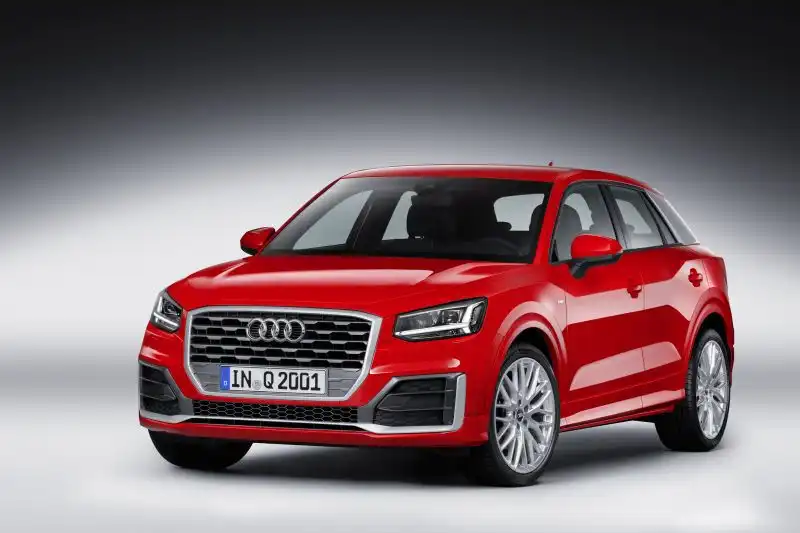
The Audi Q2 30 TDI, produced from 2018 to 2020, represents an entry point into the Audi Q2 range, a subcompact luxury crossover SUV. Positioned as a more accessible option within the Q2 lineup, the 30 TDI utilized a 1.6-liter turbocharged diesel engine producing 116 horsepower. It was primarily marketed in Europe and other regions where diesel engines remained popular, offering a blend of fuel efficiency and practicality in a stylish package. This variant aimed at buyers seeking a premium small SUV experience without the higher price tag of more powerful or better-equipped models.
Technical Specifications
| Brand | Audi |
| Model | Q2 |
| Generation | Q2 |
| Type (Engine) | 30 TDI (116 Hp) |
| Start of production | 2018 |
| End of production | 2020 |
| Powertrain Architecture | Internal Combustion engine |
| Body type | SUV |
| Seats | 5 |
| Doors | 5 |
| Combined fuel consumption (WLTP) | 5.6-6.2 l/100 km (42 – 37.9 US mpg) |
| CO2 emissions (WLTP) | 148-162 g/km |
| Fuel consumption (urban) | 5.4-5.6 l/100 km (43.6 – 42 US mpg) |
| Fuel consumption (extra urban) | 4.2-4.5 l/100 km (56 – 52.3 US mpg) |
| Fuel consumption (combined) | 4.6-4.9 l/100 km (51.1 – 48 US mpg) |
| CO2 emissions | 121-128 g/km |
| Fuel Type | Diesel |
| Acceleration 0 – 100 km/h | 10.3 sec |
| Acceleration 0 – 62 mph | 10.3 sec |
| Acceleration 0 – 60 mph | 9.8 sec |
| Maximum speed | 197 km/h (122.41 mph) |
| Emission standard | Euro 6d – TEMP |
| Weight-to-power ratio | 11.6 kg/Hp |
| Weight-to-torque ratio | 5.4 kg/Nm |
| Power | 116 Hp @ 3250-4000 rpm |
| Torque | 250 Nm @ 1750-3200 rpm (184.39 lb.-ft.) |
| Engine layout | Front, Transverse |
| Engine Model/Code | DGTE |
| Engine displacement | 1598 cm3 (97.52 cu. in.) |
| Number of cylinders | 4 |
| Engine configuration | Inline |
| Number of valves per cylinder | 4 |
| Fuel injection system | Diesel Commonrail |
| Engine aspiration | Turbocharger, Intercooler |
| Engine oil capacity | 4.7 l (4.97 US qt | 4.14 UK qt) |
| Coolant capacity | 8 l (8.45 US qt | 7.04 UK qt) |
| Kerb Weight | 1345 kg (2965.22 lbs.) |
| Max. weight | 1930 kg (4254.92 lbs.) |
| Max load | 585 kg (1289.7 lbs.) |
| Trunk (boot) space – minimum | 405 l (14.3 cu. ft.) |
| Trunk (boot) space – maximum | 1050 l (37.08 cu. ft.) |
| Fuel tank capacity | 50 l (13.21 US gal | 11 UK gal) |
| Max. roof load | 60 kg (132.28 lbs.) |
| Permitted trailer load with brakes (8%) | 1700 kg (3747.86 lbs.) |
| Permitted trailer load with brakes (12%) | 1500 kg (3306.93 lbs.) |
| Permitted trailer load without brakes | 710 kg (1565.28 lbs.) |
| Permitted towbar download | 75 kg (165.35 lbs.) |
| Length | 4191 mm (165 in.) |
| Width | 1794 mm (70.63 in.) |
| Width including mirrors | 2009 mm (79.09 in.) |
| Height | 1508 mm (59.37 in.) |
| Wheelbase | 2601 mm (102.4 in.) |
| Front track | 1547 mm (60.91 in.) |
| Rear track | 1541 mm (60.67 in.) |
| Minimum turning circle | 11.1 m (36.42 ft.) |
| Drivetrain | Front wheel drive |
| Number of gears | 6 |
| Gearbox type | Manual transmission |
| Front suspension | Independent type McPherson |
| Rear suspension | Torsion |
| Front brakes | Ventilated discs |
| Rear brakes | Disc |
| Assisting systems | ABS (Anti-lock braking system) |
| Steering type | Steering rack and pinion |
| Power steering | Electric Steering |
INTRODUCTION
The Audi Q2 30 TDI, launched in 2018, was a key component of Audi’s strategy to broaden the appeal of the Q2 model range. Built on the Volkswagen Group’s MQB platform (specifically the A05 variant), it shared its underpinnings with vehicles like the Volkswagen Polo and Audi A3. The “30 TDI” designation indicated the engine’s power output and fuel type, aligning with Audi’s naming convention for diesel models. This variant was particularly popular in European markets where diesel fuel was readily available and offered tax advantages. It served as an entry-level option, providing a more affordable route into Audi ownership compared to the higher-powered petrol or diesel variants.
Powertrain & Engine Architecture
At the heart of the Q2 30 TDI lies the Volkswagen Group’s 1.6-liter inline-four cylinder diesel engine, identified by the engine code DGTE. This engine is a turbocharged common rail direct injection (CRDI) unit. The turbocharger, coupled with an intercooler, helps to boost power and efficiency. The engine utilizes four valves per cylinder and a sophisticated fuel injection system capable of multiple injections per combustion cycle, optimizing combustion for reduced emissions and improved fuel economy. The 6-speed manual transmission was standard, providing a balance between fuel efficiency and driver engagement. The transmission’s gear ratios were tuned to maximize the engine’s torque output, providing adequate acceleration in everyday driving situations.
Driving Characteristics
The Q2 30 TDI, with its 116 horsepower and 250 Nm (184 lb-ft) of torque, offered a respectable, if not exhilarating, driving experience. Acceleration from 0 to 62 mph (0-100 km/h) took around 10.3 seconds. While not a performance-oriented vehicle, the engine provided sufficient power for comfortable cruising and overtaking on highways. The manual transmission allowed for precise control, but the gear ratios were optimized for fuel efficiency rather than outright speed. Compared to the more powerful Q2 variants (like the 2.0 TDI), the 30 TDI felt less responsive, particularly at higher speeds. However, its lower weight and efficient engine contributed to good fuel economy, making it a practical choice for daily commuting and long-distance travel.
Equipment & Trim Levels
The Q2 30 TDI typically came with a reasonable level of standard equipment. This included features like air conditioning, a multi-function steering wheel, Audi’s MMI radio system with a 5.8-inch color display, and alloy wheels. Safety features such as ABS, electronic stability control, and multiple airbags were also standard. Higher trim levels offered options like automatic climate control, a larger MMI display with navigation, parking sensors, and a panoramic sunroof. Interior upholstery was typically cloth, with leather options available as an upgrade. The dashboard layout was typical of Audi’s design language, featuring a clean and modern aesthetic.
Chassis & Braking
The Q2 30 TDI utilized a McPherson strut front suspension and a torsion beam rear suspension. This setup provided a good balance between ride comfort and handling. The front brakes were ventilated discs, while the rear brakes were solid discs. ABS (Anti-lock Braking System) and electronic stability control were standard safety features. The steering was electric power-assisted, providing a light and precise feel. The suspension was tuned to prioritize comfort, but it still offered decent body control in corners. The relatively lightweight nature of the 30 TDI variant contributed to its agile handling characteristics.
Market Reception & Comparison
The Audi Q2 30 TDI was generally well-received by automotive critics. It was praised for its stylish design, comfortable interior, and fuel efficiency. However, some reviewers noted that the engine lacked the punch of the more powerful variants. Compared to the Q2 2.0 TDI, the 30 TDI offered lower running costs but sacrificed performance. Against competitors like the BMW X1 and Mercedes-Benz GLA, the Q2 30 TDI offered a compelling combination of price, features, and fuel economy. Its diesel engine provided a significant advantage in terms of fuel consumption, particularly for drivers who covered long distances.
Legacy
The Audi Q2 30 TDI, while no longer in production, remains a popular choice in the used car market. The 1.6-liter DGTE diesel engine is known for its reliability, provided it has been properly maintained. Regular servicing, including oil changes and filter replacements, is crucial for ensuring long-term durability. The Q2’s stylish design and practical interior continue to appeal to buyers seeking a compact luxury SUV. While diesel engines have faced increased scrutiny in recent years, the Q2 30 TDI remains a viable option for those prioritizing fuel efficiency and low running costs.
