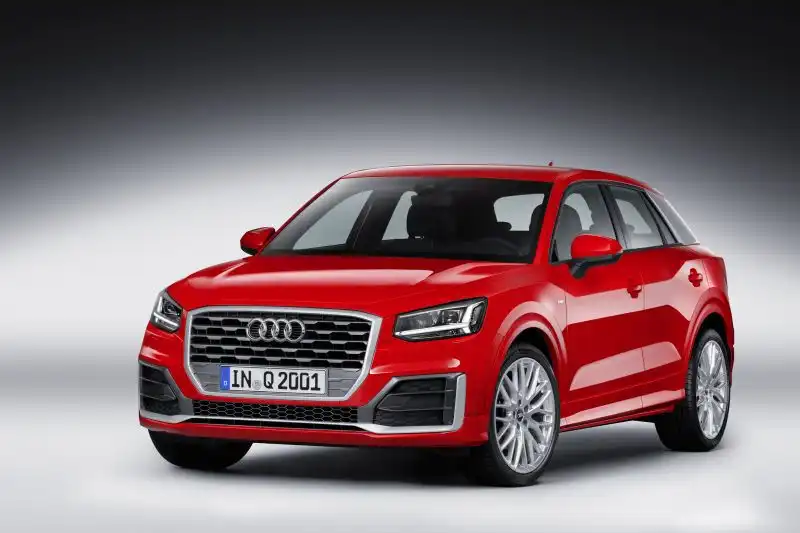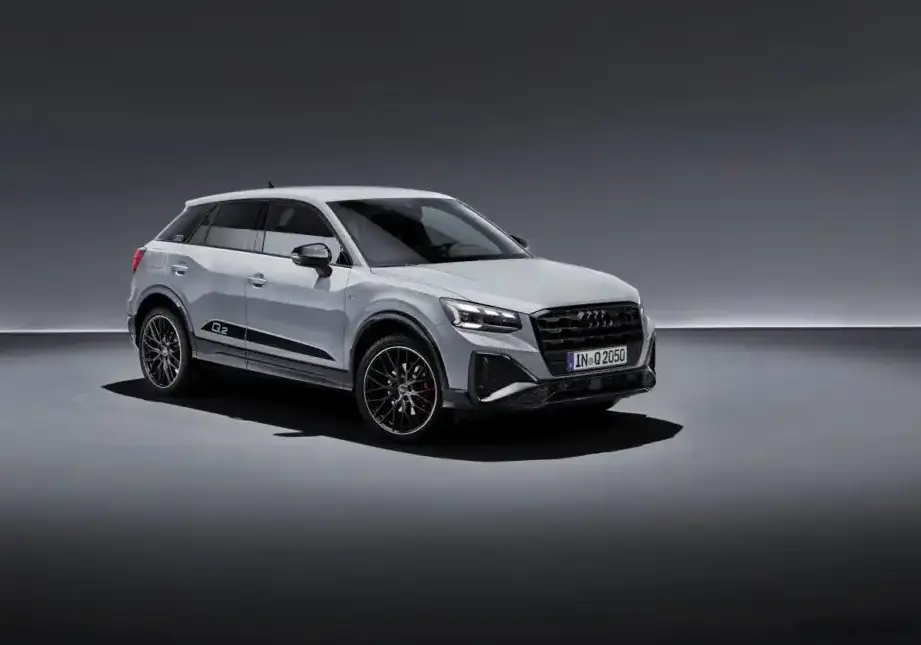
The Audi Q2 30 TDI (116 hp) represents a diesel-powered entry point into the second-generation Q2 range, which received a significant facelift in 2020. Production of this specific variant commenced in February 2021, and it quickly became a popular choice in European markets where compact, fuel-efficient SUVs are highly sought after. Positioned as a more economical alternative to the petrol-powered Q2 models and higher-output diesel variants, the 30 TDI aimed to deliver a balance of practicality, comfort, and running costs. It slots into Audi’s lineup as a premium subcompact crossover, competing with vehicles like the BMW X1, Mercedes-Benz GLA, and Volkswagen T-Roc.
Technical Specifications
| Brand | Audi |
| Model | Q2 |
| Generation | Q2 (facelift 2020) |
| Type (Engine) | 30 TDI (116 Hp) |
| Start of production | February, 2021 |
| Powertrain Architecture | Internal Combustion engine |
| Body type | SUV |
| Seats | 5 |
| Doors | 5 |
| Fuel consumption (economy) – urban (NEDC) | 5.6-5.8 l/100 km (42 – 40.6 US mpg, 50.4 – 48.7 UK mpg, 17.9 – 17.2 km/l) |
| Fuel consumption (economy) – extra urban (NEDC) | 3.5-3.8 l/100 km (67.2 – 61.9 US mpg, 80.7 – 74.3 UK mpg, 28.6 – 26.3 km/l) |
| Fuel consumption (economy) – combined (NEDC) | 4.3-4.5 l/100 km (54.7 – 52.3 US mpg, 65.7 – 62.8 UK mpg, 23.3 – 22.2 km/l) |
| CO2 emissions (NEDC) | 113-119 g/km |
| Fuel Type | Diesel |
| Acceleration 0 – 100 km/h | 9.9 sec |
| Acceleration 0 – 62 mph | 9.9 sec |
| Acceleration 0 – 60 mph | 9.4 sec |
| Maximum speed | 202 km/h (125.52 mph) |
| Emission standard | Euro 6d-ISC-FCM |
| Weight-to-power ratio | 11.8 kg/Hp, 85 Hp/tonne |
| Weight-to-torque ratio | 4.6 kg/Nm, 219.8 Nm/tonne |
| Power | 116 Hp @ 2750-4250 rpm |
| Torque | 300 Nm @ 1600-2500 rpm (221.27 lb.-ft. @ 1600-2500 rpm) |
| Engine layout | Front, Transverse |
| Engine Model/Code | DTR |
| Engine displacement | 1968 cm3 (120.09 cu. in.) |
| Number of cylinders | 4 |
| Engine configuration | Inline |
| Number of valves per cylinder | 4 |
| Fuel injection system | Diesel Commonrail |
| Engine aspiration | Turbocharger, Intercooler |
| Engine oil capacity | 5.5 l (5.81 US qt | 4.84 UK qt) |
| Kerb Weight | 1365 kg (3009.31 lbs.) |
| Max. weight | 1940 kg (4276.97 lbs.) |
| Max load | 575 kg (1267.66 lbs.) |
| Trunk (boot) space – minimum | 405 l (14.3 cu. ft.) |
| Trunk (boot) space – maximum | 1050 l (37.08 cu. ft.) |
| Fuel tank capacity | 50 l (13.21 US gal | 11 UK gal) |
| Max. roof load | 60 kg (132.28 lbs.) |
| Permitted trailer load with brakes (8%) | 1700 kg (3747.86 lbs.) |
| Permitted trailer load with brakes (12%) | 1500 kg (3306.93 lbs.) |
| Permitted trailer load without brakes | 720 kg (1587.33 lbs.) |
| Permitted towbar download | 75 kg (165.35 lbs.) |
| Length | 4208 mm (165.67 in.) |
| Width | 1794 mm (70.63 in.) |
| Width including mirrors | 2009 mm (79.09 in.) |
| Height | 1508 mm (59.37 in.) |
| Wheelbase | 2601 mm (102.4 in.) |
| Front track | 1546 mm (60.87 in.) |
| Rear (Back) track | 1542 mm (60.71 in.) |
| Front overhang | 830 mm (32.68 in.) |
| Rear overhang | 777 mm (30.59 in.) |
| Drag coefficient (Cd) | 0.30 |
| Drivetrain Architecture | The Internal combustion engine (ICE) drives the front wheels of the vehicle. |
| Drive wheel | Front wheel drive |
| Number of gears and type of gearbox | 6 gears, manual transmission |
| Front suspension | Independent type McPherson |
| Rear suspension | Semi-independent, coil spring |
| Front brakes | Ventilated discs |
| Rear brakes | Disc |
| Assisting systems | ABS (Anti-lock braking system) |
| Steering type | Steering rack and pinion |
| Power steering | Electric Steering |
| Tires size | 205/60 R16; 215/55 R17; 215/50 R18; 235/40 R19 |
| Wheel rims size | 16; 17; 18; 19 |
INTRODUCTION
The Audi Q2 30 TDI (116 hp) is a front-wheel-drive subcompact luxury crossover SUV that forms part of the facelifted first-generation Q2 range (internal code: GA1). Introduced in 2021, this variant utilizes a 2.0-liter turbocharged diesel engine paired with a six-speed manual transmission. It was designed to appeal to buyers seeking a premium, compact SUV with strong fuel economy and reasonable performance. The facelift brought styling updates, enhanced technology, and refined interior materials to the Q2 lineup, further solidifying its position in the competitive subcompact SUV segment.
Powertrain & Engine Architecture
At the heart of the Q2 30 TDI lies the Volkswagen Group’s 1.968-liter (120.09 cubic inches) four-cylinder diesel engine, designated the DTR engine code. This engine is a member of the EA288 family and features common-rail direct injection, a turbocharger with an intercooler, and four valves per cylinder. The engine produces 116 horsepower at 2750-4250 rpm and 300 Nm (221.27 lb-ft) of torque between 1600-2500 rpm. The fuel injection system utilizes piezo injectors for precise fuel delivery and optimized combustion. The six-speed manual transmission provides a relatively direct driving experience, with gear ratios tuned for fuel efficiency and everyday usability. While an S tronic dual-clutch transmission was available on other Q2 models, the 30 TDI was exclusively offered with the manual gearbox in many markets.
Driving Characteristics
The Q2 30 TDI, with its 116 hp and manual transmission, offers a respectable, if not exhilarating, driving experience. Acceleration from 0 to 100 km/h (0-62 mph) takes approximately 9.9 seconds. The engine delivers a usable amount of torque at low revs, making it suitable for urban driving and overtaking maneuvers. However, compared to the more powerful petrol and diesel variants, the 30 TDI feels less responsive, particularly at higher speeds. The manual transmission allows for greater driver engagement, but the gear ratios are geared towards economy rather than outright performance. The front-wheel-drive configuration provides adequate traction in most conditions, but can exhibit torque steer under hard acceleration.
Equipment & Trim Levels
The Q2 30 TDI typically came equipped with a generous level of standard features, reflecting Audi’s premium positioning. These included Audi’s MMI infotainment system with a 7-inch touchscreen display, Bluetooth connectivity, air conditioning, and a leather-wrapped multifunction steering wheel. Safety features such as ABS, electronic stability control, and multiple airbags were also standard. Higher trim levels offered options such as Audi Virtual Cockpit (a fully digital instrument cluster), navigation system, automatic climate control, heated seats, and a panoramic sunroof. Interior upholstery typically consisted of cloth or a combination of cloth and leatherette, with various color options available.
Chassis & Braking
The Q2 30 TDI utilizes a McPherson strut front suspension and a semi-independent torsion beam rear suspension. This setup provides a good balance between ride comfort and handling. The steering is electrically assisted, offering a light and precise feel. The braking system consists of ventilated front discs and solid rear discs, providing adequate stopping power for the vehicle’s weight and performance. ABS (Anti-lock Braking System) is standard, enhancing safety during emergency braking situations.
Market Reception & Comparison
The Audi Q2 30 TDI was generally well-received by automotive critics, who praised its fuel efficiency, comfortable ride, and stylish design. However, some reviewers noted that the engine could feel underpowered, particularly when fully loaded or driving on uphill roads. Compared to the Q2 1.5 TFSI petrol variant, the 30 TDI offered superior fuel economy but less outright performance. Against the higher-output Q2 2.0 TDI, the 30 TDI represented a more affordable entry point into the Q2 range, albeit with a noticeable compromise in performance. Its main competitors, such as the BMW X1 and Mercedes-Benz GLA, offered similar levels of luxury and refinement, but often at a higher price point.
Legacy
The Audi Q2 30 TDI has proven to be a reliable and durable vehicle, with the EA288 diesel engine generally regarded as robust and long-lasting. While diesel engines have faced increasing scrutiny in recent years, the Q2 30 TDI remains a popular choice in the used car market, particularly for buyers seeking a fuel-efficient and practical compact SUV. Regular maintenance, including oil changes and filter replacements, is crucial for ensuring the longevity of the engine and transmission. The Q2’s stylish design and premium interior have also contributed to its enduring appeal.