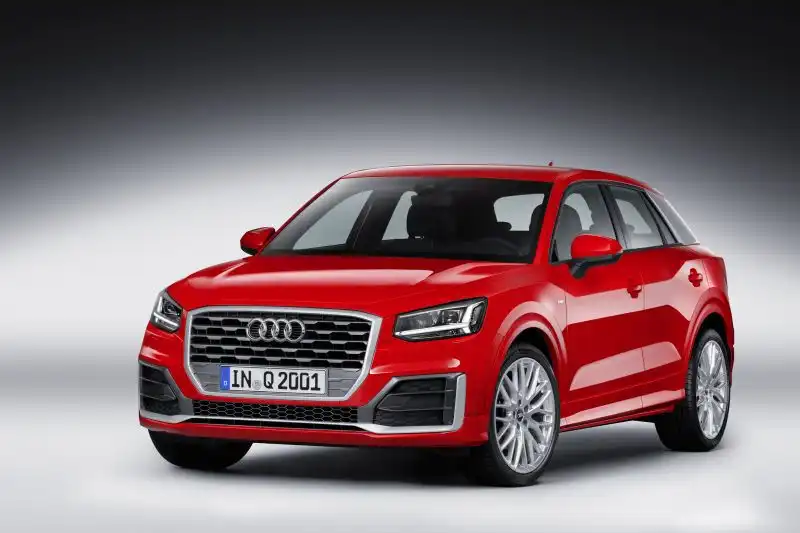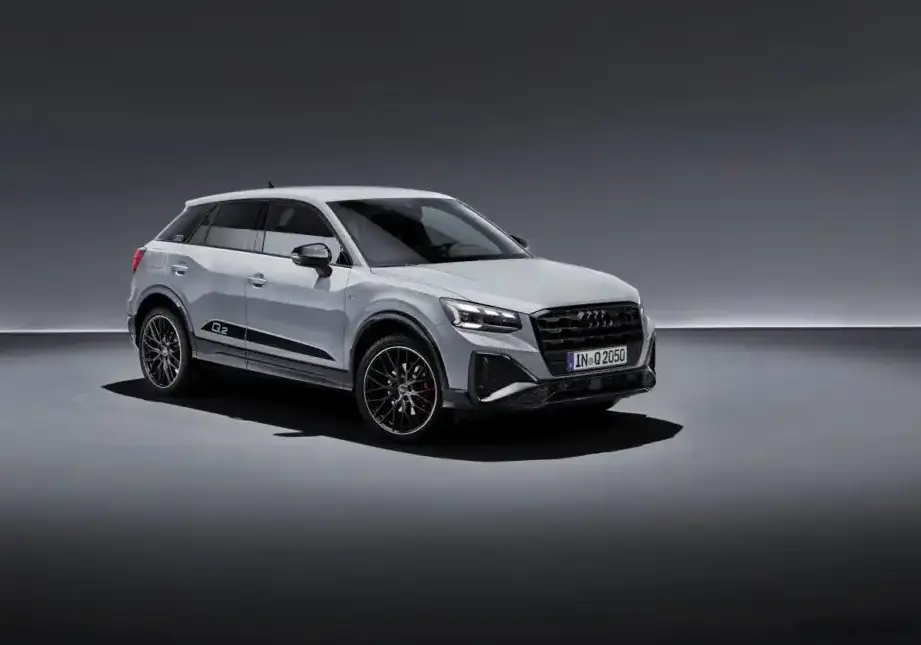
The Audi Q2 30 TDI (116 hp) S tronic, introduced with the 2020 facelift, represents a key entry point into the Audi Q2 range, particularly in European markets. Production commenced in February 2021, and this variant is positioned as a fuel-efficient and practical compact SUV aimed at buyers prioritizing economy and ease of driving over outright performance. It falls within the broader Q2 (GA) model series, which itself is built on the Volkswagen Group’s MQB platform – specifically the A05 variant – shared with models like the Audi A3, Volkswagen Golf, and SEAT Leon. The Q2 aimed to attract a younger demographic with its distinctive, coupe-like SUV styling and a focus on urban usability.
Technical Specifications
| Brand | Audi |
| Model | Q2 |
| Generation | Q2 (facelift 2020) |
| Type (Engine) | 30 TDI (116 Hp) S tronic |
| Start of production | February, 2021 |
| Powertrain Architecture | Internal Combustion engine |
| Body type | SUV |
| Seats | 5 |
| Doors | 5 |
| Fuel consumption (economy) – urban (NEDC) | 4.8-5 l/100 km (49 – 47 US mpg, 58.9 – 56.5 UK mpg, 20.8 – 20 km/l) |
| Fuel consumption (economy) – extra urban (NEDC) | 3.6-3.7 l/100 km (65.3 – 63.6 US mpg, 78.5 – 76.3 UK mpg, 27.8 – 27 km/l) |
| Fuel consumption (economy) – combined (NEDC) | 4.1-4.2 l/100 km (57.4 – 56 US mpg, 68.9 – 67.3 UK mpg, 24.4 – 23.8 km/l) |
| CO2 emissions (NEDC) | 107-111 g/km |
| Fuel Type | Diesel |
| Acceleration 0 – 100 km/h | 10.3 sec |
| Acceleration 0 – 62 mph | 10.3 sec |
| Acceleration 0 – 60 mph | 9.8 sec |
| Maximum speed | 201 km/h (124.9 mph) |
| Emission standard | Euro 6d-ISC-FCM |
| Weight-to-power ratio | 11.9 kg/Hp, 84.1 Hp/tonne |
| Weight-to-torque ratio | 5.5 kg/Nm, 181.2 Nm/tonne |
| Power | 116 Hp @ 3250-4250 rpm |
| Power per litre | 58.9 Hp/l |
| Torque | 250 Nm @ 1500-3250 rpm (184.39 lb.-ft. @ 1500-3250 rpm) |
| Engine layout | Front, Transverse |
| Engine Model/Code | DTR |
| Engine displacement | 1968 cm3 (120.09 cu. in.) |
| Number of cylinders | 4 |
| Engine configuration | Inline |
| Number of valves per cylinder | 4 |
| Fuel injection system | Diesel Commonrail |
| Engine aspiration | Turbocharger, Intercooler |
| Engine oil capacity | 5.5 l (5.81 US qt | 4.84 UK qt) |
| Kerb Weight | 1380 kg (3042.38 lbs) |
| Max. weight | 1945 kg (4287.99 lbs) |
| Max load | 565 kg (1245.61 lbs) |
| Trunk (boot) space – minimum | 405 l (14.3 cu. ft) |
| Trunk (boot) space – maximum | 1050 l (37.08 cu. ft) |
| Fuel tank capacity | 50 l (13.21 US gal | 11 UK gal) |
| Max. roof load | 60 kg (132.28 lbs) |
| Permitted trailer load with brakes (8%) | 1700 kg (3747.86 lbs) |
| Permitted trailer load with brakes (12%) | 1500 kg (3306.93 lbs) |
| Permitted trailer load without brakes | 720 kg (1587.33 lbs) |
| Permitted towbar download | 75 kg (165.35 lbs) |
| Length | 4208 mm (165.67 in) |
| Width | 1794 mm (70.63 in) |
| Width including mirrors | 2009 mm (79.09 in) |
| Height | 1508 mm (59.37 in) |
| Wheelbase | 2601 mm (102.4 in) |
| Front track | 1546 mm (60.87 in) |
| Rear (Back) track | 1542 mm (60.71 in) |
| Front overhang | 830 mm (32.68 in) |
| Rear overhang | 777 mm (30.59 in) |
| Drag coefficient (Cd) | 0.30 |
| Drivetrain Architecture | The Internal combustion engine (ICE) drives the front wheels of the vehicle. |
| Drive wheel | Front wheel drive |
| Number of gears and type of gearbox | 7 gears, automatic transmission S tronic |
| Front suspension | Independent type McPherson |
| Rear suspension | Semi-independent, coil spring |
| Front brakes | Ventilated discs |
| Rear brakes | Disc |
| Assisting systems | ABS (Anti-lock braking system) |
| Steering type | Steering rack and pinion |
| Power steering | Electric Steering |
| Tires size | 205/60 R16; 215/55 R17; 215/50 R18; 235/40 R19 |
| Wheel rims size | 16; 17; 18; 19 |
Powertrain & Engine Architecture
The Q2 30 TDI utilizes the Volkswagen Group’s 1.968-liter (120.09 cubic inches) four-cylinder diesel engine, designated the DTR engine code. This engine is part of the EA288 family, known for its robust construction and efficiency. It employs a turbocharger with an intercooler to boost power and torque. The fuel system is a common rail direct injection system, delivering fuel at high pressure for optimized combustion. The engine features four valves per cylinder and a timing belt. The S tronic transmission is a seven-speed dual-clutch transmission (DCT) offering quick and smooth gear changes. This transmission is known for its efficiency and responsiveness, contributing to the Q2’s overall fuel economy.
Driving Characteristics
The 116 hp output and the S tronic transmission provide a balanced driving experience. Acceleration from 0-60 mph takes approximately 9.8 seconds, making it adequate for everyday driving but not particularly sporty. The S tronic transmission is programmed for fuel efficiency, resulting in relatively high gearing in lower gears. This prioritizes economy over rapid acceleration. Compared to the more powerful Q2 variants, such as those equipped with the 2.0-liter TDI engines, the 30 TDI feels less eager to accelerate. However, the readily available 250 Nm (184 lb-ft) of torque from 1500-3250 rpm provides sufficient pulling power for overtaking and navigating hills. The front-wheel-drive configuration offers predictable handling, but it can exhibit some torque steer under hard acceleration.
Equipment & Trim Levels
The Q2 30 TDI typically came with a respectable level of standard equipment. This included features like Audi’s MMI radio plus infotainment system with a 7-inch display, Bluetooth connectivity, air conditioning, and a leather-wrapped multifunction steering wheel. Safety features such as ABS, electronic stability control, and multiple airbags were standard. Higher trim levels, such as Sport and S line, added features like larger alloy wheels, sport seats, LED headlights, and parking sensors. Optional extras included a panoramic sunroof, upgraded infotainment systems with navigation, and advanced driver-assistance systems like adaptive cruise control and lane departure warning.
Chassis & Braking
The Q2 30 TDI utilizes a McPherson strut front suspension and a semi-independent coil spring rear suspension. This setup provides a comfortable ride quality suitable for everyday use. The front brakes are ventilated discs, while the rear brakes are solid discs. The braking system is assisted by ABS and electronic stability control. The suspension is tuned for comfort rather than outright sportiness, resulting in a slight degree of body roll during cornering. Stabilizer bars are fitted to both the front and rear axles to reduce body roll and improve handling.
Market Reception & Comparison
The Audi Q2 30 TDI was generally well-received by automotive critics for its fuel efficiency, comfortable ride, and practical interior. However, some reviewers noted that the engine lacked the punch of more powerful alternatives. Compared to other trims in the Q2 lineup, the 30 TDI offered the most affordable entry point, making it attractive to budget-conscious buyers. Its fuel economy figures of 4.1-4.2 l/100 km (56-57.4 US mpg) were competitive within its segment. Against rivals like the BMW X1 and Mercedes-Benz GLA, the Q2 30 TDI offered a compelling combination of style, practicality, and efficiency.
Legacy
The 1.968-liter TDI engine and the S tronic transmission have proven to be relatively reliable powertrains. While diesel engines, in general, have faced increased scrutiny regarding emissions, the DTR engine, when properly maintained, is known for its durability. The S tronic transmission requires regular servicing, including fluid changes, to ensure optimal performance and longevity. On the used car market, the Q2 30 TDI represents a good value proposition for buyers seeking a stylish and economical compact SUV. Its fuel efficiency and relatively low running costs make it an attractive option for urban commuters and those looking for a practical family vehicle.