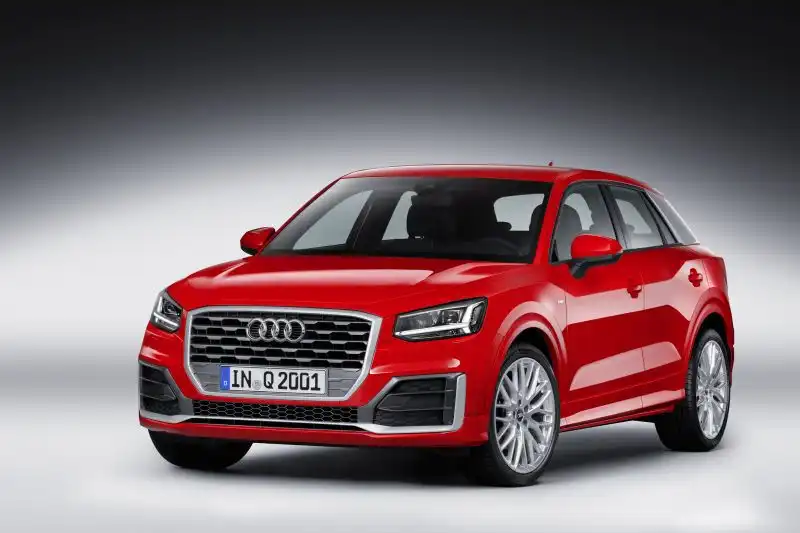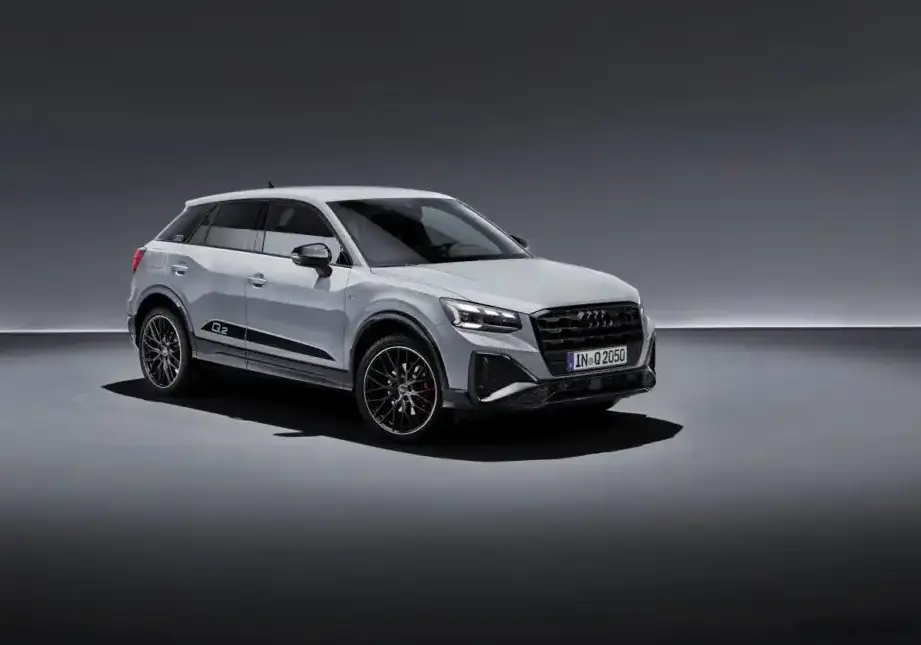
The Audi Q2 35 TDI (150 hp) S tronic, introduced with the 2020 facelift (and entering production in March 2021), represents a key offering within the second-generation Q2 lineup. Positioned as a mid-range variant, it balances fuel efficiency with respectable performance, appealing to buyers seeking a compact premium SUV. This model is primarily targeted towards the European market, where diesel engines remain popular due to their fuel economy and suitability for long-distance driving. The Q2 itself is Audi’s entry-level SUV, built on the Volkswagen Group’s MQB platform (specifically the A05 variant), and aims to attract a younger demographic with its distinctive styling and technology.
Technical Specifications
| Brand | Audi |
| Model | Q2 |
| Generation | Q2 (facelift 2020) |
| Type (Engine) | 35 TDI (150 Hp) S tronic |
| Start of production | March, 2021 |
| Powertrain Architecture | Internal Combustion engine |
| Body type | SUV |
| Seats | 5 |
| Doors | 5 |
| Fuel consumption (economy) – urban (NEDC) | 4.9-5.1 l/100 km (48 – 46.1 US mpg, 57.6 – 55.4 UK mpg, 20.4 – 19.6 km/l) |
| Fuel consumption (economy) – extra urban (NEDC) | 3.7-3.9 l/100 km (63.6 – 60.3 US mpg, 76.3 – 72.4 UK mpg, 27 – 25.6 km/l) |
| Fuel consumption (economy) – combined (NEDC) | 4.2-4.3 l/100 km (56 – 54.7 US mpg, 67.3 – 65.7 UK mpg, 23.8 – 23.3 km/l) |
| CO2 emissions (NEDC) | 109-114 g/km |
| Fuel Type | Diesel |
| Acceleration 0 – 100 km/h | 8.4 sec |
| Acceleration 0 – 62 mph | 8.4 sec |
| Acceleration 0 – 60 mph | 8 sec (Calculated) |
| Maximum speed | 216 km/h (134.22 mph) |
| Emission standard | Euro 6d-ISC-FCM |
| Weight-to-power ratio | 9.4 kg/Hp, 106.8 Hp/tonne |
| Weight-to-torque ratio | 3.9 kg/Nm, 256.2 Nm/tonne |
| Power | 150 Hp @ 3000-4200 rpm |
| Power per litre | 76.2 Hp/l |
| Torque | 360 Nm @ 1600-2750 rpm (265.52 lb.-ft. @ 1600-2750 rpm) |
| Engine layout | Front, Transverse |
| Engine Model/Code | DTT |
| Engine displacement | 1968 cm3 (120.09 cu. in.) |
| Number of cylinders | 4 |
| Engine configuration | Inline |
| Number of valves per cylinder | 4 |
| Fuel injection system | Diesel Commonrail |
| Engine aspiration | Turbocharger, Intercooler |
| Engine oil capacity | 5.5 l (5.81 US qt | 4.84 UK qt) |
| Kerb Weight | 1405 kg (3097.49 lbs.) |
| Max. weight | 1970 kg (4343.11 lbs.) |
| Max load | 565 kg (1245.61 lbs.) |
| Trunk (boot) space – minimum | 405 l (14.3 cu. ft.) |
| Trunk (boot) space – maximum | 1050 l (37.08 cu. ft.) |
| Fuel tank capacity | 50 l (13.21 US gal | 11 UK gal) |
| Max. roof load | 60 kg (132.28 lbs.) |
| Permitted trailer load with brakes (8%) | 1800 kg (3968.32 lbs.) |
| Permitted trailer load with brakes (12%) | 1600 kg (3527.4 lbs.) |
| Permitted trailer load without brakes | 740 kg (1631.42 lbs.) |
| Permitted towbar download | 75 kg (165.35 lbs.) |
| Length | 4208 mm (165.67 in.) |
| Width | 1794 mm (70.63 in.) |
| Width including mirrors | 2009 mm (79.09 in.) |
| Height | 1508 mm (59.37 in.) |
| Wheelbase | 2601 mm (102.4 in.) |
| Front track | 1546 mm (60.87 in.) |
| Rear (Back) track | 1542 mm (60.71 in.) |
| Front overhang | 830 mm (32.68 in.) |
| Rear overhang | 777 mm (30.59 in.) |
| Drag coefficient (Cd) | 0.31 |
| Drivetrain Architecture | Front wheel drive |
| Number of gears and type of gearbox | 7 gears, automatic transmission S tronic |
| Front suspension | Independent type McPherson |
| Rear suspension | Semi-independent, coil spring |
| Front brakes | Ventilated discs |
| Rear brakes | Disc |
INTRODUCTION
The Audi Q2 35 TDI S tronic, launched after the 2020 facelift, builds upon the success of the original Q2, offering a refined and efficient driving experience. It slots into the Q2 range between the lower-powered 30 TDI and the more potent 40 TDI models. The facelift brought subtle styling updates, improved technology, and enhanced efficiency across the range. This particular variant is geared towards drivers prioritizing fuel economy and comfortable cruising, making it a popular choice for urban commutes and longer journeys alike. The Q2, as a whole, was designed to appeal to a younger, more style-conscious audience than Audi’s larger SUV offerings.
Powertrain & Engine Architecture
At the heart of the Q2 35 TDI S tronic lies the Volkswagen Group’s 1.968-liter four-cylinder diesel engine, designated the DTT. This engine is a member of the EA288 family, known for its robust construction and efficiency. It utilizes a common rail direct injection system, delivering fuel at extremely high pressure for optimized combustion. The engine also features a turbocharger with an intercooler, boosting power and torque. The 35 TDI variant produces 150 horsepower at 3000-4200 rpm and 360 Nm (265.52 lb-ft) of torque between 1600-2750 rpm. Paired with this engine is Audi’s seven-speed S tronic dual-clutch transmission. This transmission offers quick and smooth gear changes, contributing to both performance and fuel efficiency. The S tronic transmission is known for its responsiveness and ability to adapt to driving conditions.
Driving Characteristics
The Q2 35 TDI S tronic delivers a composed and refined driving experience. While not overtly sporty, the 150 hp engine provides sufficient power for everyday driving and overtaking maneuvers. The S tronic transmission ensures that power is delivered smoothly and efficiently. Acceleration from 0 to 100 km/h (0-62 mph) takes 8.4 seconds. Compared to the more powerful 40 TDI, the 35 TDI feels less urgent, but the difference is not dramatic in most real-world scenarios. The automatic transmission is well-programmed, offering both a ‘D’ (Drive) mode for comfortable cruising and a ‘S’ (Sport) mode for more responsive acceleration. The gear ratios are optimized for fuel efficiency, with higher gears engaged at lower speeds. The front-wheel-drive configuration provides good traction in most conditions, although it may struggle in very slippery environments.
Equipment & Trim Levels
The Q2 35 TDI S tronic typically comes well-equipped as standard. Features include Audi’s MMI infotainment system with a 7-inch touchscreen display, Bluetooth connectivity, and a multi-function steering wheel. Safety features such as ABS, electronic stability control, and multiple airbags are also standard. Interior upholstery is typically cloth, but leather options were available. Optional extras included larger alloy wheels, a panoramic sunroof, a premium sound system, and advanced driver-assistance systems such as adaptive cruise control and lane departure warning. Trim levels varied by market, but generally offered progressive upgrades in terms of interior materials, exterior styling, and technology features.
Chassis & Braking
The Q2 35 TDI S tronic utilizes a McPherson strut front suspension and a semi-independent coil spring rear suspension. This setup provides a good balance between ride comfort and handling. The suspension is tuned to prioritize comfort, but still offers decent body control in corners. The front brakes are ventilated discs, while the rear brakes are solid discs. ABS (Anti-lock Braking System) is standard, providing enhanced braking performance and stability. The steering is electric power-assisted, offering a light and precise feel. Stabilizer bars are fitted to both the front and rear axles to reduce body roll.
Market Reception & Comparison
The Audi Q2 35 TDI S tronic was generally well-received by automotive critics. It was praised for its fuel efficiency, comfortable ride, and refined interior. However, some critics noted that the engine could feel a little underpowered, especially when fully loaded. Compared to the 40 TDI, the 35 TDI offered a more affordable entry point into the Q2 range, but at the expense of some performance. In terms of fuel economy, the 35 TDI consistently outperformed the higher-powered variants, achieving combined fuel consumption figures of around 4.2-4.3 l/100 km (56-54.7 US mpg). Reliability has been generally good, with the EA288 diesel engine proving to be a durable and dependable unit.
Legacy
The Audi Q2 35 TDI S tronic has established itself as a popular choice in the used car market. Its combination of fuel efficiency, practicality, and premium features makes it an attractive option for buyers seeking a compact SUV. The EA288 diesel engine, while subject to scrutiny in the past regarding emissions, has proven to be relatively reliable when properly maintained. Regular servicing, including oil changes and filter replacements, is crucial for ensuring the longevity of this powertrain. The S tronic transmission also requires regular maintenance, including fluid changes, to prevent issues. Overall, the Q2 35 TDI S tronic represents a well-rounded and dependable vehicle that continues to hold its value in the used car market.