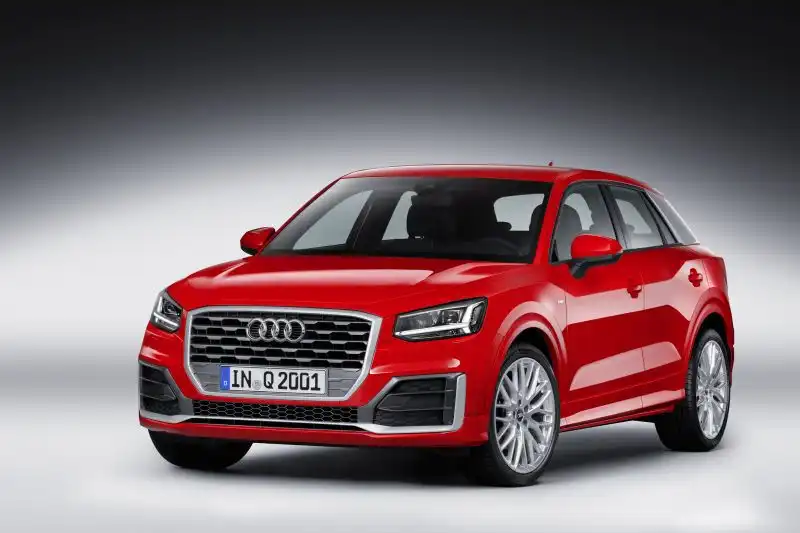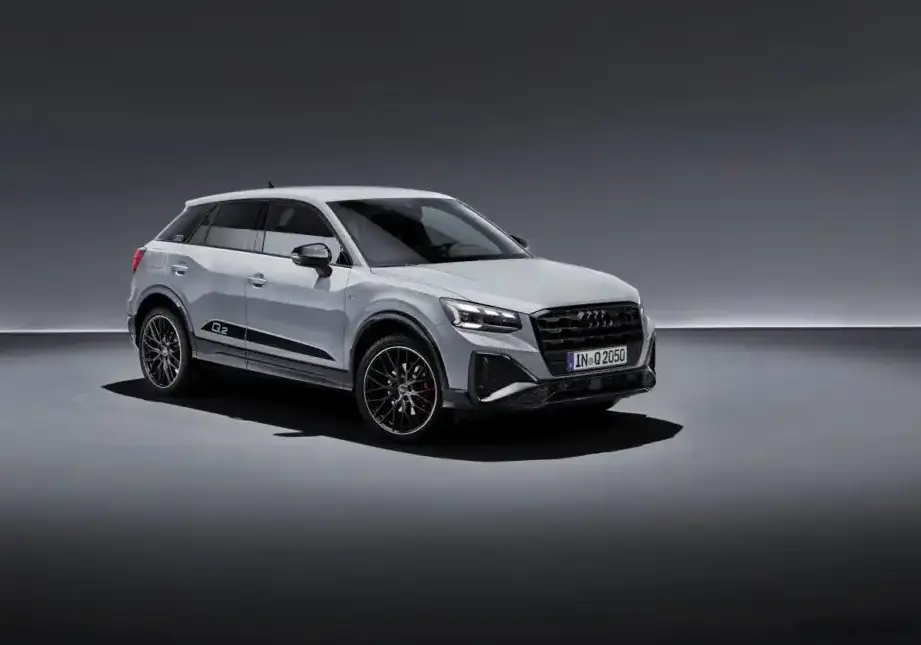
The Audi Q2 40 TFSI quattro S tronic, introduced with the 2020 facelift (and entering production in March 2021), represents a mid-range offering within the second-generation Q2 lineup. Positioned above the entry-level 30 TFSI models and below the more performance-oriented SQ2, this variant combines a 2.0-liter turbocharged four-cylinder engine with Audi’s seven-speed S tronic dual-clutch transmission and the quattro all-wheel-drive system. The Q2, as a whole, aimed to attract a younger demographic with its distinctive styling and compact dimensions, bridging the gap between the larger Q3 and the A3 hatchback in Audi’s model range. This particular configuration was primarily marketed in Europe and other international markets, offering a balance of performance, efficiency, and all-weather capability.
Technical Specifications
| Brand | Audi |
| Model | Q2 |
| Generation | Q2 (facelift 2020) |
| Type (Engine) | 40 TFSI (190 Hp) quattro S tronic |
| Start of production | March, 2021 |
| Powertrain Architecture | Internal Combustion engine |
| Body type | SUV |
| Seats | 5 |
| Doors | 5 |
| Combined fuel consumption (WLTP) | 7.1-7.9 l/100 km (33.1 – 29.8 US mpg, 39.8 – 35.8 UK mpg, 14.1 – 12.7 km/l) |
| CO2 emissions (WLTP) | 162-179 g/km |
| Fuel consumption (economy) – urban (NEDC) | 7.5-7.9 l/100 km (31.4 – 29.8 US mpg, 37.7 – 35.8 UK mpg, 13.3 – 12.7 km/l) |
| Fuel consumption (economy) – extra urban (NEDC) | 5.6-5.9 l/100 km (42 – 39.9 US mpg, 50.4 – 47.9 UK mpg, 17.9 – 16.9 km/l) |
| Fuel consumption (economy) – combined (NEDC) | 6.3-6.6 l/100 km (37.3 – 35.6 US mpg, 44.8 – 42.8 UK mpg, 15.9 – 15.2 km/l) |
| CO2 emissions (NEDC) | 144-151 g/km |
| Fuel Type | Petrol (Gasoline) |
| Acceleration 0 – 100 km/h | 6.7 sec |
| Acceleration 0 – 62 mph | 6.7 sec |
| Acceleration 0 – 60 mph | 6.4 sec |
| Maximum speed | 231 km/h (143.54 mph) |
| Emission standard | Euro 6d-ISC-FCM |
| Weight-to-power ratio | 7.7 kg/Hp, 130.1 Hp/tonne |
| Weight-to-torque ratio | 4.6 kg/Nm, 219.2 Nm/tonne |
| Power | 190 Hp @ 4200-6000 rpm |
| Power per litre | 95.8 Hp/l |
| Torque | 320 Nm @ 1500-4100 rpm (236.02 lb.-ft. @ 1500-4100 rpm) |
| Engine layout | Front, Transverse |
| Engine Model/Code | EA888 evo4 / DNNA |
| Engine displacement | 1984 cm3 (121.07 cu. in.) |
| Number of cylinders | 4 |
| Engine configuration | Inline |
| Cylinder Bore | 82.5 mm (3.25 in.) |
| Piston Stroke | 92.8 mm (3.65 in.) |
| Compression ratio | 12.2:1 |
| Number of valves per cylinder | 4 |
| Fuel injection system | Direct injection |
| Engine aspiration | Turbocharger, Intercooler |
| Valvetrain | DOHC |
| Engine oil capacity | 5.7 l (6.02 US qt | 5.02 UK qt) |
| Coolant | 9.9 l (10.46 US qt | 8.71 UK qt) |
| Kerb Weight | 1460 kg (3218.75 lbs.) |
| Max. weight | 2045 kg (4508.45 lbs.) |
| Max load | 585 kg (1289.7 lbs.) |
| Trunk (boot) space – minimum | 355 l (12.54 cu. ft.) |
| Trunk (boot) space – maximum | 1000 l (35.31 cu. ft.) |
| Fuel tank capacity | 55 l (14.53 US gal | 12.1 UK gal) |
| Max. roof load | 60 kg (132.28 lbs.) |
| Permitted trailer load with brakes (8%) | 1700 kg (3747.86 lbs.) |
| Permitted trailer load with brakes (12%) | 1500 kg (3306.93 lbs.) |
| Permitted trailer load without brakes | 750 kg (1653.47 lbs.) |
| Permitted towbar download | 75 kg (165.35 lbs.) |
| Length | 4208 mm (165.67 in.) |
| Width | 1794 mm (70.63 in.) |
| Width including mirrors | 2009 mm (79.09 in.) |
| Height | 1508 mm (59.37 in.) |
| Wheelbase | 2601 mm (102.4 in.) |
| Front track | 1546 mm (60.87 in.) |
| Rear (Back) track | 1542 mm (60.71 in.) |
| Front overhang | 830 mm (32.68 in.) |
| Rear overhang | 777 mm (30.59 in.) |
| Drag coefficient (Cd) | 0.32 |
| Drivetrain Architecture | The Internal combustion engine (ICE) drives the front wheels permanently, and the rear wheels are driven through an electrically or mechanically operated clutch if necessary. |
| Drive wheel | All wheel drive (4×4) |
| Number of gears and type of gearbox | 7 gears, automatic transmission S tronic |
| Front suspension | Independent, type McPherson with coil spring and anti-roll bar |
| Rear suspension | Independent multi-link spring suspension with stabilizer |
| Front brakes | Ventilated discs |
| Rear brakes | Disc |
| Assisting systems | ABS (Anti-lock braking system) |
| Steering type | Steering rack and pinion |
| Power steering | Electric Steering |
| Tires size | 205/60 R16; 215/60 R16; 215/55 R17; 215/50 R18; 235/40 R19 |
| Wheel rims size | 6J x 16; 6.5J x 16; 7J x 17; 7J x 18; 8J x 19 |
INTRODUCTION
The Audi Q2 40 TFSI quattro S tronic, launched as part of the 2020 facelift, builds upon the foundation of the first-generation Q2 (introduced in 2016, internally designated as GA1). This updated model featured revised styling, enhanced technology, and refined engine options. The “40 TFSI” designation signifies the engine’s power output relative to Audi’s naming convention. This variant aimed to provide a compelling blend of performance and practicality for buyers seeking a premium compact SUV with all-wheel drive. It slotted into the Q2 range as a step up from the more economical 30 TFSI models, offering a noticeable increase in power and a more engaging driving experience.
Powertrain & Engine Architecture
At the heart of the Q2 40 TFSI lies the EA888 evo4 2.0-liter turbocharged four-cylinder gasoline engine, bearing the internal code DNNA. This engine is a member of the Volkswagen Group’s widely used EA888 family, known for its robust construction and tuning potential. The evo4 iteration incorporates advancements such as a plasma-sprayed cylinder coating for reduced friction and improved thermal management. Direct fuel injection is employed, delivering fuel directly into the combustion chambers for precise control and increased efficiency. The engine utilizes a dual overhead camshaft (DOHC) valvetrain with four valves per cylinder, optimizing airflow for enhanced performance. The turbocharger, coupled with an intercooler, provides a significant boost in power and torque. The engine is paired with Audi’s seven-speed S tronic dual-clutch transmission, offering rapid and seamless gear changes. This transmission features a wet clutch design for improved durability and heat dissipation. The quattro all-wheel-drive system utilizes a multi-plate clutch to distribute torque between the front and rear axles as needed, providing enhanced traction and stability in various driving conditions.
Driving Characteristics
The Q2 40 TFSI quattro S tronic delivers a noticeably more spirited driving experience compared to the lower-powered 30 TFSI variants. The 190 horsepower and 320 Nm (236 lb-ft) of torque provide ample power for both urban driving and highway cruising. The S tronic transmission contributes to quick acceleration, with a 0-60 mph time of around 6.4 seconds. The quattro all-wheel-drive system enhances grip and stability, particularly on slippery surfaces. The gear ratios are tuned to provide a balance between acceleration and fuel efficiency. While not a dedicated performance model, the 40 TFSI offers a responsive and engaging driving experience. The steering is precise and well-weighted, providing good feedback to the driver. Compared to a manual transmission equipped Q2, the S tronic offers convenience and faster shift times, but some enthusiasts may miss the direct engagement of a manual gearbox.
Equipment & Trim Levels
The Q2 40 TFSI quattro S tronic typically came well-equipped as standard. Features included Audi’s MMI infotainment system with a 8.3-inch touchscreen display, Audi Virtual Cockpit (digital instrument cluster), automatic climate control, and a suite of driver-assistance systems such as lane departure warning and automatic emergency braking. Interior upholstery was typically cloth or a combination of cloth and leatherette, with optional full leather available. Exterior features included LED headlights, alloy wheels (typically 17 or 18 inches), and silver roof rails. Optional extras included a panoramic sunroof, upgraded sound system, and various styling packages. Trim levels varied slightly depending on the market, but generally offered progressive enhancements in terms of interior materials, exterior styling, and technology features.
Chassis & Braking
The Q2 40 TFSI utilizes a McPherson strut front suspension and a multi-link rear suspension, providing a comfortable yet controlled ride. The suspension is tuned to balance handling and ride comfort, making it suitable for a variety of driving conditions. Stabilizer bars are fitted to both the front and rear axles to reduce body roll during cornering. Braking duties are handled by ventilated discs at the front and solid discs at the rear. The anti-lock braking system (ABS) and electronic stability control (ESC) are standard features, enhancing safety and control. The steering system is an electric power steering system, providing precise and responsive steering feel.
Market Reception & Comparison
The Audi Q2 40 TFSI quattro S tronic was generally well-received by automotive critics. It was praised for its stylish design, refined interior, and engaging driving experience. The combination of the 2.0-liter engine, S tronic transmission, and quattro all-wheel drive was considered a sweet spot in the Q2 lineup, offering a good balance of performance and practicality. Compared to the 30 TFSI models, the 40 TFSI offered a significant improvement in acceleration and overall driving enjoyment. However, it was also more expensive and slightly less fuel-efficient. Compared to rivals such as the BMW X2 and the Mini Countryman, the Q2 40 TFSI offered a more sophisticated interior and a more comfortable ride.
Legacy
The EA888 engine family, including the DNNA variant found in the Q2 40 TFSI, has proven to be a reliable and durable powertrain. With regular maintenance, these engines can provide many years of trouble-free service. The S tronic transmission is also generally reliable, although it may require more frequent servicing than a traditional automatic transmission. On the used car market, the Q2 40 TFSI quattro S tronic holds its value relatively well, due to its desirable combination of features and performance. It remains a popular choice for buyers seeking a premium compact SUV with all-wheel drive and a refined driving experience.