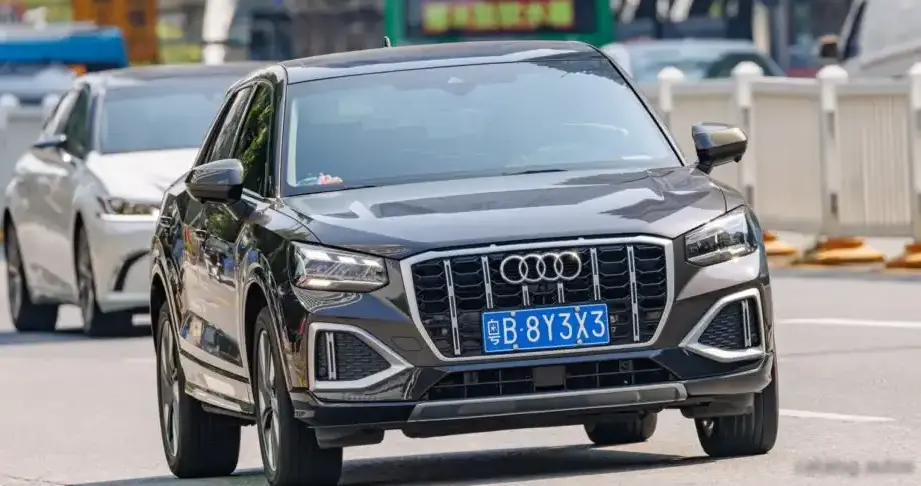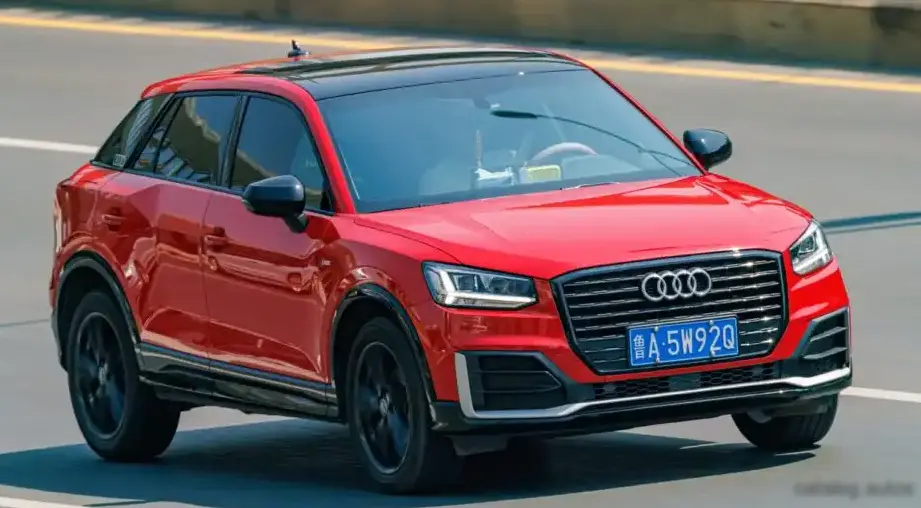
The Audi Q2 L 35 TFSI was a China-market specific, long-wheelbase version of the Audi Q2 subcompact luxury crossover. Produced from October 2018 to 2021, it was designed to appeal to Chinese consumers who prioritize rear passenger space. This variant featured a 1.4-liter turbocharged four-cylinder engine producing 150 horsepower, paired with a 7-speed S tronic dual-clutch transmission. It occupied a mid-range position within the Q2 L lineup, balancing performance and fuel economy, positioned between the entry-level 30 TFSI and the more powerful 40 TFSI models.
Technical Specifications
| Brand | Audi |
| Model | Q2 |
| Generation | Q2L |
| Type (Engine) | 35 TFSI (150 Hp) S tronic |
| Start of production | October, 2018 |
| End of production | 2021 |
| Powertrain Architecture | Internal Combustion engine |
| Body type | SUV |
| Seats | 5 |
| Doors | 5 |
| Fuel consumption (combined NEDC) | 6.1 l/100 km (38.6 US mpg, 46.3 UK mpg, 16.4 km/l) |
| Fuel Type | Petrol (Gasoline) |
| Acceleration 0 – 100 km/h | 8.7 sec |
| Acceleration 0 – 62 mph | 8.7 sec |
| Acceleration 0 – 60 mph | 8.3 sec |
| Maximum speed | 200 km/h (124.27 mph) |
| Weight-to-power ratio | 9.4 kg/Hp, 106.8 Hp/tonne |
| Weight-to-torque ratio | 5.6 kg/Nm, 177.9 Nm/tonne |
| Power | 150 Hp @ 5000-6000 rpm |
| Power per litre | 107.5 Hp/l |
| Torque | 250 Nm @ 1750-3000 rpm (184.39 lb.-ft. @ 1750-3000 rpm) |
| Engine layout | Front, Transverse |
| Engine Model/Code | CSS, DJS |
| Engine displacement | 1395 cm3 (85.13 cu. in.) |
| Number of cylinders | 4 |
| Engine configuration | Inline |
| Cylinder Bore | 74.5 mm (2.93 in.) |
| Piston Stroke | 80 mm (3.15 in.) |
| Number of valves per cylinder | 4 |
| Fuel injection system | Direct injection |
| Engine aspiration | Turbocharger, Intercooler |
| Valvetrain | DOHC |
| Engine oil capacity | 4.3 l (4.54 US qt | 3.78 UK qt) |
| Kerb Weight | 1405 kg (3097.49 lbs.) |
| Trunk (boot) space – minimum | 347 l (12.25 cu. ft.) |
| Fuel tank capacity | 50 l (13.21 US gal | 11 UK gal) |
| Length | 4236 mm (166.77 in.) |
| Width | 1785 mm (70.28 in.) |
| Height | 1548 mm (60.94 in.) |
| Wheelbase | 2628 mm (103.46 in.) |
| Front track | 1543 mm (60.75 in.) |
| Rear (Back) track | 1546 mm (60.87 in.) |
| Front overhang | 833 mm (32.8 in.) |
| Rear overhang | 775 mm (30.51 in.) |
| Minimum turning circle | 11.3 m (37.07 ft.) |
| Drivetrain Architecture | The Internal combustion engine (ICE) drives the front wheels of the vehicle. |
| Drive wheel | Front wheel drive |
| Number of gears and type of gearbox | 7 gears, automatic transmission S tronic |
| Front suspension | Independent, type McPherson with coil spring and anti-roll bar |
| Rear suspension | Independent multi-link spring suspension with stabilizer |
| Front brakes | Ventilated discs |
| Rear brakes | Disc |
| Assisting systems | ABS (Anti-lock braking system) |
| Steering type | Steering rack and pinion |
| Power steering | Electric Steering |
| Tires size | 215/55 R17; 215/50 R18 |
| Wheel rims size | 7J x 17; 7J x 18 |
Powertrain & Engine Architecture
The Q2 L 35 TFSI employed the Volkswagen Group’s EA888 1.4-liter turbocharged four-cylinder engine, identified by the engine codes CSS or DJS depending on the production year. This engine incorporated direct fuel injection and a turbocharger with an intercooler, optimizing for both power output and fuel efficiency. The engine’s dual overhead camshaft (DOHC) valvetrain, with four valves per cylinder, contributed to its responsive nature. The 7-speed S tronic dual-clutch transmission facilitated rapid and seamless gear changes, enhancing the overall driving experience. This transmission is recognized for its efficiency and effective power delivery. A Start & Stop system was integrated to further improve fuel economy, particularly in city driving scenarios.
Driving Characteristics
The combination of 150 horsepower and 250 Nm (184 lb-ft) of torque, delivered by the 1.4 TFSI engine and the 7-speed S tronic, provided sufficient performance for typical daily driving. Acceleration from 0 to 100 km/h (0-62 mph) took around 8.7 seconds. While not designed for sporty performance, the Q2 L 35 TFSI offered a comfortable and refined driving experience. Compared to the more potent 40 TFSI variants, the 35 TFSI exhibited a less aggressive acceleration profile, but the S tronic transmission compensated by enabling quick downshifts when needed. The gear ratios were calibrated to prioritize a balance between fuel economy and responsiveness, emphasizing smooth operation over outright speed. The front-wheel-drive configuration provided predictable handling, though it lacked the all-weather capabilities of the quattro all-wheel-drive system available on other Q2 models.
Equipment & Trim Levels
The Q2 L 35 TFSI generally came equipped with standard features such as automatic climate control, a touchscreen infotainment system with smartphone integration (Apple CarPlay and Android Auto), and a comprehensive suite of safety technologies including ABS, electronic stability control, and multiple airbags. Interior upholstery typically consisted of cloth or a combination of cloth and leatherette. Optional extras included a panoramic sunroof, leather seats, a premium sound system, and advanced driver-assistance systems such as adaptive cruise control and lane-keeping assist. Trim levels varied slightly based on the year and region, but generally offered progressively enhanced levels of luxury and technology.
Chassis & Braking
The Q2 L featured an independent suspension system, comprising a McPherson strut front suspension and a multi-link rear suspension. This setup delivered a comfortable ride quality while maintaining respectable handling characteristics. A stabilizer bar was incorporated into the front suspension to minimize body roll during cornering maneuvers. Braking was managed by ventilated discs at the front and solid discs at the rear. The ABS system ensured effective braking performance in diverse conditions. The chassis was engineered to provide a stable and secure driving experience, prioritizing comfort and refinement.
Market Reception & Comparison
The Audi Q2 L 35 TFSI was generally well-received in the Chinese market, where its spacious interior and comfortable ride were highly valued attributes. Critics lauded its fuel efficiency and the smooth operation of the S tronic transmission. Compared to the 40 TFSI models, the 35 TFSI offered a more accessible entry point into the Q2 L range, broadening its appeal to a wider customer base. However, some reviewers pointed out that the 150 horsepower engine could feel somewhat underpowered when the vehicle was fully loaded or navigating steep inclines. Fuel economy was a significant strength, with the Q2 L 35 TFSI achieving approximately 6.1 l/100 km (38.6 US mpg) in combined driving conditions.
Legacy
The Audi Q2 L, including the 35 TFSI variant, was discontinued in 2021 as Audi redirected its focus to other models within the Chinese market. The EA888 1.4 TFSI engine and S tronic transmission have demonstrated a reputation for relative reliability, although consistent maintenance is crucial for ensuring long-term durability. In the used car market, the Q2 L 35 TFSI presents a compelling value proposition for buyers seeking a stylish and comfortable subcompact luxury crossover. Its fuel efficiency and comparatively low running costs make it an attractive option for urban commuters. While not a performance-focused vehicle, it delivers a refined and enjoyable driving experience.