
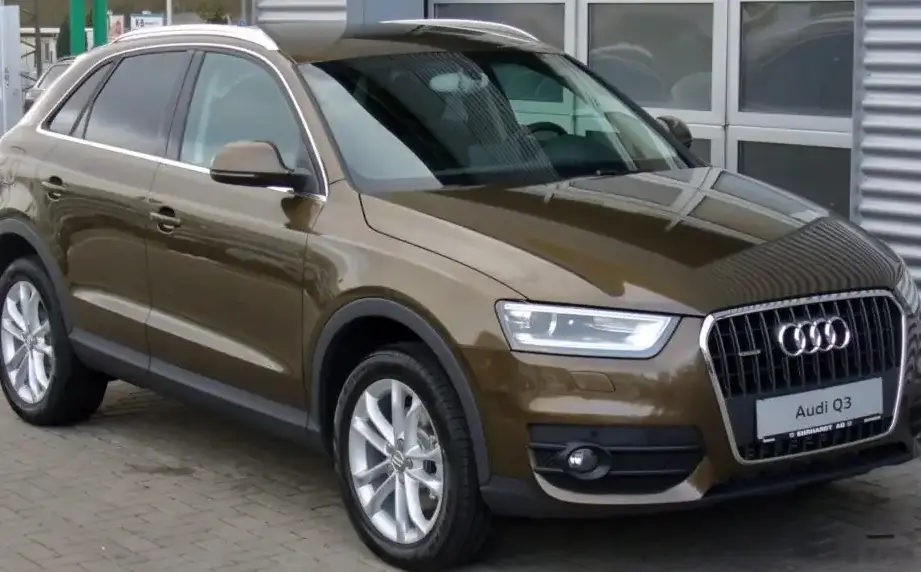
The Audi Q3 I (8U) 1.4 TFSI, produced from 2013 to 2014, represented Audi’s entry point into the burgeoning compact luxury crossover segment. Positioned as the base engine option within the first generation Q3 (8U) lineup, it aimed to deliver a balance of fuel efficiency and acceptable performance for urban and highway driving. This variant was primarily sold in the European market, where smaller, more efficient engines were highly favored, though limited numbers were available in other regions. It sat below the more powerful 2.0 TFSI variants and the diesel-powered TDI models in terms of both price and performance.
Technical Specifications
| Brand | Audi |
| Model | Q3 |
| Generation | Q3 I (8U) |
| Type (Engine) | 1.4 TFSI (150 Hp) |
| Start of production | October, 2013 |
| End of production | 2014 |
| Powertrain Architecture | Internal Combustion engine |
| Body type | SUV |
| Seats | 5 |
| Doors | 5 |
| Fuel consumption (urban) | 7.4 l/100 km (31.8 US mpg) |
| Fuel consumption (extra urban) | 5 l/100 km (47 US mpg) |
| Fuel consumption (combined) | 5.9 l/100 km (39.9 US mpg) |
| CO2 emissions | 137 g/km |
| Fuel Type | Petrol (Gasoline) |
| Acceleration 0 – 100 km/h | 9.2 sec |
| Acceleration 0 – 62 mph | 9.2 sec |
| Acceleration 0 – 60 mph | 8.7 sec |
| Maximum speed | 203 km/h (126.14 mph) |
| Emission standard | Euro 6 |
| Weight-to-power ratio | 9.7 kg/Hp |
| Weight-to-torque ratio | 5.8 kg/Nm |
| Power | 150 Hp @ 5000-6000 rpm |
| Torque | 250 Nm @ 1500-3500 rpm (184.39 lb.-ft.) |
| Engine layout | Front, Transverse |
| Engine Model/Code | CHPB |
| Engine displacement | 1395 cm3 (85.13 cu. in.) |
| Number of cylinders | 4 |
| Engine configuration | Inline |
| Fuel injection system | Direct injection |
| Engine aspiration | Turbocharger, Intercooler |
| Engine oil capacity | 4 l (4.23 US qt | 3.52 UK qt) |
| Kerb Weight | 1460 kg (3218.75 lbs.) |
| Max. weight | 1985 kg (4376.18 lbs.) |
| Max load | 525 kg (1157.43 lbs.) |
| Trunk (boot) space – minimum | 460 l (16.24 cu. ft.) |
| Fuel tank capacity | 64 l (16.91 US gal | 14.08 UK gal) |
| Length | 4385 mm (172.64 in.) |
| Width | 1831 mm (72.09 in.) |
| Height | 1608 mm (63.31 in.) |
| Wheelbase | 2603 mm (102.48 in.) |
| Front track | 1571 mm (61.85 in.) |
| Rear (Back) track | 1575 mm (62.01 in.) |
| Minimum turning circle | 11.8 m (38.71 ft.) |
| Drivetrain Architecture | Front wheel drive |
| Number of gears | 6 gears, manual transmission |
| Front suspension | Independent type McPherson |
| Rear suspension | Independent multi-link suspension |
| Front brakes | Ventilated discs |
| Rear brakes | Disc |
| Assisting systems | ABS (Anti-lock braking system) |
| Steering type | Steering rack and pinion |
| Power steering | Electric Steering |
| Tires size | 215/65 R16 |
| Wheel rims size | 6.5J x 16 |
Powertrain & Engine Architecture
The heart of the Q3 1.4 TFSI is the CHPB engine, a 1.4-liter turbocharged inline-four cylinder gasoline engine. This engine is part of Volkswagen Group’s EA111 family, known for its compact size and efficiency. The CHPB utilizes direct fuel injection (FSI) and a single turbocharger with an intercooler to boost power output. The engine’s cylinder head features four valves per cylinder (DOHC) and a variable valve timing system on both the intake and exhaust sides, optimizing performance and fuel economy across the rev range. The 1.4 TFSI produces 150 horsepower at 5,000-6,000 rpm and 184 lb-ft of torque between 1,500 and 3,500 rpm. This torque curve provides good low-end responsiveness, making it suitable for everyday driving. The engine is paired with a six-speed manual transmission, delivering power to the front wheels.
Driving Characteristics
The Q3 1.4 TFSI offers a comfortable and refined driving experience, prioritizing fuel efficiency over outright performance. Acceleration from 0-60 mph takes approximately 8.7 seconds, which is adequate for most driving situations but noticeably slower than the 2.0 TFSI models. The turbocharger provides a noticeable boost in power during acceleration, but turbo lag is present, particularly at lower engine speeds. The six-speed manual transmission is well-matched to the engine, offering smooth gear changes and a reasonable spread of ratios. While not a sporty vehicle, the Q3 1.4 TFSI handles predictably and offers a stable ride, thanks to its well-tuned suspension. The steering is light and precise, making it easy to maneuver in urban environments.
Equipment & Trim Levels
The 1.4 TFSI Q3 typically came with a respectable level of standard equipment. This included features like air conditioning, a multi-function steering wheel, a basic audio system with CD player, and alloy wheels. Safety features such as ABS, electronic stability control, and multiple airbags were also standard. Optional extras included a panoramic sunroof, leather upholstery, a more advanced infotainment system with navigation, parking sensors, and bi-xenon headlights. Trim levels varied by market, but generally, the 1.4 TFSI represented the entry-level offering, with higher trims adding more luxury and convenience features.
Chassis & Braking
The Q3 1.4 TFSI utilizes a front-wheel-drive layout with an independent McPherson strut suspension at the front and an independent multi-link suspension at the rear. This suspension setup provides a good balance of ride comfort and handling. The braking system consists of ventilated discs at the front and solid discs at the rear, providing adequate stopping power for the vehicle’s weight and performance. ABS (Anti-lock Braking System) is standard, enhancing safety during emergency braking situations. The steering system is a rack-and-pinion type with electric power assistance, offering light and precise steering feel.
Market Reception & Comparison
The Audi Q3 1.4 TFSI was generally well-received by automotive critics, who praised its fuel efficiency, comfortable ride, and stylish interior. However, some critics noted that the engine lacked the punch of the more powerful 2.0 TFSI variants. Compared to the 2.0 TFSI, the 1.4 TFSI offered significantly better fuel economy, but at the cost of performance. The 1.4 TFSI also offered a more affordable entry point into the Q3 range, making it attractive to buyers who prioritized value and efficiency. Against diesel-powered competitors, the 1.4 TFSI offered a smoother and quieter driving experience, but typically with lower fuel economy.
Legacy
The 1.4 TFSI engine, while not known for being a powerhouse, proved to be relatively reliable in the Q3. Common issues, when they arose, often related to the turbocharger or the direct injection system, but these were not widespread. Today, used examples of the Q3 1.4 TFSI are readily available and represent a relatively affordable entry into the Audi brand. The engine’s fuel efficiency and reasonable maintenance costs make it a practical choice for buyers seeking a compact luxury crossover. While it may not offer the same level of performance as its more powerful siblings, the Q3 1.4 TFSI remains a capable and comfortable vehicle for everyday use.
