
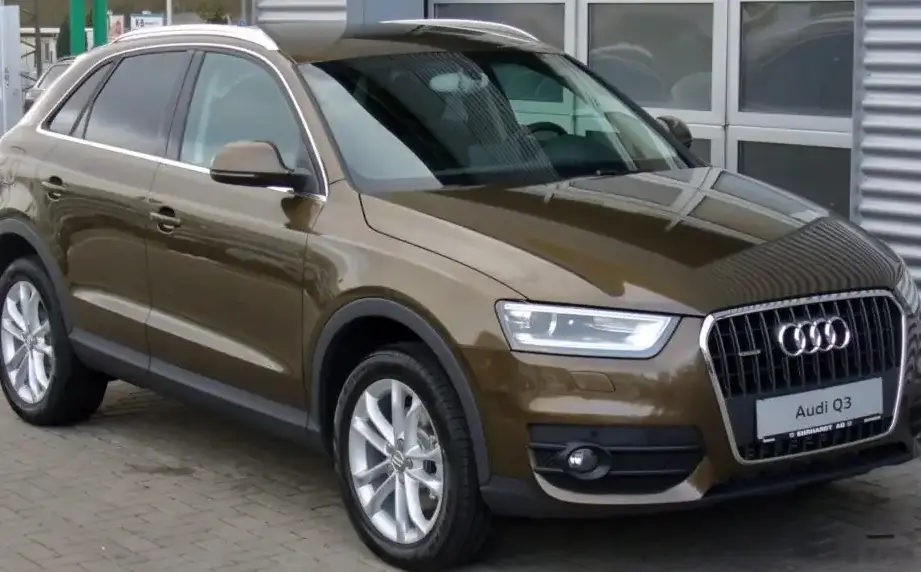
The Audi Q3 I (8U) 2.0 TFSI quattro S tronic represents a significant entry into the burgeoning compact luxury crossover segment for Audi. Produced from 2012 to 2014, this variant occupied a mid-to-upper position within the first generation Q3 lineup, offering a blend of performance, practicality, and Audi’s signature refinement. It was primarily marketed in Europe and other international markets, serving as a premium alternative to mainstream compact SUVs. The Q3 8U was built on the Volkswagen Group’s PQ35 platform, also underpinning models like the Volkswagen Tiguan and SEAT Ateca, but distinguished itself through its more upscale interior and available technology.
Technical Specifications
| Brand | Audi |
| Model | Q3 |
| Generation | Q3 I (8U) |
| Type (Engine) | 2.0 TFSI (211 Hp) quattro S tronic |
| Start of production | 2012 |
| End of production | 2014 |
| Powertrain Architecture | Internal Combustion engine |
| Body type | SUV |
| Seats | 5 |
| Doors | 5 |
| Fuel consumption (urban) | 10.2 l/100 km (23.1 US mpg, 27.7 UK mpg, 9.8 km/l) |
| Fuel consumption (extra urban) | 6.4 l/100 km (36.8 US mpg, 44.1 UK mpg, 15.6 km/l) |
| Fuel consumption (combined) | 7.7 l/100 km (30.5 US mpg, 36.7 UK mpg, 13 km/l) |
| CO2 emissions | 179 g/km |
| Fuel Type | Petrol (Gasoline) |
| Acceleration 0 – 100 km/h | 6.9 sec |
| Acceleration 0 – 62 mph | 6.9 sec |
| Acceleration 0 – 60 mph | 6.6 sec |
| Maximum speed | 230 km/h (142.92 mph) |
| Emission standard | Euro 5 |
| Weight-to-power ratio | 7.8 kg/Hp, 128.7 Hp/tonne |
| Weight-to-torque ratio | 5.5 kg/Nm, 182.9 Nm/tonne |
| Power | 211 Hp @ 5000-6200 rpm |
| Power per litre | 106.4 Hp/l |
| Torque | 300 Nm @ 1800-4900 rpm (221.27 lb.-ft. @ 1800-4900 rpm) |
| Engine layout | Front, Transverse |
| Engine Model/Code | CPSA |
| Engine displacement | 1984 cm3 (121.07 cu. in.) |
| Number of cylinders | 4 |
| Engine configuration | Inline |
| Fuel injection system | Direct injection |
| Engine aspiration | Turbocharger, Intercooler |
| Engine oil capacity | 4.6 l (4.86 US qt | 4.05 UK qt) |
| Coolant | 10 l (10.57 US qt | 8.8 UK qt) |
| Kerb Weight | 1640 kg (3615.58 lbs.) |
| Max. weight | 2165 kg (4773.01 lbs.) |
| Max load | 525 kg (1157.43 lbs.) |
| Trunk (boot) space – minimum | 460 l (16.24 cu. ft.) |
| Fuel tank capacity | 64 l (16.91 US gal | 14.08 UK gal) |
| Length | 4385 mm (172.64 in.) |
| Width | 1831 mm (72.09 in.) |
| Height | 1608 mm (63.31 in.) |
| Wheelbase | 2603 mm (102.48 in.) |
| Front track | 1571 mm (61.85 in.) |
| Rear (Back) track | 1575 mm (62.01 in.) |
| Minimum turning circle | 11.8 m (38.71 ft.) |
| Drive wheel | All wheel drive (4×4) |
| Number of gears and type of gearbox | 7 gears, automatic transmission S tronic |
| Front suspension | Independent type McPherson |
| Rear suspension | Independent multi-link suspension |
| Front brakes | Ventilated discs |
| Rear brakes | Disc |
| Assisting systems | ABS (Anti-lock braking system) |
| Steering type | Steering rack and pinion |
| Power steering | Electric Steering |
| Tires size | 235/55 R17 |
| Wheel rims size | 7J x 17 |
Powertrain & Engine Architecture
At the heart of the Q3 2.0 TFSI quattro S tronic lies the CPSA engine code, a 1.984-liter inline-four cylinder gasoline engine. This engine is part of Volkswagen Group’s EA888 family, known for its robust design and tuning potential. The CPSA features direct fuel injection (FSI) and a single turbocharger with an intercooler, allowing for a broad torque curve and responsive power delivery. The engine produces 211 horsepower at 5000-6200 rpm and 300 Nm (221 lb-ft) of torque between 1800 and 4900 rpm. The S tronic transmission is a seven-speed dual-clutch transmission (DCT) offering quick and smooth gear changes. This transmission contributes significantly to the vehicle’s performance and efficiency, providing both automatic and manual shifting modes. The quattro all-wheel-drive system utilizes a multi-plate clutch to distribute power between the front and rear axles, enhancing traction and stability in various driving conditions.
Driving Characteristics
The 2.0 TFSI quattro S tronic delivers a noticeably more engaging driving experience compared to lower-powered Q3 variants. The 211 hp engine provides ample power for confident acceleration and effortless highway cruising. The S tronic transmission’s quick shifts contribute to a sporty feel, while the quattro all-wheel-drive system inspires confidence in challenging weather conditions. While not a dedicated sports SUV, the Q3 2.0 TFSI offers a balanced ride, combining comfort with a degree of agility. The gear ratios are tuned for a blend of performance and fuel efficiency, with the lower gears providing brisk acceleration and the higher gears optimizing fuel economy at cruising speeds. Compared to the base 1.4 TFSI models, the 2.0 TFSI offers a substantial performance upgrade, while remaining more accessible and fuel-efficient than the range-topping 2.5 TFSI variant.
Equipment & Trim Levels
The Q3 2.0 TFSI quattro S tronic typically came well-equipped, reflecting its position as a mid-range to premium offering. Standard features often included automatic climate control, a multi-function steering wheel, power windows and mirrors, and a basic audio system. Higher trim levels added features such as leather upholstery, panoramic sunroof, navigation system, and parking sensors. Optional extras included upgraded audio systems, bi-xenon headlights, and various driver assistance systems. Interior upholstery was typically a combination of cloth and leatherette, with full leather options available. The dashboard layout was clean and modern, typical of Audi’s design language at the time, with a focus on ergonomics and user-friendliness.
Chassis & Braking
The Q3 8U featured a McPherson strut front suspension and a multi-link rear suspension, providing a comfortable yet controlled ride. The suspension was tuned to balance handling and comfort, making it suitable for both city driving and longer journeys. The quattro all-wheel-drive system added to the vehicle’s stability and handling prowess. Braking duties were handled by ventilated discs at the front and solid discs at the rear. Anti-lock braking system (ABS) was standard, along with electronic brake-force distribution (EBD). The braking system provided adequate stopping power for the vehicle’s weight and performance.
Market Reception & Comparison
The Audi Q3 2.0 TFSI quattro S tronic was generally well-received by automotive critics. It was praised for its refined interior, comfortable ride, and strong performance. The S tronic transmission and quattro all-wheel-drive system were also highlighted as key strengths. Fuel economy was considered reasonable for a vehicle in this class, although not class-leading. Compared to rivals like the BMW X1 and Mercedes-Benz GLA (which arrived later), the Q3 offered a compelling combination of luxury, practicality, and performance. The 2.0 TFSI variant offered a significant step up in performance compared to the base 1.4 TFSI models, making it a popular choice for buyers seeking a more engaging driving experience.
Legacy
The Audi Q3 I (8U) 2.0 TFSI quattro S tronic has proven to be a relatively reliable vehicle in the used car market. The EA888 engine is known for its durability, although regular maintenance is crucial. The S tronic transmission, while generally reliable, can require more frequent servicing than traditional automatic transmissions. Common issues reported by owners include oil leaks, turbocharger problems, and occasional issues with the electronic systems. Overall, the Q3 2.0 TFSI remains a desirable compact luxury crossover, offering a blend of style, performance, and practicality. Its continued presence in the used car market reflects its enduring appeal and reputation for quality.
