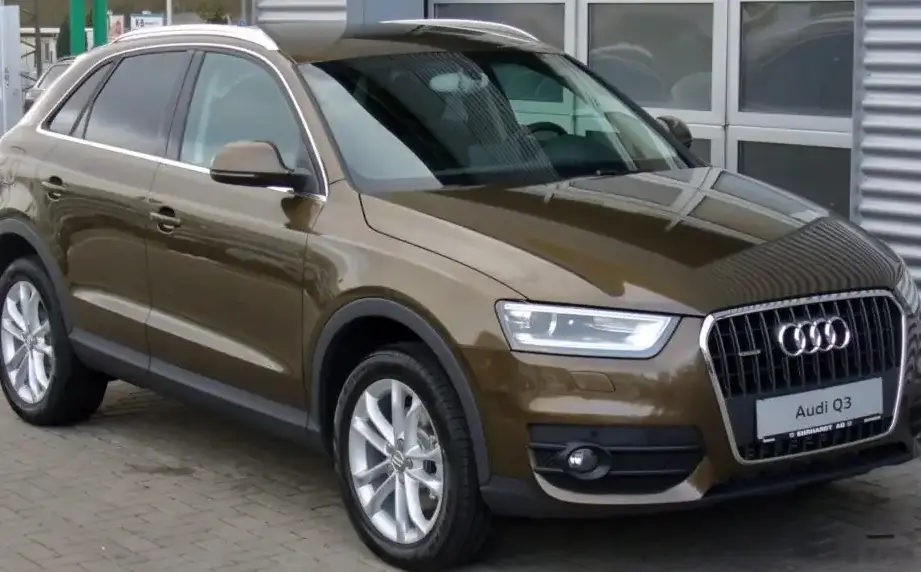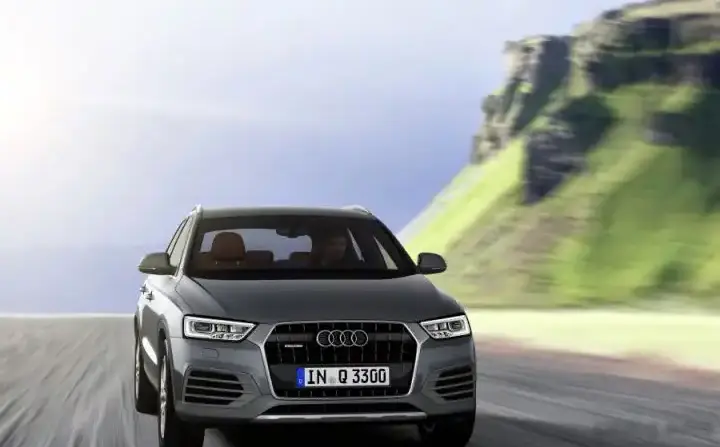
The Audi Q3 I (8U), particularly the facelifted version introduced in 2014, represented Audi’s entry into the burgeoning compact luxury crossover segment. Produced from 2014 to 2018, the 1.4 TFSI 150 hp variant with the S tronic dual-clutch transmission was a key model in many European markets, offering a balance of efficiency, technology, and Audi’s signature refinement. This version aimed to provide a more accessible price point within the Q3 range while still delivering a premium driving experience. It sat in the mid-range of the Q3 lineup, positioned below the more powerful 2.0 TFSI models and above the base diesel options.
Technical Specifications
| Brand | Audi |
| Model | Q3 |
| Generation | Q3 I (8U, facelift 2014) |
| Type (Engine) | 1.4 TFSI (150 Hp) S tronic |
| Start of production | 2014 |
| End of production | 2018 |
| Powertrain Architecture | Internal Combustion engine |
| Body type | SUV |
| Seats | 5 |
| Doors | 5 |
| Fuel consumption (urban) | 7.1 l/100 km (33.1 US mpg, 39.8 UK mpg, 14.1 km/l) |
| Fuel consumption (extra urban) | 5.1 l/100 km (46.1 US mpg, 55.4 UK mpg, 19.6 km/l) |
| Fuel consumption (combined) | 5.8 l/100 km (40.6 US mpg, 48.7 UK mpg, 17.2 km/l) |
| CO2 emissions | 135 g/km |
| Fuel Type | Petrol (Gasoline) |
| Acceleration 0 – 100 km/h | 8.9 sec |
| Acceleration 0 – 62 mph | 8.9 sec |
| Acceleration 0 – 60 mph | 8.5 sec |
| Maximum speed | 204 km/h (126.76 mph) |
| Emission standard | Euro 6 |
| Weight-to-power ratio | 9.4 kg/Hp, 106.8 Hp/tonne |
| Weight-to-torque ratio | 5.6 kg/Nm, 177.9 Nm/tonne |
| Power | 150 Hp @ 5000-6000 rpm |
| Power per litre | 107.5 Hp/l |
| Torque | 250 Nm @ 1500-3500 rpm (184.39 lb.-ft. @ 1500-3500 rpm) |
| Engine layout | Front, Transverse |
| Engine Model/Code | EA211 / CZDA, CZEA |
| Engine displacement | 1395 cm3 (85.13 cu. in.) |
| Number of cylinders | 4 |
| Engine configuration | Inline |
| Number of valves per cylinder | 4 |
| Fuel injection system | Direct injection |
| Engine aspiration | Turbocharger, Intercooler |
| Engine oil capacity | 4 l (4.23 US qt | 3.52 UK qt) |
| Coolant | 8 l (8.45 US qt | 7.04 UK qt) |
| Kerb Weight | 1405 kg (3097.49 lbs.) |
| Max. weight | 2005 kg (4420.27 lbs.) |
| Max load | 600 kg (1322.77 lbs.) |
| Trunk (boot) space – minimum | 460 l (16.24 cu. ft.) |
| Trunk (boot) space – maximum | 1365 l (48.2 cu. ft.) |
| Fuel tank capacity | 64 l (16.91 US gal | 14.08 UK gal) |
| Max. roof load | 75 kg (165.35 lbs.) |
| Permitted trailer load with brakes (8%) | 1800 kg (3968.32 lbs.) |
| Permitted trailer load with brakes (12%) | 1800 kg (3968.32 lbs.) |
| Permitted trailer load without brakes | 740 kg (1631.42 lbs.) |
| Permitted towbar download | 80 kg (176.37 lbs.) |
| Length | 4388 mm (172.76 in.) |
| Width | 1831 mm (72.09 in.) |
| Width including mirrors | 2019 mm (79.49 in.) |
| Height | 1608 mm (63.31 in.) |
| Wheelbase | 2603 mm (102.48 in.) |
| Front track | 1571 mm (61.85 in.) |
| Rear (Back) track | 1575 mm (62.01 in.) |
| Front overhang | 905 mm (35.63 in.) |
| Rear overhang | 880 mm (34.65 in.) |
| Minimum turning circle (turning diameter) | 11.8 m (38.71 ft.) |
| Drivetrain Architecture | The Internal combustion engine (ICE) drives the front wheels of the vehicle. |
| Drive wheel | Front wheel drive |
| Number of gears and type of gearbox | 6 gears, automatic transmission S tronic |
| Front suspension | Independent, type McPherson with coil spring and anti-roll bar |
| Rear suspension | Independent coil spring |
| Front brakes | Ventilated discs |
| Rear brakes | Disc |
| Assisting systems | ABS (Anti-lock braking system) |
| Steering type | Steering rack and pinion |
| Power steering | Electric Steering |
| Tires size | 215/65 R16 |
| Wheel rims size | 6.5J x 16 |
INTRODUCTION
The Audi Q3 I (8U) facelift, launched in 2014, brought a refreshed design and updated technology to Audi’s compact SUV offering. The 1.4 TFSI 150 hp variant with the S tronic transmission was a popular choice, particularly in Europe, where fuel efficiency and lower running costs were highly valued. This model aimed to bridge the gap between affordability and the premium experience Audi was known for. Built on the Volkswagen Group’s PQ25 platform (also known as the A3 platform – 1HX0/A3), the Q3 shared components with other VW Group vehicles, contributing to economies of scale and a relatively accessible price point for a luxury crossover.
Powertrain & Engine Architecture
At the heart of this Q3 variant lies the EA211 family 1.4-liter turbocharged four-cylinder engine, specifically coded CZDA or CZEA depending on the exact specification and market. This engine utilizes direct fuel injection (FSI) and a turbocharger with an intercooler to deliver a balance of power and efficiency. The engine produces 150 horsepower at 5000-6000 rpm and 250 Nm (184 lb-ft) of torque between 1500-3500 rpm. The S tronic transmission is a 6-speed dual-clutch transmission (DCT) known for its quick and smooth shifts. Unlike a traditional automatic, the S tronic uses two separate clutches for odd and even gears, allowing for pre-selection of the next gear and minimizing interruption in power delivery. This contributes to both improved acceleration and fuel economy. The engine’s valvetrain features four valves per cylinder, enhancing breathing and contributing to its power output.
Driving Characteristics
The 1.4 TFSI 150 hp S tronic Q3 offered a comfortable and refined driving experience, but it wasn’t designed for outright performance. Acceleration from 0-100 km/h (0-62 mph) took around 8.9 seconds. While adequate for everyday driving, it was noticeably slower than the 2.0 TFSI variants. The S tronic transmission helped to maximize the available power, providing quick gear changes and a responsive feel. The gear ratios were tuned for fuel efficiency, meaning the engine could feel slightly strained when accelerating hard or climbing hills. Compared to the manual transmission versions, the S tronic offered greater convenience, especially in urban traffic. However, some drivers preferred the more engaging feel of a manual gearbox. The relatively low power output meant that the Q3 wasn’t particularly sporty, but it offered a composed and stable ride.
Equipment & Trim Levels
The 1.4 TFSI S tronic Q3 typically came equipped with a respectable level of standard features. These included air conditioning, a multi-function steering wheel, an infotainment system with a color display, and alloy wheels. Higher trim levels offered options such as leather upholstery, a panoramic sunroof, navigation system, parking sensors, and advanced driver-assistance systems like lane departure warning. Interior upholstery was typically cloth in the base models, with leather options available as upgrades. The dashboard layout was typical of Audi at the time, with a clean and minimalist design. Optional extras allowed buyers to personalize their Q3 to their specific needs and preferences.
Chassis & Braking
The Q3’s chassis featured independent suspension all around, with a McPherson strut setup at the front and a multi-link setup at the rear. This provided a comfortable ride and good handling characteristics. The front brakes were ventilated discs, while the rear brakes were solid discs. Anti-lock Braking System (ABS) was standard, along with Electronic Stability Control (ESC). The suspension was tuned for comfort rather than outright sportiness, prioritizing ride quality over sharp handling. Stabilizer bars were fitted to both the front and rear axles to reduce body roll during cornering.
Market Reception & Comparison
The 1.4 TFSI S tronic Q3 was generally well-received by critics, who praised its fuel efficiency, comfortable ride, and refined interior. However, some reviewers noted that the engine lacked the punch of the larger 2.0 TFSI variants. Compared to the 2.0 TFSI models, the 1.4 TFSI offered better fuel economy but slower acceleration. The 2.0 TDI diesel variants provided similar torque but with even greater fuel efficiency, making them a popular choice for long-distance drivers. The 1.4 TFSI S tronic Q3 appealed to buyers who prioritized fuel economy and a comfortable driving experience over outright performance.
Legacy
The 1.4 TFSI engine, while generally reliable, has been known to exhibit some issues with carbon buildup on the intake valves over time, particularly if not regularly driven on longer journeys. The S tronic transmission is generally robust, but requires regular servicing, including fluid changes, to ensure longevity. Today, the 2014-2018 Q3 1.4 TFSI S tronic represents a relatively affordable entry point into the Audi crossover market. These models are readily available on the used car market and offer a good balance of features, efficiency, and reliability, provided they have been well-maintained. The EA211 engine remains a common sight in many VW Group vehicles, and parts availability is generally good.