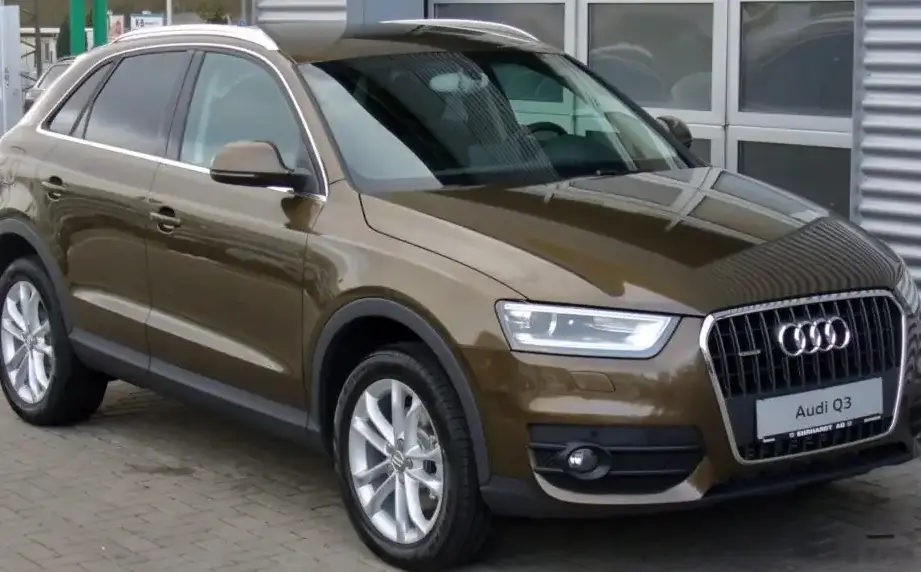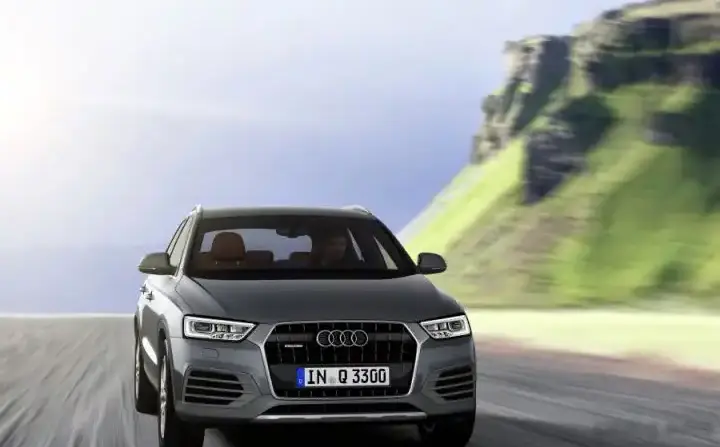
The Audi Q3 I (8U), particularly the facelifted version introduced in 2014, represented Audi’s entry into the burgeoning compact luxury crossover segment. Produced from 2014 to 2018, the 2.0 TDI variant with 150 horsepower was a significant offering, especially in European markets where diesel engines held considerable popularity. This model sat within the first generation Q3 (8U) range, positioned as a mid-range option offering a balance between performance, fuel efficiency, and price. It aimed to attract buyers seeking a premium SUV experience without the higher costs associated with the top-tier trims.
Technical Specifications
| Brand | Audi |
| Model | Q3 |
| Generation | Q3 I (8U, facelift 2014) |
| Type (Engine) | 2.0 TDI (150 Hp) |
| Start of production | 2014 |
| End of production | 2018 |
| Powertrain Architecture | Internal Combustion engine |
| Body type | SUV |
| Seats | 5 |
| Doors | 5 |
| Fuel consumption (urban) | 5.3 l/100 km (44.4 US mpg, 53.3 UK mpg, 18.9 km/l) |
| Fuel consumption (extra urban) | 4.1 l/100 km (57.4 US mpg, 68.9 UK mpg, 24.4 km/l) |
| Fuel consumption (combined) | 4.6 l/100 km (51.1 US mpg, 61.4 UK mpg, 21.7 km/l) |
| CO2 emissions | 119 g/km |
| Fuel Type | Diesel |
| Acceleration 0 – 100 km/h | 9.6 sec |
| Acceleration 0 – 62 mph | 9.6 sec |
| Acceleration 0 – 60 mph | 9.1 sec |
| Maximum speed | 204 km/h (126.76 mph) |
| Emission standard | Euro 6 |
| Weight-to-power ratio | 9.9 kg/Hp, 101 Hp/tonne |
| Weight-to-torque ratio | 4.4 kg/Nm, 229 Nm/tonne |
| Power | 150 Hp @ 3500-4000 rpm |
| Power per litre | 76.2 Hp/l |
| Torque | 340 Nm @ 1750-3000 rpm (250.77 lb.-ft. @ 1750-3000 rpm) |
| Engine layout | Front, Transverse |
| Engine Model/Code | EA288 / CUVC, DBBA, DFTA |
| Engine displacement | 1968 cm3 (120.09 cu. in.) |
| Number of cylinders | 4 |
| Engine configuration | Inline |
| Number of valves per cylinder | 4 |
| Fuel injection system | Diesel Commonrail |
| Engine aspiration | Turbocharger, Intercooler |
| Engine oil capacity | 4.6 l (4.86 US qt | 4.05 UK qt) |
| Kerb Weight | 1485 kg (3273.86 lbs.) |
| Max. weight | 2085 kg (4596.64 lbs.) |
| Max load | 600 kg (1322.77 lbs.) |
| Trunk (boot) space – minimum | 460 l (16.24 cu. ft.) |
| Trunk (boot) space – maximum | 1365 l (48.2 cu. ft.) |
| Fuel tank capacity | 64 l (16.91 US gal | 14.08 UK gal) |
| Max. roof load | 75 kg (165.35 lbs.) |
| Permitted trailer load with brakes (8%) | 1800 kg (3968.32 lbs.) |
| Permitted trailer load with brakes (12%) | 1800 kg (3968.32 lbs.) |
| Permitted trailer load without brakes | 750 kg (1653.47 lbs.) |
| Permitted towbar download | 80 kg (176.37 lbs.) |
| Length | 4388 mm (172.76 in.) |
| Width | 1831 mm (72.09 in.) |
| Width including mirrors | 2019 mm (79.49 in.) |
| Height | 1608 mm (63.31 in.) |
| Wheelbase | 2603 mm (102.48 in.) |
| Front track | 1571 mm (61.85 in.) |
| Rear (Back) track | 1575 mm (62.01 in.) |
| Front overhang | 905 mm (35.63 in.) |
| Rear overhang | 880 mm (34.65 in.) |
| Minimum turning circle (turning diameter) | 11.8 m (38.71 ft.) |
| Drivetrain Architecture | The Internal combustion engine (ICE) drives the front wheels of the vehicle. |
| Drive wheel | Front wheel drive |
| Number of gears and type of gearbox | 6 gears, manual transmission |
| Front suspension | Independent, type McPherson with coil spring and anti-roll bar |
| Rear suspension | Independent coil spring |
| Front brakes | Ventilated discs |
| Rear brakes | Disc |
| Assisting systems | ABS (Anti-lock braking system) |
| Steering type | Steering rack and pinion |
| Power steering | Electric Steering |
| Tires size | 215/65 R16 |
| Wheel rims size | 6.5J x 16 |
Powertrain & Engine Architecture
The heart of this Q3 variant is the 2.0-liter four-cylinder diesel engine, part of the Volkswagen Group’s EA288 engine family. Engine codes such as CUVC, DBBA, and DFTA were commonly used depending on the specific market and year of production. This engine utilizes a common rail direct injection system, delivering fuel at extremely high pressures for optimized combustion. A turbocharger with an intercooler is employed to boost power output and improve efficiency. The engine features four valves per cylinder and a timing belt, requiring periodic replacement as part of scheduled maintenance. The 150 horsepower output is achieved between 3500 and 4000 rpm, while the peak torque of 340 Nm (250.77 lb-ft) is available from 1750 to 3000 rpm. This broad torque curve provides good responsiveness in everyday driving situations. The engine is transversely mounted in the front of the vehicle, driving the front wheels.
Driving Characteristics
The 2.0 TDI 150 hp Q3 offered a comfortable and refined driving experience, prioritizing fuel economy and usability over outright performance. Acceleration from 0 to 100 km/h (0-62 mph) takes around 9.6 seconds, which is adequate for most daily driving scenarios but doesn’t provide particularly sporty performance. The engine’s strong low-end torque makes it easy to navigate city traffic and provides sufficient power for overtaking maneuvers. Compared to the higher-output 2.0 TDI variants or the petrol-powered Q3s, this version feels less eager to rev and offers a more relaxed driving style. The manual transmission, with its six forward gears, is well-matched to the engine’s characteristics, providing smooth shifts and allowing the driver to maintain optimal engine speed for efficiency or power.
Equipment & Trim Levels
The 2.0 TDI 150 hp Q3 typically came equipped with a respectable level of standard features. These included air conditioning, a multi-function steering wheel, an infotainment system with a color display, and alloy wheels. Higher trim levels offered upgrades such as leather upholstery, a panoramic sunroof, parking sensors, and a more advanced infotainment system with navigation. Optional extras included features like xenon headlights, heated seats, and a premium sound system. The interior design was typically understated and functional, reflecting Audi’s commitment to quality and ergonomics.
Chassis & Braking
The Q3’s chassis features an independent suspension setup at all four corners, with McPherson struts at the front and a multi-link setup at the rear. This configuration provides a good balance between ride comfort and handling. The steering is precise and well-weighted, offering a confident feel on the road. Braking duties are handled by ventilated discs at the front and solid discs at the rear, equipped with ABS (Anti-lock Braking System) as standard. The suspension tuning is geared towards comfort, but the Q3 still offers a reasonably stable and predictable handling experience.
Market Reception & Comparison
The Audi Q3 2.0 TDI 150 hp was generally well-received by automotive critics. It was praised for its fuel efficiency, comfortable ride, and refined interior. However, some reviewers noted that the performance was not particularly exciting compared to some of its rivals. In terms of fuel economy, it offered a significant advantage over the petrol-powered Q3 variants. Compared to the higher-output diesel models, it provided a more affordable entry point into the Q3 range, albeit with a slight compromise in performance. Reliability was generally good, although like any diesel engine, it required regular maintenance and attention to ensure long-term durability.
Legacy
The 2.0 TDI 150 hp Q3 has proven to be a relatively reliable and durable vehicle in the used car market. The EA288 engine family is known for its robustness, and with proper maintenance, these engines can accumulate high mileage without major issues. However, potential buyers should be aware of the potential for diesel particulate filter (DPF) issues, particularly if the vehicle has been primarily used for short trips. Overall, the 2.0 TDI 150 hp Q3 remains a popular choice for buyers seeking a practical, fuel-efficient, and well-built compact SUV.